Finding a roommate you can live with comes down to four things: a written list of your nonnegotiables, a budget you can actually hit, one screening process applied to every candidate, and a signed roommate agreement before anyone moves in. Compatibility on daily habits matters far more than personality chemistry. Most people who start early find a workable housemate in two to six weeks.
That timeline surprises people who expect it to happen in a weekend. The slow part is not the listing, it is the conversations about money, cleaning, guests, and schedules that have to happen before a key changes hands. Skip those and you are gambling with a twelve-month lease.
Table of Contents
- What You Need
- How to Find a Roommate You Can Live With Step by Step
- Define what living with a roommate actually means
- Set a realistic budget and list your must-haves
- Choose places that support the search
- Write a profile that attracts the right matches
- Screen applicants before inviting them home
- Meet in a safe public place and ask detailed questions
- Review the lease and house rules together
- Make a decision and protect the move-in
- Common Mistakes
- Tips for Keeping the Arrangement Working
- Frequently Asked Questions
- How long does it take to find a compatible roommate?
- Is it safe to meet a roommate from an online listing?
- What should I ask about income and employment before signing a lease?
- How do I find an LGBTQ+ friendly roommate?
- Should I live with a friend as a roommate?
- What if the roommate search is not working and my lease starts anyway?
- Conclusion
What You Need
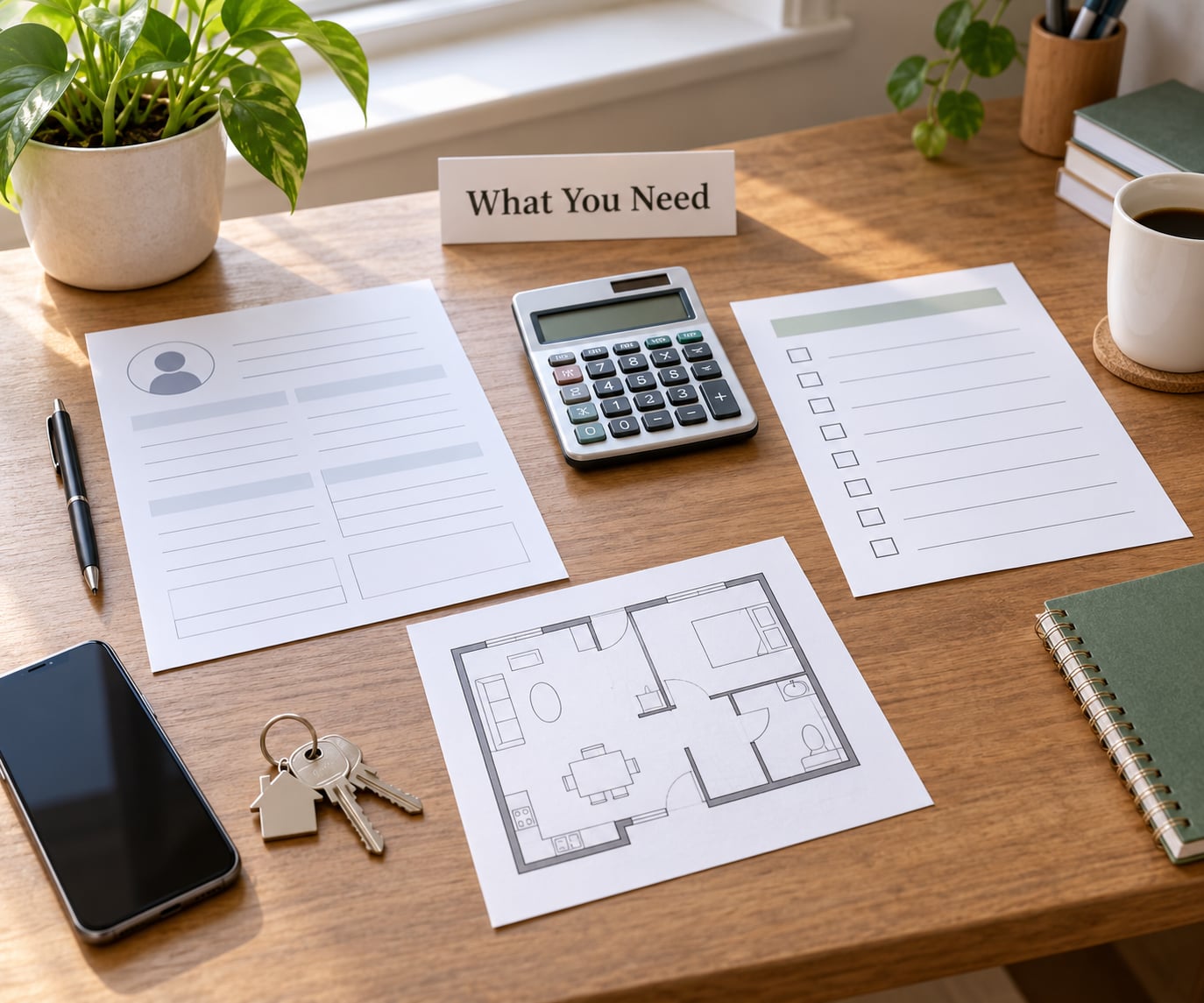
Before you post anything, gather six things. Without them you will answer the same questions from scratch every time someone messages you.
- A nonnegotiables list. The three or four things you cannot live without, written down.
- A preferences list. Everything else you would like but can trade on.
- A real budget. Rent, utilities, deposits, moving costs, and the recurring stuff between paychecks.
- Home details. Address or neighborhood, room size, photos, what is already furnished, which floor, parking, transit distance.
- Move-in timing. Exact date, and whether you can flex it by a couple of weeks.
- A secure way to exchange documents. A separate email address or a password-protected folder, not your main inbox.
Keep the budget worksheet simple. Add monthly rent, a utility average for the unit, internet, renter’s insurance, and about ten percent for repairs and replacement items you will end up buying together. Deposit and first month often land in the same month as moving costs, so budget for them together rather than one at a time.
The roommate profile is the piece most people rush, and it is the piece that does the filtering for you. Honest detail saves weeks. Vague listings attract the people you are trying to avoid.
How to Find a Roommate You Can Live With Step by Step
Define what living with a roommate actually means
Most roommate disasters trace back to one assumption: that everyone means the same thing by clean, quiet, or alone time. Write down your own definitions, and separate the two lists clearly.
Your nonnegotiables are the dealbreakers. For some people that is no smoking indoors. For others it is a partner who works nights and sleeps during the day, or a home where an emotional-support animal is not allowed. Nonnegotiables are the small number of things where a mismatch is a daily low-grade problem, and people rarely recover from them.
Preferences are where you negotiate. You may prefer a social home but can tolerate a quiet one. You may want a spotless kitchen but not care about vacuuming. Putting both lists in writing forces you to rank your own priorities, which is the first time most people actually do that.
Eight dimensions cover almost every case: sleep schedule, cleaning standards, guests and overnight stays, work-from-home habits, quiet versus social energy, pets, smoking and drinking at home, and how much household participation you want. Decide your answer on each one before you meet anyone.
One more thing worth settling early: you are looking for coexistence, not a best friend. People on r/roommates repeat this constantly, and it is right. A roommate who keeps to themselves, keeps their space clean, and gives notice before guests arrive is doing the job, even if you never become close.
Set a realistic budget and list your must-haves
A budget is a range with a ceiling, not a number you hope to hit. Work out your maximum share of rent first, then check what that buys in the neighborhoods you actually want. Splitting rent lowers your number but doubles the number of people who can affect your housing, which is a trade worth naming out loud.
Then list your must-haves for the home itself. These are different from roommate nonnegotiables. A single occupant versus a couple changes the rent math completely. A room without a door locks you out of a private life and is harder to rent again later. In-unit laundry, transit within a short walk, and a building that allows the kind of guest traffic you expect all belong here.
Be honest about two hard limits. Accessibility needs, medical equipment, or a service animal rule out buildings that cannot accommodate them, and no roommate will fix that later. A work schedule that puts you asleep at six in the morning narrows your candidate pool more than any other single factor, so decide whether that trade is worth making before you start messaging people.
Choose places that support the search
Different channels reach different people, and the mix you use shapes who answers you. Start with the ones with built-in accountability, then widen out.
- Personal network. Friends, former roommates, colleagues, classmates. Word of mouth consistently produces the best long-term outcomes in r/roommates, because there is someone who already knows how this person behaves in a shared home.
- Queer community groups and local meetups. For readers looking for a housemate who will not treat the arrangement as a risk to disclose, this is often faster than a generic listing site. Board members and organizers can also vouch for people.
- Facebook and Instagram DMs. The most effective channel people report for reaching compatible roommates inside an existing friend circle, and the one with the least risk attached to it.
- Free public boards. Facebook housing groups, city-specific subreddits, Craigslist rooms and Roommate sections. Volume is high and screening is entirely on you, so expect no verification at all.
- Dedicated platforms. SpareRoom, Roomster, Roommates.com and matching tools built around compatibility questionnaires. More structured profiles, some identity or background screening, usually paid for the better features.
- Co-living. Furnished rooms in a shared house with programming and shared space. Removes the search entirely and trades away independence of your home.
Watch for the standard scams in all of them. A listing asking for a deposit before a viewing, a landlord who will not confirm the unit exists, a request to move payment to a wire or gift card, or a tour that suddenly has to happen at a different address. Legitimate landlords will show the unit or send verified photos of the listing and the signer’s name.
Discrimination shows up in this search too. Federal protections around housing and the rules in major cities mean a landlord cannot simply refuse you for who you are, but screening happens informally and quickly. A profile that names your orientation draws louder applicants and more wasted time. Plenty of people advertise the home and their preferences without listing their own identity, then get to know people by phone.
Write a profile that attracts the right matches
A good roommate listing is short, specific, and honest about the tradeoffs. It should read like an accurate description of the home rather than a sales pitch.
Cover these in order: the neighborhood and the room, the rent range for your share, the move-in date, the layout and who else lives there, what the home’s actual vibe is including the quiet or social parts, and what you need from a housemate. Be honest that the kitchen gets used a lot or that the walls are thin and the building has a quiet hours rule.
Then state your preferences as an actual list, not a vibe. Working from home three days a week, no smoking, one cat welcome, no overnight guests on weeknights, dishes done the same night, comfortable with a monthly house meeting. Specifics filter better than charm.
Leave out what you do not need strangers to know. No last name, no workplace, no social handles, no photos of the home that show the street number or your neighbor’s door. Use a separate email address, and never send identification documents over an open message thread. Wait until you have met in person and asked for them, and then agree on how sensitive details get stored.
Screen applicants before inviting them home
Use the same process on everyone, in the same order. Consistency is what keeps a screening process from turning into a series of impressions.
Start with a call or video chat, twenty minutes is plenty. People across r/roommates rank this as the single most effective filter, because tone and answers tell you more than a text thread does. Use it to cover schedule, work arrangement, cleaning habits, guests, pets, substances, and how they handle disagreement. Then, if the answers line up, move to a meeting in public.
After that, ask for verification in proportion to the commitment. A soft credit check for identity and basic financial standing is normal for a twelve-month lease. Employment or enrollment verification is reasonable. A formal background check is more common when you are taking on a lease with a stranger, though most tenants have the legal right to know what information a landlord can request. Ask before you hand over anything, and never pay for a screening service from a link someone else sent you.
References matter more than self-reported answers. Talk to a former roommate and, if possible, a former landlord. Ask a pointed question: did they pay on time, did they keep shared space usable, and would they live with this person again. A reference that answers politely but vaguely is information too.
On identity and sensitive background: ask for what the lease actually requires, collect it through a method both of you control, and delete what you do not need once the decision is made. Some queer readers prefer to disclose identity later, after meeting and before signing. That is reasonable, but be aware it does not remove the risk, it only moves the conversation to a moment when you have more information about the person.
Meet in a safe public place and ask detailed questions
Meet at a cafe, a bar, or a restaurant with a full room and two exits in sight. Never make the first meeting at the apartment, and never let someone you have not met move their furniture in first. Tell a friend where you are going and share the restaurant name.
Bring your question list and walk through it in three groups. Take notes during, not after. Here is a set that covers the ground without turning into an interrogation, because people relax when the questions sound normal.
Lifestyle. What time do you get up and go to bed, and is that a hard schedule? How often do you cook and clean? How many guests in a month, and do partners stay over? Do you work from home or mostly outside? Do you smoke, vape, or drink at home? Pets? Any current relationship status worth knowing? Quiet hours, and how you handle a late night with friends?
Money. What does your work or study schedule look like, and is income steady? Can you produce first and last month plus the deposit at signing? Has rent ever been late? How would you like to handle payment, automatic transfer on a set date, or one person paying and the other sending their share? Do you have an emergency cushion of two months of expenses? Any debt that a landlord might ask about?
Logistics. How long do you plan to stay? When is your move-in date and is it firm? Who owns which furniture? Cleaning schedule, and does it run on a shared checklist? Who handles repairs and calls the landlord? What is the plan if one of us wants to leave early, and is subletting allowed? What does the building say about guests, quiet hours, and pets? Who handles emergencies, and how do we reach each other at work?
The question that gets skipped and matters most: how do you want to be told when something bothers you. Someone who says they would rather raise it the same day, calmly, tells you a lot about month seven.
Review the lease and house rules together
Read the actual lease before signing anything, ideally together and in full. Most leases in shared housing carry joint and several liability, which means the landlord can pursue any one signer for the entire unpaid rent. If your roommate misses a payment, you do not get to point at their side of the room and wait. You pay, then you chase them.
Confirm in writing: the rent amount and the due date, the deposit amount and the conditions for getting it back, how utilities are split and who holds the accounts, whether rent or deposits are due at signing, the length of the term, the notice required to move out, and what happens if one of you leaves early.
House rules are a separate document from the lease, and this is where the real life lives. Cover cleaning responsibilities and the schedule, quiet hours, guests and overnight stays, dishes and trash, food sharing versus food ownership, the thermostat and how heating disputes get settled, smoking and vaping locations, pets, shared purchases and how those get split, and how disagreements get raised. Who calls the landlord when the radiator breaks? Which repairs are shared cost versus one person’s problem?
Keep it in writing and keep it short. Forum users who wish they had done one thing differently usually name the same item: they talked through boundaries at a move-in meeting and nothing was documented, so every argument after that started from scratch. An unsigned agreement is a memory, and memories differ depending on who is annoyed.
Make a decision and protect the move-in
Score the candidates against the same three things you decided in step one: compatibility on the nonnegotiables, reliability on rent and logistics, and risk. Compatibility is the one you cannot adjust later. Reliability can improve with a payment plan. Risk mostly shows up in the reference conversations.
If two people score similarly, choose the one you can live with slightly worse than perfect. A mismatched sleep schedule and a meticulous cleaner still works. An unhonest reference is harder to recover from.
Then protect the handover. Sign the roommate agreement at the same time as the lease, not later. Exchange keys in person, at the apartment, with a written receipt and a copy of every payment already made. Take dated photos of the unit at move-in so damage disputes have a starting point. Set up automatic rent transfer with a buffer. Share contact information for the landlord, the building manager, and a backup person who should know you live there.
For the first month, do a short check-in at the end of week one and again at day thirty. Ask the quiet questions early, while everything is still small and nobody is angry. The people who bring up a thing that annoys them in week two usually get it fixed. The ones who sit on it do not.
Common Mistakes
Choosing who is available instead of who fits. A person moving out in two weeks will take a room that does not suit them. If they decline a single item on your nonnegotiables list, they will be unhappy inside the lease and you will be collecting the difference.
Trusting the first impression. Charm in a cafe tells you nothing about dishes on day nine. Judge people on their answers to specific questions and on what former roommates say, not on how easy they are to talk to.
Skipping references. A previous landlord or roommate will tell you about late rent and conflict in ways a stranger never will. If someone refuses to give references, that refusal is the answer.
Avoiding the money conversation. Asking how someone will handle rent is not rude, it is the part of the lease that binds you most. If they cannot discuss it without defensiveness, that is the finding.
Moving in without a written agreement. House rules agreed verbally in a good mood turn into a dispute in a bad month. Write it down, sign it, keep a copy each.
Overlooking safety and accessibility. Rushing a move-in date is how people end up signing with someone they never properly met, or in a unit that cannot accommodate a medical or mobility need. Waiting three weeks is cheaper than both.
Expecting friendship. Searching for a best friend is how people end up disappointed. You are hiring a compatible housemate, and a good one is plenty.
Tips for Keeping the Arrangement Working
Almost every roommate conflict that reaches r/badroommates or r/roommateproblems started as a small thing that nobody said out loud for four months. A few habits prevent most of it.
- Hold a short monthly meeting. Fifteen minutes, same week each month. Bills, chores, guests coming up, anything nagging. Keep it in a shared note so the record is visible to both of you.
- Use a shared checklist for chores. Assign by preference, not by speed. People do more of what they chose.
- Raise one thing per conversation. A running list of complaints delivered all at once reads as an attack, even when every item is fair.
- Give notice on guests. A text the morning of is enough. No notice reads as the boundary being ignored, not the timing.
- Talk before the lease ends. Renewal and rent conversations get tense in the final month. Start eight weeks out and you keep the choice of whether to renew.
- Keep a shared communication log. Dates and short notes on what was agreed. It sounds clinical. It is the difference between a misunderstanding and a three-hour argument six months later.
Frequently Asked Questions
How long does it take to find a compatible roommate?
Most people who start early find a workable housemate in two to six weeks. Shorter searches usually mean moving in with whoever replied first rather than a better fit. Add two more weeks if you are searching in a smaller city, need a pet-friendly unit, or work unusual hours, since those narrow the pool fast. If your lease starts before your search ends, ask the landlord for a short month-to-month extension rather than signing with a stranger to avoid the gap.
Is it safe to meet a roommate from an online listing?
Meeting online leads is common and workable if you keep the basics in place. Screen by video call first, meet in a busy public place, tell a friend the name of the place, and never hand over identification documents before you have met in person. Refuse any tour at a different address than the one you advertised, and never send a deposit or move money by wire before seeing the unit. Trust your discomfort and leave.
What should I ask about income and employment before signing a lease?
Ask how the person earns, whether that income is steady, and whether they can produce first month, last month and the deposit at signing. Steady employment, a graduate student with a funded stipend, and contract work all qualify, as long as the money is real and predictable. Ask whether they have two months of expenses set aside for a car repair or a gap between contracts. If the answer is vague or the schedule changes monthly, that is a real risk.
How do I find an LGBTQ+ friendly roommate?
Community groups, queer social meetups, board members at local housing organizations and referrals from friends in the community produce the best results. In your listing, describe the home and your household preferences without naming your own identity if you would rather screen first, then tell people directly once you have spoken. Ask openly about how they handle a roommate who is trans, who is married, or who has a partner stay over, and listen to the specificity of the answer.
Should I live with a friend as a roommate?
It can work well, and it is much harder than strangers because nobody feels free to negotiate. Money owed to a friend turns into a relationship problem instead of an invoice. Write the agreement anyway, including chores and guests, and treat it as a business document the way you would with a stranger. If either of you cannot say no to the other, choose a stranger instead.
What if the roommate search is not working and my lease starts anyway?
Three options rank best. Ask the landlord for a month-to-month extension, which many will accept when a good tenant wants a longer stay. Take a short sublet or a furnished co-living room while you keep searching. Or move in alone for a month and keep your profile live, since you now know exactly which items on your list you can actually compromise on. The worst option is signing with the first person who says yes.
Conclusion
Start with a page of paper, not a listing. Write your nonnegotiables, your preferences, your budget and your move-in date, then run every candidate through the same call, the same public meeting, the same questions and the same reference checks. When someone clears that standard, put the lease terms and the house rules in writing and hand over the keys with a receipt.
That process takes a few weeks. It replaces a year of arguments about dishes, noise, and money with a signed page and two people who already know what they signed up for.