If you want to know how to find a drag brunch near you, the shortest route is the venue’s or host’s own Instagram account, checked within the week you plan to go. Brunches almost never run through one national calendar, so the schedules that matter live in local posts, story highlights and ticket links that change every few weeks.
That is also why generic roundups go stale so quickly. A list written two years ago can name a show that no longer runs on that day, at a venue that has moved, with a booking link that quietly stopped working. The method below replaces those roundups with a repeatable ten-minute search you can run in any city, plus the details worth confirming before you travel.
Schedules change and shows sell out, so treat every listing as a starting point and the organizer’s page as the final word. Check the source you’re given, not an article that last updated a season ago.
Table of Contents
- What You Need
- Step-by-Step
- Common Mistakes
- Frequently Asked Questions
- Do I need a reservation for a drag brunch, or can I walk in?
- What search terms actually turn up drag brunches in my city?
- How much money should I bring to a drag brunch?
- How much should I tip, and does it have to be cash?
- What should I wear to a drag show brunch, and who can go?
- What do I do when the listing I found is out of date?
- Conclusion
What You Need
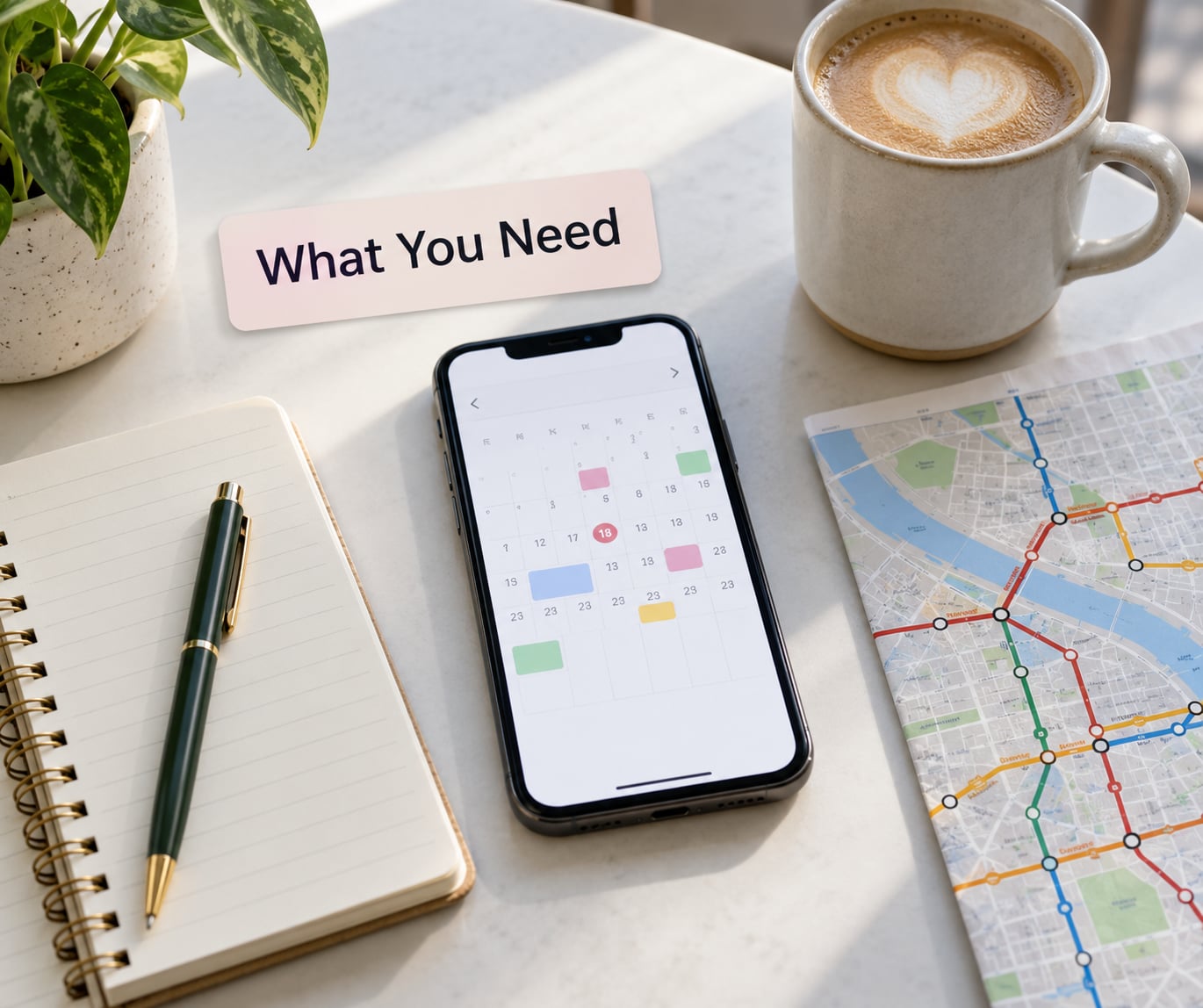
You need very little to start, but three things make the difference between a real booking and a wasted trip. The first is a current sense of geography: your neighborhood plus how far you will actually travel on a Sunday morning. Drag brunches cluster hard, so a five-mile radius is usually plenty, and widening it too fast is how people end up booking a show they cannot get to.
The second is a phone with local search switched on. Location access turns “drag brunch” into a list of venues within driving distance, ranked by recent reviews, and it is the fastest way to find out whether a restaurant anywhere near you has quietly started hosting one.
- A neighborhood and a travel radius you would genuinely cover, including the transit ride home.
- A phone with location access on, so local search can sort results by distance instead of by ad spend.
- A notes app, because you will compare four venues and lose two of them by the time you get to the fourth.
- A way to check five things before booking: date and time, neighborhood, cost and what it includes, reservation rules, and age policy.
- Cash for the visit, kept aside in small bills. Performer tips are customarily handed over in person, and venues that look casual are rarely set up for digital gratuities at the table.
- A transit or parking plan, worked out in advance rather than on the sidewalk when the seating window starts.
That last item matters more than people expect. Drag brunch seatings are timed, and arriving after your window has started is the single most common reason a reserved table is released.
Step-by-Step
Six steps, roughly ten minutes, and you go from a vague idea to a confirmed reservation. Run them in order: the early steps find candidates, the later ones remove the ones that will disappoint you.
1. Search Local Event Calendars
Start with the broadest searches, because they surface events that have no venue website at all. Type the exact phrase first, then swap in the words local venues actually use, since very few of them call it a drag brunch.
- drag brunch near me — the broadest sweep, and the one most likely to bring back venues rather than one-night events.
- bottomless mimosa drag show — the phrase used by venues selling a drink package with the show attached.
- queer brunch [your city] — catches drag brunches that are marketed as community events rather than shows.
- drag queen [your city] Sunday — weekday and day-of-week qualifiers are what turn a list into a schedule.
- walk-in drag show tonight — for the spontaneous version of the same question.
Then repeat the best performer with a city or neighborhood appended. Tournaments, residencies and themed shows are easier to trace through the artist than through the venue, and a performer touring four cities in a season will have every date on one page.
You know this step worked when each result has a specific date, a named host or cast, and a way to buy or reserve. A page with no date on it is a description of a show that may or may not exist this month.
2. Check Social Media and Community Groups
Social posts are where the current schedule actually lives. Venue accounts post seating times and ticket links, performers post their own dates, and community groups fill in what search engines miss.
Open Instagram and work in this order. Check the venue’s story highlights first, because regulars pin the standing schedule there and it updates weekly. Then search the hashtag and location tags for your city, and read the caption dates rather than assuming a post is still running. If two accounts are posting the same seating time, you have found the organizer’s official account.
The distinction that catches people out is the difference between a repost and an announcement. A repost from a fan account, a city blog or an old ticket page can be months behind the venue’s own feed. When a date matters, the venue account or the ticket link wins.
Facebook Events and local LGBTQ+ groups fill the same role, differently. They are less precise about dates but far better for two things search will not give you: whether the room is genuinely welcoming, and what the atmosphere is like. Groups also surface the one-off events that never touch a venue calendar, including pop-ups in hotel dining rooms and charity brunches with a rotating cast.
Meetup is worth a look in smaller cities, where a single organizer runs several recurring events and posts them as a group. Eventbrite is useful for public and ticketed events, and much less useful for the recurring restaurant-hosted shows that fill most of the brunch calendar.
3. Search Queer Business and Venue Directories to Find a Drag Brunch Near You
Queer business directories and local tourism guides have something search results lack: an editorial answer to whether a venue is a good fit for the crowd you are part of. They are also the fastest route to the recurring shows, because a brunch that has run every Sunday for four years gets written into a guide, while a one-off almost never does.
Use them to identify the organizer, not just the room. Drag brunches run on one of three setups, and knowing which one you are booking tells you what to expect from pricing, seating and tipping.
- Dedicated drag venues, where the show is the business and brunch is packaged around it.
- Restaurant-hosted brunches, where a normal restaurant adds a host and a short performance to an ordinary Sunday service. Quieter, often cheaper, and the format most first-timers actually want.
- Community and charity events, where a bar or hotel lends its room to a show that supports a cause.
Restaurant-hosted brunches are consistently harder to find than dedicated venues, because they are advertised through the host and the front-of-house staff rather than through the venue name. Searching the host’s name plus your city finds more of them than searching venue types does.
4. Confirm the Date, Location, and Reservation Rules
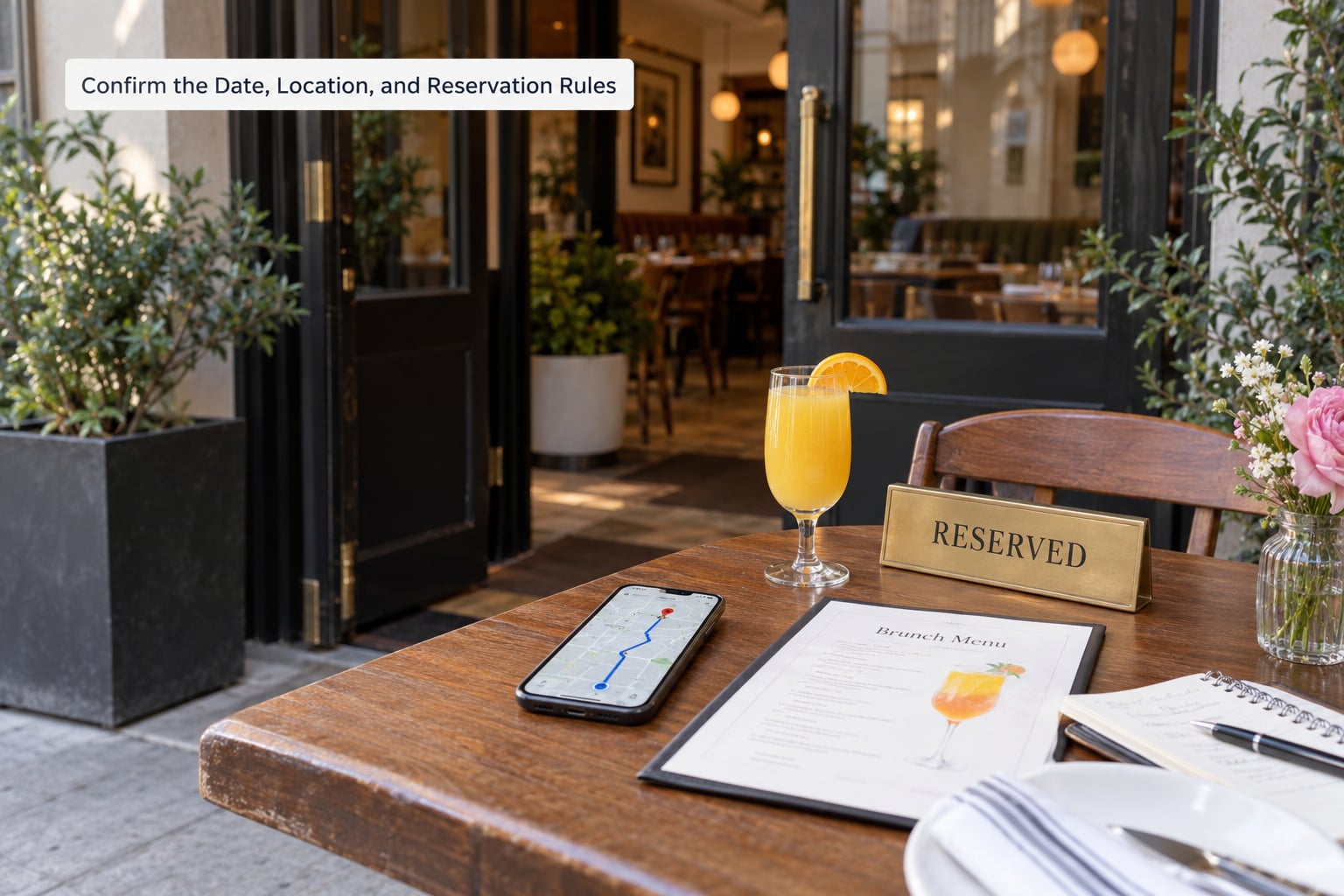
Before you leave home, confirm eight things in one sitting, all from the organizer’s own page. You are checking that the event is real and current, that you can afford it, and that you will be able to get in.
- The exact date and seating time, including whether the show runs once or twice that day.
- The neighborhood and street address, not just the venue name. Some venues have more than one room.
- What the price includes: the menu, whether there is a separate cover, and whether a drink package is an upgrade or already built in.
- How long the seating lasts, so you know whether you are booking one hour and forty-five minutes or three hours.
- Whether reservations are required, and how far ahead the window opens. Two to four weeks is common at popular shows.
- The reservation link itself, opened and tested. A dead booking page is the clearest sign a listing is stale.
- The age policy, which often differs between all-ages dining and the bar area.
- Whether the show is still running, read from the most recent post rather than the oldest one you can find.
Gratuity is the item people most often discover late. Unless the page says otherwise, service is not included in the menu price, and the performers are tipped separately in cash on top of that.
You know this step worked when you can answer one question without hesitating: what time am I arriving, at which door, and how am I getting in.
5. Check Inclusivity, Accessibility, and Practical Details
This is the step that decides whether the event is right for you, and it is the one most guides skip. Ask about it directly, and ask in writing, because a venue’s own page will rarely volunteer the answer.
Accessibility questions come first: step-free entry, an accessible restroom, a seating position with a clear sightline, and whether service animals are welcome anywhere on the floor. Venues in older buildings are the ones worth asking about, and a slow, honest answer tells you more than a confident one.
Then the practical questions. Is there transit close by, and where do you park? Is there indoor seating, an outdoor patio, or both, and what happens when it rains? If the show is on the patio, ask whether indoor guests can still see the performance, since that is the arrangement that catches people out most often.
Food matters too. Check whether the menu has vegan, vegetarian or gluten-free options, and how long the show runs before you commit to a large party ordering the slowest thing on the list. A drag brunch where the food takes ninety minutes is a very different afternoon from one that serves quickly between numbers.
On atmosphere, ask in plain terms whether the show is loud, intimate, staged or improvised. People planning a send-off for a friend who wants a big party and people who want a first quiet outing are both looking for a drag brunch, and they need very different rooms.
6. Save the Listing and Plan Your Visit
Once you have confirmed the details, save the organizer’s page rather than a screenshot. Posts get deleted and schedules move; an account you can reopen tells you about a cancellation that happened three hours before your seating.
Add the seating time to your phone calendar with an alarm set twenty minutes earlier than you need to be there, not twenty minutes before the show. Then work out the trip home, because a brunch seating often ends around the same time a Sunday afternoon traffic jam starts.
Bring the cash you set aside, and bring it in small bills. Tip jar totals change hands quickly, and a performer working a packed room cannot break a large note between tables during a number.
Send the listing to anyone else coming with you. Groups that coordinate on one link get seated together; groups that each found their own source end up in different rooms.
Common Mistakes
Almost every frustrating search comes down to one of six mistakes. Each has a simple fix.
Trusting a roundup instead of a listing. Listicles go stale because nobody owns the upkeep. The fix is one rule: every date, price and booking link comes from the venue or performer account, and any article that gives those details without a verification date is a starting point at best.
Confusing fan accounts with official ones. A reposted screenshot looks identical to an announcement until the date is wrong. Fix it by matching the venue name, the seating time and the ticket link across two accounts. If they agree, you have the source.
Assuming walk-ins are fine. Plenty of drag brunch seatings are reservation-only, and popular shows fill two to four weeks out. Fix it by finding the booking page before you build a plan around the day.
Assuming every venue is accessible. Most buildings are not, and nobody lists it. Fix it by asking one specific question about step-free entry and an accessible restroom before you book, and treat a vague answer as a reason to pick somewhere else.
Travelling before confirming the room. A venue with several rooms may be running the show in one of them, and patio seating changes where the stage goes. Fix it by confirming the address, the room, and whether the stage is indoors.
Reading cost as a single number. A cover charge, a prix fixe menu, an optional drink package, a minimum spend and a gratuity are five different lines, and people only notice one of them on the bill. Fix it by asking what the menu includes and whether the drink package is optional before you commit to a group.
A few search habits that pay off every time:
- Add the day of the week to every search. Sunday brunch and Thursday brunch are different searches with almost no overlap.
- Search the performer, not just the venue. Touring artists date every stop in one place.
- Keep a running note of venue name, seating time, price and booking link. Four venues is the point where memory fails.
- Read the three most recent reviews rather than the overall rating. They describe the current room.
- Check whether the event recurs. A brunch running every other Sunday is easier to book than a one-night special.
- Ask your local queer community group directly. It remains the fastest source when a listing has gone quiet.
Frequently Asked Questions
Do I need a reservation for a drag brunch, or can I walk in?
Reserve whenever you can. Many drag brunches run timed seatings with a fixed menu and a set amount of space, and popular shows fill two to four weeks ahead. Walk-ins do work at some venues, particularly on slower weekdays, but the organizer’s page is the only reliable source for that. If you plan to walk in, arrive early and be willing to take whatever seating is left.
What search terms actually turn up drag brunches in my city?
Try the exact phrase drag brunch near me, then widen with bottomless mimosa drag show, queer brunch, drag queen, and your city or neighborhood. Add a day of the week for better results. Venues rarely use the words drag brunch, so searching by host name finds restaurant-hosted shows that name searches miss.
How much money should I bring to a drag brunch?
Budget for a prix fixe brunch menu, an optional or included drink package, and cash for performer tips on top of that. Book the outing as a fixed menu plus a drink package plus a tip you are comfortable with, and add transit or parking. Gratuity is usually not included, so treat the tip as part of the cost rather than an optional extra.
How much should I tip, and does it have to be cash?
Bring cash in small bills, and tip each performer you liked directly. A percentage of the check is not the custom, because the check largely pays the kitchen and the room rather than the cast. Many performers now also take digital payment, but that varies by person and is always easier to hand over in bills between numbers.
What should I wear to a drag show brunch, and who can go?
There is rarely a dress code. Most guests dress up for the occasion, and the room is full of people who came straight from brunch or a walk. Bring whatever you would wear to a birthday lunch and expect to be photographed. Straight allies, partners, friends and families are regulars at most venues, and all-ages dining is common outside the bar area.
What do I do when the listing I found is out of date?
Open the venue or performer account directly and read the newest posts rather than the oldest. Schedules move, casts change, and a brunch that ran monthly may now run weekly or not at all. If the account has been quiet for months, ask your local queer community group, then treat the listing as closed until you hear otherwise.
Conclusion
Run one local search on your phone, open the organizer’s own account, and confirm the seating time, address and reservation rules before you build a plan around the day. That single sequence is the whole method: local search finds candidates, the official account tells you which ones are real, and the confirmation step stops you arriving somewhere that cannot seat you.
Check again the week you are going. Schedules move, casts change, and a listing that looked current last month may not be current now.