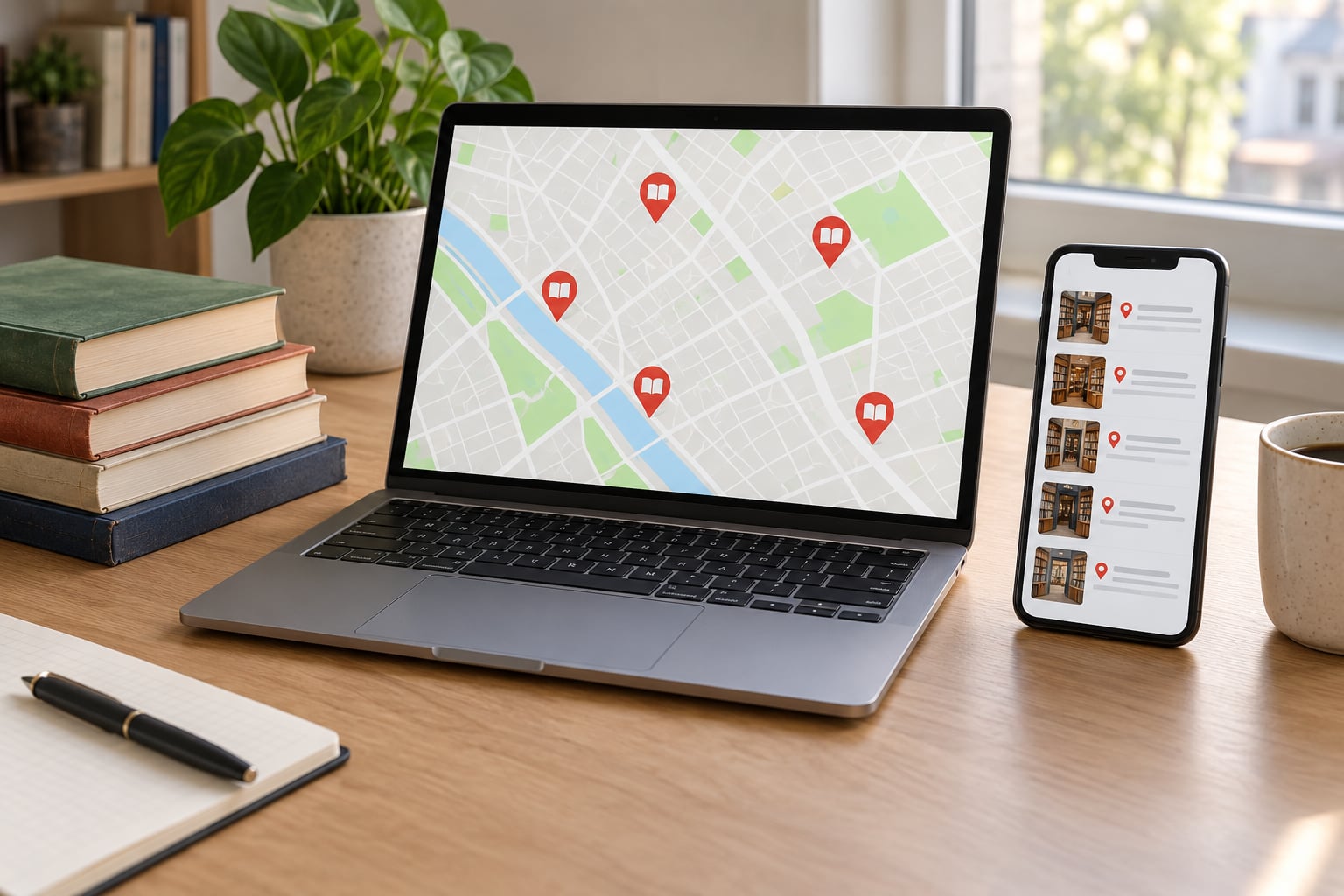
To find LGBTQ bookstores, start with a queer business directory, type the exact phrase plus your city or ZIP code into Google Maps, and then confirm each candidate on the shop’s own website and social accounts before you travel. Most listings are stale, so the verification step matters more than the search itself.
I know the frustration underneath this question. People post in local groups asking for a link to a shop that carries LGBTQ+ books, and somebody replies with three names, two of which closed years ago. Queer bookstores are genuinely scarce outside a handful of cities, and the listings that exist online were built for browsing businesses, not for finding books.
So this guide covers the full method: what to gather before you start, the six steps that actually turn up a shop you can walk into, how to tell a queer-owned store from one that merely has a nice display table, and where to look when your town has none. It takes about fifteen minutes to run through the steps properly.
Table of Contents
What You Need
You need a city or ZIP code, plus a device with internet access. Everything else makes the search sharper rather than possible.
- Your location or travel radius. Decide how far you will realistically drive. Many readers set it at about 20 miles; others will happily cross a state line for a good event.
- What you actually want to read. Queer fiction, trans studies, young adult, comics, poetry, zines, children’s picture books, a banned title. The list narrows the results and tells you whether the shop is even worth the trip.
- What kind of store suits you. Some readers want a worker-owned shop with a café and a readings calendar. Some want a discount shelf of used paperbacks and will not care about the events. Those are different searches.
- Access needs. Step-free entrance, accessible restroom, a quiet space, seating, transit access. Plenty of independent shops are in older buildings, and nobody lists this on a directory.
- Age requirements. If you are shopping for a teenager or a young child, check whether the shop has a youth section or hosts a youth group, because the adult-only shops will not serve you.
Also note whether you want a physical visit at all. Plenty of readers in smaller towns never find a shop nearby, and the sections further down cover what to do instead.
Step-by-Step: Finding a Welcoming LGBTQ Bookstore
Start with your location and book interests
Write down your city or ZIP code and two or three things you are hunting for. That short list is what makes step two useful instead of noisy.
If you want something specific and slightly harder to find, say so plainly: a trans memoir from a small press, a banned YA novel, a queer mystery. Shops that curate their shelves will chase down a title they do not carry, and they will do it faster when you tell them the author and year.
Search maps, directories, and social platforms
Run three searches in this order. Start with a queer business directory such as Pride Places or Everywhere Is Queer, then run a plain maps search, then check social media for anything the first two missed.
Directories are good for breadth. Pride Places sorts LGBTQ+ friendly businesses by location and category, so you can filter down to bookstores. Everywhere Is Queer is built around a map of queer-owned spaces and works well when you are already in a city and want to see what is within walking distance. LGBTQIA Hub is another option, with listing cards that carry ownership tags such as queer-owned, woman-led, or community-focused.
Maps are good for confirming. A general search for “queer bookstore” plus your city, or for the district name, surfaces places the directories missed, including used bookshops that never signed up for a directory listing.
Social accounts are good for liveness. A shop posting this week’s reading three days ago is open and staffed. A profile that stopped posting two years ago is not, whatever the map says.
How to find LGBTQ bookstores on maps and directories
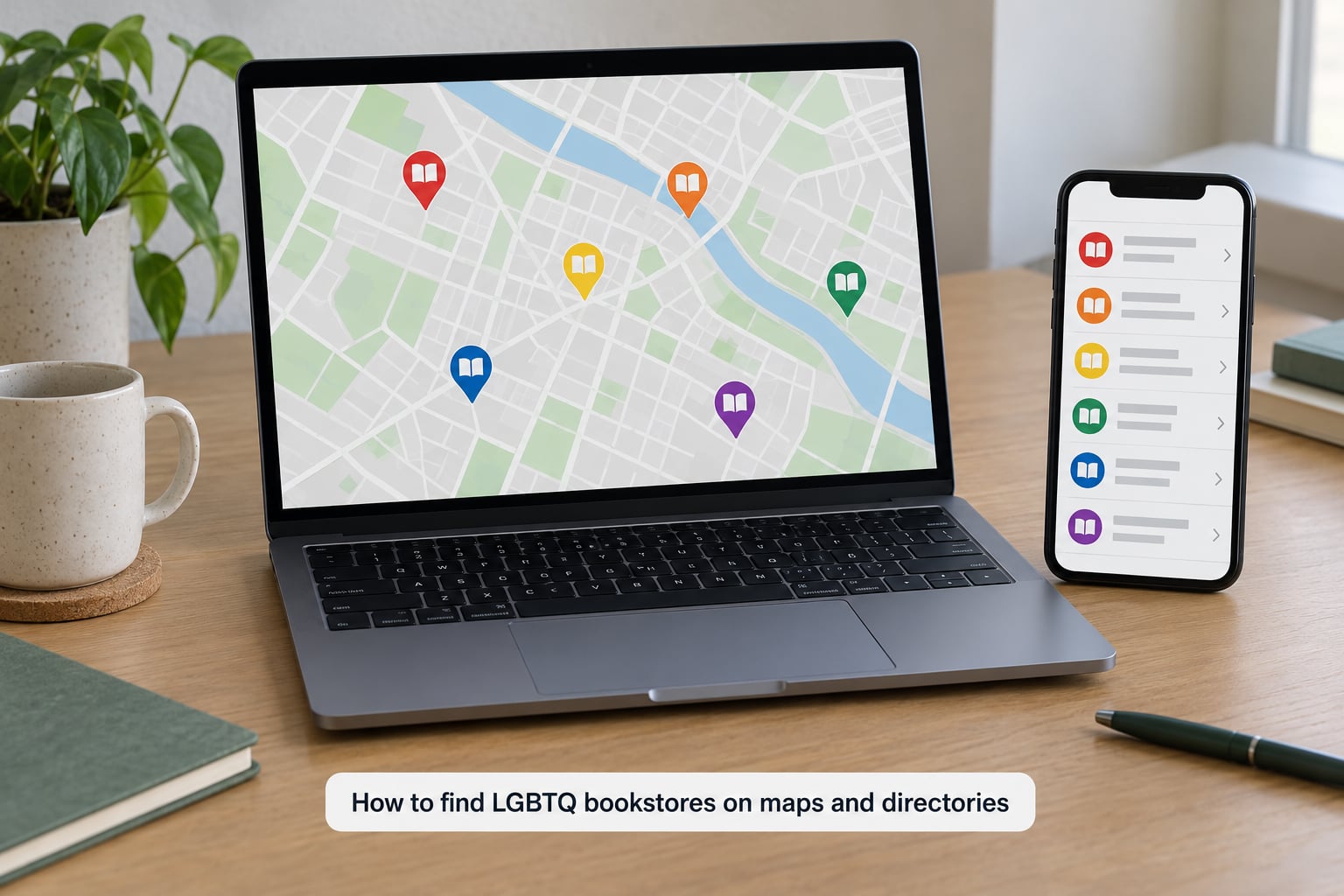
The mechanics are simple, and they take about two minutes per tool.
On a maps app, type the exact phrase and add the city or ZIP code. Read the result list, not just the pins, because the list shows review counts and recent photos. Open each listing and check the last photo date, the hours, and whether the website and Instagram links still resolve.
In a directory, set the location filter first, then narrow the category to bookstores. Sort options vary by directory; several let you sort by review count or recency, which is a decent proxy for activity. Save the three or four candidates that look most active instead of every result.
Then separate your list into two piles: confirmed LGBTQ-focused shops, and general bookstores that happen to have a themed section. Only the first pile is what this guide means by a queer bookstore.
Check the inventory, events, and community focus
Open each candidate’s website and look for the sections page or the events calendar. This is where a real shop looks different from a general store with a rainbow display in June.
Concrete things to look for:
- Queer and trans books given their own sections rather than filed under general fiction.
- Named sections for specific audiences, such as Black queer fiction, trans studies, lesbian romance, disabled queerness, or queer comics.
- An events calendar with readings, signings, book clubs, and game nights listed on it.
- A mission statement, an about page, or a stated ownership identity. Worker-owned, queer-owned, trans-owned, feminist, and volunteer-run all show up here.
- A staff or customer advisory board, which usually signals the store answers to the community it serves.
- Evidence that the shop carries challenged titles, often with a dedicated banned-books shelf or a stated policy on requests.
- A special-order service, so you can ask for an out-of-print title or a book from a small press.
Curated shelving is the tell. Independent queer shops choose what they carry instead of letting an algorithm decide, so two shops in the same city will have noticeably different shelves. A general store orders by category and sales data, which is why the queer section there is often three shelves and out of date.
Call ahead when the listing is unclear
If the listing does not answer your question, message or call. This is the step people skip, and it is the one that saves a wasted trip.
Keep the message simple and specific. Something like: “Hi, I’m looking for a trans memoir published by a small press. Do you carry it or could you special order it? Also, do you have a youth section, and is the shop step-free accessible?” Add “and do you have any reading or book club events coming up?” and you have covered everything in two or three sentences.
You do not need to ask staff members to disclose their own identity, and you should not. Asking a shop whether it identifies as LGBTQ-focused, or who owns it, is a normal question and usually answered on the website anyway. Asking an individual what they are is a different request, and it puts a person on the spot.
If a shop does not reply within a few days, treat that as data. It may mean the inbox is unmonitored, or that the shop is struggling. Either way, plan around it.
Visit and decide whether the store is a good fit
On a first visit, browse before you buy. Queer shops are curated by people, not by a warehouse algorithm, so what you find depends on who runs the shelves.
Notice whether staff can talk about the books, whether the youth section exists and how big it is, whether the events calendar is current, and how the room feels to walk into. A shop that identifies as a safe space has to hold up in the room itself, not just on the about page.
Browse normally and buy what you came for. Do not handle the entire shop as if you are on an inspection tour. If you want a recommendation, ask, and give the staff something to work with: an author you liked, a book that did not work for you, a mood.
Support does not have to mean buying a book. Attending a reading, joining a book club, mailing in a preorder, or recommending the shop to someone starting over are all real support. Several shops are volunteer-run, where hours are scarce and every hour of help counts.
Common Mistakes and How to Fix Them
Trusting a directory entry you have not opened. Listings linger for years after a shop moves or closes. Fix: open the site, check that the social accounts posted within the last month, and look for a date on the events calendar. Anything with no update in months goes to the bottom of your list.
Assuming a general bookstore has a real LGBTQ+ section. A friendly policy and three shelves of rainbows are not the same as a curated queer collection. Fix: search the store’s site for trans authors, queer classics, and specific titles you care about. If nothing turns up, ask staff directly whether the section is maintained and by whom.
Treating shelf selection as proof of staff knowledge. Owners buy carefully and still hand the register to whoever is working that day. Fix: ask one specific question about a book. A good shop can answer or admit it doesn’t know and offer to find out.
Skipping the events calendar. This is the most common missed opportunity. Book clubs, readings, and signings are the reason people return, and several shops only run them for people who showed up. Fix: check the calendar before you plan the visit, and put the date in your own reminders.
Travelling on stale hours. Volunteer-run shops close for illness, conventions, and holidays. Fix: read the latest post or call on the day you travel if the trip is longer than a few minutes.
Forgetting to support the shop afterwards. One purchase is a good start, but returning readers are what keep a shop open through a rough year. Fix: join the mailing list, join one event, and send the shop to a friend who needs it.
Ways to Expand Your Search Beyond a Bookstore
If no independent shop is close by, you have more routes than most readers try.
- Your public library. Most systems hold a solid queer collection, and librarians are usually the most knowledgeable people in town. Ask for help with the catalog, and check interlibrary loan for anything the system lacks.
- Mainstream and chain stores. Bigger shops with dedicated children and YA departments often carry more queer titles than you expect, especially from small presses that do not sell through wholesale channels. Ordering is easiest in person at the register, where staff can request a book directly.
- Online and mail-order sellers. Independent queer booksellers ship nationally, and most will special order a title from a press the mainstream chains skip. Small presses often sell directly from their own sites, which also gets the money to the people who made the book.
- Book clubs and readings. A local queer or feminist reading group often knows every relevant shop in a region, including the volunteer-run ones that never show up on a map. Attending an event is also the fastest way to get a personal recommendation.
- Free and low-cost shelves. Little free libraries, book bikes run by volunteers, take-a-shelf pay-it-forward bookshops, and discount tables inside larger stores all exist in most cities. Search for free bookshops or book bikes plus your city name; they are chronically under-documented online.
- Local groups. This is the method people already use. A city or neighbourhood group, a reading community, or a Pride organisation page will name shops, and the answers come with dates attached.
- Travelling. Before a trip, run the directory search for the destination and save two options, then re-check them the week you go. Ask your host where the local queer reading happens; an event is often better than a shop that has moved hours.
A short note on why this matters: LGBTQ+ titles are among the most challenged books in the country, which means a well-curated independent shelf is often the only reliable place to find a specific queer book at all. The money you spend there also stays inside the community.
Frequently Asked Questions
How can I find an LGBTQ bookstore near me?
Search a queer business directory such as Pride Places or Everywhere Is Queer with your city or ZIP code, then run the same phrase on Google Maps. Open every candidate and check that the website works and the social accounts have posted recently. Keep the two or three most active listings and message them before you travel.
What should I look for in an LGBTQ-focused bookstore?
Look for sections given their own shelves rather than filed under general fiction, a current events calendar with readings or book clubs, and a stated ownership identity such as queer-owned, trans-owned, worker-owned or volunteer-run. A special-order service and a named youth section are strong signals too. A mission page alone proves less than the shelving does.
Can I find LGBTQ books at general bookstores?
Yes, and it is worth checking, especially at larger shops with strong children and YA departments. The problem is consistency: general stores order by sales data, so the queer section is often small and out of date. Search the store’s site for specific trans and queer authors before you go, and ask at the register to order from a small press directly.
How do I confirm that a bookstore is still open and active?
Check three things: whether the most recent social post is within the last month, whether the events calendar has dates on it, and whether the map listing hours match what the website says. A shop posting about an upcoming reading is almost certainly open. A profile that stopped two years ago is not, no matter what the directory still lists.
What if there is no LGBTQ bookstore in my city?
Widen the search before you give up. Try your public library and interlibrary loan, check whether a nearby city has a shop within a reasonable drive, look at online mail-order sellers and small presses, and ask local reading groups for the volunteer-run options that never appear on maps. Free bookshops and book bikes are also common and almost impossible to find through a general search.
How can I support LGBTQ bookstores?
Buy something, then keep coming back. Join the mailing list, attend one reading or book club, place preorders, and recommend the shop to someone starting over. If money is tight, volunteering matters just as much at volunteer-run shops, where opening hours are limited by how many people can spare them.
Conclusion
Open a queer business directory, set it to your city or ZIP code, and build a short list of three. Confirm each one on the shop’s own website and social accounts, check the events calendar, then call or message the most promising one before you set out.
If nothing in your town survives that check, the library, interlibrary loan, and an online seller will get the book into your hands, and a local reading group will tell you about the volunteer-run shop that has not announced itself yet.