Hosting a movie night with friends comes down to five things: pick the film before anyone arrives, set enough seating for the exact headcount, put out a snack spread before the first person walks in, dim the lights to a level people can still see by, and decide in advance what happens at intermission. Get those right and the evening runs itself. This guide walks through the whole thing in order, from choosing the movie to turning the lights back on. It takes about two hours of prep spread over a week.
Updated for 2026.
Table of Contents
What You Need
Gather these before you send the invite. Most of them you already own, which is exactly why movie night is a cheap night to host.
- A playback source that works. A streaming subscription everyone has access to, a disc, or a downloaded file saved on the device that will do the playing. Decide now, not at showtime.
- Seating for the real headcount. Count your chairs, couch spots, floor cushions and chairs you can borrow. Comfortable seats for roughly five to six people is a normal living room; more than that and you need to plan the floor.
- Snacks and drinks. One substantial dish, two or three easy-handed items, and at least one drink that is not alcoholic so nobody has to make a choice about it.
- Lighting you can control. A dimmer, a lamp instead of an overhead, or a string of lights. Total darkness is harder on some eyes than people expect, so aim for soft, not off.
- Cushions, blankets and a side table. Floor seating only works if the floor is not a hardwood marathon. Blankets on the couch do more for comfort than any snack does.
- Something for the pause. A card game, movie bingo, or three discussion questions. Ten minutes of nothing is where movie nights usually die.
Then work backward from the film. A two-hour movie plus arrival time plus a fifteen-minute intermission means you are hosting three and a half hours, not two.
How to Host a Movie Night With Friends, Step by Step
Choose the Movie and Set the Mood
Give everyone a deadline, not an open chat. The fastest method I know: you name a shortlist of three titles, everyone ranks them in the group chat, and whoever ranked first picks the order for next time. Set the voting to close the day before, and state that out loud in the message.
Watch for the two failure modes. One is a film over two hours and ten minutes in a group of chatty people, which guarantees you lose the room. The other is a group with one strong genre outlier, usually the person who only watches horror, while everyone else wants something else.
For a mixed-taste group, pick a film everyone has heard of and nobody is seeing for the first time. Second screenings of familiar films are underrated, because the conversation starts before the opening credits. If someone is new to the film entirely, mention it in the invite so nobody feels ambushed.
Set the mood in the same message where you confirm the date. One line about the tone is enough: a cozy 90s night, a loud horror night, a slow foreign-film afternoon. People dress their energy to it.
Set Up the Viewing Area
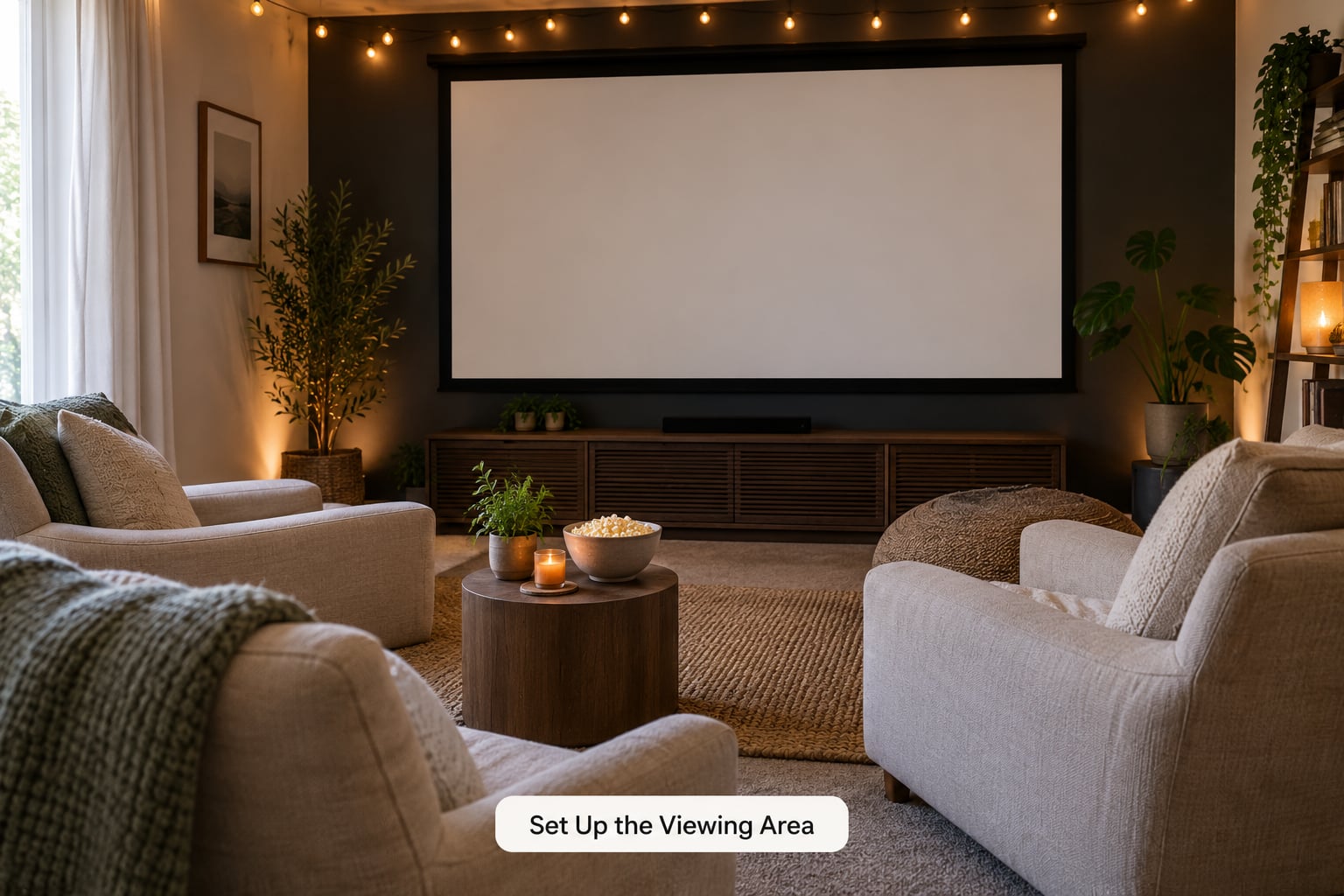
Seat the room around one clear sightline, not around whatever furniture you happen to own. The test is simple: can the person furthest from the screen read the on-screen text without squinting? If not, move them or make the image bigger.
For five or six guests in a typical living room, the couch and two floor cushions usually cover it. Beyond that, borrow folding chairs or add a second layer of blankets on the floor. Nobody should sit on a bare hard floor for two hours. If your guest list is larger than your seating, that is the moment to consider a double feature instead of cramming.
Small apartments work fine with a change of angle. Put the screen against the longest wall, push furniture to the edges, and let people sit with their backs to a wall so late arrivals can slip in without crossing the room. Dining chairs pulled into a loose circle handle eight people better than a couch does.
For the lighting, one lamp or a string of warm lights beats the overhead. For sound, speakers beat a laptop every time, though a phone on a table in the middle of the room is a surprisingly decent substitute. Outdoors, the three things that ruin a screening are bugs, neighbor noise and darkness, so plan a bug spray, keep the volume reasonable, and wait until dusk.
Plan Snacks and Drinks
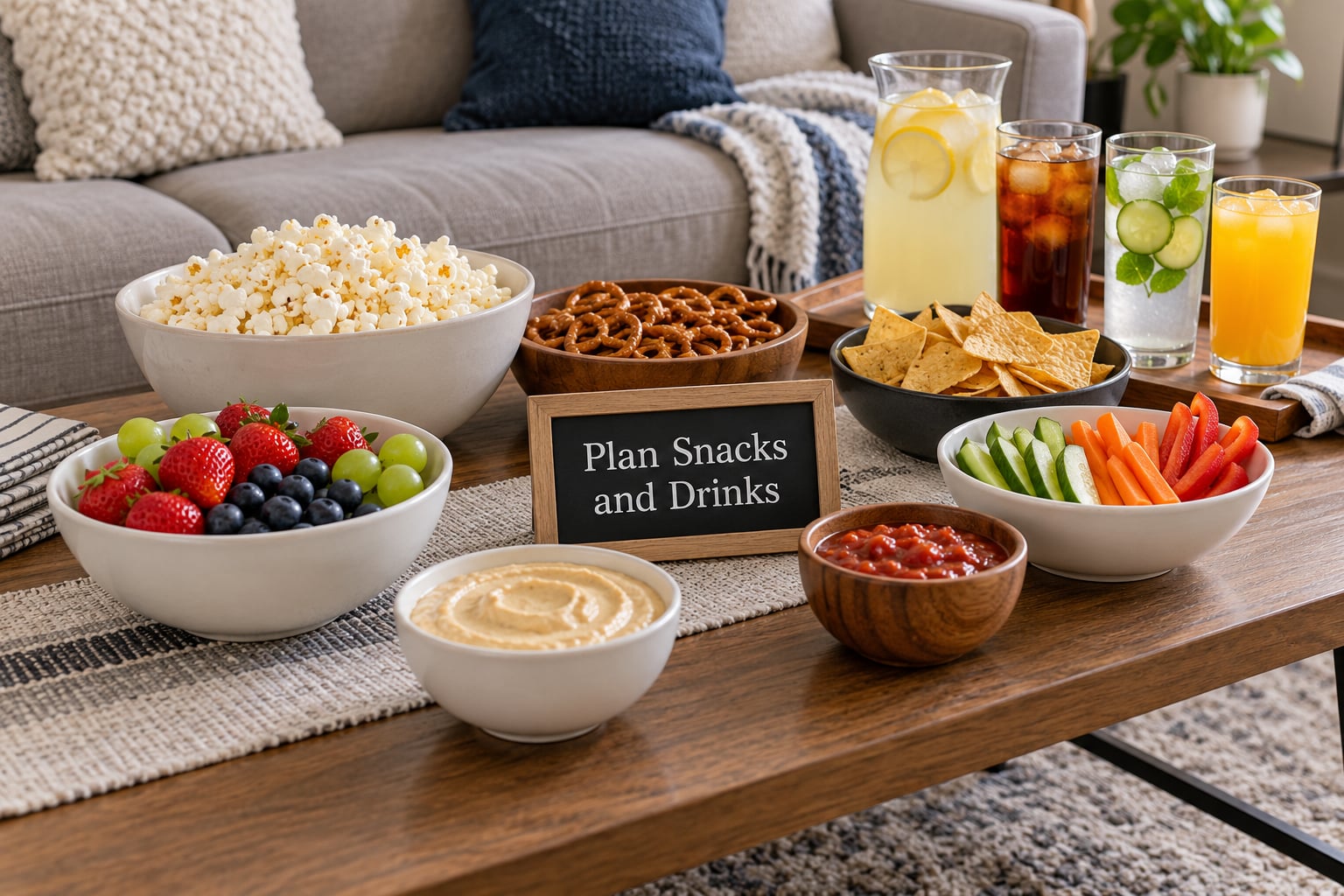
Serve food that can be eaten with one hand and does not need a knife. Popcorn, pretzels, chips with dips, sliced fruit, olives, and something you can pick up cold all work. One hot dish is fine too, as long as it is not the only thing and it does not require you to leave the room mid-film.
Then add exactly one filling dish. For a group of six, a sheet-pan of chicken wings, a batch of loaded nachos or a big pasta tray covers people who did not eat lunch. Skip it and you will hear someone raiding your kitchen at the halfway mark.
Themes make ordinary snacks feel deliberate. A 90s night gets a soda fountain setup and candy bought in bulk. An afternoon tea night gets scones and a pot. A horror night goes salty and dark. The theme does not need to be expensive, it just needs to be consistent.
On drinks, always pour at least two non-alcoholic options that are as good as the alcoholic ones. Nobody should have to announce why they are not drinking. If alcohol is flowing, put the car keys somewhere visible, put a rideshare app on the coffee table, and name a designated driver early rather than at one in the morning.
And do ask about dietary needs in the invite. A sentence about allergies, plus a labelled area for anything shared, prevents the awkward two-hour-late discovery that the dip has dairy in it.
Test the Tech Before Guests Arrive
Run the whole thing once, start to finish, at least thirty minutes before anyone arrives. Open the app, sign in, check the audio output is going to the speakers and not the TV, and confirm the picture is filling the screen properly.
Check the details people notice immediately: the remote has fresh batteries, the streaming app is logged in on the device you will actually use, the cables are connected, and your captions and subtitles are turned on. If the film is available to download ahead of time, download it. Buffering halfway through an emotional scene undoes an evening.
Then build a backup that you do not have to think about. Have a second title queued and ready, keep a physical disc on hand if you own one, and know the login for a second device. When the stream fails, you change the plan in one sentence and nobody thinks about it again.
Create a Simple Welcome and Start Time
Send one message with everything, and keep it short: the address, the door code or buzzer if there is one, the start time, the film title, who is bringing what, and any access notes. Start times work better on the half hour than the top of the hour.
Be specific about accessibility in the same message. Mention step-free access if there is a flight of stairs, note where the bathroom is, and confirm that captions will be on. If a guest uses a mobility aid and your seating plan puts them on the floor, that is worth rearranging a week ahead, not improvising.
Tell people phones go away once the film starts. Announce it as a group plan rather than a rule you impose: everyone puts theirs on the side table, nobody is singled out. Frame it as a two-hour break from the group chat, which is a genuine relief for most adults.
Host Without Taking Over the Evening
Greet people at the door, take coats and bags to one corner of the room so the seating does not fill up with clutter, and give people five minutes to settle before you start. Put the food out first, not after the film begins.
Once it starts, your job is small: refill drinks, handle the bathroom logistics, and step in early when the conversation gets loud. Refills should happen before the good part, not during it. If someone is uncomfortable about temperature, noise or what is playing, let them raise it without having to make a scene first.
Have a backup activity ready for the intermission. Fifteen minutes is enough for the bathroom, more food and a card game. Twenty minutes of stretching and getting some air works better after a long film than a long film followed by a long break.
For a mixed group, one useful trick is a theme rather than a genre. Queer film nights, animation, foreign-language cinema or a director’s retrospective give people a reason to be there that is not just watching, and the theme makes disagreement about the film less personal.
Finish with an Easy Transition
Do not let the credits roll into silence with five guests standing around unsure what to do. Have something queued: two discussion questions, a quick card game, or a show everyone is arguing about on the way home.
Good discussion prompts are open and low-stakes. Which character made the worst decision? What would you have done differently? What scene would you cut? They work for almost any film and they get past the polite silence faster than asking whether people liked it.
Turn the lights up gradually rather than all at once, mention where the leftovers are, and have a bin by the door for anything shared that needs to go back to a fridge. If the night was good, book the next one before anyone leaves, while everyone is still in the room.
Common Mistakes
Over-inviting. Nine guests in a room with six good seats means someone sits on the floor and gets uncomfortable at minute forty. Set your headcount to your seating, not to how many people said yes.
Deciding the movie in the room. Forty minutes of negotiation before the film starts is the single most common way a movie night goes wrong. Shortlist of three, ranking, deadline.
No tech test. Every failure I have seen on a movie night was a login, a cable or a buffering wheel. Thirty minutes of testing removes most of them.
No backup title. If your only plan is a stream with no offline copy and no second device queued, the night depends on your internet holding up. Queue a second film.
Serving only finger food. Chips and dip feel like a plan, then someone eats a third of the bag. Add one dish that actually fills people up.
Losing the group after the credits. The night is not over at the end of the film, and nobody wants to be the person who suggests leaving while others stay. Plan ten minutes of something.
Skipping the access details. Stairs, captions, allergies, a quiet room for someone who needs one. These take one line in the invite and change the night for whoever needs them.
Frequently Asked Questions
How do you pick a movie everyone will like?
Give the group three options and a deadline, then let them rank them in the group chat. For groups with very different tastes, pick something most people have already seen, or give the night a theme like animation or a director retrospective so the film is not the only reason to show up.
What are the must-haves for a movie night at home?
A working playback source you have already tested, comfortable seating for your exact headcount, a snack spread ready before anyone arrives, soft lighting instead of total darkness, and a stated plan for phones and intermission. Most disappointing nights are logistical failures, not bad film choices.
What should I serve for a movie night?
One-handed food mostly, plus one dish that fills people up. Popcorn, pretzels, dips and fruit work for snacking; wings, nachos or a pasta tray handle the hungry guests. Put out at least two non-alcoholic drinks that are as good as the alcoholic ones, and ask about allergies in the invite.
How do you host a movie night in a small apartment?
Push furniture to the edges and seat people in a loose semicircle facing the longest wall. Dining chairs handle more guests than a couch does, and floor spots need blankets and cushions rather than bare hardwood. Keep your headcount at your seat count, and cap the film length if the room is warm.
How long should a movie night intermission be?
Fifteen to twenty minutes. Enough time for the bathroom, a refill and a bit of movement before the second half. Longer than that and the group drifts, starts side conversations and struggles to come back. A short card game or two discussion questions fills it better than a long break.
What if guests arrive at different times?
Set a start time about thirty minutes after the invite time, start on time regardless, and hold the door open for latecomers. Put the snacks out before the film and tell people to come in quietly if it has already started. Nobody expects a movie to pause for them.
Conclusion
Most of the work happens before anyone arrives: the film is chosen and the vote has closed, the seats match the guest list, the food is out, and the source has been tested with a second film queued. Start with those three things, send one clear message with the address and start time, and the rest of the evening takes care of itself.