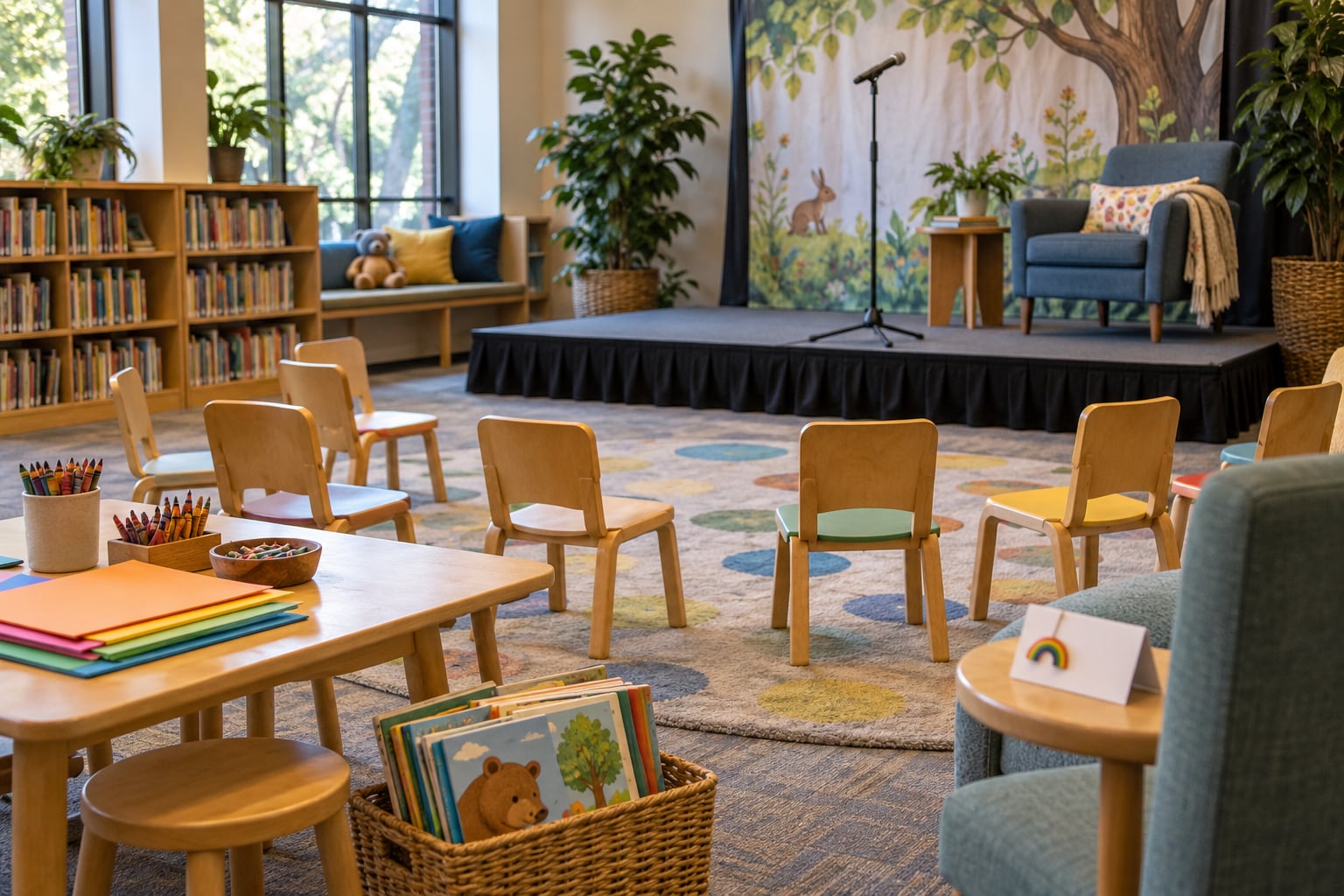
A drag story hour is a library program in which drag artists read picture books aloud to young children and their caregivers, lead sing-alongs, and finish with a simple craft such as paper crowns or wands. Sessions usually run 45 to 60 minutes for ages 2 to 11, with 20 to 30 minutes of reading and singing. If you are trying to work out how to run a drag story hour at a library for the first time, the program itself is the easy part. Getting it approved is the work.
The format has been running for years in public, school, and academic libraries nationwide. Multnomah County Library has kept a series going for more than eight years, and Boston Public Library has run one of 19 scheduled sessions in a single season. What most first-time hosts lack is not enthusiasm but a sequence: who approves it, who books the performer, which books work, and what happens if someone objects.
This guide walks through that sequence in order. Most first programs need eight weeks of lead time, and a few need more if a board or city review sits in the path.
What You Need
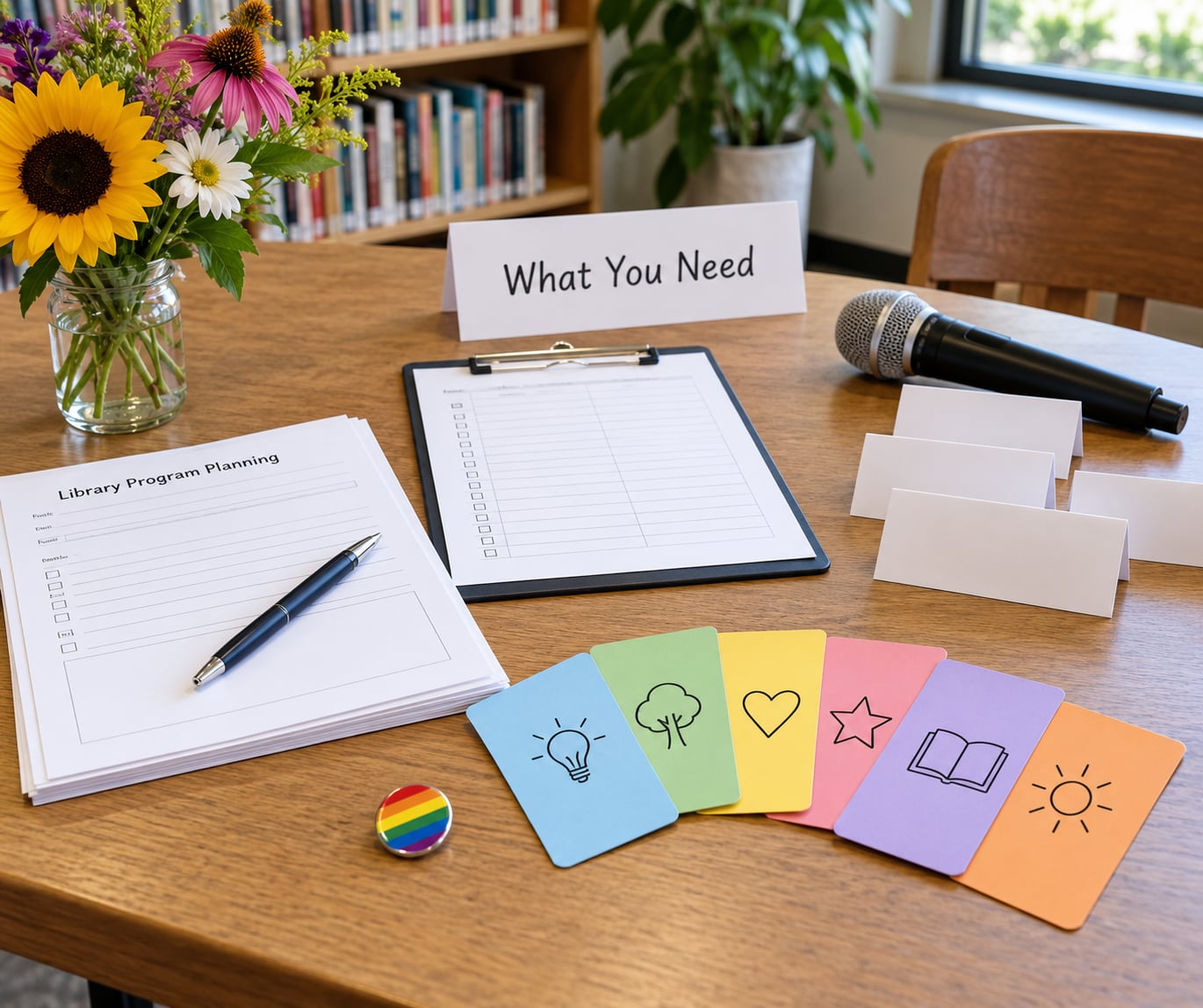
Before anything else, gather the following. If a line item is missing, that is your gap to close first.
Paperwork and permissions
- A written program proposal, one page, stating the educational purpose, the date, the room, the performer and the age range.
- Your library’s own programming and meeting-room policy, read rather than assumed.
- Confirmation of who signs off: your supervisor, the branch or area manager, the library director, and in some systems a board of trustees or a city risk or legal office.
- Copies of the American Library Association Library Bill of Rights interpretations on library-initiated programs and on access regardless of sex, gender identity, gender expression, or sexual orientation, plus your system selection and reconsideration policy.
People
- A paid drag performer. A fee is standard practice for community performers, not a gratuity, and libraries that treat it as a tip budget signal to the artist that the work is not valued.
- A performer with actual experience reading to young children. Outreach veterans are trusted far more than a first-timer in a wig, and a performer who has done school or library outreach before will need less coaching.
- At least one other staff member on the day. Front-line staff absorb hostility, and you do not want a single person handling both a room and a complaint call.
- Child-safety clearance. Ask your system what background check or clearance it requires for anyone working with children, and complete it before the performance, not after.
Event supplies
- A microphone, even in a small room. Drag performance is loud and projected differently from a normal read-aloud, and toddlers do not project back.
- Books selected in advance, plus one or two backups that you personally know well enough to read cold.
- Craft supplies: paper, crayons, glue sticks, scissors, and a plan for cleanup that does not involve a volunteer who is also watching children.
- Name cards at the door, a signup sheet or no-name-count option, and a printed program sheet for the approving body and the board report.
- Directional signage that keeps arriving families in the right room without shouting the program name across the building.
Accessibility resources
- Captioning or a hearing-assistance setup if your usual storytime room lacks it.
- A large-print or plain-language program sheet, and the story list posted in advance so caregivers can preview titles.
- A quiet corner adjacent to the room, and a stated policy that anyone may step out of the craft station without explanation.
Step-by-Step
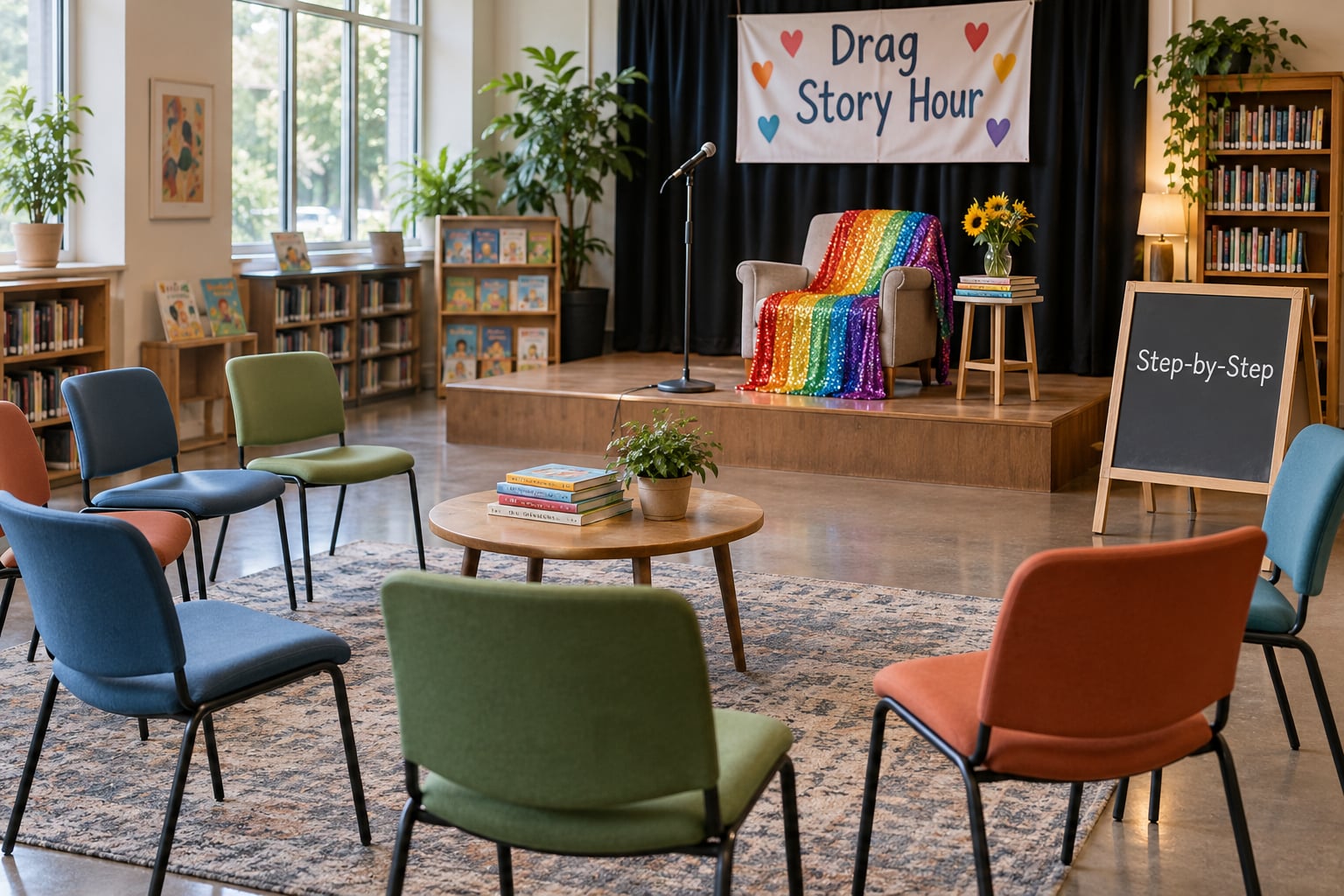
The table below is the working timeline. Treat it as a sequence, not a menu, because each task depends on the one above it.
| When | Task | Who owns it |
|---|---|---|
| 8 weeks out | Write the one-page proposal and read the local programming and meeting-room policy | You |
| 8 weeks out | Confirm the signature path: supervisor, branch manager, director, board, city legal | You and your supervisor |
| 7 weeks out | Start sourcing performers. Search the affiliate finder at dragstoryhour.org, then local drag performers with youth outreach experience | You |
| 6 weeks out | Book the performer in writing: date, fee, length, room, arrival time, and what the fee covers | You |
| 6 weeks out | Complete child-safety clearance for the performer | Your system |
| 5 weeks out | Select and order books, and set the age band | Children’s librarian |
| 4 weeks out | Submit the approved program listing to marketing and calendar | Marketing |
| 3 weeks out | Brief front-line staff with the FAQ and the response script | Branch manager |
| 2 weeks out | Confirm room, microphone, craft table, seating, and the sign | Facilities and you |
| 1 week out | Confirm with the performer, print the program sheet, check supplies | You |
| Day of | Run the session, then clean and record numbers | Everyone |
| 2 weeks after | Send the outcome summary to whoever approved the program | You |
How to choose a format that fits your audience
Pick the age band first, because it decides everything else. Most library programs land in one of three groups: toddler and preschool storytime for ages 2 to 6, general story hour for ages 3 to 11, or a teen and adult variant that runs more like a spoken-word showcase with a Q&A.
Then pick a structure. Hosted storytelling means the performer reads and sings and the audience watches, which is the safest first attempt. Audience participation invites kids to come up, act out, or finish a rhyme, which works well with an experienced performer and a small group. Themed readings tie to a holiday, a collection display, or a theme like chosen family. A hybrid does a hosted block and then opens the floor, and that is the format most successful first programs settle on.
Delivery is straightforward. In-person is the default and it is what libraries report as working best. Virtual works for families who cannot travel, and the Drag Story Hour network books both. If you go virtual, plan for camera fatigue and keep the session under 30 minutes, because a screen will not hold a three-year-old.
How to get library approval and community partners
Start with your own written policy, because how to run a drag story hour at a library is a question your institution has usually already answered in general terms. The ALA publishes toolkits and interpretations that support library-initiated programming and access regardless of sex, gender identity, gender expression, or sexual orientation, and those documents are what a director or a board needs to see. Decisions rest with your individual library, so the citation is the argument.
What you submit should be one page and boring: the date and room, the age range, the performer’s name and fee, the planned books, the educational purpose stated in literacy terms, the accessibility provisions, and the plan for handling complaints. Avoid making the case about representation alone. Make it about read-aloud practice, caregiver participation, and children seeing adults who are comfortable and kind.
For evidence, bring a neighbor. A library in your state or region that has run the program is the most persuasive thing you can put in front of a skeptical board, and the Boston Public Library and Multnomah County examples are both citable. If you are starting in an area with no local program, the affiliate network at dragstoryhour.org is a practical route, because chapters are independently operated and funded and a new one can be started locally.
Partners widen the base and the safety. A queer bookstore, a parents’ group, a community center, a school librarian, and a local LGBTQ nonprofit can each co-sponsor, promote, or supply performers. A co-sponsoring organization also gives front-line staff someone to point to when the questions get pointed.
How to build an inclusive story lineup
Choose familiar titles first. Multnomah reported that the books that worked were ones children already recognized from school, church, or home, and that recognizability defuses tension better than a surprising title. Three books is plenty for a 45-minute session, and four is the ceiling before attention drops.
Build the list in age bands. For ages 2 to 6, picture books with rhythm, repetition, and room for the performer to ham up the voice work. For ages 3 to 11, picture books and early chapter books that carry an explicit message about self-acceptance. For teens and adults, memoir, graphic memoir, and history.
Real titles that library programs have used include Todd Parr’s It’s Ok To Be Different, Stacy B. Davids’s Annie’s Plaid Shirt, and Michael Tyler’s The Skin You Live In. Multnomah has published its own full list, and library systems in San Jose and Multnomah County maintain themed collections you can borrow titles from.
Watch for two things. First, read every book the night before, not the morning of. Second, do not stack a lineup that reads as a lesson; one or two directly thematic titles surrounded by ordinary favorites is the better bet, and it protects the program if a single title gets challenged later.
How to promote the event respectfully
On naming, use Drag Story Hour when you can. The organization behind the network uses drag artists rather than drag queens deliberately, and a library that says Drag Queen Story Hour while booking a drag artist will get a less cooperative performer and a stranger online comment. Match your local vocabulary, and mention both in the description so people searching either term find you.
Write the title around the activity, not the controversy. A Drag Story Hour for ages 2 to 6: picture books, songs, and a craft is harder to argue with than a slogan, and it tells an actual attendee what they are getting.
The description should name the age band, the run time, the format, and the accessibility details, then close with a plain statement that the program centers read-aloud practice and that all children and caregivers are welcome. List the books you plan to read when you can. Do not RSVP unless the room is small enough that you need a head count for staffing; requiring registration adds a barrier to the families you most want in the room.
Promote through the library channels you already use, plus the co-sponsors. Expect organic reach to be wider than your target age band, since Multnomah reported attendees of all ages at a program designed for two- to six-year-olds.
How to run the event and support participation
Here is the run of show. The single most useful thing a first-time host learns is that the librarian is not the reader that day. The librarian owns setup, safety, flow, and the door, and the performer owns the reading position.
| Time | Segment | Performer | Librarian |
|---|---|---|---|
| 10 minutes before | Arrival and greeting | Checks in at the door, warms up | Sets the room, seats early arrivals, confirms caregiver sightlines |
| 5 minutes | Welcome | Says hello, introduces self in one sentence | Names the program, the craft, and the exit and bathroom locations |
| 5 minutes | Opening song | Leads a familiar rhyme with movement | Stands at the back with the room in view |
| 20 to 30 minutes | Reading and singing | Reads the books, sings, invites participation | Manages late arrivals, the door, and any child who wanders |
| 15 to 20 minutes | Craft | Models the craft, circulates and talks | Supervises scissors and glue, keeps the cleanup table stocked |
| 5 minutes | Close | Thanks the room, names the next date | Announces the finish, hands out story sheets, starts cleanup |
Participation stays optional in practice, not just in policy. Say out loud that kids can watch, sing, or step out, and that all three are fine. A child who does not want to put on a crown is not a problem to solve.
Have a plan for the two predictable surprises. A loud or disruptive child: the librarian handles it, never the performer, because a performer who is managing behavior is not reading. A disruptive adult: a second staff member steps in, the room is not emptied, and the program continues.
Watch your volume. A performer who projects a full drag voice in a hard-surfaced room can be genuinely painful for infants and for adults with hearing sensitivities. The microphone helps, and so does telling the performer in advance that the room is small and the families include babies.
How to close the event and evaluate it
End on a clear, short close: thank the room, name when the next one is, and hand out a sheet with the story list and a link to your library’s LGBTQ+ collection. Do not add a lecture at the end; the program should end the way a normal storytime ends.
Then capture four things: attendance, a caregiver or attendee quote, circulation or holds on the featured titles in the following month, and any incident worth writing down. Multnomah’s patron testimonial in their own write-up is the model, because named patron voice is the most persuasive thing you can bring to next year’s budget conversation.
Send those numbers back to whoever approved the program. A board or director who approved a first event will usually approve a series on the strength of a short outcome summary more readily than on a proposal, and Multnomah’s eight-plus year run shows the series is achievable once the first one is documented.
How to handle pushback before it arrives
Opposition is a management problem, not a moral argument, and front-line staff need words before they need the phone. The most-asked question in librarian forums is what to actually say when a caller is angry, and the answer that works is calm, brief, and non-reactive.
For a phone call: thank the person, state that the library offers programs on a range of topics, confirm that this one is a storytime for young children with singing and a craft, and offer to send the program sheet. Do not debate. Do not say if you do not like it, do not come. If the caller becomes abusive, end the call politely and log it.
For online comments: reply once, briefly, and stay on the program’s educational purpose. Never argue with an individual commenter in the thread, and never delete respectful disagreement, because deleting it turns a program complaint into a censorship complaint.
Document everything. Date, time, channel, and what was said. When opposition comes from an elected official or a board member rather than a parent, the written record and your printed policy become the defense, and ALA’s Office for Intellectual Freedom is the escalation path libraries use.
Common Mistakes
These are the failures that repeat, and each has a straightforward fix.
- Starting with the performer instead of the policy. Booking a drag artist before you know the approval path wastes the performer’s time and yours. Fix: proposal and signature path first, performer second.
- Assuming everyone is comfortable on stage. A child who does not want to act is normal. Fix: announce that watching, singing, and stepping out are all fine, in those words.
- Over-programming. Six books and a complicated craft will lose a two-year-old by minute twenty. Fix: three books, one song, one simple craft.
- Picking a loud venue. Hard floors, HVAC noise, and a room off the main corridor do real damage to a storytime. Fix: soft surfaces, a closed door, and a hard stop on the room volume.
- Forgetting cleanup and staffing. A craft table with no one watching scissors is the actual safety issue at these events. Fix: one staff member on the craft station, one on the door.
- Leading with unfamiliar or very bold titles. A single surprising book can turn the room. Fix: two familiar favorites plus one thematic title, all read the night before.
- Overpromising confidentiality. Staff cannot promise that nobody will ever discuss what happened at a public program. Fix: say that the library does not discuss individual patrons, and do not claim the event is invisible.
- Letting one staff member carry the whole event. The person who answers the hostile call is usually the person also running the craft table. Fix: staff the program for the full hour, and brief the front desk separately.
Frequently Asked Questions
What is a drag story hour?
A drag story hour is a library program where drag artists read picture books aloud to young children and their caregivers, lead sing-alongs, and run a simple craft such as paper crowns or wands. Sessions typically run 45 to 60 minutes for ages 2 to 11, with 20 to 30 minutes of reading and singing. The format began with Michelle Tea and RADAR Productions in San Francisco and is now run by libraries, schools, and bookstores across the country.
Is a drag queen story hour appropriate for children?
Yes. These are early literacy programs built on read-aloud practice, singing, movement, and a craft, and public, school, and academic libraries run them as standard programming. The American Library Association has published toolkits, Library Bill of Rights interpretations, and policy resources specifically to support them. Each library’s own local policy governs its programs, and citing that policy is what settles the question internally.
Are there still drag queen story hours?
They are running in significant numbers. Multnomah County Library has kept a series going for more than eight years, and Boston Public Library scheduled 19 sessions in one season. The Drag Story Hour network at dragstoryhour.org runs a federated affiliate model with independently operated chapters, and its affiliate finder lists programs by region. The best evidence to bring to your own board is a nearby library that has done it.
Do I need board approval to run a drag story hour at my library?
It depends on your system. Some library directors can approve a single event, while others route library-initiated programs through a board of trustees, a city risk office, or a legal review. Find out before you book anyone by asking your supervisor who signs off on a program in a meeting room. Submit a one-page proposal with the educational purpose, age range, performer, fee, and books, and attach your library’s programming policy.
How do I find and pay a drag performer for storytime?
Search the affiliate finder at dragstoryhour.org first, then look for local drag artists with genuine youth outreach experience, since libraries consistently favor performers who have worked with children before. A paid fee is standard practice rather than a gratuity, and it should be written into the booking letter along with the date, length, room, arrival time, and arrival and departure times. Expect to run a background check or clearance through your system.
How do I respond to complaints about a drag story hour?
Thank the person, note that the library offers programs on many topics, describe the program factually as a children’s storytime with singing and a craft, and offer to send the program sheet. Do not debate, and do not dismiss. Log every call and comment with the date, time, channel, and what was said. When opposition comes from an official rather than a parent, the written record and your printed policy are the defense, with ALA’s Office for Intellectual Freedom as the escalation path.
Conclusion
Three things first, in this order. Read your own library’s programming policy and find out exactly who signs off. Write the one-page proposal in literacy terms and attach the ALA interpretations that support it. Then start sourcing performers, because booking is the step with the longest lead time once the clearance paperwork is counted.
Everything after that is craft: familiar books, a quiet room, a simple craft, a clear handoff between the performer’s job and the librarian’s, and a short written record you can hand back to whoever approved the program. Run it that way and it is what libraries have been running for years. Do it well, and people bring their neighbors.