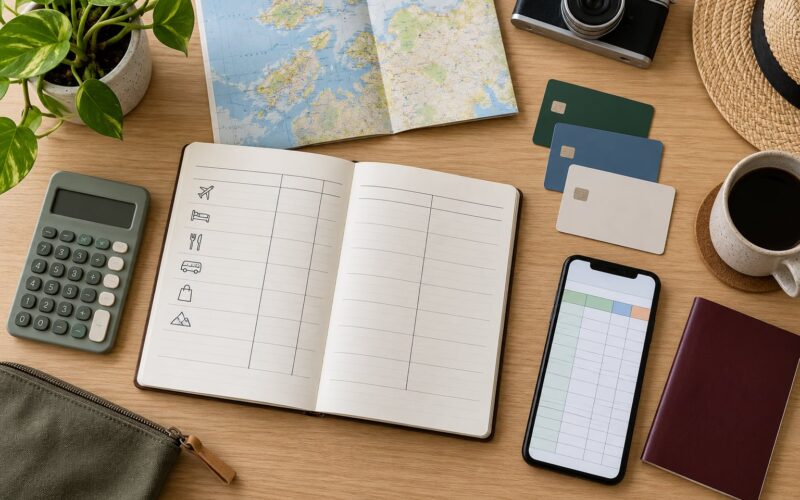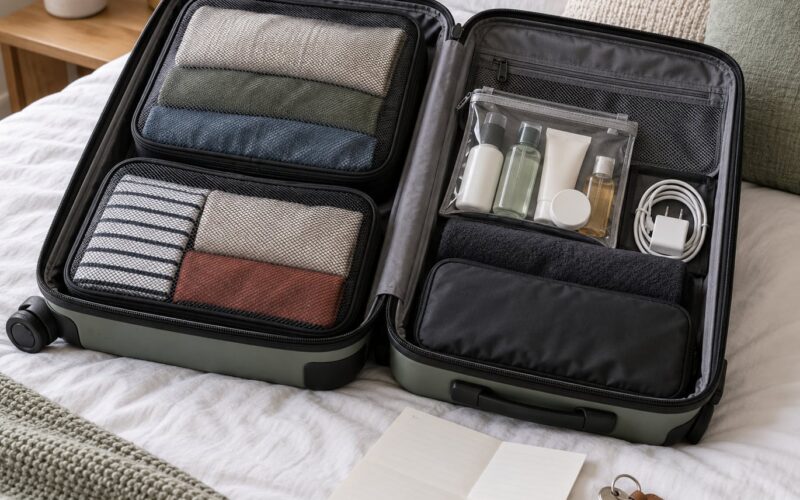
How to move to a new city alone comes down to four things: a realistic budget, temporary housing before any long lease, a written safety plan, and one recurring social commitment you repeat every week. Most solo movers get the logistics right and the loneliness wrong, and it costs them. Here’s the version that fixes both.
Moving by yourself is a bigger reset than most people expect. You are not just packing boxes. You are rebuilding a routine, a support network and a sense of where you belong, all at once, with nobody to hand you the spare key or talk you out of a bad lease at midnight.
What nobody tells you about solo moves is that the hard part is not moving day. It is the two to six weeks right after it, a stretch people in relocation forums call the lag period, when the excitement wears off and no friendships exist yet. Plan for that window specifically and the whole thing gets a lot more manageable.
Last updated: October 2026. Prices, rents and rules change, so verify anything time-sensitive before you book it.
Table of Contents
What You Need to Move to a New City Alone
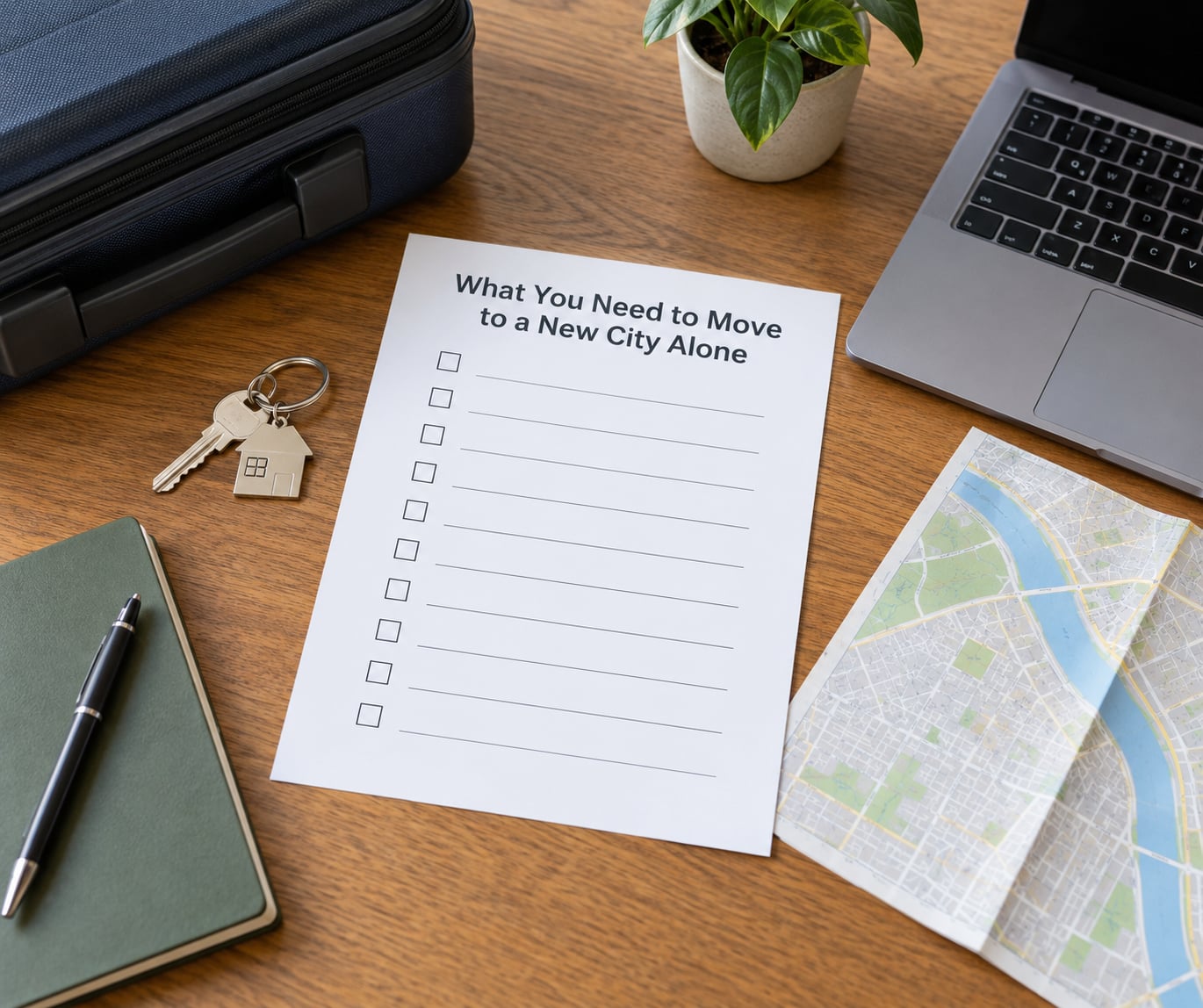
Before you research apartments, gather six things. Missing any one of them turns a planned move into a scramble.
A budget that survives a bad month. Work out your monthly cost of living in the destination, then add the one-time costs on top: deposits, first month’s rent, travel, transport passes, and setting up utilities before your first paycheck lands. Keep three to six months of expenses untouched. That buffer is what stops a broken boiler from turning into a catastrophe.
A destination research file. Not a wish list. Track rent ranges, how long a typical commute takes at rush hour, which neighbourhoods have late-night transit, where the nearest hospital and urgent care clinic sit, and what local groups exist for the thing you already enjoy.
Temporary accommodation booked first. Book a place for two to four weeks before you arrive, not a twelve-month lease you signed from a photograph. A short-term rental, a sublet, a room in a shared house or a hostel bed gives you time to look around in daylight.
Documents in one folder. Government ID, lease or sublet agreement, proof of income, your moving checklist, insurance details, emergency contacts, and a digital copy of everything stored somewhere you can reach without your phone.
A transport plan for day one. Know exactly how you get from the airport or station to your first night, and how you get around once you land. Look up whether transit passes need a physical card sold at an office that closes before you arrive.
One person in the destination city. This is the item people skip and later wish they hadn’t. One friend, relative, colleague or community contact who can meet you for dinner on day three is worth more than any app.
Step-by-Step
How to Move to a New City Alone: Set Your Priorities
Decide what the move is actually for before you compare cities. Write it down in one sentence, because vague intentions pick expensive cities and then blame the city.
Then separate needs from preferences. You need somewhere safe, affordable, and close to work or school. You would prefer a bike lane and a good bakery. Sorting the two lists stops you from paying a premium for a lifestyle you can get anywhere.
Give the move a date and a minimum viable plan. Most solo movers set a single move-in date and treat everything else as optional, which is backwards. The first month only needs a bed, a kitchen setup, somewhere to work, one gym or class, and two people you can text. Everything else can wait.
You will know step one worked when you can state your budget ceiling and your move date without checking anything.
Choose the City and Neighborhood
Compare two or three cities against the same list, in the same order, every time. Housing cost, commute, transport, healthcare access, and how much social life you can have without a car.
For this audience, add two more columns: whether the city has a real, visible LGBTQ+ community with actual venues, groups and services, and what the legal protections look like where you are going. Those affect daily life in ways a cost-of-living index never captures. Rules differ by country, state and city, so check the current specifics before you commit rather than trusting a blog or a friend who moved five years ago.
Shortlist neighbourhoods, not cities, then test them. Stay one night in each candidate area on a weekday and again on a Saturday. Walk the block you’d actually live on at 11pm on a Friday. Stand outside the building you are considering and count how many people pass in twenty minutes. Sit in the nearest cafe for an hour.
Look at the commute at rush hour, not at noon. Check whether a hospital, a grocery store and a transit stop are inside a ten-minute walk. Ask your one local contact the honest question: would you raise a kid here, and what do you actually do on a Tuesday night?
Create a Moving Budget
Build the budget in three buckets: money that moves with you, money spent once, and money you keep untouched. A spreadsheet works fine. So does a notebook page.
| Expense | When to estimate it | Notes |
|---|---|---|
| Security deposit and first month’s rent | Before you apply anywhere | Ask whether the deposit is refundable and what the written notice period is |
| Temporary lodging for the first weeks | Before booking travel | Check the cancellation deadline in writing |
| Transport from the station or airport | Before you book the flight | Night buses and airport links often run less often than the daytime map suggests |
| Utility setup and deposits | Before you sign | Power, water, internet and mobile, each with its own activation lead time |
| Renter’s insurance | Before move-in day | Often required at signing even if you rent furnished |
| Food, transit passes and phone for month one | Before you arrive | Add the gap between your arrival date and your first income |
| Emergency reserve | Never spend it on the move | Three to six months of expenses, held back |
If the totals do not work, change one of three things before you touch the reserve: the city, the housing type, or the move date. Extending the temporary stay by two weeks costs far less than the mistakes a squeezed budget causes.
Money in the reserve is not for a nicer apartment. It is for the furnace failing in February, the deposit dispute, or the flight home if the job falls through.
Find Housing Before You Arrive
Short-term first, long-term second. A four-week stay while you look at places in person protects you from signing a twelve-month lease for a street that empties out at 6pm and a landlord who does not answer.
There are four routes worth comparing. Temporary lodging, usually a furnished short-term rental or room, costs more per night and buys flexibility. A room in a shared house gets you a bed, a kitchen and a built-in social life, and can be cheaper than a studio. A sublet gives you a real apartment on someone else’s lease, which usually needs less upfront cash. A co-living space bundles a private room with shared space and events, at a mid-range rate.
Whichever you pick, get the terms in writing before you pay anything. The full monthly amount including utilities, the deposit, the cancellation window, the notice period, and who handles repairs. Screenshot the listing and the landlord’s contact details on the day you book, because listing photos get reused and listings do vanish.
Then run the scam check. A landlord who cannot show you the unit, wants a deposit before a viewing, pressures you to wire money, or has a listing priced well below the area and asks you to leave before closing are the standard shapes. View in person, walk the building, and meet the person you will be paying.
Moving with almost no money? The honest version is that you do not move on nothing, you change the order. Look for work in the destination before you go, or start remote gig income before you travel so the first two weeks are covered. Rent a room, not an apartment, and start a job-first search that treats the city as a place to interview from. Sell furniture rather than shipping it, or use a storage unit for the few boxes you cannot replace. Ask about newcomer assistance programs in the destination city, which frequently cover deposits or settling-in costs. Ask family for a loan with a date you will repay it. And consider a first destination an hour or two away by train, so a bad month costs you a bus ticket, not a flight.
Build a Support System Before Arriving
Do this before you pack, not after you land lonely. The most repeated advice in relocation forums is blunt: have at least one person in the destination city before you arrive, and stay with them or near them for the first stretch.
Then think recurring, not one-off. One-off events are where you meet nobody. A weekly book club, a recreational sports league, a running group or a regular board game night creates the repeated contact that turns into an actual friend. People frequently describe trying an app, having a decent conversation once, and never hearing from the person again. Commitment is the part that works.
Write to the people you already have before you go. Friends from years ago, relatives, former colleagues, online communities you have only ever posted in. A message saying you are arriving on a date and would love to get dinner does more work than a month of arriving alone and hoping.
Line up three local things: one recurring activity, one group that meets monthly, and one person who owes you a favor. If you are moving as an LGBTQ+ person, add community organisations, a centre, a social group or a venue with a regular calendar, plus a friendly healthcare provider. Having a real safety net, in the shape of people who already know you, is what turns a fresh start into a landing rather than a fall.
Check the move is done when you have a recurring weekly commitment booked and a dinner scheduled for your first three days.
Plan Transportation and the First Week
Write the first week down as if it were a shift schedule. Decisions made on a tired first night are usually bad ones.
Arrival day. Know the route from the airport or station, have the temporary address written down offline, and keep one phone charged with power for the rest of the day. Do not plan to explore a new neighbourhood with luggage you cannot lift.
Day one. Get keys, change the locks, find the nearest grocery store and pharmacy, and test the hot water, the oven and the smoke alarm. Photograph anything broken in the first 48 hours so the landlord has the evidence, and note the emergency number for the building.
Day two. Utilities and internet sorted, transit pass or transport app working, a pharmacy you can walk to. Buy groceries for three real meals rather than a takeaway, because cooking in a new kitchen on your first evening is a surprisingly grounding thing to do.
Day three to five. One coffee shop, one library card, one walk through the neighbourhood with no destination. Set up the mail forwarding and change of address, and get the utilities and renter’s insurance documents into the same folder.
Day five to seven. Your first recurring commitment. Then a second one. The first week is not about having a social life, it is about proving you can do a Tuesday evening alone and that the building still exists in the morning.
Make the New City Feel Like Home

Belonging arrives through repetition, not a decision. Pick a coffee shop and go back to the same one. Find the library, the park, the class and the one restaurant within a ten-minute walk that you like, then visit them repeatedly until the staff know your order.
Small routines beat grand plans. A walk at the same time each morning, a weekly class, coffee on the same bench. Each one puts you in front of the same people, and familiar faces are the raw material of a social life.
Give the first three months a shape rather than a goal. First month, learn the ten-minute radius. Second month, get to a place and a face you can name. Third month, commit to one thing that happens weekly. The first weeks feel flat, then a bit better around the three-month mark, and homesickness often shows up later, around three to four months, once the novelty has worn off. That is normal and it passes.
Give yourself a review at six months. If you still have no recurring commitment, no one to call and no routine you like, treat that as information rather than failure. Most people need a different neighbourhood, a different room, a different group, or a different city. Adjusting to a new city is a process, not a personality test, and nobody’s timeline matches anyone else’s.
Common Mistakes Solo Movers Make
These are the same six problems that show up again and again, and each one has a straightforward correction.
Choosing a city from a weekend of research. Correction: visit for a full day, including 9pm, before you sign anything. The correction is a schedule item, not a vibe.
Signing a long lease sight unseen. Correction: book two to four weeks of temporary housing. A slightly awkward month beats a year in the wrong building.
Spending the whole budget on getting there. Correction: hold back three to six months of expenses before you book anything. Getting in cheap and having nothing left is the standard failure.
Postponing all social plans. Correction: put the recurring commitment on the calendar in the same week you start looking at apartments. People in advice forums describe spending months on jobs and housing, then realising they had no routine and no friends to give.
Skipping the admin, especially mail and utilities. Correction: submit the change of address, activate utilities, and confirm renter’s insurance before you need any of them. A lapsed policy or a missed address change creates the kind of problem that eats a week.
Moving alone because staying felt worse. Sometimes the move is a good decision and the city is not the right one. Correction: set a review date before you move, and tell one person what it is, so it actually happens.
If you take one tip from this guide, make it the recurring commitment. Housing and money are logistics you can solve. The thing that makes a place feel like yours is showing up somewhere the same people can see you.
Frequently Asked Questions
How do I deal with loneliness in a new city?
Expect the hardest stretch between two and six weeks in, when the novelty fades and no friendships exist yet. Plan for it rather than being surprised by it. Book one recurring weekly commitment before you move, arrange dinner with one person in the first three days, and keep a visible routine so the days have shape.
How long does it take to adjust to a new city?
Most solo movers feel functional within a month and genuinely settled between three and six months, though belonging can take a year. Homesickness often arrives late, around three to four months, once the excitement has worn off. Set checkpoints at 30, 60 and 90 days and judge progress on routine and one recurring commitment, not on how you feel on a given Tuesday.
How do I move to another city without money?
Change the order rather than the amount. Look for work in the destination first, or begin remote gig income before you travel. Rent a room or shared space instead of an apartment, sell furniture rather than shipping it, apply for newcomer assistance programs that cover deposits, and choose a first destination within a few hours by train so a bad month costs a bus ticket instead of a flight.
Is it safe to move to a new city alone?
Most moves are safe when the practical checks get done. Change the locks on move-in day and photograph any damage in the first 48 hours. Meet the landlord or roommate in person before paying a deposit, meet people from apps in public places, and keep emergency numbers written down somewhere physical. Where you are going matters, so check local protections for your specific situation before you sign.
Should I find a job first or move first?
Find work first whenever you can, because money and loneliness compound each other. The exceptions are remote work, a partner income, or a city you already know well. If you must move first, book only four weeks of housing, start with a fixed monthly cost, and give yourself a job deadline in writing. Treating an open-ended arrival as a job hunt is where budgets quietly disappear.
How do I meet people as an adult in a new city?
Through something recurring, not something general. Recreational sports leagues, a book club, a running group, a regular board game night and volunteering all work because they meet again. Communities consistently say one-off events do not produce friendships. The other half is turning up twice, and saying yes to the invitation even when you would rather go home.
Conclusion
Take three actions this week. Write the full moving budget, including a three to six month reserve you will not touch. Book two to four weeks of temporary housing before you sign anything long. And put one recurring weekly commitment on the calendar before you pack a single box.
Moving to a new city alone is manageable when the plan treats safety, money, flexible housing and slow connection as equally important. Alone is not the same as lonely, and the gap between them is a calendar you fill in the same week you start packing.