Interviewing someone for a community blog comes down to seven stages: decide the story, research the person, build a consentful question outline, agree on logistics, hold a real conversation, pick quotes, then draft and get approval. Most of the work happens before anyone presses record. Budget 60 to 90 minutes for the conversation itself, plus two or three hours spread across the days around it.
I have watched small neighbourhood blogs run member spotlights the way they run a potluck, and it usually shows in the final piece. The quotes feel borrowed from a press release, the subject cannot tell what they agreed to, and nobody follows up. The workflow below fixes all three, and it works whether you are interviewing a volunteer organiser, a bar owner, a playwright, or your neighbour.
Table of Contents
What You Need
You need six things ready before you contact anyone, and one of them matters more than the other five: a clear editorial reason for the interview. Without it, you will ask ten questions and get eleven sentences.
- The story goal. One sentence describing what the piece does for your readers. A member spotlight, a neighbourhood issue explainer, and a Pride event preview each need different questions.
- A question outline. Ten to fifteen open-ended questions, grouped as warm-up, story, community, and closing, plus a handful of follow-ups you could ask from memory.
- Contact and scheduling details. Two scheduling windows that work for them, not just for you, plus a backup channel in case the first one goes quiet.
- A recording or note setup. A phone voice memo app is fine, a laptop for video or written interviews, or a notebook if they decline to be recorded.
- Accessibility details. Whether they need written questions in advance, a quiet room, a phone option instead of video, a captioning tool, or extra time between questions.
- A fact-check plan. How you will verify dates, names, and numbers, and when the subject sees the draft.
Step-by-Step: How to Interview Someone for a Community Blog
Read the seven stages below in order, but do not read your list aloud word for word. The stages are a spine, not a script. Experienced interviewers free-style because the best material usually arrives in the second follow-up, and a rigid list kills it.
1. Define the Story and Audience
Turn the assignment into one editorial goal before you pick a single question. Ask yourself what a reader learns, and what they might do, learn or do differently after reading it. If the answer is “they’ll like this person more,” the interview is a personality piece. If it is “they’ll understand why the shelter had to close,” it is a reporting piece, and you need documentation rather than charm.
Write the goal on the top of your outline. It settles arguments later, like whether a tangent is worth twelve more minutes or a polite glance at your notes.
2. Research Without Stereotyping
Read what is accurate and current, then stop where assumptions begin. Look at the subject’s own posts, shows, projects, and press, and read at least one or two earlier interviews to spot what they enjoy explaining and what nobody has thought to ask.
That last habit is the single most useful preparation step, and writers on small blogs say so consistently. Ask about a detail everyone misses: the specific first venue, the year a name changed, the person who taught them something. Then separate what you verified from what you are only guessing. Guesses are questions, never facts.
3. Build a Consentful Question Outline
Open-ended questions do the heavy lifting. “Tell me about the evening that changed everything” pulls a story, while “Do you like the new hours” pulls a one-word answer. Group your questions so the interview has a shape: two or three warm-ups, five or six core story questions, two about community, and one or two closers.
- Warm-up: “What made you start?” or “How did you end up at this place?”
- Story: “Walk me through the night the venue almost closed.”
- Community: “Who shows up here who you never expected?”
- Closer: “What should someone who has never been here know before their first visit?”
Flag any sensitive topics in advance and tell the subject they exist, so nobody is ambushed. Then plan for the answer you hope for: if someone declines a question, skip it without apology and without returning to it. Know your five essential questions before you walk in, because those are the ones you will not get a second chance at.
4. Set Logistics and Ground Rules
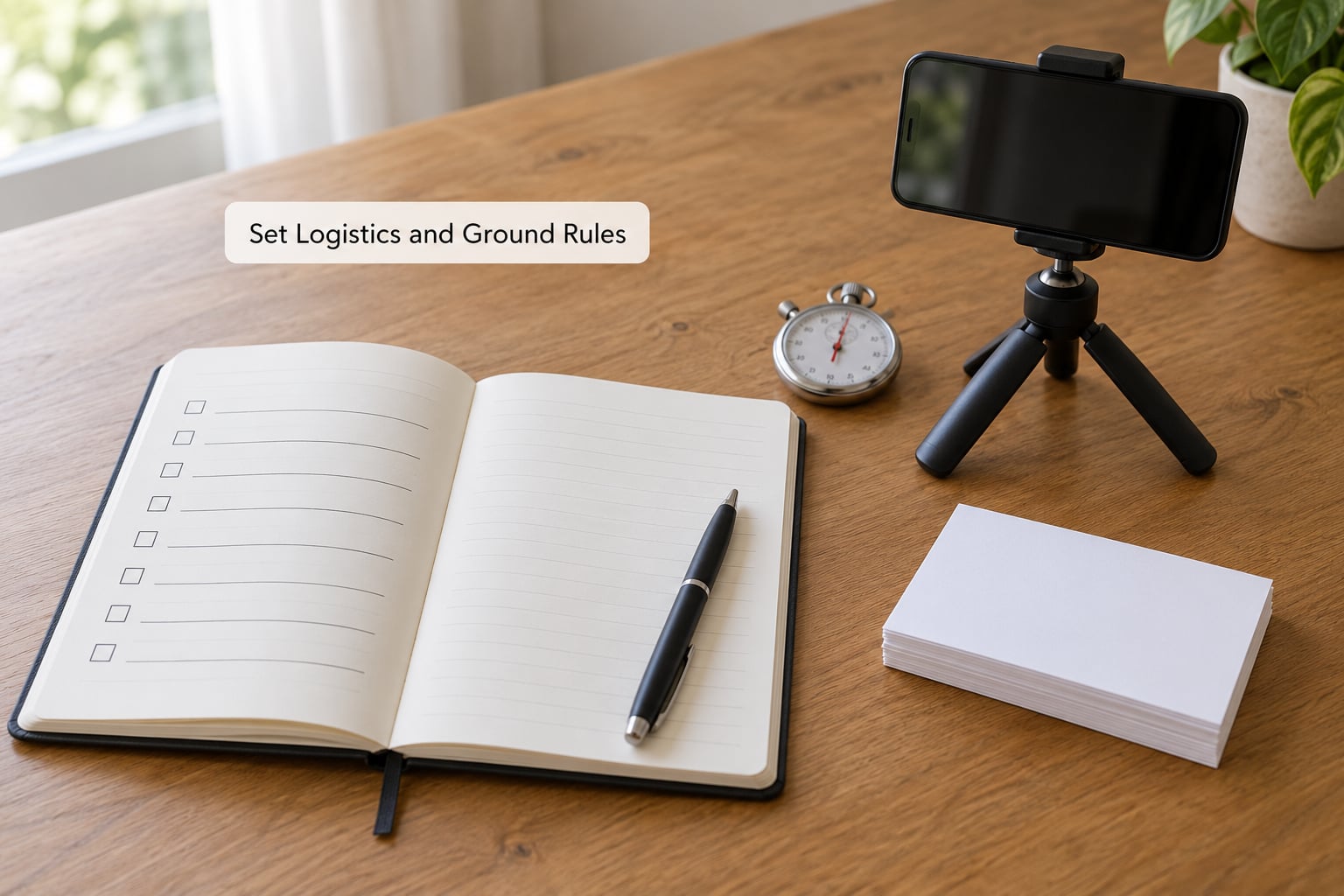
Everything you agree to in writing saves an argument later. Email a short paragraph a few days ahead covering format, length, recording, attribution, anonymity, deadline, and how they will review the draft. People who know the terms show up calmer.
The consent line itself takes under a minute to say out loud, and I say it at the top of every recording, not at the end: that you would like to record, that the recording is for your notes, that quotes may appear in the piece with their name and a link unless they say otherwise, and that they can ask to take something off the record at any point, including after recording. Confirm that plainly and get a clear yes.
Give a time box. Thirty minutes works for a quick owner profile, sixty for a standard conversation, ninety when you are covering a complicated issue. Say the time out loud at the start and again at the halfway mark so nobody feels ambushed at the end.
5. Conduct a Thoughtful Conversation — How to Interview Someone, Not Interrogate Them
How to interview someone well comes down to listening harder than you talk. Open with the agreed warm-up, keep your phone visible and out of the way, and spend the first five minutes on something that is not the piece. People who feel like a source produce sources. People who feel like a guest produce stories.
Then aim for roughly 20 percent of the airtime. Not a law, just a useful check: if you have been talking as much as them, the questions are doing too much work. Leave three or four seconds of silence after each answer, because the most quotable line usually arrives after the pause, when people think the recording stopped.
Follow the thread. When someone lights up on a detail, stay there even if it sits off your outline, and come back to the list afterwards. When a chatty subject runs long, agree on the signal early, then bridge without a hard stop: “That is a good place to pause. What is it like on a Tuesday night?” If nerves show up instead, drop to their experience rather than their opinion, and offer the easier path of a written follow-up for anything heavy.
6. Review Notes and Select Quotes
Transcribe before you write. Transcription is the slowest part of the job, roughly a few hours for every hour of audio, and trying to write from memory is how quotes end up slightly wrong. If you use automated transcription software, listen back over anything you plan to publish, because names, venues and spellings of names and venues get mangled constantly.
When you choose quotes, cut filler without changing meaning. Drop “you know” and “I mean”, join two sentences with a comma where the speaker clearly linked them, and keep their phrasing. Never tidy a sentence into something sharper than the person is, and never stitch two separate answers into one quote that they never said as a single thought.
Watch for selective emphasis. Pulling one line out of a paragraph can change its meaning entirely, so either give enough surrounding context or move to paraphrase. If you paraphrase, say so in the piece by writing it in your own words rather than inside quotation marks.
7. Draft, Fact-Check, and Get Approval
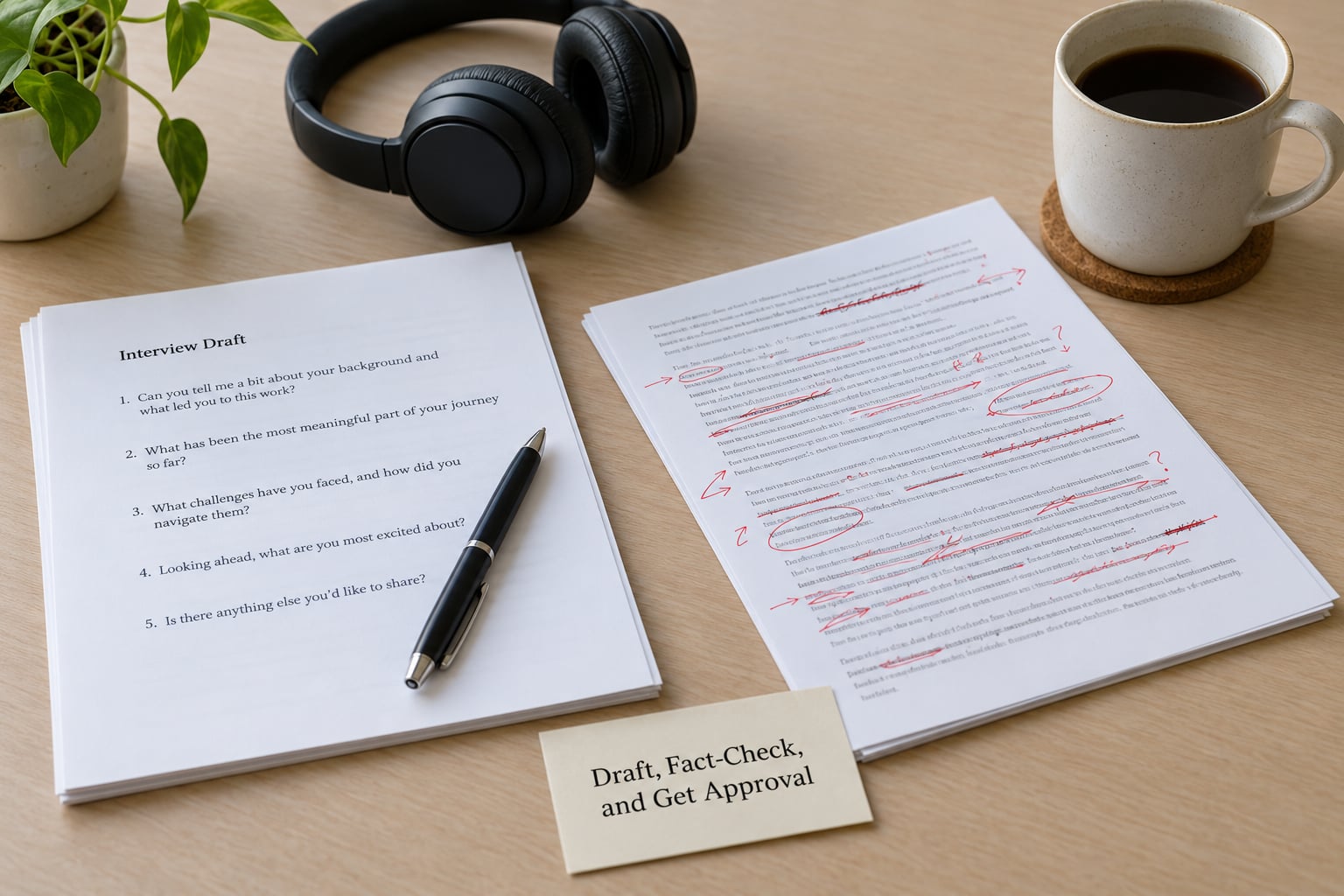
Write the piece the way you would want to read it: the subject’s own words carrying the middle, your reporting carrying the facts and the context around them. Check every date, name, figure and quote against your notes and sources before you send it anywhere. Then send the draft to the subject with a specific request, such as checking the quotes and the names rather than approving the piece in general.
Be clear about what approval means. Let people correct facts, their own words, and anything they think is misleading, and explain clearly that you keep the final say on length, structure and accuracy. That agreement is not a licence to soften an accurate line or to drop a fair quote on request. If someone disagrees with a fact you can verify, correct your draft. If they dislike how you describe something they said accurately, explain the reasoning and offer them a chance to respond on the record.
Handle the details that make community writing decent. Get separate consent for photos, and never reuse an image outside the piece without asking. Name and pronounce people the way they asked, including any chosen name, and check it in the draft. Offer a transcript or summary for readers who want one, add alt text to any photo, and check your text for accessibility before publishing.
Common Mistakes
Almost every bad community interview traces back to one of a handful of habits, and each one has a straightforward fix.
- Leading questions. “So you must have been thrilled?” shapes the answer before it exists. Replace it with “How did that feel?”
- Talking over the answer. Jumping in to rephrase a quote changes it in the recording. Wait for the pause, then ask.
- Overloading the subject. Forty questions turns a conversation into an exam. Ten to fifteen is plenty, and follow-ups carry the rest.
- Quoting without context. A line lifted from the middle of an answer reads as a different statement. Give the surrounding two or three sentences or paraphrase instead.
- Ignoring pronunciation and access needs. Ask early whether anything needs spelling out for the record, whether they want written questions in advance, and whether they would rather answer by email.
- Skipping the fact-check. Dates and titles drift. Verify them against your own notes and the subject’s correction pass before you publish.
- Treating approval as permission to rewrite accuracy. Approval covers their words and facts. Your editorial judgement still holds, and saying so up front avoids the standoff later.
A couple of habits help more than anything else. Send the questions in advance, and the subject arrives prepared instead of guarded. And write the thank-you note the same day, before the piece is even finished, because that email is often what gets a second person in front of you three months later.
Frequently Asked Questions
Do I need permission to record an interview?
Yes, always ask, and get a clear yes before you start rather than an assumption. Say out loud what you will record, what the recording is used for, and how the quotes will appear. Many community members are relaxed about being recorded but firm about where the audio ends up, so state the plan. A one-line confirmation in writing afterwards protects both of you.
How do you quote someone without changing their meaning?
Transcribe first, then quote only what they actually said. Remove filler words like you know and I mean, and join sentences the speaker clearly linked, but keep their word choices and sentence shape. Never merge two separate answers into one quotation. If the meaning depends on the paragraph around it, publish that context with the quote.
Can I interview someone anonymously?
You can, and plenty of community members need to. Agree before the interview whether the name is withheld, whether the job or role is generalised, and whether identifying details such as the venue or the neighbourhood are removed. Tell your editor what you promised. Anonymity that quietly falls apart after publication does lasting damage to your credibility.
What questions should I avoid asking?
Avoid anything that demands disclosure the person has not offered, such as questions about health, family, immigration status, past addiction or income. Do not ask a subject to speak for a group they are not part of. Flag sensitive topics in advance and accept a skip without argument, because a respectful interview is worth more to your blog than one extra quote.
Does an interviewee get to approve the final article?
Give them a clear chance to check their quotes, names and facts before publication, and say so when you send the draft. Explain that you hold the final decision on length, structure and accuracy, so nobody expects a rewrite button. Many community writers make approval a required step in their process, and it prevents corrections and hurt feelings later.
How should I handle factual disputes or requested corrections?
Check the claim against your notes, recording and any independent source. If you were wrong, fix it and tell the person what changed. If the detail is accurate but they want a different framing, explain your reasoning and offer a response in the piece. Correct errors promptly in public if the piece is already live, with a short note rather than a quiet edit.
Conclusion
A good community interview is mostly preparation and follow-through: one clear story goal, accurate background reading, a consentful question outline, an honest conversation where you listen more than you talk, and a draft the subject gets to check. Start with the smallest possible next step today. Write the one-sentence story goal, then send a short list of questions with your recording, attribution and fact-check terms attached.