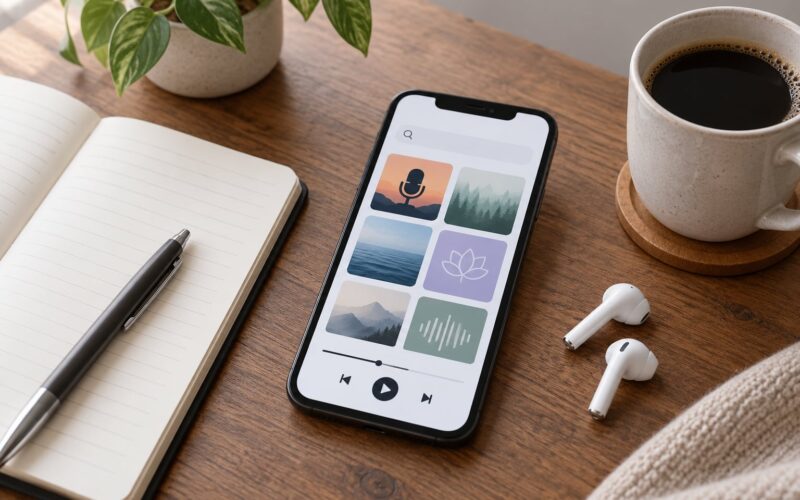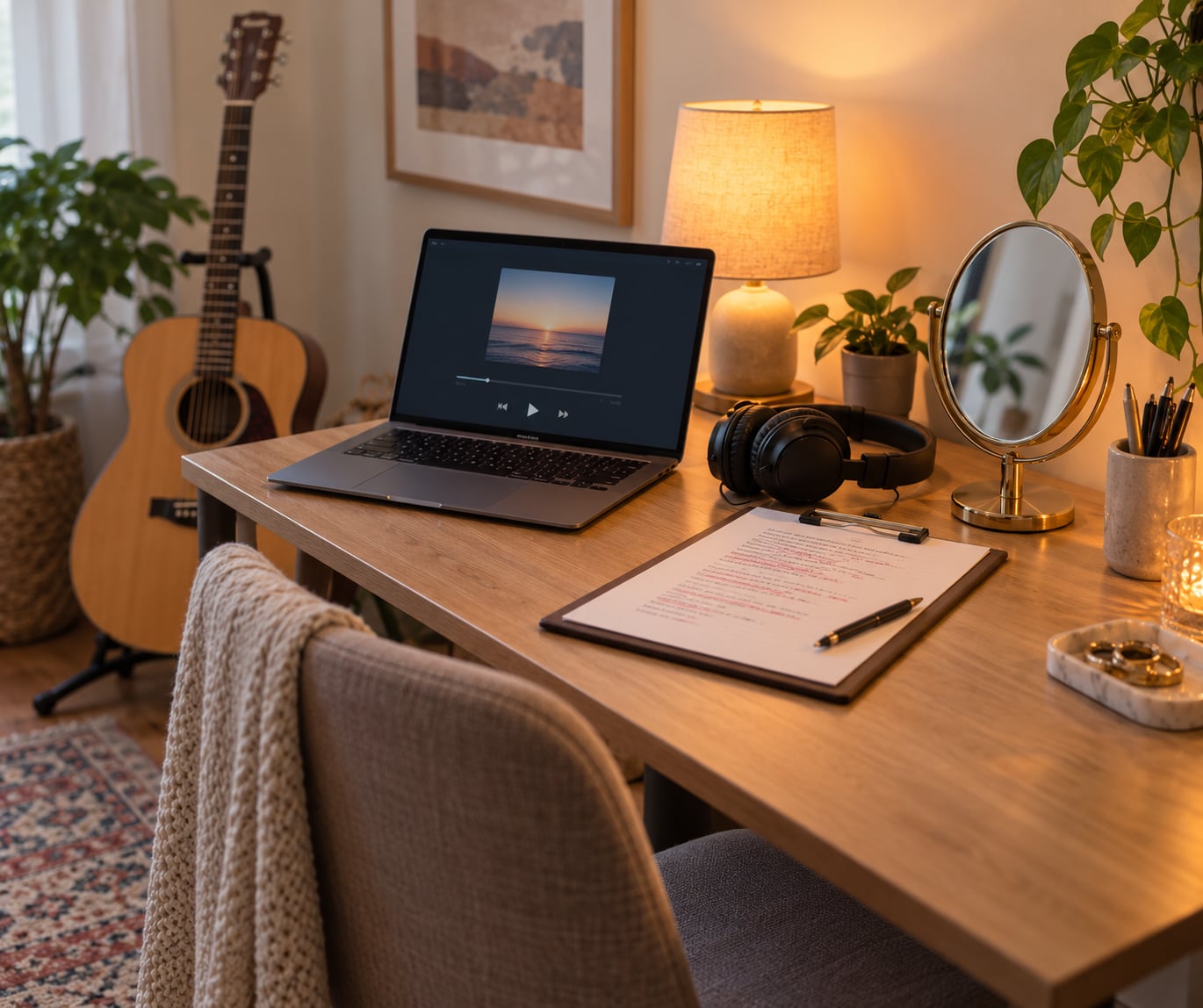
Learning how to lip sync like a performer comes down to four things: knowing the words cold, marking every entrance in the track, using clear mouth shapes, and delivering the whole number with enough conviction that nobody thinks about the speakers. Most people handle the first two and then lose the illusion somewhere around the first instrumental break.
It is a rehearsal problem, not a talent problem. Give it five focused sessions of about 30 minutes and most numbers tighten up noticeably, including for performers who have never taken a voice lesson. This guide works for karaoke hosts, first-timers on a talent show bill, drag and burlesque performers, and anyone filming a lip sync video for 2026.
Table of Contents
- What You Need
- How to Lip Sync Like a Performer: Step-by-Step
- Common Mistakes
- Frequently Asked Questions
- How long does it take to get better at lip syncing?
- What should I do if I cannot hear the lyrics clearly?
- How do I lip sync a fast song without losing the words?
- Should lip syncing movements be big or subtle?
- How can I stop feeling nervous while lip syncing on stage?
- Do I need to know how to sing to lip sync a song?
- Conclusion
What You Need
None of this requires vocal training. What it does require is a quiet room and a playback device with clear audio, because you cannot fix diction you cannot hear.
- The song recording. The exact version you will perform to, not a similar one. Different mixes have different tempos and different vocal balances.
- Printed or typed lyrics with syllable marks. Write them out yourself if possible. Copying a line by hand is a memory exercise in disguise.
- A mirror at standing height, so you can see your jaw and not just your eyebrows.
- A timer or a stopwatch for rehearsing a 60 or 90 second window, which is what most battle and open-mic formats cap you at.
- Headphones for rehearsal, speakers for the performance. Mumbling under headphones is a memory aid; you still have to check the delivery out loud.
- A glass of water. Mouth shapes dry out faster than singers expect, especially under stage lights.
- A phone on a stand or a stack of books. For recording rehearsal passes, which is where the real diagnosis happens.
A quiet practice space matters more than any of the rest. A room with a running dishwasher will teach you to push words out instead of shaping them.
How to Lip Sync Like a Performer: Step-by-Step
Six steps, in this order. Do not jump to step 5, the performance, until step 4 sounds right standing up.
1. Know the Song Before You Perform
Listen for structure, not melody. You are looking for four things: where the vocal enters, where the long instrumental sections sit, which lines repeat, and where the production switches tempo or drops out.
Then divide the song into sections and write the exact lyric that belongs over each musical moment. For a four-minute track you might end up with a sheet like this:
- 0:00 to 0:18 – instrumental intro, no mouth movement, get your stance
- 0:18 to 0:52 – first verse, moderate density, mark the held vowels
- 0:52 to 1:14 – instrumental break, choreograph or use as a recovery breath
- 1:14 to 2:05 – pre-chorus and chorus, the part the audience will remember
You know it worked when you can name the time stamp of every vocal entrance without looking at the track.
2. Mark the Lyrics for Clear Mouth Shapes
The fastest way to look fake is to treat every syllable the same. Instead, divide long words into mouth shapes: comfortable becomes com-fort-a-ble, and you write the vowel under each one.
Underline the stressed syllables, because those get the open mouth. Circle the plosives, since P, B, and M are where a lip sync gives itself away. Then mark the held vowels with a line, since a sustained note is a wide mouth and a moving jaw.
Match the lyric’s natural vowel and consonant sounds rather than forcing exaggerated movement everywhere. Over-opening every syllable looks like a cartoon, which is its own kind of obvious.
3. Practice the Words at the Right Tempo
Start at half speed and raise the tempo only when the words land. Jumping straight to full speed is the single most common reason a number falls apart on stage: the mouth arrives late, every time.
Count the rests out loud during instrumental sections so you know exactly when the next line starts. Then anticipate the entrance. The first sound of each word should begin just before the beat lands, not after you hear it.
Work the two hardest lines on their own, ten times each, before running the whole section again. Isolated drilling is faster than re-running a chorus you are not yet ready for.
4. Use Breath Control Without Losing the Words
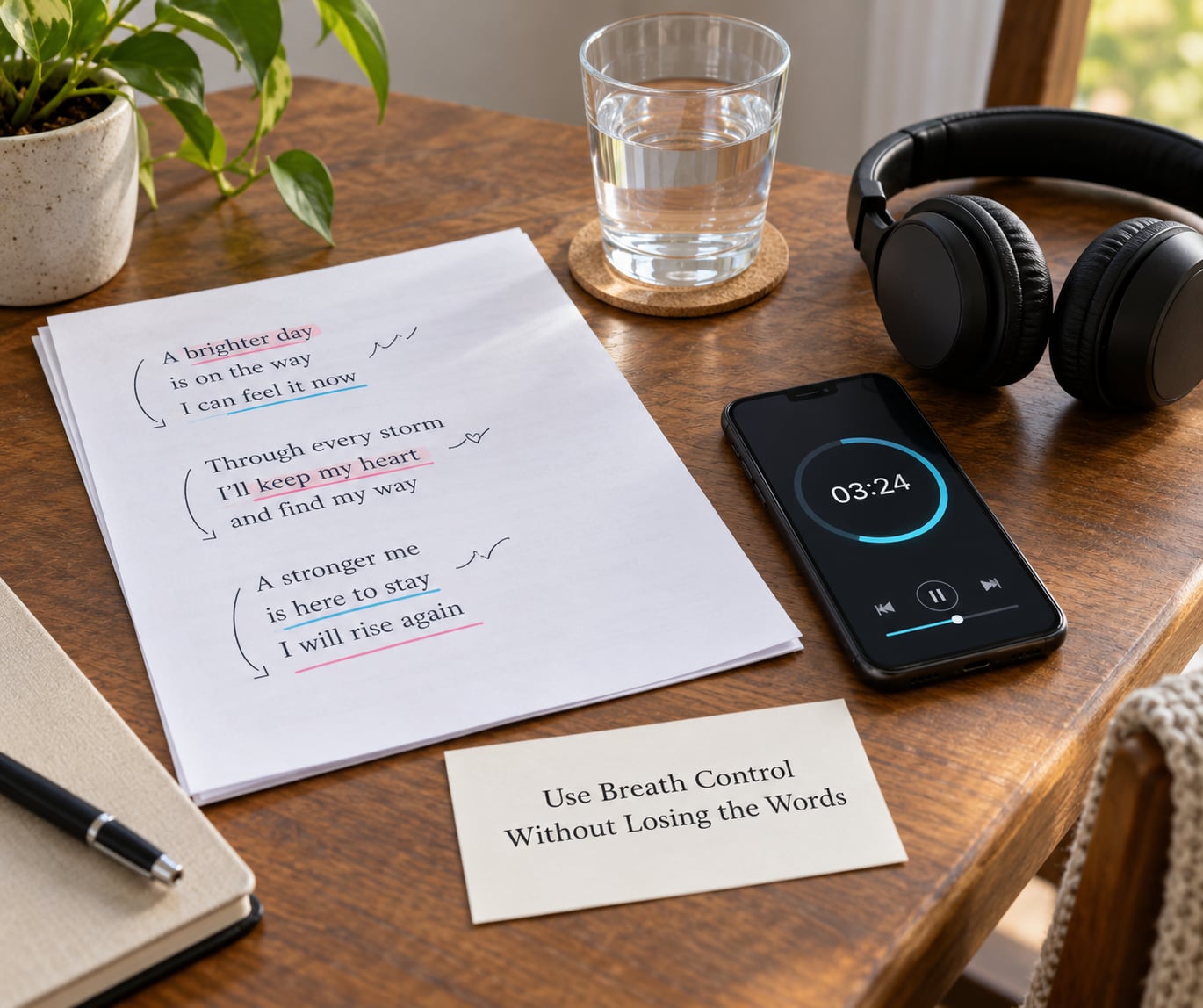
Breathe before the phrase, never in the middle of a word, and make the inhale quiet enough that the audience never hears it. Mark the breaths on your sheet with a small arrow, the way a conductor marks a rest.
There are three places this gets hard. On a high note, where the instinct is to hold everything tight, so drop your jaw and let the breath come early. On a long instrumental section, where you can take one full breath at the start and use the rest of the gap for gesture. And if you run short of air partway through, shorten the breaths to two counts and put one in every gap you have rather than fighting for a deep breath mid-line.
It worked when you can perform a full pass and never hear yourself gasp.
5. Build Confidence With a Recorded Rehearsal
Record yourself performing the entire song, not a highlight. Watch the playback once for timing, once for diction, and once with the sound off so you can see whether the mouth shapes still read.
Look for three specific problems. Muddy consonants mean the plosives need more closure. Drifting during instrumental sections means you stopped cueing. A mouth that closes on the chorus means the words are there but the delivery is not.
Then check the thing that matters most: does it still look like singing if the artist is not actually singing that track? If it fails that test, the fix is nearly always conviction rather than accuracy.
6. Perform With Presence, Not Just Accurate Words
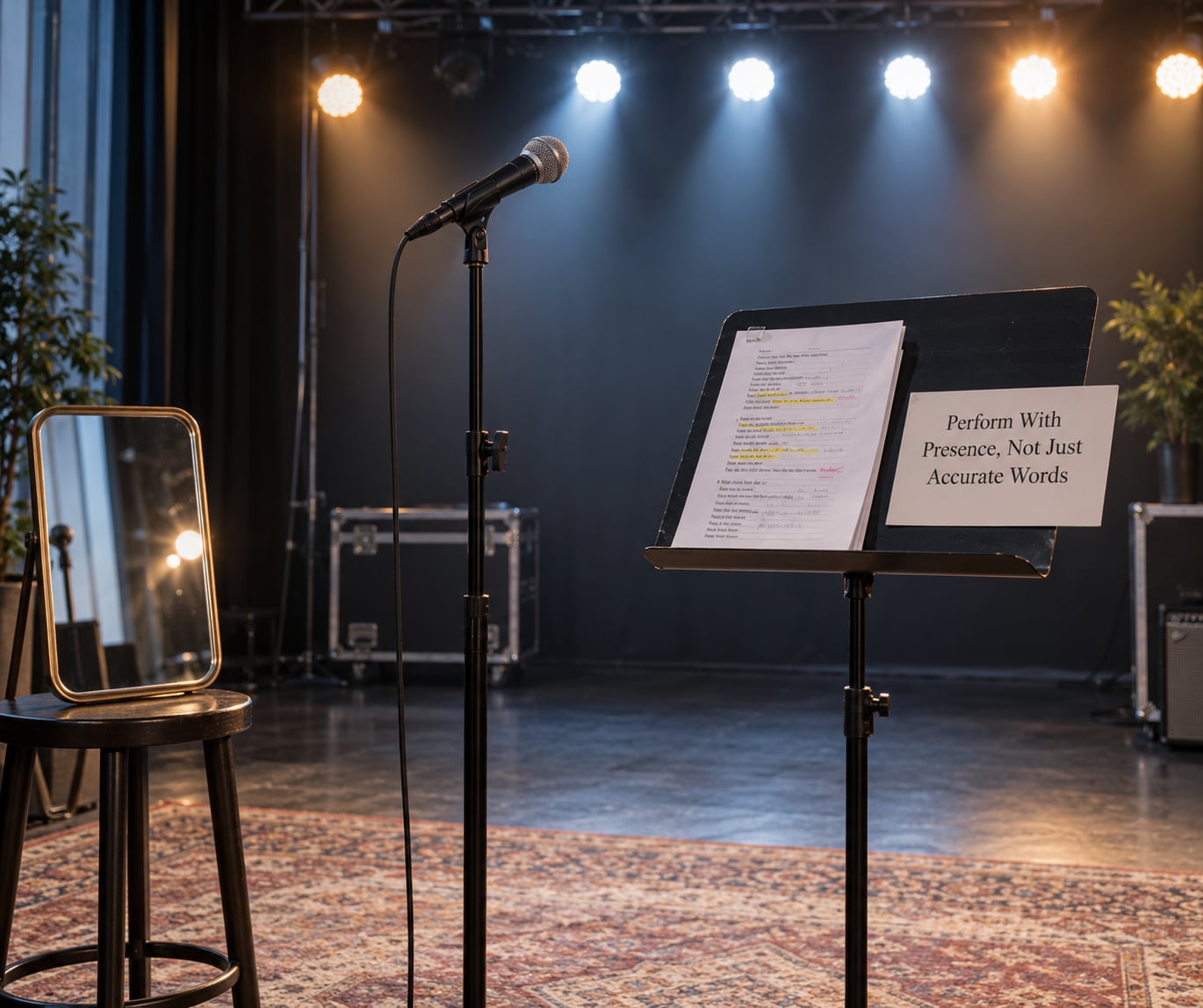
Look forward rather than at the floor or the screen. Pick one person in the front and give them the first line, then let the rest of the room follow you. A performer who commits to the number is far harder to read than one who is technically immaculate and visibly nervous.
A short pre-performance routine works better than winging it. Ninety seconds of slow breaths, one run of the first eight counts to set the tempo, a check that the mic is off if you are not using one, and a look at the room. Do the same sequence every time and the nerves lose their surprise value.
Different rooms need different delivery. A karaoke bar rewards big gestures and a smile you can see from the back. An audition or talent show rewards clean, economical movement. A drag performance can carry full choreography. A lip sync battle rewards timing accuracy, because that is the only axis the judges are scoring.
Common Mistakes
Moving the mouth too late. The classic tell. Fix it by anticipating: every line starts a fraction before the beat lands, so you are forming the first vowel while the band is still resolving the previous bar.
Over-opening every syllable. Uniform mouth shapes read as a puppet. Fix it by giving open shapes to vowels and stressed syllables, and letting consonants stay brief and clipped.
Breathing audibly. Fix it by marking every breath on the lyric sheet and taking it in a gap, not in the word.
Practicing only at full speed. If you cannot do it at half speed, full speed is guesswork. Slow the track down until the words are unarguable, then walk the tempo up.
Staring at the screen. A karaoke lyric screen is a safety net, not a script. Learn the timing well enough to glance at it once per verse, not line by line.
Treating lip syncing as a substitute for ability. It is a craft with its own mechanics, and it rewards the same hours of repetition that dancing does. Treating it as a shortcut is what makes it look like one.
Two quick notes on gear. Sound and lighting do more for a number than any mouth shape: a clear vocal line and a face that is lit from the front remove most of what the audience would otherwise notice. And check the mic situation early, because a live mic during a lip sync turns every breath into a mistake.
Adrenaline is what breaks new performers most often, and the fix is unglamorous. Rehearse standing, in the shoes, at the length the format allows, and record every pass. A number that has survived three recorded runs is a number your body already knows.
Frequently Asked Questions
How long does it take to get better at lip syncing?
Most performers get noticeably tighter within three to five focused practice sessions, usually a week of short daily work. The change usually comes when you stop anticipating the words and start reacting to cues you have already marked. Denser numbers, fast rap verses and tracks with production switches take longer. Record every pass so you can see the progress instead of guessing at it.
What should I do if I cannot hear the lyrics clearly?
Turn the volume up in headphones and run the song five or six times before rehearsing anything else. Write down every line you can catch, then check the timing against a waveform view or a lyric-timing tool. If the original mix genuinely buries the vocal, work from a version with a clearer vocal line or a karaoke track, so you have something reliable to anchor to.
How do I lip sync a fast song without losing the words?
Halve the tempo and drill the two or three fastest lines on their own, ten repetitions each. Fast sections collapse when you try to shape every word, so carry the line with the open vowels and keep consonants short. Start the first sound of each word just before the beat instead of waiting to hear it. Then rejoin the full speed section and check it on a recording.
Should lip syncing movements be big or subtle?
Bigger than feels natural in a large room, subtler when a phone is filming close up. Small movements disappear at stage distance and look frantic on camera, so practice at the distance you will actually perform at. What gives a number away is not size, it is mouth shapes that stop matching the vowel while the words are being sung.
How can I stop feeling nervous while lip syncing on stage?
Nerves usually show in the shoulders and the eyes rather than in the mouth. Do two full run-throughs in the shoes and under the lights you will wear, breathe out longer than you breathe in for the first eight counts, and pick one person in the front row to receive the first line. A repeated pre-show routine gives your body a familiar sequence to follow.
Do I need to know how to sing to lip sync a song?
No, and plenty of strong performers have no vocal training. What helps is a feel for phrasing, and you can build that by speaking the lines in rhythm, tapping the beat on your thigh, and mouthing the words quietly under the track. Singing along is a useful memory aid for some people, but it is not a requirement and it is not what the audience is checking for.
Conclusion
A convincing lip sync is built in a fixed order: learn the structure, mark the mouth shapes, work the tempo slowly, control the breath, then record and correct yourself before you add any stagecraft. Skipping the recording step is how people rehearse for a week and still read as slightly off.
So start small tonight. Pick one short section of your song, write out its lyrics, mark the vowels and the plosives, and drill it at half speed until it is boring. Then record a full pass from top to bottom and watch it once with the sound off. That single evening does more for how to lip sync like a performer than a month of waving your arms around in front of a mirror.