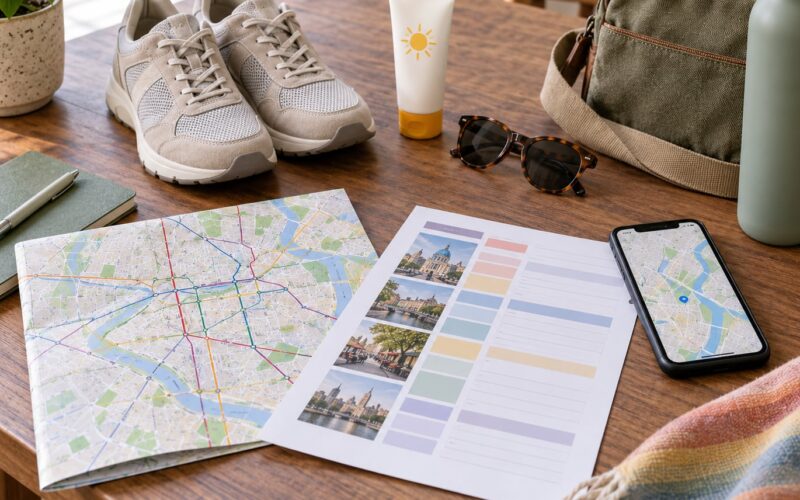
A Pride trip is a short travel stay, usually a long weekend, timed to line up with a city’s Pride festival, parade, and queer nightlife. Learning how to plan a Pride trip on a budget comes down to two levers: pick a destination that fits your total, and book the two most expensive items in the right order. Set a cap, lock lodging first, then transport, then fill the weekend with free programming and cheap food.
All the cost figures below are U.S. ranges, current as of 2026, and they shift every season. Big-city Pride weekends run roughly two to three times the cost of a small-town one, almost entirely because of lodging.
One piece of vocabulary first, since it shows up in every event listing. LGBTIQCAPGNGFNBA stands for lesbian, gay, bisexual, transgender, queer, intersex, culture, asexual, pansexual, neurodivergent, gender nonconforming, genderqueer, non-binary, and allies. The short form, LGBTQ+, does the same job, so I’ll use it here.
Table of Contents
- What You Need
- Step-by-Step: How to Plan a Pride Trip on a Budget
- Common Mistakes
- Frequently Asked Questions
- What is the cheapest way to travel to Pride?
- Can I plan a budget Pride trip at the last minute?
- How can I attend Pride without going to the biggest events?
- How should I split travel costs with friends?
- What should I do if Pride event tickets cost more than expected?
- Is staying outside the main Pride district a good way to save money?
- The First Thing to Do Next
What You Need
You need five things before you pick a city, and gathering them takes one evening. Skipping this step is how people end up with a beautiful trip that costs roughly twice what they expected.
Real local cost research. Look up what a room actually costs in the host city during Pride weekend, not during a normal month. Check the event’s own site for the festival schedule, ticket tiers, and any wristband rules, because the fee structure changes year to year.
Your documents in order. A government-issued photo ID for domestic flights, and for international trips a passport with enough validity plus whatever entry paperwork your nationality requires. A driver’s license plus a second form of ID covers most domestic rail and bus travel.
A booking tool with free cancellation. The single most useful feature for Pride planning is a 24-hour free cancellation window or a refundable rate, not the lowest sticker price. You want room to move when a cheaper option appears two weeks later.
Cash or a card limit for lodging holds. Hotels and vacation rentals often authorize more than the first night. Keep enough available credit that an authorization hold does not bounce. This is a routine step, but it derails a lot of trips on arrival day.
A ranked priority list. Write down which one thing would make the trip worth it for you: the parade, a specific performer, being with friends, or a first Pride. That ranking decides where the extra money goes and where you cut without regret.
Safety and comfort notes. Note any accessibility needs, sensory sensitivities, medication timing, and whether you are traveling solo. Knowing this up front shapes which city and which neighborhoods you pick.
Step-by-Step: How to Plan a Pride Trip on a Budget
Set a Total Budget and Choose Your Travel Style
Set one total number and one number of nights before you look at anything else, then split it into fixed costs you cannot change and flexible costs you can. Fixed is lodging and transport. Flexible is food, events, local transit, and everything else. The reason people overshoot is that they budget for food and forget that lodging and transport together are usually the majority of the trip.
A realistic U.S. range for a solo long weekend in a mid-size city runs 350 to 700 dollars all-in, and a major city with peak weekend lodging can climb to 1,000 dollars and well past that. Small-town Prides often land at the low end of that. Decide local versus travel early too: attending Pride in your own city removes lodging and transport from the equation entirely, which is the largest single cut available to anyone.
Then pick a style: full weekend with a paid festival, or parade-and-free-programming weekend. The second costs a fraction of the first and still gets you the crowd, the march, and the nightlife.
Compare Cities and Dates Before Booking
Compare cities on five numbers, not on vibe: peak weekend room rate, cheapest transport cost, festival ticket price, local food average, and how crowded the event gets. Then compare dates, because the difference between arriving Thursday and arriving Saturday is often the whole budget.
Here is the shape of the trade, as rough daily ranges per person for three nights:
| Cost category | Major city Pride | Mid-size city Pride | Small-town Pride |
|---|---|---|---|
| Lodging per night | 220 to 400 dollars | 90 to 180 dollars | 50 to 110 dollars |
| Round-trip transport | 150 to 450 dollars | 60 to 200 dollars | 20 to 90 dollars |
| Food per day | 35 to 70 dollars | 25 to 50 dollars | 20 to 40 dollars |
| Event and misc per day | 40 to 90 dollars | 15 to 45 dollars | 5 to 25 dollars |
| Local transit per day | 8 to 15 dollars | 3 to 9 dollars | 0 to 6 dollars |
Read that table as a shape, not a quote. On the Chicago and Midwest side of things, the practical advantage is the lakefront, the free museum days, and a transit system good enough that you do not need a car at all, which means a Chicago weekend can be run cheaply on lodging and food discipline alone. Smaller Midwest towns are cheaper still, and for a first Pride the smaller festival is often the better experience anyway.
On dates, three moves help. Arrive a day early, because the Thursday and Sunday nights are priced below the Friday and Saturday peaks. Travel on a weekday and shift the whole trip earlier or later if the festival dates allow. And check whether the city runs more than one Pride weekend, which some do, because a small secondary weekend can carry a fraction of the crowd and cost.
Book the Largest Expenses Early
Book the largest expenses early, in this order: lodging, then transport, then anything with a refundable hold. Lodging is first because it has the least flexibility and the steepest spike. Waiting on transport while holding a room is the standard way people get priced out.
Compare lodging by total cost, not nightly rate. A low nightly rate with a resort or facility fee plus taxes can land well above a higher listed rate where the fee is already included. Vacation rentals add a cleaning fee plus a per-night service charge, which makes a four-night stay the cheap version of a rental and a two-night stay the expensive one. Short rentals and last-minute app rates are often cheaper than the city average because they are priced by demand, and Pride demand is exactly what you are walking into.
| Lodging type | Typical nightly range | Watch for |
|---|---|---|
| Hostel private room | 35 to 80 dollars | Lockers, shared bathrooms, noise at night |
| Budget chain hotel | 90 to 170 dollars | Facility and destination fees added at checkout |
| Independent inn or B&B | 100 to 200 dollars | Breakfast included can offset a day of food |
| Room share with a friend | 40 to 110 dollars | Confirm the bed situation before you commit |
| Vacation rental | 80 to 250 dollars | Cleaning fee and minimum-night rules |
For transport, price three options and take the cheapest: intercity bus or rail, a budget airline, and driving split between a few people. Rail and bus win on city-center arrivals and on luggage costs. Driving wins when four people split fuel, tolls, and parking for a long weekend, though parking downtown during a festival is its own expense. Set a fare alert for the routes you are watching, and be suspicious of “basic economy” fares that add a large fee per bag.
Then look at the sample totals. For a three-night long weekend, per person, in U.S. dollar ranges as of 2026:
| Category | Solo traveler | Couple (per person) | Group of four (per person) |
|---|---|---|---|
| Lodging | 270 to 500 dollars | 200 to 380 dollars | 120 to 240 dollars |
| Transport | 80 to 300 dollars | 80 to 300 dollars | 30 to 120 dollars |
| Food and drink | 100 to 190 dollars | 90 to 170 dollars | 75 to 140 dollars |
| Events and extras | 30 to 120 dollars | 40 to 150 dollars | 20 to 80 dollars |
| Buffer | 40 to 90 dollars | 35 to 80 dollars | 25 to 60 dollars |
| Realistic total | 520 to 1,200 dollars | 445 to 1,080 dollars | 270 to 640 dollars |
Groups win mainly on lodging and transport, which is why a group of four can be the cheapest way to attend a major city Pride. Solo is the most expensive, and the difference is mostly housing. On r/chicagogaybros, travelers have put the practical floor for a day in Chicago, including bars and food, at roughly 200 dollars, and the caution that the bars are busy enough to eat into that fast. Treat that as a comfortable day, not a bare minimum.
Choose Affordable Food and Neighborhoods
Choose affordable food by capping meals rather than picking restaurants one at a time. A working cap for a mid-size city is 30 to 50 dollars a day, and 20 to 40 in a small town. Two of those can be a grocery run or a cheap breakfast, one a sit-down meal, and the rest happy hour and snacks, which is also how most locals spend a Pride day.
Three habits do most of the work. Eat before the festival gates open or an hour after the parade ends, because the meal rush in the Pride district is the most expensive food you’ll find. Use grocery pickup or a late supermarket run for breakfast and water, since you will be buying bottles all weekend. And plan one free or cheap anchor per day, like a park, a lake, or a museum free-admission day, so you are not eating three full meals in the crowd every day.
On neighborhoods, compare on nightly rate, transit access, and what is still happening on the street at 11 p.m. Staying one or two stops of the transit line out from the festival district usually cuts the nightly rate substantially and keeps you close enough to walk or ride back. Do not trade away the part of the evening you actually want. A cheaper room in a stretch of road with nothing on it after dark costs you money in rideshares and safety, which eats the savings twice.
Build a Low-Cost Pride Itinerary
Build a low-cost Pride itinerary by assuming most of the memorable parts are free. The parade, the street fair, the beach or lakefront march, community breakfasts, block parties, and open-air stages cost nothing to attend. That is the skeleton of a good weekend, and paid tickets are seasoning, not the meal.
Layer it like this. Day one is arrival, a walk through the fairgrounds, cheap food, and an early evening bar shift. Day two is the parade with a free viewing spot claimed early, a museum or attraction on a free day, then the festival in the evening. Day three is a community brunch, a lakefront or park afternoon, and a last cheap dinner before transport.
Then pick one or two paid items rather than all of them. If you buy a festival wristband, check what it actually includes, because general admission and premium viewing areas are priced separately and premium areas are where the money disappears. If you skip the paid stage entirely, you still get the parade, the vendors, the crowds, and the people, which is the honest trade at a quarter of the cost.
Beyond June, the shoulder months carry the same programming for less. Many cities run queer film festivals, community picnics, queer history walks, and fundraising events in the spring, and a lot of Pride-adjacent festivals happen in September or October. If your budget is genuinely the constraint, going to a smaller festival in a cheaper month is a real answer, not a consolation prize.
Track Every Expense and Keep a Buffer
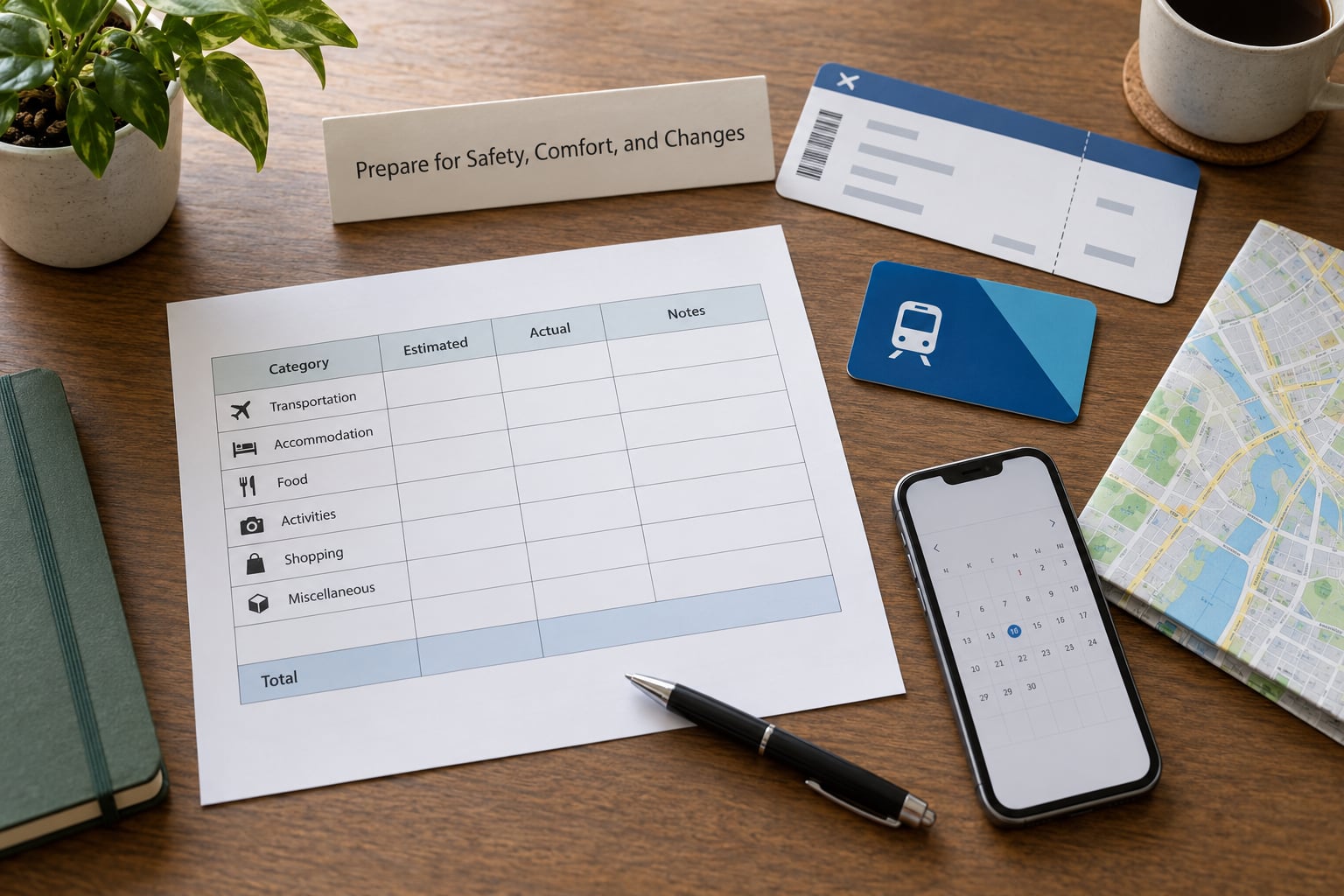
Track every expense, because the small items are what break a budget you built carefully. Keep one note with two columns, expected and actual, and update it the same night. Add a line for lodging taxes and facility fees, local transit fares, rideshare surge during the parade exit, convenience store prices inside the festival grounds, and any bag or seat fees the transport booking added at the end.
Hold back 10 to 15 percent of your total as a buffer and do not plan to spend it. The realistic uses are a last-night room when transport timing falls apart, a luggage fee discovered at the airport, a ticket price that jumped after you published the trip group chat, or a medication or comfort need you did not budget for.
Check in halfway through the trip. If the actual column is running more than a third over expectation, that is the signal to switch to the free version of the remaining days, not to push harder. You will get more out of a relaxed weekend of parades and parks than out of a scheduled one you cannot afford.
Prepare for Safety, Comfort, and Changes
Prepare for safety, comfort, and changes before departure, not during the crowds. Set a meeting point that is a real landmark, not a pin dropped in a dense festival area, and agree on a check-in time with whoever is traveling with you. Know how you are getting back to your room at the end of the night before you go out, and keep one card or note in your wallet with the name and number of a person at home who would know to call for you.
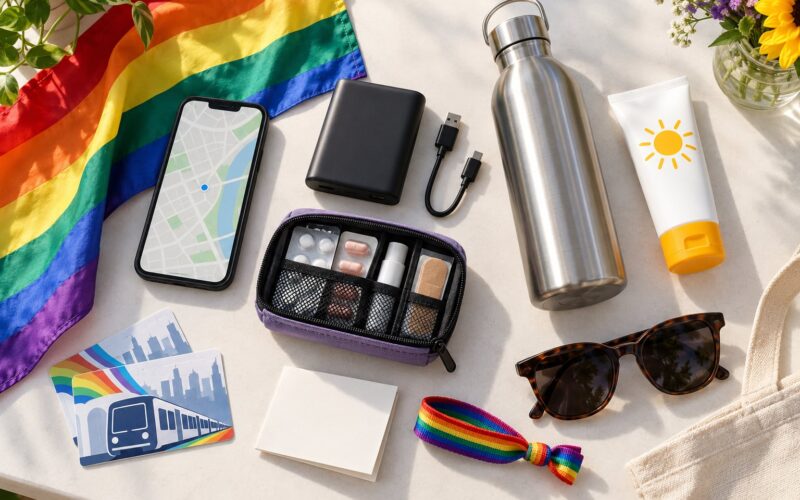
For accessibility and sensory needs, check the festival’s own access page in advance. Many large Prides publish accessible washroom locations, viewing platforms, low-sensory or quiet zones, and first-aid locations. Bring earplugs, a portable charger, refillable water bottles, sunscreen, and a light rain layer, since a poncho you can fold into a pocket costs nothing and a sudden storm is a real possibility in June. Keep medications in hand luggage rather than a checked bag.
For document safety, keep originals in one secure place and a photo of each on a device you can lock, and carry only what the day requires. Each country’s entry rules and each airline’s identification policy differ and change, so confirm yours with the official source before you fly rather than relying on a blog or a forum answer.
Have a rainy-day plan that costs nothing: a museum, a bookshop or record store, a long brunch, a bar with good music and a small footprint, or a community center event. Most cities have a queer-friendly indoor space listed somewhere, and having the name saved before the rain starts is the difference between a good backup and a bad afternoon.
Common Mistakes
Almost every expensive Pride trip mistake is the same mistake made at a different step.
Booking every night during the peak. Friday and Saturday carry the spike. Arriving Thursday and departing Sunday, or shifting to a secondary weekend, is the single largest cut available to you.
Comparing nightly rates instead of checkout totals. A rock-bottom nightly rate with heavy fees can cost more than a slightly higher rate with none. Do the full total every time, including taxes on both.
Trying to buy every ticketed thing. Festivals charge separately for general admission, premium viewing, and add-ons. Pick one, and let the rest be the free programming, which is most of the day anyway.
Staying inside the festival district. The premium on the most expensive blocks is real and so is the noise. One or two transit stops out usually costs far less with a short ride home.
Letting the group decide nothing. If a friend group waits for perfect date alignment, prices move past your budget. Pick a date range with a firm answer by, and confirm each person’s cap in the group chat before anyone books.
Packing like the weather will cooperate and the day will be gentle. Water, sunscreen, rain layer, earplugs, portable charger, medication. A tote and a refillable bottle cost less than one souvenir stand purchase at the festival.
Building a schedule with no free time in it. Pride is loud, hot, and crowded. Leave one unplanned block per day in the plan, and put at least one free or indoor backup on the schedule before you need it.
Adding new costs once you arrive. Set a daily cash or card cap and check it nightly. On r/askgaybros, travelers weighing whether to build a whole U.S. trip around New York City Pride keep running into the same wall, which is that the best dates and the lowest fares do not land on the same day. A firm cap, decided before the group chat starts comparing screenshots, is what resolves it.
Frequently Asked Questions
What is the cheapest way to travel to Pride?
Intercity bus or rail usually wins on total cost because fares stay low and you arrive downtown, and you dodge checked-bag fees entirely. Driving is cheapest when four or more people split fuel, tolls, and parking for a full weekend. Flying rarely wins on price, but it wins on time when the festival is three hours or more away. Set a fare alert on all three, compare the final total including bags and seat fees, and book the one with the refundable option.
Can I plan a budget Pride trip at the last minute?
Yes, but you have to change what you buy rather than how much you pay. Last-minute rates beat peak rates on Thursday and Sunday, and vacant weekday rooms are common two to three weeks out. Stay outside the festival district, skip ticketed stages, and build the weekend around the parade, the street fair, and free programming. What gets expensive at the last minute is transport on the actual festival days, so book that first even if the room is undecided.
How can I attend Pride without going to the biggest events?
Choose a mid-size or small-town Pride and you cut lodging and transport at once, often by more than half. Many smaller festivals still have a parade, a fair, a community brunch, a beach or lakefront march, and a full week of nightlife at a fraction of the cost. If you cannot travel at all, look for a Pride-adjacent community event, a queer film festival, or a fundraising block in your own city. Local Pride is the cheapest Pride there is.
How should I split travel costs with friends?
Split by what each person actually books. Whoever reserves the room pays and collects the equal shares before the trip, not after, since chasing money afterward ruins the weekend. Agree in writing on one total cap per person, on which costs are shared and which are individual, and on the date. Set a hard booking deadline so no one books late at a peak price and expects the group to cover it. Keep a small shared float for the ride-share and food costs that come up.
What should I do if Pride event tickets cost more than expected?
Drop the premium tier before you drop the event. General admission usually covers the parade, the vendors, the crowds, and most stages, and the premium viewing areas are what drive the price up. Skipping a paid ticketed night and putting that money into lodging and food usually makes the whole trip better, not worse. If the ticket is already bought, check the refund or transfer window early, because reselling or gifting to a friend is often the cheapest fix.
Is staying outside the main Pride district a good way to save money?
Usually yes, if you stay close to a transit line and pick a block that is still busy at night. One or two stops out from the festival district can cut the nightly rate substantially, and the ride home costs a fraction of a rideshare. Do not chase the cheapest room available if it means a long isolated walk after dark, because the savings disappear in ride costs. Confirm what is actually open on your street before you book, not just the price.
The First Thing to Do Next
Open a note tonight and write two numbers: your total cap and your number of nights. Everything after that is a comparison against those two numbers, and knowing how to plan a Pride trip on a budget comes down to that discipline rather than clever tricks.
Then book lodging before you book anything else, pick a refundable rate, and hold 10 to 15 percent back for the costs that only show up on the ground. Rank the weekend around the parade, the street fair, and one paid thing you genuinely care about. That combination is what most people remember years later.