
You can afford therapy without insurance, and the route is usually a mix of income-based fees, community services, and formats that cost less than a private 50-minute session. Most people who make it work use two tracks at once: they join a free or low-cost waitlist today, then start something cheap this week so nothing is empty in the gap.
This is a practical guide, not medical advice. A licensed clinician can tell you what care actually fits; what follows is about the money and the mechanics of finding it. Last reviewed for 2026 — phone numbers and program details change, so verify them before you rely on one.
If you are in crisis right now, call or text 988 for the Suicide and Crisis Lifeline. You can also text HOME to 741741 for the Crisis Text Line, or call The Trevor Project at 1-866-488-7386 for LGBTQ+ specific crisis support. Free and confidential, 24 hours a day.
What follows covers the whole sequence: what to gather before you call, nine ways to lower the cost, the mistakes that cost people money and time, and the questions people ask most.
Table of Contents
- What You Need to Afford Therapy Without Insurance
- Step-by-Step: Nine Ways to Make Therapy Affordable
- 1. Set a realistic therapy budget
- 2. Find sliding-scale and nonprofit therapists
- 3. Look for public and community services
- 4. Compare low-cost online therapy options
- 5. Ask about financial assistance
- 6. Use training, university, and support-group resources
- 7. Work with a provider to reduce costs
- 8. Review the service and escalate when needed
- 9. Protect the budget while maintaining care
- What Each Option Actually Costs
- Free Referral and Crisis Services
- Common Mistakes
- Frequently Asked Questions
- Can I get therapy without insurance?
- What is the cheapest way to see a therapist without insurance?
- How do I ask a therapist for a sliding-scale fee?
- Are online therapy services affordable without insurance?
- How can I find LGBTQ+-affirming therapy on a low budget?
- What should I do if I cannot afford ongoing therapy right now?
- Conclusion
What You Need to Afford Therapy Without Insurance
Before you start calling practices, gather four things. Having them ready turns a three-week email chain into a ten-minute phone call.
- Your numbers. Gross household income for the last 60 days, roughly what you pay for rent, food, transport, and medications, and the most you could put toward therapy in a month without cutting something essential.
- What you want help with. One or two sentences you could say out loud to a stranger on the phone. Intake workers ask for this, and having it ready makes you less likely to hang up.
- Your location and its rules. Your county or zip code for in-person options, plus whether telehealth is allowed where you live and whether you can do sessions by phone only.
- Current prescriptions and diagnoses on file. If you take psychiatric medication, note the prescriber and the pharmacy, because therapy and medication are often handled by separate systems and one may cost more than the other.
How to Afford Therapy Without Insurance: Check What You May Already Qualify For
Most uninsured readers I talk to have never called the number that would have cost them nothing. Several free or near-free routes sit inside things they already use.
- Community mental health centers offer counseling on an income-based scale, often including sessions at no charge for people below the poverty line.
- County and city health departments run counseling programs, and many libraries host a social worker on certain days.
- Universities operate training clinics where sessions are supervised by licensed providers and charged on a sliding scale.
- Employee assistance programs come through many workplaces, including small ones, and some offer a set number of free sessions.
- LGBTQ+ community organizations run support groups, peer programs, and sometimes referral lists of affirming therapists who take reduced fees.
- Free referral lines such as 988, 211, the SAMHSA National Helpline at 1-800-662-4357, and NAMI’s helpline at 1-800-950-6264 will hand you a list of local options at no cost.
Ask whoever answers the phone one question: what am I eligible for at no charge, and what would the fee be at my income? That single question moves you faster than most of the searching people do.
Step-by-Step: Nine Ways to Make Therapy Affordable
1. Set a realistic therapy budget
Work backward from what is left after essentials, not from what therapy is supposed to cost. If rent and utilities leave you a number, divide that number by four and treat it as your ceiling.
The reason budget comes first: a self-pay rate commonly lands somewhere between 100 and 200 dollars for a 50-minute session in the US, and people rarely do 20 to 30 sessions. Twenty sessions at 150 dollars is 3,000 dollars out of pocket, which is why “just book weekly” is not a plan for most uninsured readers.
How you know the budget is working: you can hold it for three months without skipping rent, utilities, or medication. A low fee is not a signal of poor care, by the way. Plenty of excellent therapists keep a few low-fee hours open, and community clinicians are often the most experienced people in the building.
2. Find sliding-scale and nonprofit therapists
A sliding scale means the fee moves with your income, usually in set steps rather than a negotiation. Many private therapists hold a few of these hours, and nonprofit clinics offer them across the board.
Start with therapist directories where you can filter by fee, insurance, and specialty, then check each practice’s own page, since directories are sometimes years out of date. Nonprofit and community agencies are usually listed on their county or city health department website.
How you know it is working: the practice tells you the actual fee before you book, not after. Ask what documentation they need, whether the rate changes if your income changes, and whether they hold a cancellation or no-show fee.
3. Look for public and community services
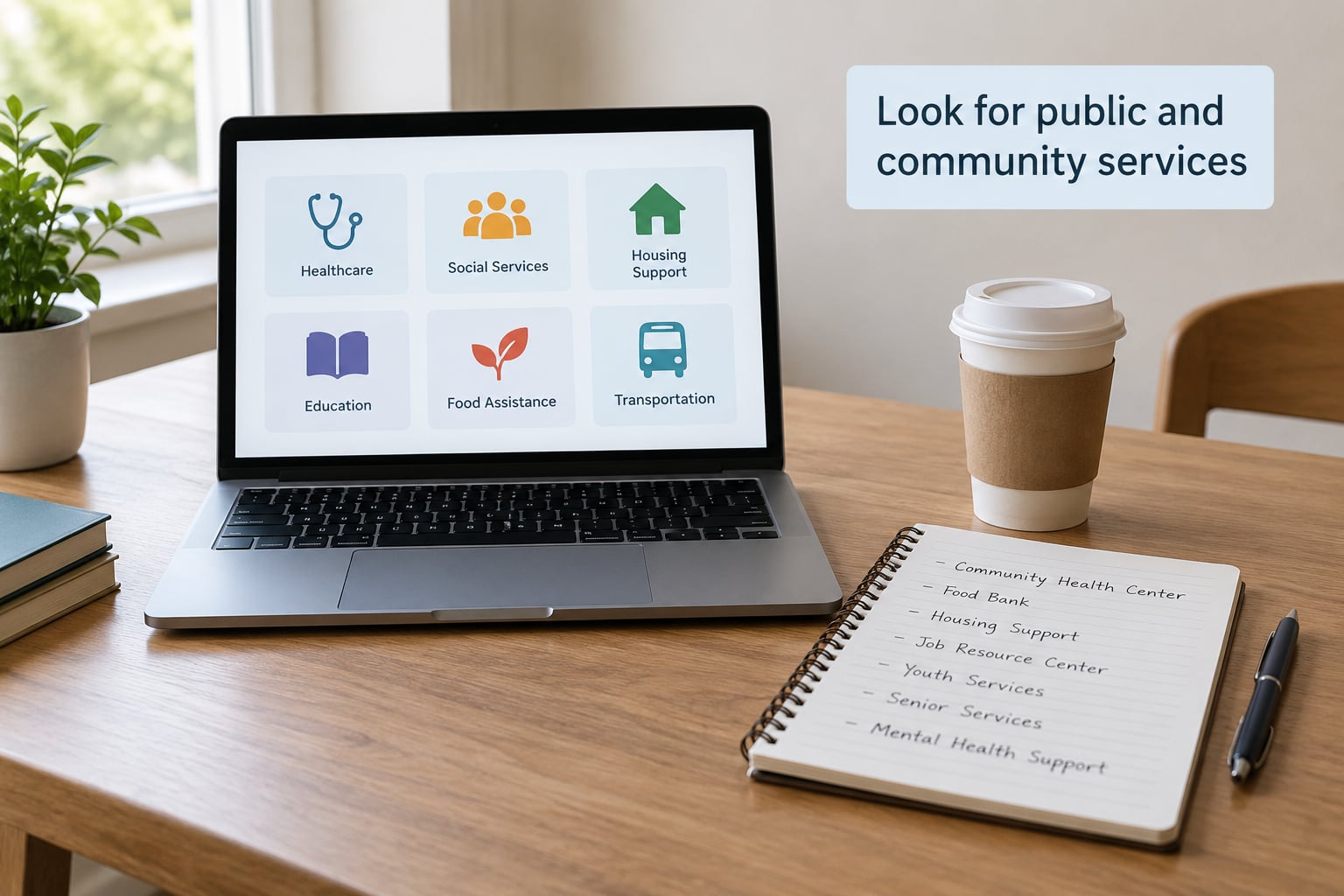
Community mental health centers are publicly funded and treat people regardless of insurance status, usually on a fee schedule based on income and household size. Many also handle medication, case management, and substance use counseling, which matters if more than one thing is going on.
The honest part: waits are real. People report weeks, sometimes months, between an intake call and a first appointment, and some centers will not tell you where you are on the list. Ask for a written estimate of the wait, ask to be added to a cancellation list, and call back on a schedule so you stay in the intake track.
While you wait, put something in the gap. A weekly peer support group costs nothing, a crisis line is open at any hour, and a training clinic may have a shorter queue than the county center.
4. Compare low-cost online therapy options
Telehealth usually costs less than in-person care and removes the travel and lost-work time. The tradeoff is that subscription-style platforms bill monthly regardless of how much you use, which is a bad fit if your schedule is unpredictable.
Check six things before you sign up: the therapist is licensed in the state you live in, the total cost per session once membership fees are counted, whether messaging is included or billed separately, whether they can prescribe medication or only talk therapy, what happens if you cancel, and whether sessions are live video or phone only.
How you know it is working: after one month, the math matches what you actually paid per session, and you are not paying for a plan you barely use.
5. Ask about financial assistance
Most people never ask, and that is the whole problem. Here is a script you can read out loud on the phone or paste into an email.
“I’m looking for therapy and I’m paying entirely out of pocket. After taxes, my income is about 2,100 dollars a month, and I can put roughly 60 dollars a month toward care. Do you have a sliding scale, a hardship discount, or any unpaid or pro bono hours? What documents would you need, and does the rate change if my income changes?”
If the answer is no, that is information, not a dead end. Private practices rarely have money to give away. Community agencies, FQHCs, and training clinics almost always have a fee schedule you can access, which is why the same question sent to three different practices can produce three different answers.
6. Use training, university, and support-group resources
Training clinics are staffed by counselors in a master’s or doctoral program working under the supervision of a licensed clinician. Sessions are real therapy, they are genuinely low cost, and they are supervised, so you are not being handed to someone with no oversight.
University counseling centers serve students, and some extend care to community members. Peer support groups and libraries of self-help material are not therapy and should not be used in place of it during a crisis, but they add structure and contact between appointments, which most people underestimate.
7. Work with a provider to reduce costs
Once you are with someone, the negotiation moves from whether you get help to what it looks like. Options include starting weekly and stepping down to every other week, asking for longer sessions at a proportional price, or a defined short-term course of ten to twelve sessions with a specific goal instead of open-ended weekly work.
Some practices sell a block of sessions at a reduced rate, or will bill you monthly at a figure you can afford. If you happen to have insurance at all, even a plan you rarely use, ask whether they can provide a superbill for out-of-network reimbursement; people report it works, but it is slow and requires the therapist to produce paperwork.
If you do have an HSA or FSA, psychotherapy with a licensed clinician is generally an eligible expense. Confirm with your plan administrator before you assume it.
8. Review the service and escalate when needed
Give the first three sessions a fair look, then check the basics: the therapist holds a current license in your state, they treat your concerns with respect, their availability fits your schedule, and the fee and cancellation policy are in writing.
Check licensure yourself through your state licensing board’s search, which is free and public. It takes a minute and rules out the most common bad outcome, which is paying someone who is not actually licensed.
When the fit is wrong, most therapists will give you two or three referrals at the same fee or lower. That is normal practice, and you are entitled to ask for it directly. If you are correcting course, say what you need: I need someone who will not pathologize my identity, and I can pay about 60 dollars a session. State both halves in the same sentence.
9. Protect the budget while maintaining care
Keep a simple record: date of each session, amount paid, method, and a receipt. You will need those receipts, and building the habit takes two minutes.
Stay alert to financing offers. Health-care payment plans and buy-now-pay-later credit can turn a 3,000 dollar course of therapy into 4,000 dollars of interest, and people stuck in a distress cycle are not the audience those products are designed for. If the only way to pay is credit that compounds, go back to step 3 instead.
Keep the crisis lines somewhere you do not have to search for them. And if a month gets tight, cut the session frequency through a conversation with your therapist rather than quietly stopping, because a lapse is how most people end up back in crisis.
What Each Option Actually Costs
These are typical US ranges for a 50-minute individual session and they change over time. What you will be asked to show differs more than most people expect, which is why that column matters as much as the fee.
| Option | Typical cost per session | Income proof needed | How fast you get seen |
|---|---|---|---|
| Sliding-scale private therapist | Reduced rate, often 40 to 90 dollars | Sometimes, varies by practice | Days to a couple of weeks |
| Community mental health center | 0 dollars to a small fee by income | Yes, usually household income | Weeks to months |
| University training clinic | Reduced fee set by income bracket | Yes, usually | Often a shorter queue |
| Free and charitable clinic | No charge | Varies, some ask | Varies widely |
| Employee assistance program | Often a set number of free sessions | No | Within a week, if you are employed |
| Group therapy | A share of the individual rate | Sometimes | Days to weeks |
| Peer support group | No charge | No | Same week |
| Full-price private session | Often 100 to 200 dollars | No | Days to weeks |
Free Referral and Crisis Services
These lines cost nothing, do not require insurance, and are staffed by people whose job is to point you at local care. They are also the fastest route when you have no idea where to start.
| Service | How to reach it | What it helps with |
|---|---|---|
| 988 Suicide and Crisis Lifeline | Call or text 988 | Immediate crisis support, 24 hours |
| Crisis Text Line | Text HOME to 741741 | Crisis support by text, 24 hours |
| The Trevor Project | 1-866-488-7386 | LGBTQ+ crisis support, 24 hours |
| SAMHSA National Helpline | 1-800-662-4357 | Treatment referrals and local facilities |
| NAMI HelpLine | 1-800-950-6264 | Support, referrals, peer groups |
| 211 | Call 211 | Local health and human services, including counseling |
Common Mistakes
Most people who give up on affordable therapy make one of six avoidable errors.
Assuming every uninsured rate is the same
Full-price private therapy varies enormously by region, credential, and specialty, and public options sit far below it. Compare at least three options before deciding what therapy costs.
Not asking about the sliding scale
Most people who describe a painful phone call about fees say they simply never asked, or asked once and accepted the first no. Outreach workers report that saying the words “I am unemployed, here is my budget” is often enough, sometimes with no documentation at all.
Skipping the licensure check
Cheap is not the risk, unlicensed is. Verify any therapist through your state licensing board before your second session, which takes about a minute.
Using coaching or crisis chat services as therapy
Crisis text lines are free and staffed by trained counselors, but they are not ongoing treatment and they are not the same as a licensed therapist. Crisis lines are a bridge, not a replacement.
Assuming the waitlist will move quickly
Community center waits stretch for weeks or months. Get on the list, ask for a cancellation slot, and put a free group or a training clinic in the gap so you are not waiting on nothing.
Postponing urgent care over money
Delaying because a session feels unaffordable is the one mistake with real consequences. If things are urgent or unsafe, use 988 or a crisis line now and sort the money later, when a lot of the options above are still open to you.
Frequently Asked Questions
Can I get therapy without insurance?
Yes. Most therapists see self-pay clients, and a large share set aside a few reduced-fee or pro bono hours each week. Community mental health centers and free and charitable clinics treat people with no insurance at all, usually on an income-based fee that can be zero. Expect a wait at public agencies, so start the intake call today.
What is the cheapest way to see a therapist without insurance?
Free and charitable clinics charge nothing, though many still require paperwork. Training clinics at universities and federally qualified health centers charge on an income-based scale and are often the fastest low-cost route. Peer support groups cost nothing and can start this week while you wait for a clinician.
How do I ask a therapist for a sliding-scale fee?
Say it plainly on the first call: I am paying entirely out of pocket, here is my income, here is what I can afford per month. Ask what documentation is needed, whether pro bono hours exist, and whether the rate changes if my income changes. Practices without a scale usually have nothing to offer, but community agencies almost always do.
Are online therapy services affordable without insurance?
Often yes, because telehealth usually costs less than in-person care. The catch is subscription pricing, where you pay monthly whether or not you use it. Check the license of the therapist in your state, work out the true cost per session including any membership fee, and confirm cancellation and messaging terms before you sign up.
How can I find LGBTQ+-affirming therapy on a low budget?
Look at community mental health centers with explicit LGBTQ+ services, LGBTQ+ community organizations that keep referral lists, and federally qualified health centers. On any call, state both halves at once: that you need affirming care and what you can pay per session. Screening for someone who will not pathologize your identity is normal practice.
What should I do if I cannot afford ongoing therapy right now?
Get two things going at once. Join a community center or free clinic waitlist today, since that queue is long, and start something free this week such as a peer support group or crisis line. Ask your therapist about a reduced frequency you can sustain. Stopping silently is what most often leads back to crisis.
Conclusion
Three things first. Work out the number you can genuinely pay each month, then call one community or public mental health service today to get on a waitlist, because that queue is the slow part. Then ask every practice you contact for the lowest fee they offer, out loud, on the first call.
If any part of this becomes urgent or unsafe, call or text 988 or The Trevor Project at 1-866-488-7386 right away, and sort the money afterward. None of the options above close just because your budget got tight.