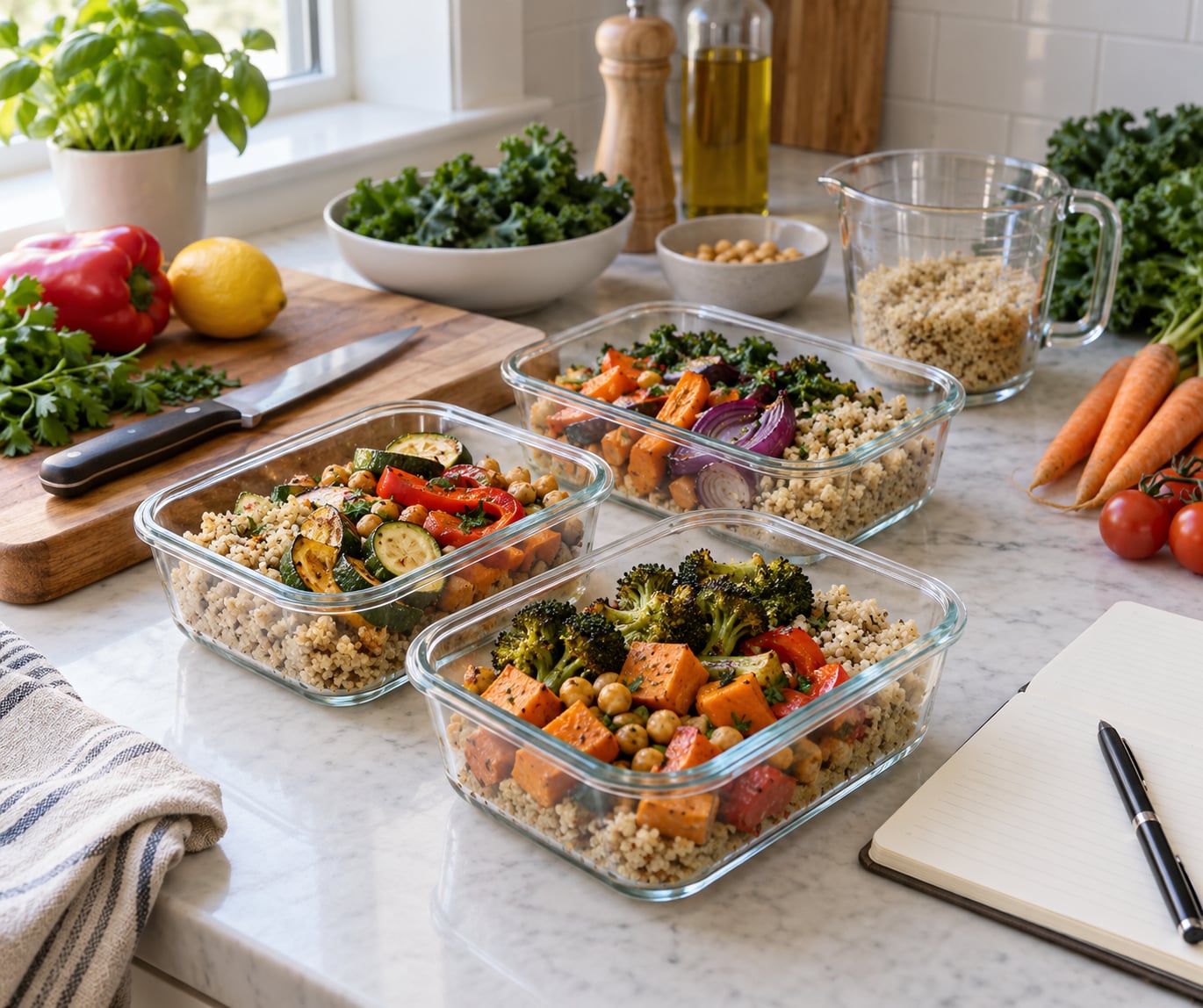
How to cook healthy meals on a busy schedule comes down to one habit: decide the meal before you are tired, and cook the components once instead of every night. Most weeknights only need 15 to 25 minutes of actual cooking, because the chopping, roasting and cooking of grains and protein already happened in one focused session earlier in the week.
The honest version takes about 45 to 90 focused minutes once, plus a few 10-minute top-ups. That is very different from the Sunday-afternoon meal prep marathon most blog posts describe, and it is far more likely to survive a real calendar.
This guide is general information, not nutrition or medical advice. If you are managing diabetes, a heart condition, an eating disorder or any other medical issue, talk to a registered dietitian or your doctor before changing how you eat.
Table of Contents
- What You Need
- Step-by-Step: How to Cook Healthy Meals on a Busy Schedule
- Common Mistakes
- Frequently Asked Questions
- How can I cook healthy meals when I work late?
- What are the fastest healthy meals for a busy weeknight?
- How long can prepared meals stay in the refrigerator?
- Is it cheaper to cook healthy meals at home or order takeout?
- How do I reheat meal-prep food without making it dry?
- How can I meal prep when I have very little kitchen space?
- Start With One Batch Base Tonight
What You Need
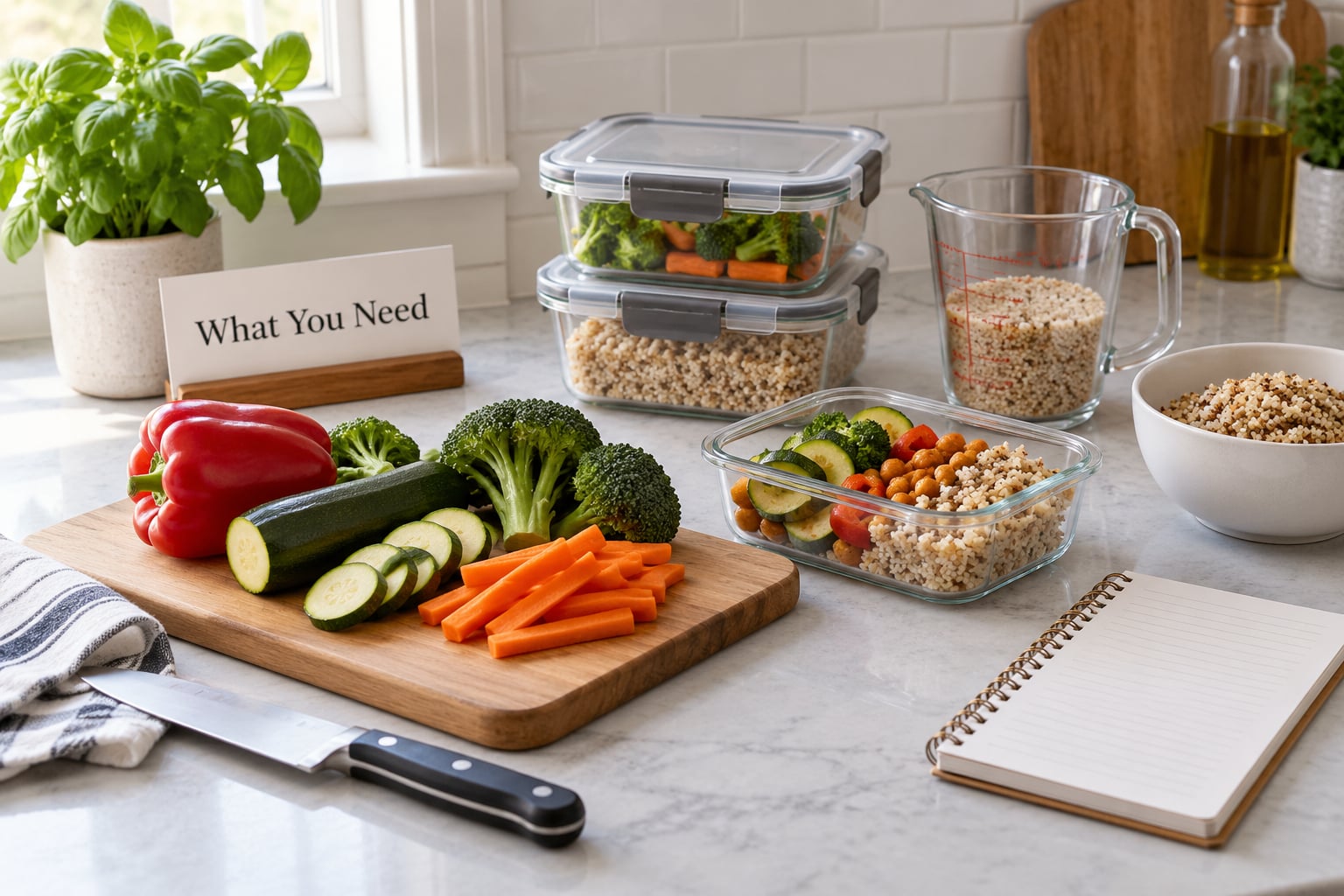
You need far less equipment than kitchen blogs imply. A sheet pan, a knife, a pot, a few containers and a slow cooker or rice cooker will carry you through most weeks. Anything beyond that is a convenience, not a requirement.
Tools that earn their counter space
- A sheet pan, because roasting vegetables and protein together is the fastest cleanup in the kitchen.
- A pot or Dutch oven for one-pot grains, soups and bean dishes.
- A slow cooker or pressure cooker if you want dinner to cook while you do something else entirely.
- A sharp knife and one cutting board. A second board for raw meat keeps washing down.
- A can opener, a peeler and a couple of sheet pans you do not mind using again.
Containers
Pick containers that are leak-proof, microwave-safe and easy to stack. Glass holds odors less than plastic and goes from freezer to microwave, but it is heavier to carry to work. A mix is normal: glass at home, plastic at the office. Look for ones that hold roughly two cups, since that is about a lunch-sized portion for most adults.
Pantry staples that carry several meals
Fill these first because they never spoil quickly and they appear in many recipes: canned beans and lentils, whole grains such as brown rice, quinoa and rolled oats, canned tomatoes, stock, olive oil, vinegar, nut butter, spices, and frozen vegetables. Frozen produce is picked and frozen at peak ripeness, so it is often more nutritious than fresh that has been sitting for a week, and it costs less.
Fresh items worth buying each week
Buy a small amount of fresh produce: two or three vegetables for roasting, a salad green or two, fruit for breakfast, onions, garlic and lemons. Add a protein you actually like, whether that is chicken, eggs, tofu or canned tuna.
Planning supplies
A notebook or a note on your phone is enough. Write down the three or four meals you will cook this week and the ingredients they share. That shared-ingredient list is your shopping list, and it is the fastest way to cut duplicates out of your week.
Step-by-Step: How to Cook Healthy Meals on a Busy Schedule
Plan Your Meals Around the Busiest Parts of Your Week
Plan your meals around the busiest parts of your week by picking two or three anchor meals and scheduling cooking on the day you have the most energy. Fifteen minutes on a Sunday is usually enough to write the plan; the cooking happens in short sessions later, not in one marathon.
Look at your calendar and find the two nights that are reliably wrecked: a late meeting, a kid activity, a commute that runs long. Those two nights get your made-ahead meals. The rest of the week rotates through quick assembly. If your hours shift, anchor the plan to a fixed action rather than a fixed day, like cooking the moment you get home on your early days.
Then build the grocery list by overlap. If you are making chili and grain bowls, buy onions, peppers, garlic and canned tomatoes once. Recipes that share four or five ingredients waste less food and cost less than recipes that each demand their own thing.
Use a Batch-Cooking Base for Flexible Meals
Use a batch-cooking base for flexible meals by cooking one neutral component and turning it into different meals all week. A pot of quinoa, a tray of roasted vegetables or a batch of lentils gives you structure, and the protein and sauce you add later create variety.
Match the prep style to the time you actually have:
- 15 minutes: no-cook assembly from washed greens, canned beans, pre-cooked grains, a boiled egg and a sauce you mix in a jar.
- 45 minutes: a single-ingredient batch, meaning one tray of roasted vegetables, one pot of rice and one protein cooking in the oven at the same time.
- 60 to 90 minutes: full meal prep, portioning three to five complete meals into containers plus one spare for the freezer.
Cook the base components in parallel rather than in sequence. Put the oven on first, set the rice going, then chop while both run. That sequencing is the entire difference between a 60-minute session and a 30-minute one.
Choose Low-Prep Meals That Still Feel Satisfying
Choose low-prep meals that still feel satisfying by building each plate the same way: one grain, one vegetable, one protein and one healthy fat. That simple plate formula is the practical version of the USDA MyPlate guidance, and it means you can mix components freely without a recipe.
- Bowls: quinoa or brown rice, roasted vegetables, chickpeas or grilled chicken, and a tahini or yogurt dressing drizzled on after reheating.
- Sheet-pan meals: protein and vegetables on one tray with oil and salt. About 30 minutes total, most of it unattended.
- Wraps: a tortilla, hummus or leftover protein, raw vegetables, and greens. Assembles in three minutes.
- Soups and stews: one pot, freezes well, and reheats better than most weeknight food.
- Salad grain bowls: greens, canned beans, corn, seeds and any cooked grain. No reheating required.
The fat matters more than people expect. Olive oil, nuts, seeds, avocado or a dressing on top makes a grain-and-bean bowl feel like an actual meal instead of a side dish.
Cook in Short, Efficient Sessions
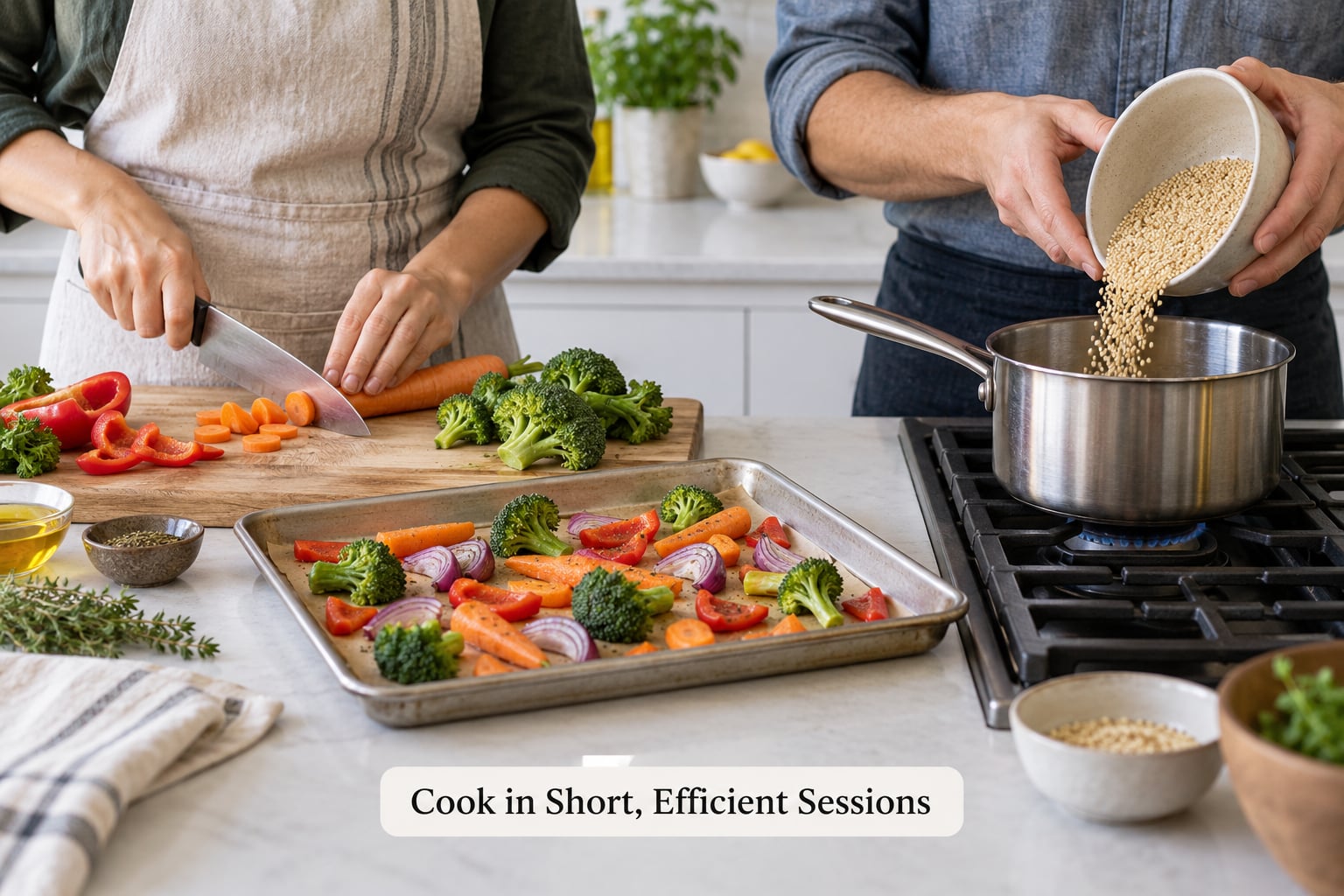
Cook in short, efficient sessions by understanding one distinction that most guides blur: active time is the minutes you spend working, and total time includes the oven and stove doing their part unattended. A sheet-pan meal might be 10 minutes of active work and 30 minutes total. Knowing which is which is how you tell whether a recipe fits tonight.
Use make-ahead components where the shortcut does not compromise safety. Cook grains, roast vegetables on a sheet pan, boil eggs, blend a dressing or wash greens in a batch, then store them properly. Some things should stay out of it. Do not wash and store raw meat, and do not cut fruit days ahead expecting it to stay crisp.
Prevent produce browning the way restaurant kitchens do: keep cut vegetables submerged in water in the fridge, or add a thin coating of oil. Both block the air that turns cut surfaces brown. If you are prepping more vegetables than one meal needs, blanch them briefly, cool them in ice water and freeze.
Use appliances to remove the work, not to remove the judgment. A slow cooker started before work cooks dinner without supervision. A pressure cooker cuts a long bean or grain dish down to under an hour. An air fryer handles small portions of protein and vegetables quickly and leaves the main pans unused.
Store and Reheat Meals Safely
Store and reheat meals safely by following three rules: cool food quickly, refrigerate within two hours, and label everything with the date it was made. Most cooked meals keep three to four days in the refrigerator, so plan for the second half of the week to come from the freezer or a fresh cooking session.
Let food cool briefly at room temperature and then move it into the fridge rather than leaving a warm container sitting out for hours. Do not put a large steaming pot of hot food straight into the refrigerator; divide it into shallow containers so it cools fast. Once cool, seal and label.
For internal temperatures, follow USDA guidance: poultry reaches 165F (74C), ground meat 160F (71C), and whole cuts and fish 145F (63C). Reheat leftovers until steaming and hot throughout, which means 165F for a microwave reheat of leftovers.
When reheating, add a splash of water to grains and cover loosely. Dry rice reheats into something chewy and unpleasant, and a covered container traps steam so vegetables soften less. Add fresh greens, salsa, herbs or a dressing after reheating rather than before.
Freeze extra portions on the day you cooked them, not on day four. Flat freezer bags or shallow containers freeze faster and stack better than round tubs, and a written freezer inventory list is worth the two minutes it takes to create.
Keep a Backup Plan for Especially Busy Days
Keep a backup plan for especially busy days by treating energy, not time, as the real constraint. The hardest nights are rarely the ones with the most minutes. They are the ones where you get home and cannot face a cutting board, which is why a no-cook path needs to exist alongside the cooked one.
Your backup is the components you already have: cooked grains in the fridge, canned beans, washed greens, a boiled egg, a jar of dressing, frozen vegetables. Assembling from those takes five minutes and needs no heat beyond a microwave. Keep a couple of these days in the plan on purpose so the habit does not depend on feeling motivated.
Keep a freezer shelf that is not for tonight. Soups, chili, curries, individual protein portions and bread all freeze well. Thaw overnight in the refrigerator rather than on the counter. For pantry backups, keep grains, beans, stock and nut butter stocked so an unplanned late night still produces a real meal rather than a scramble.
If a week goes badly, do not restart from scratch on Sunday. Cook one batch base, portion two meals, and build the rest of the week around what is already in the fridge.
Make the Routine Easier to Repeat
Make the routine easier to repeat by cutting variety deliberately. Eating the same container five days running is the fastest way to quit, so aim for three or four distinct meals and change the sauce, seasoning or protein rather than the base.
At the end of the week, write down three things: what you actually ate and enjoyed, what got thrown away, and which nights had no plan. Most people find one or two meals fail repeatedly. Replace those instead of adding new ones. Fewer recipes, done properly, beats a large rotation you abandon in a month.
Build a repeatable shopping template from the meals that survived the test, and update it as prices and seasons change. Cooking for one or two? Halve the recipe and eat half fresh, freezing or refrigerating the rest immediately rather than cooking a full batch and hoping.
Common Mistakes
Overplanning is the most common failure. Choosing seven different recipes means seven sets of ingredients and a shopping trip that eats the evening you were trying to save. Fix: three or four meals, heavy overlap.
Buying highly perishable produce is second. Leafy greens, berries and cut fruit wilt before you get to them. Fix: buy these for the first two days and switch to frozen or sturdy vegetables for the rest of the week.
Skipping protein or fiber makes a bowl of grains feel unsatisfying by Wednesday. Fix: add a protein to every grain bowl and keep beans, lentils or seeds on the shopping list.
Cooking one large dish leaves you eating the same thing all week, which is how routines collapse. Fix: cook one base, then split it into two or three different meals.
Storing food unsafely is the mistake with real consequences. Fix: cool quickly, refrigerate within two hours, label with the date, use within three to four days, and freeze anything you will not eat in time.
Reheating badly turns good food bad. Dry grains and soggy vegetables are why people quit containers. Fix: a splash of water, cover loosely, add fresh toppings afterward.
One more worth naming: you will see meal rules floating around online, such as a 3-3-3 rule or a 5-4-3-2-1 planning method. Neither is a standardized method from a recognized nutrition body, and the definitions change from post to post. Use the plate formula and the USDA MyPlate guidance instead, which you can verify.
Frequently Asked Questions
How can I cook healthy meals when I work late?
Shift your prep to the days you have energy instead of the days you have time. Most people can cook one batch base in 45 minutes on a free evening, portion five meals, and reheat in five minutes on the nights that run late. Keep a no-cook path for the worst nights: canned beans, cooked grains, washed greens, a boiled egg and a jar of dressing. The goal is a meal that requires a decision, not a project.
What are the fastest healthy meals for a busy weeknight?
Sheet-pan meals, one-pot grain dishes, no-cook grain bowls and assembly wraps all fit a 15 to 25 minute window. Sheet-pan meals win on cleanup: protein and vegetables roast together on one tray while you do something else. Bowls win when the base is already cooked, since assembling takes three minutes. Slow cookers win on days you can start before work and stop thinking about dinner entirely.
How long can prepared meals stay in the refrigerator?
Most cooked meals keep three to four days refrigerated at or below 40F (4C), which is why a five-day plan needs a freezer backup for day four and five. Refrigerate food within two hours of cooking, cool it in shallow containers first, and label each container with the date. USDA guidance on reheating leftovers calls for 165F (74C) until steaming hot throughout.
Is it cheaper to cook healthy meals at home or order takeout?
For most households cooking wins on cost, mainly because one batch recipe feeds several meals while a takeaway order feeds one. Pantry staples, frozen vegetables and canned beans do most of the work, since those items cost less and last longer than fresh. The savings shrink if you buy produce you never cook and end up discarding it, which is another argument for planning three or four meals instead of seven.
How do I reheat meal-prep food without making it dry?
Add a splash of water to grains and heat them covered but not sealed, so steam softens the food without the container staying wet. Vegetables reheat best in a hot skillet for two or three minutes rather than in a microwave. Cover poultry, ground meat, whole cuts and fish until they hit 165F (74C), 160F (71C) and 145F (63C) respectively. Add fresh greens, salsa or dressing after reheating.
How can I meal prep when I have very little kitchen space?
Skip the equipment and prep components instead of full meals. Two sheet pans, a pot and three stackable containers are enough for a week. Cook one grain, one vegetable and one protein, then store them separately so you can mix them into different meals all week. A slow cooker can live on the counter and do most of the work while you are out, which offsets the lack of prep surface.
Start With One Batch Base Tonight
How to cook healthy meals on a busy schedule gets easier once the first week is done and there are containers in the fridge. Start smaller than feels reasonable: cook one grain and one tray of vegetables tonight, portion what you will eat this week, and freeze the rest. Add the protein and the planning step once that feels normal. The habit is built from one ordinary evening, not from a better schedule.