To start swimming as an adult, work through four things in order: get comfortable standing in the shallow end, learn to exhale underwater and breathe on a rhythm, learn to float on your back and front, then add kicking and arms. Most adults who take consistent lessons are floating within a few sessions and swimming a full length within two to three months.
Nobody starts at the deep end. You start at the shallow end, with your feet on the floor, doing the least interesting part of swimming until it stops being frightening.
Table of Contents
What You Need
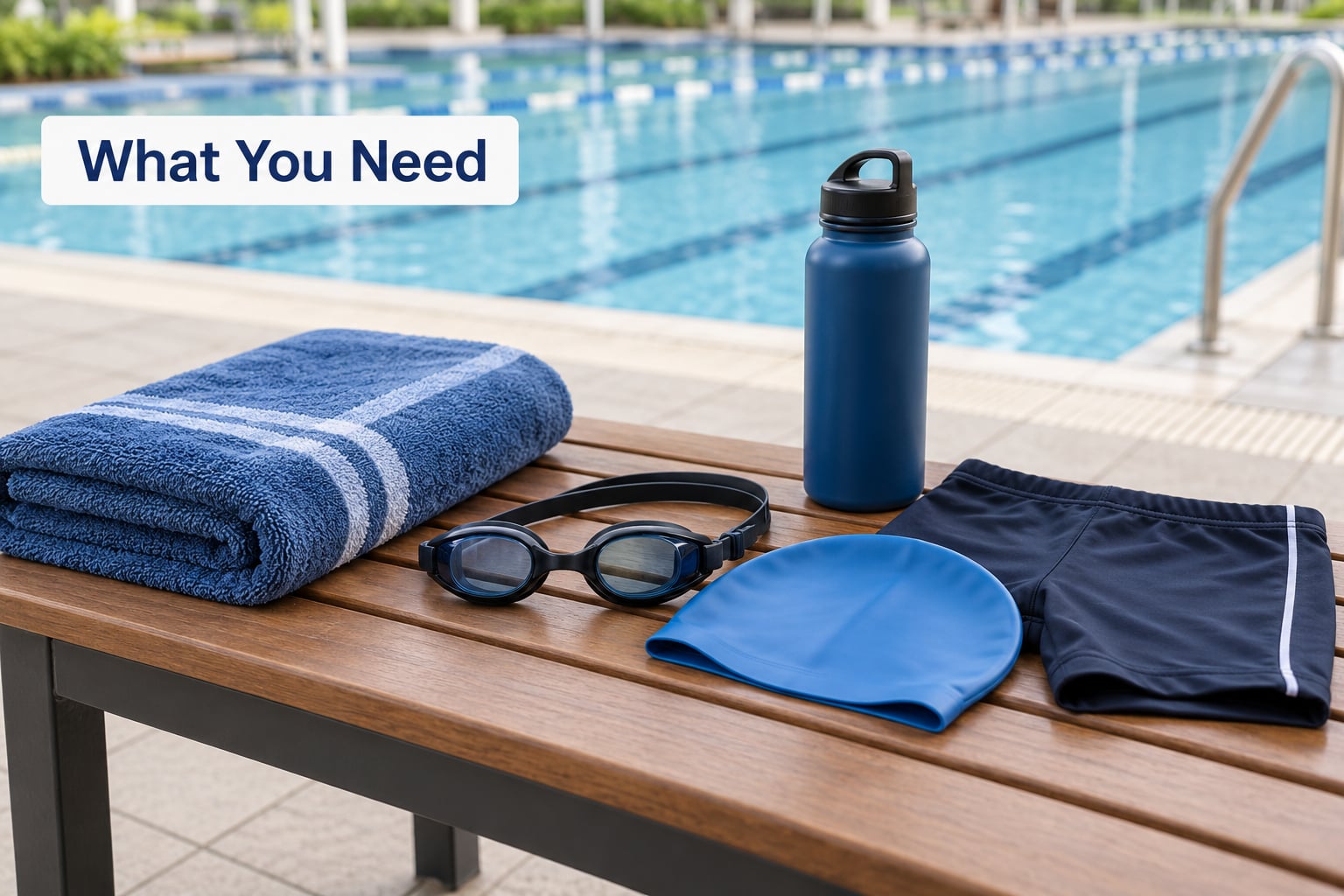
You need less than people expect. Here is the honest list.
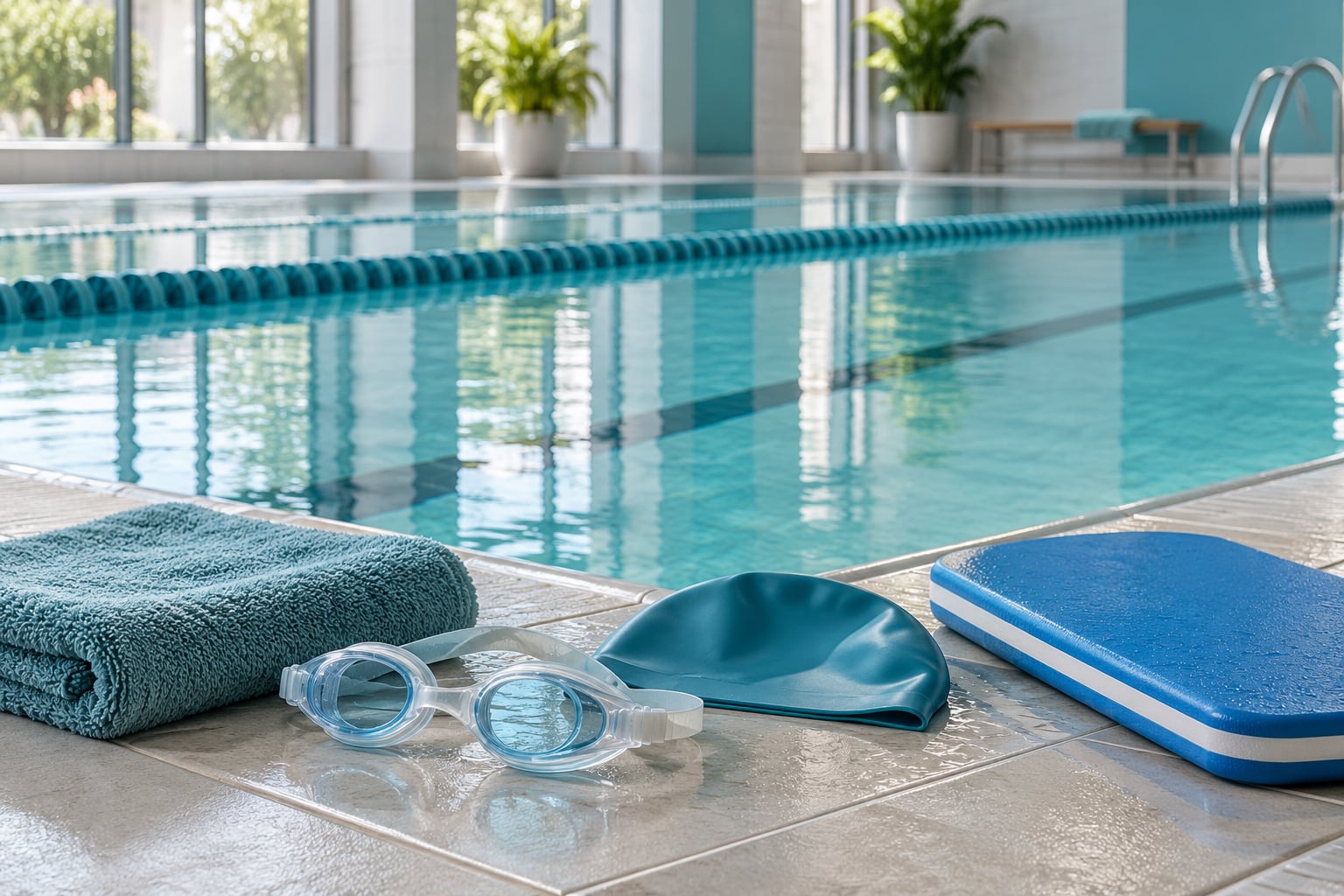
- A pool with a shallow end. Somewhere you can stand with water at your waist or chest and your feet still touching. Depth markers on the wall help.
- Swimwear you can move in. A swimsuit, trunks, board shorts, or leggings and a top. It needs to stay put when you push off the wall.
- Goggles. Clear lenses for your first lessons, not tinted. You are learning to keep your eyes open underwater, and you cannot do that without them.
- A swim cap if the facility requires one. Most indoor pools do. It also keeps chlorine out of your hair on your first visit.
- A towel and a change of clothes. Bring a second layer, because you will be warmer walking out than you expect.
- A water bottle. You will be in the water for less than an hour and still surprisingly thirsty.
- An instructor, or a patient adult friend. A friend is fine for your first visit. An instructor is much better once you want to learn a real stroke.
You do not need to be fit, athletic, or confident in water. You do not need to own a kickboard or a set of fins; most facilities lend them for lessons.
You also do not need a good reason. People start because they are afraid of deep water, because a doctor told them to do something low impact, because they want to swim on vacation without panicking, or because they are tired of saying they cannot swim.
Step-by-Step: How to Start Swimming as an Adult
Get Comfortable in the Water
Enter the pool from the shallow steps, not by jumping. Sit on the top step with your feet in the water until the temperature stops surprising you, then lower yourself one step at a time.
Stand up. Put your hands on the wall. Do nothing for a minute, just feeling the water press on your legs and listening to what the pool sounds like.
Now do the single most important thing in this entire article: put your face in the water and blow bubbles. Exhale slowly through your nose and mouth, like you are gently blowing out a candle. Every instructor says this over and over. Go back to bubbles. Breathing is the whole thing.
The reflex most adults have is to hold their breath. Breathe out underwater, breathe in above the surface, and never try to inhale while your face is still wet.
Then walk. Walk the length of the shallow end and back. Kickboard under your hands if you have one.
Your checkpoint: you can stand, breathe, and walk or bob in water that is no deeper than your chest, and your heart is not racing.
If you feel anxious or tired: get out, sit on the steps, and put your feet back in. Anxiety in a pool is not a flaw, it is a reasonable response to being in a situation you cannot yet control. A second visit almost always feels better than the first one.
Practice Floating and Body Position
Floating is mostly a matter of where your head goes. Your head is about 80 percent of your buoyancy, and a head that tips back lifts the rest of you.
For a back float, stand up, lean back slowly until your back touches the wall, then let your feet lift away. Keep your head tipped back and your ears in the water. Your hands will want to paddle; small quiet sculling with your hands keeps you up and teaches you the balance you will need later.
For a front float, take a big breath, tuck your chin toward your chest, and extend your arms and body into a long straight line. Beginners usually need a spotter holding the hips for a few seconds. That is enough. The goal is a body that is long and quiet, not a long float.
Practice one more safety skill now: how to stand up. Tread a little, pull your knees up to your chest, and let your feet find the bottom. Every instructor drills this, and it is what you will use in open water later.
Your checkpoint: you can hold a back float and a front float for several seconds with a hand supporting you, and you can bring your feet under you to stand without thrashing.
If you feel anxious or tired: floating is passive. If your arms and shoulders burn, you have been doing it too long. Twenty seconds on your back is a real session for a first-timer.
Learn the Basic Stroke Sequence
You cannot practise a stroke until you can stay calm and breathe with your face in the water. That is why the order below is the order.
- Body position first. Long and flat, hips near the surface, head down looking at the pool floor a few feet ahead. This is usually called a streamline position.
- Breathing second. Turn your head to the side, exhale underwater, inhale as your head turns back. Beginners often breathe every two or three strokes to start. Two is the easiest rhythm to learn.
- Kicking third, with a board. Hold the kickboard at the top, arms extended, and kick small and fast from the hip. Small fast kicks move you farther and stay quiet, which is exactly what a beginner needs.
- Arms last. Once breathing and kicking work together, add a freestyle arm: reach forward, pull down under the water, and recover over the top without lifting your head.
If freestyle feels like too much coordination for week three, breaststroke is the kinder option. It is slower, more predictable, and most adult beginners find it reassuring because your head stays up and you can see where you are going.
Whichever stroke you start with, keep the sessions short. Practice one thing at a time until it feels boring, then add the next thing.
Build Endurance in Short Sessions
Beginners do not need endurance. They need repetition with enough rest in between to stay calm.
A sample week looks like this: one lesson where you learn something new, one practice session where you repeat it, and one rest day. Two sessions a week is plenty to start, and three is more than plenty.
Warm up in the shallow end for five minutes before you touch a lane. Walk, splash, bob, and breathe until your breathing is normal. Then work in short intervals, like ten lengths easy with a full minute sitting on the edge between each set.
Hydrate between sets, not during. Stop before you are exhausted rather than after, because the session where you quit early is the one that gets repeated next week.
Progress the distance, not the intensity. Going from four lengths to eight comfortable lengths is a bigger win than swimming twice as fast for the same four.
Most people also hold a fear-of-water conversation with themselves at some point in month two. That is normal, and it usually passes once your body trusts the water, which happens after a few dozen uneventful sessions.
Common Mistakes to Avoid
These are the six things that slow almost every adult beginner down, and what to do instead.
Holding your breath. The automatic panic response makes you tense up and then gasp. The fix is exhale underwater, every single time, even when you are standing.
Looking straight down at the pool floor. Beginners swim with their chins up, which makes them sink and lifts their legs. Look at the floor a few feet ahead instead, and keep your hips high.
Going too far too soon. Swimming a full length in the first week is a great way to panic. The fix is to swim short distances until the short distance stops being hard.
Comparing yourself to the lane next to you. Those swimmers may have been doing this for years. A tired beginner next to a person with a good kick is not a fair comparison, and it is the number one thing that makes nervous adults quit.
Skipping instruction. YouTube is a useful supplement, not a replacement. Watching a video cannot correct your breathing timing or stop you from going too far. Books, videos, and forum threads can explain technique; only being in the water tells you what your body is actually doing.
Ignoring pool and lane etiquette. Swim on the right, pass on the left, look before you turn, and do not stop in the middle of a lane without checking. If you need to stop, swim to the wall. If you need help, raise a hand and say so out loud. Nobody in a pool has ever been annoyed by that.
A few safety habits worth building from day one: never swim alone, and never dive into water you have not checked the depth of. Adults account for the majority of drowning deaths, and most of those are people who could not swim or could not stay calm in the water. That is the whole reason to learn.
Finally: nobody cares what you look like. Tubs, suits, swim caps, goggles, whatever you wear. The pool is the least judgmental room you will ever walk into, because everyone in it is busy thinking about their own breathing.
Frequently Asked Questions
Am I too old to learn to swim as an adult?
No. Adults learn to swim well into their sixties and seventies, and there is no age limit. What slows you down is not age, it is time in the water. Adults who swim two or three times a week, consistently, reach back floating within a few sessions and a full pool length within a few months. If your joints or a recent surgery are limiting you, tell your instructor, because swimming is one of the few activities you can start with almost no impact.
How do I stop being afraid of the water as an adult?
You get comfortable in stages rather than jumping in. Start in water where you can stand, exhale underwater, and walk the shallow end. Then add a supported back float with a spotter, then a front float, then a short swim with a board. Fear usually shrinks in small, boring, repeated doses, which is why most adult beginners feel noticeably different by their third visit, not their thirtieth.
What is the first step in learning to swim?
The first step is water confidence in the shallow end, not stroke instruction. Stand in water you can touch the bottom of, learn to exhale underwater and inhale above the surface, and walk and bob until you are not panicking. You cannot practise any stroke until you can stay calm and breathe with your face in the water, so comfort and breathing come first and everything else follows.
How long does it take an adult to learn to swim?
With two sessions a week, most adults float on their back within the first few lessons, swim a full length of a pool somewhere between six weeks and three months, and feel genuinely comfortable in a group lesson setting by month three. Consistency matters more than you would think: adults who attend two or three times a week for three months swim noticeably better than adults who go once a month for a year.
Do I need to be able to float before I start lessons?
No, and instructors do not expect you to. Adult beginner classes are built for people with no swimming ability at all, and floating is one of the first things taught. If being in deep water makes you refuse to start, that is exactly the thing to mention when you call about a program, because a good instructor will start you in shallow water for a few sessions first.
Can I learn to swim on my own without lessons?
You can learn breathing, floating, and basic body position safely from books and videos, and those are the skills that stop you panicking. But technique you cannot see, distance judgment you cannot feel, and a lane you cannot judge from the pool floor are all better taught by someone standing next to you. If cost is the barrier, look for beginner classes, community pool programmes, and membership options with introductory sessions rather than going alone.
Conclusion
The first action is small: call a community pool or a YMCA branch and ask whether they run an adult beginner class that starts in shallow water. Or, if a class feels like too much commitment, go to a quiet pool on an off-peak afternoon with a patient friend and spend twenty minutes standing up and blowing bubbles.
After that, remember what this is actually for. If you learn how to start swimming as an adult by following the order above, you will be able to float, breathe, and swim a length, and you will be the person in the group who is not afraid. Nobody gets there fast, and the adults who swim at fifty are the ones who started unhurried at forty.