
Joining a recreational sports league takes about three things: a sport you actually like, a league that runs on a night you are free, and a registration form that will accept you as an individual. Most leagues do not require tryouts or an existing team, so you can show up on your own. The whole process usually takes a week or two, and the first step is simply finding the adult league coordinator for your city.
Nobody is born knowing how this works. I have watched a lot of people put off joining for years because they assumed they needed a group of friends who already played. The thing nobody tells you is that most rec leagues are built to fill rosters on their own, and a large share of their members joined exactly the way you are thinking about joining.
Below is the process I would follow, in the order I would follow it.
Table of Contents
- What You Need
- Step-by-Step
- Common Mistakes
- Frequently Asked Questions
- Can beginners join a recreational sports league?
- How much does it usually cost to join a recreational sports league?
- How do I find an LGBTQ+-friendly sports league?
- Do I need to own all my sports equipment before registering?
- Can I join a recreational sports league during its season?
- What should I do before attending my first team practice?
- Conclusion
What You Need
Most of what follows is common sense, but a few items trip people up because they wait until game one to look for them.
Sport and playing level
Pick the sport before you pick the league. Slow-pitch softball, recreational basketball, volleyball, soccer, kickball, and pickleball all have very different demands on your joints, your schedule, and how fast you have to react. If you are returning to sport after years away, players on r/Homeplate consistently recommend a beginner slow-pitch softball league as the easiest door back in, because the pace is forgiving and the ball does not punish a bad throw.
Schedule and travel radius
Decide which evenings or weekend windows you can protect every week for a full season, and how far you will drive. A league that runs a 45-minute drive is a different commitment than one four blocks away, and the drive is the part people underestimate in February.
Budget
Season fees vary a lot by sport and operator, so keep a rough ceiling in mind and ask what the fee includes. Some charge extra for uniforms or an official, some include everything in one payment. You will also have gear costs, though smaller than people fear.
Paperwork and identification
Almost every league requires a signed liability waiver before your first game, and competitive divisions sometimes ask for proof of age. Expect a brief health questionnaire. Have a photo ID and a way to submit a form online ready, because waiver portals sometimes expire after 30 days.
Gear you might need to buy first
Hold off on equipment until you read the league’s equipment rules. Bat leagues frequently restrict bats to a certified list, and many leagues ban metal cleats. Buying a bat or a pair of cleats before reading the rules is the most common way new players waste money. Keep a simple list instead: the required items, the restricted items, and anything the league provides.
Step-by-Step
How to join a recreational sports league step by step
Here is the whole process in one view. Decide what you want and what you can commit to, find the leagues, check whether the atmosphere fits, register as an individual, then show up prepared.
- Choose a sport, a playing level, and the nights you can commit to.
- Search your parks and recreation department, a YMCA or JCC, a private social-league operator, and local LGBTQ+ community organizations.
- Compare two or three options on schedule, division, fee, and location.
- Read the code of conduct and ask the organizer how they handle beginners and gender options.
- Register as an individual or a free agent, sign the waiver, and pay.
- Arrive 15 minutes early with water, the right shoes, and layers for the weather.
Find and compare local leagues
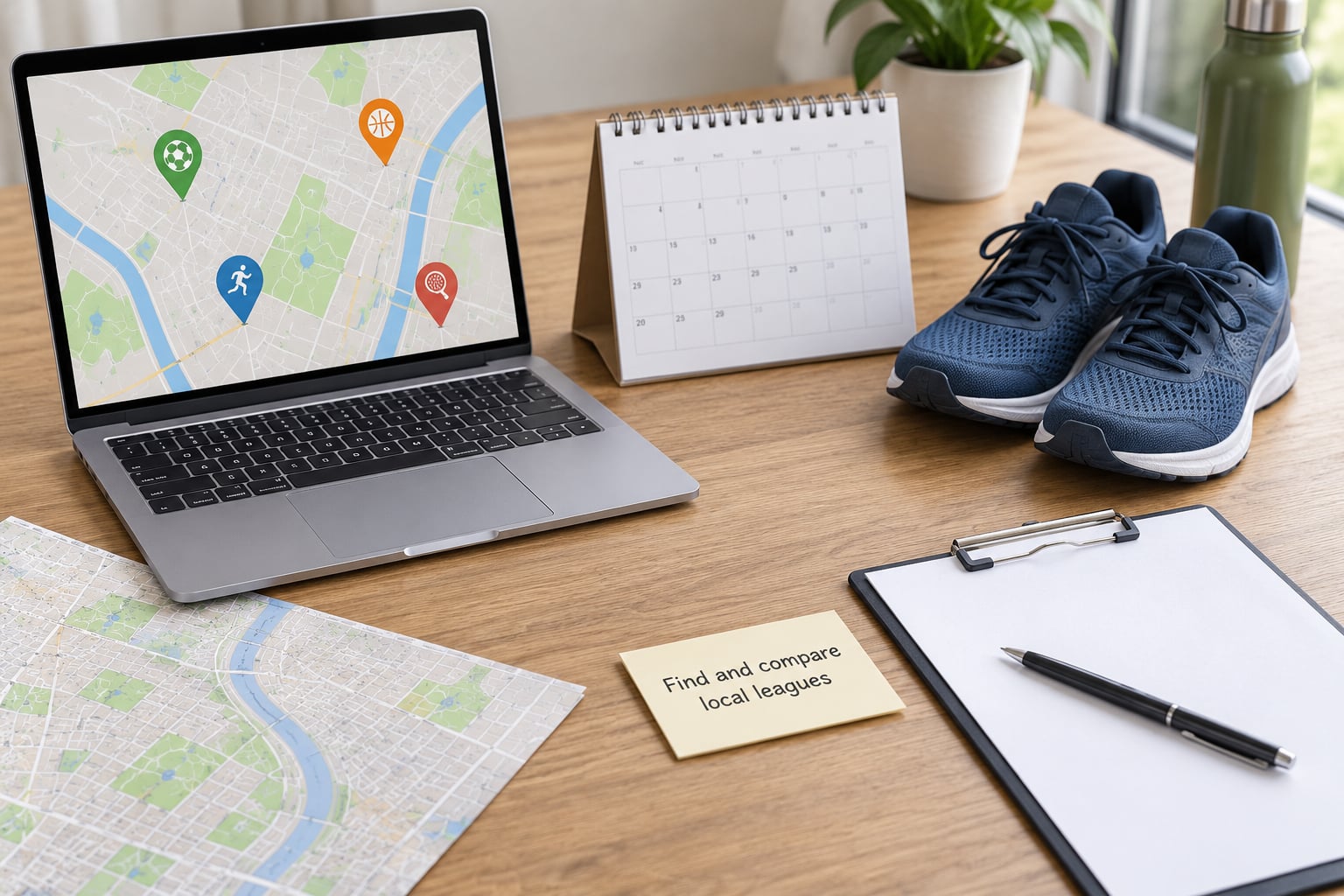
Start with the city, not with an app. Municipal parks and recreation departments run the cheapest and most beginner-tolerant leagues, and their adult league pages usually name a single adult league coordinator with an email address.
After that, widen the search. YMCA and Jewish Community Center programs fill up early and often include equipment or a gym membership in the fee. Private social-league operators are convenient, run all year, and are usually the easiest place to register as a single player. LGBTQ+ community organizations and their sports clubs sometimes run their own teams or leagues, and those are worth a direct email.
Then compare the three or four options you found on five things: the total fee and what it covers, the night of the week and season length, the skill divisions, the distance from home, and the registration deadline. Rec leagues run seasonal sessions, and spring sessions often fill during the winter. Registering early gives you the pick of division and night.
Check that the league is welcoming and compatible
A league does not have to be LGBTQ+-specific to be a good fit. What matters is whether it has a written code of conduct, whether it states which gender options it accommodates on teams and in facilities, and how it enforces the code when something happens.
Ask the organizer four questions directly: Does the league have a code of conduct? Is there a beginner division with no tryouts? How do you handle gender options on rosters and in restrooms? What happens if someone breaks the code? An organizer who answers plainly is usually a league that handles things plainly.
Players on r/ultimate point out that some associations run individual registration specifically for people who found the league but do not know anyone yet. That feature is a decent proxy for how much a league thinks about newcomers.
Attend a trial, open practice, or orientation
If the league offers a free trial session or an open practice, go. Twenty minutes there tells you more than an hour of reading. You will see the real pace of play, how the coaches or captains talk to people, whether anyone is checked in by name at the door, and how the facility sounds.
Ask a few players what a season looks like, how much running is typical, and whether people stay after to eat or drink together. If a league offers no trial, ask to be sent the schedule and any orientation video, and ask whether you can watch one game before deciding.
Complete registration and review the details
Choose your division honestly. People who overestimate their level tend to have miserable seasons and then quit, and people who badly undersell themselves get bored. If you are unsure, say so in a note to the organizer and ask for a recommendation.
Before you submit the form, look for the refund policy, the roster minimum and maximum, the makeup game rules, and the forfeit deposit. These four lines explain most of the disappointments people have in their first season.
On medical questions, give what the league requires and nothing more. A checkbox list or a general fitness question is normal; a demand for pages of health history is not, and it is fair to ask why.
Prepare for your first game or practice
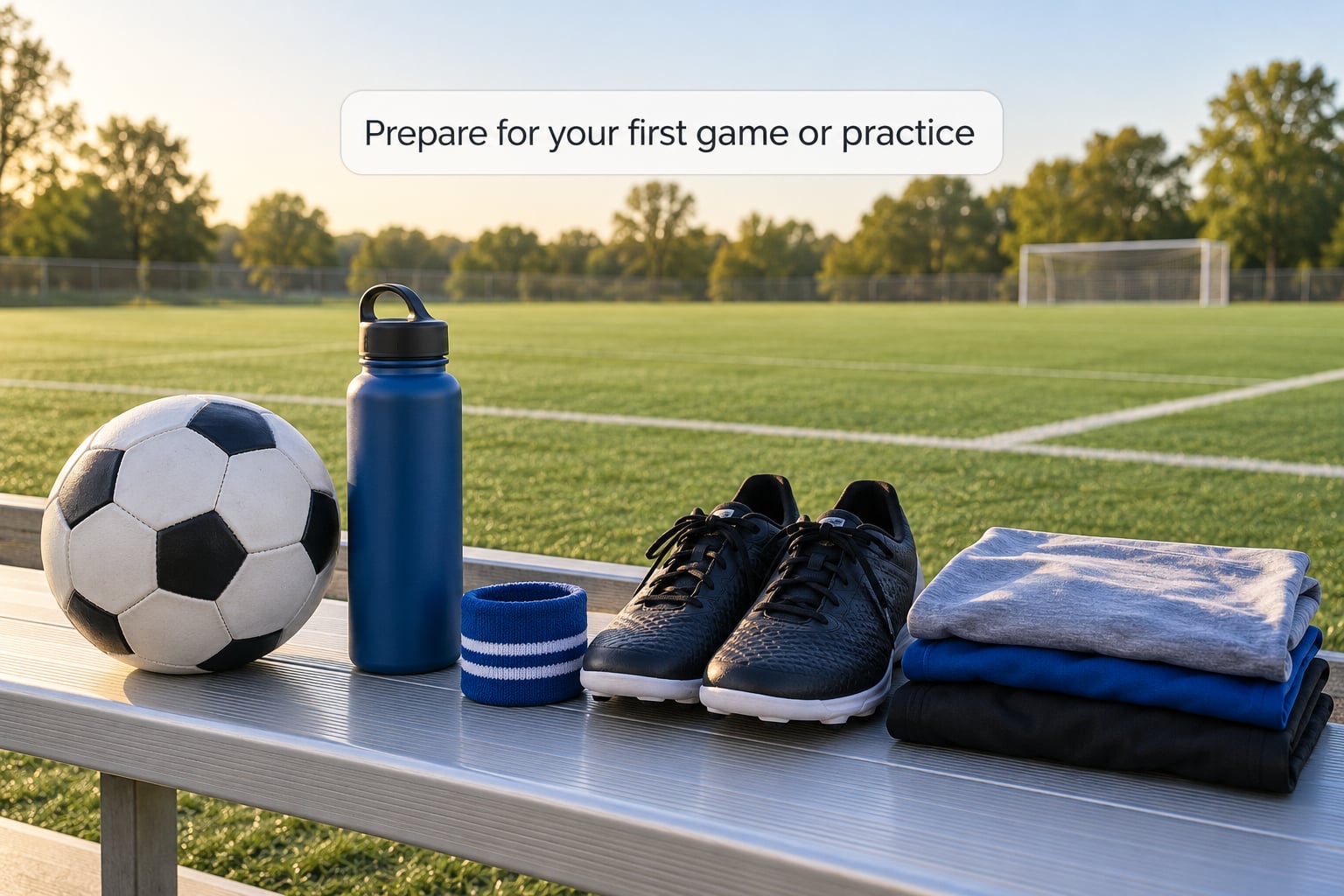
Ten minutes of prep prevents the two most common first-practice embarrassments: the wrong shoes and no water. Wear the closed-toe athletic shoes you have actually broken in, not the new pair.
Bring water, a layer for the sidelines, and anything the league said was required, such as a glove or a jersey number. Arrive 10 to 15 minutes early and find the coordinator, because early arrivals get introduced first.
Warm up for 5 to 10 minutes even if you feel ready. Walk or jog, then do dynamic movements. Anyone coming back to sport after a long layoff should tell the captain, so nobody expects a sprint from you on week one.
Settle in and build a routine
The first season is mostly about habits. Confirm your attendance through whatever channel the group uses, usually a group text or an app, and reply even when the answer is a quick yes or no. Reliable players get re-signed; silent players get forgotten.
Learn the small norms early. Whether the team stays for food afterward, whether people rotate positions, how much trash the last person picks up. Ask your captain directly what they need rather than guessing.
Volunteer once. Scorekeeping, lining the field, ordering food, or running a drill takes ten minutes and does more for your standing than a season of good playing. And if nerves do not fade on their own, tell the captain. Ask for a position where you see the play, and practice on your own twice before the season starts. Nobody in a rec league is grading you.
Common Mistakes
Choosing a league on reputation alone. A great social media presence tells you nothing about the coaching or the code of conduct. Ask for the code, the divisions, and the roster rules before you pay.
Ignoring travel and weather. A league 50 minutes away that plays outdoors ends in a rained-out season you paid for. Check the facility, the cancellation policy, and the makeup game rules.
Playing at the wrong level. Skipping the beginner division to avoid looking outclassed is a fast route to a bad season. Start where the ball moves slowly and move up next year.
Skipping the waiver. Some leagues do not let you take the field without one, and a lapsed waiver portal can cost you the first two games.
Buying gear too early. Certified bat lists, cleat bans, and required jersey numbers are published by the league. Read them first and buy second.
Missing the registration deadline. Deadline for early signups is usually a few weeks before the season starts, and open divisions fill first. Put the date in your calendar the day you find the league.
Ignoring the code of conduct. Read it. If something happens and you stay silent, the league learns that nothing happens.
Frequently Asked Questions
Can beginners join a recreational sports league?
Yes. Most rec leagues are built for beginners and many run a dedicated beginner division with no tryouts. Slow-pitch softball, kickball, volleyball, and pickleball are common entry points because the pace is forgiving. Tell the organizer your honest experience level when you register and ask which division they would place you in. You will likely spend the first few practices learning the basics and the local norms, which is exactly what the division is designed for.
How much does it usually cost to join a recreational sports league?
Fees depend on the sport, the season length, and who runs the league. Municipal parks and recreation programs are usually the least expensive and often the only charge is a season fee plus a small referee or deposit. YMCA and JCC programs run higher because they include facility access. Private social-league operators charge per season with gear sometimes extra. Ask what the fee covers before you register so you are not surprised by a uniform or official charge.
How do I find an LGBTQ+-friendly sports league?
Start with your LGBTQ+ community center or sports club, then email nearby rec leagues and ask directly whether they have a code of conduct, which gender options they accommodate on rosters and in facilities, and how they handle a complaint. Many leagues are not LGBTQ+-specific and are perfectly welcoming. The written code is the real signal, because it is what an organizer can actually enforce. A named contact who answers clearly is another good sign.
Do I need to own all my sports equipment before registering?
No, and you should not buy anything until you read the league rules. Some leagues supply or loan gear, some require you to buy a specific item, and others restrict what you can use, such as a certified bat list or a ban on metal cleats. Register first, read the equipment section, then shop. Many beginners borrow a glove or ball from a teammate for the first month, and that is completely normal.
Can I join a recreational sports league during its season?
Often yes. Leagues that keep a free agent list fill in mid-season vacancies, and some associations run individual registration on a rolling basis for exactly that reason. Ask the adult league coordinator whether there is a free agent list and whether fees are prorated. If you missed the deadline, joining next season is the fallback, and joining as a substitute for a few games is a good way to see if you like it first.
What should I do before attending my first team practice?
Check the schedule and venue, confirm your waiver is submitted, and read the equipment rules one more time. Bring water, broken-in athletic shoes, and a layer for the sidelines, and arrive 10 to 15 minutes early so you can introduce yourself to the captain. Plan to warm up for 5 to 10 minutes, and tell the captain if you are returning to sport after a long break so expectations are clear from day one.
Conclusion
Joining a recreational sports league comes down to three moves: pick a sport and a night you can protect, compare two or three local leagues on fee, division, and code of conduct, then email the organizer and register as an individual. Start with your parks and recreation department, keep a beginner division in your sights, and read the equipment rules before you buy anything. That short email is the whole hurdle.