How to start running as a beginner: use the walk-run method — short bursts of very slow jogging separated by walking breaks — two or three days a week, with a rest day between sessions. Give it four weeks, not four miles, and you will build an aerobic base without the shin pain and knee soreness that ends most first attempts.
The honest truth is that almost nobody gets injured starting to run because running is dangerous. They get hurt because they run too hard, too often, for too long in the first two weeks. Everything below is built around avoiding that.
By the Gay Chicago Magazine editorial desk · Last updated October 2026
Table of Contents
What You Need
The gear list for beginners is short, because most of what running culture tells you to buy is optional until you have somewhere to run three times a week.
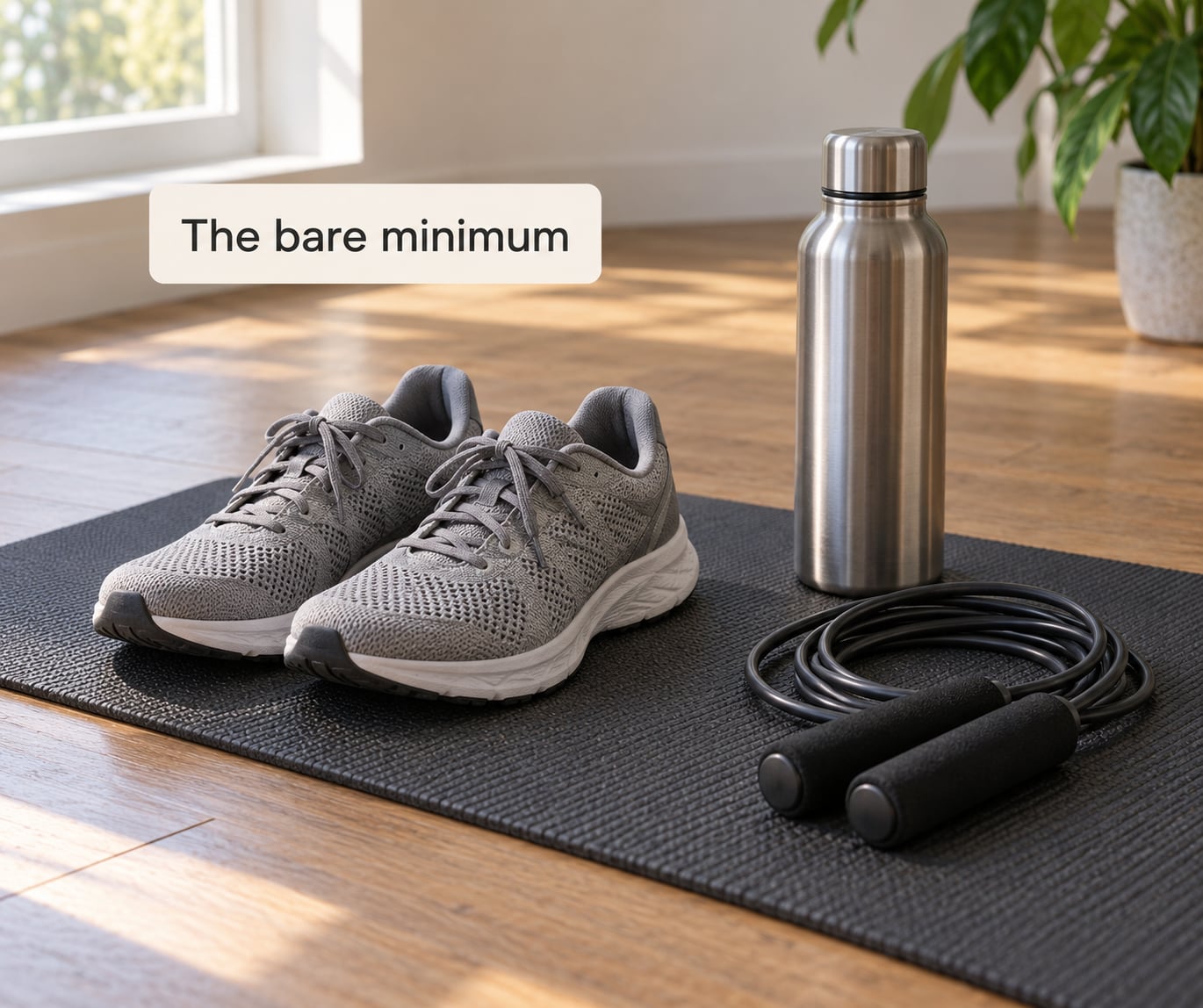
The bare minimum
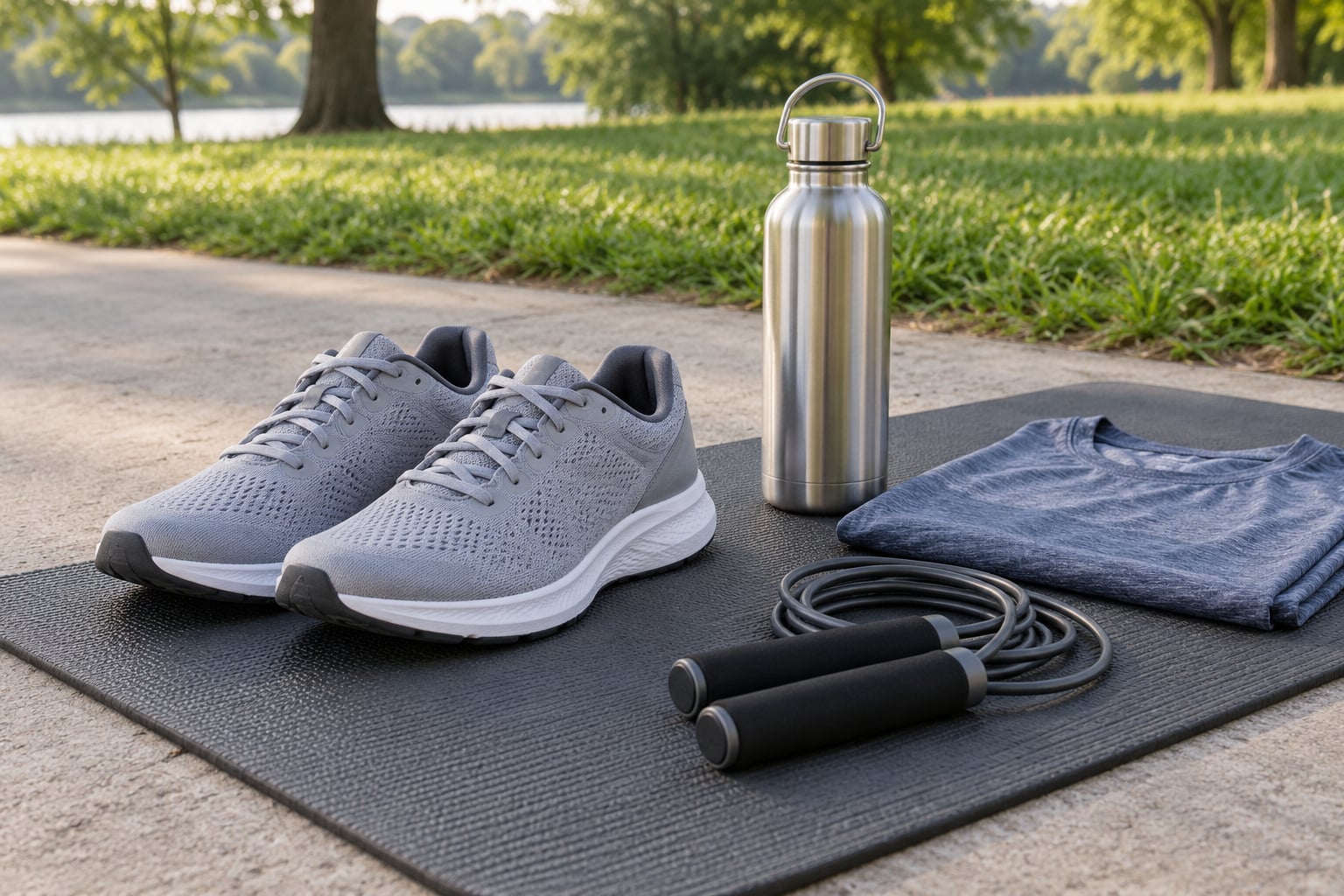
- Running shoes that fit. Not the newest release. The pair that fits your feet with a thumb’s width of space at the toe.
- Socks. Synthetic or wool blends wick sweat. Cotton holds it against your skin and invites blisters.
- Moisture-wicking clothing. Whatever you already own that dries quickly works fine.
- Water. A reusable bottle, mostly for longer sessions once the weather warms up.
- A route you know. Flat, well-lit, with somewhere to stop if you need to.
A watch is genuinely optional. A phone app or nothing at all is enough for the first month, and more on that in the watch-metrics section below.
How to pick a running shoe in five checks
- Try them late in the day. Feet swell after a few hours of being upright, so buy in the afternoon or evening.
- Wear your running socks. Cotton socks change the fit. Thin synthetic socks are what you will actually run in.
- Leave a thumb’s width at the toe. Your longest toe should not touch the front of the shoe.
- No pressure points after a short jog. Walk around the store for five minutes. Pressure points that feel fine while standing often complain once you move.
- Heel-to-toe drop feels natural. Beginners generally tolerate traditional cushioned shoes better than thin minimalist flat shoes, which deliver more jarring impact per step.
If running shoes make your knees or shins hurt more, walking shoes are a perfectly acceptable way to begin. Walking the same route builds the same aerobic base with less impact per step.
Choosing a route
Pick somewhere flat and boring on purpose. Grass, a track, a flat neighborhood loop, or a treadmill all work. Avoid your first runs on technical trail, and avoid hills until your calves and ankles can handle a week or two of flat running.
Long routes are not the goal in month one. A loop you can finish twice without walking is worth more than a scenic 5-mile out-and-back you abandon at mile two.
Do and skip list before your first run
What not to do before jogging comes up constantly, so here it is plainly.
Do:
- Walk briskly for five minutes first to warm up your joints and raise your heart rate gently.
- Eat a small meal one to three hours before, or have a snack if you are running early.
- Drink water through the morning.
- Pick a time of day you can repeat three days a week. Consistency of schedule beats perfect timing.
Skip:
- Long static stretches before running. Ten minutes of toe-touching does nothing for injury risk and can leave you cold. Move gently instead.
- Starting from a dead stop at full speed. Walk first, then ease in.
- New gear on day one. Do not test unfamiliar shoes, new socks, and a new route at the same time.
- Coffee on an empty stomach if it normally makes your heart race. Your first sessions should be boring.
- Running the day after a hard weight session. Give yourself the rest day.
When to check with a clinician first
This guide is general information, not medical advice. Before you start, talk to a doctor or physical therapist if you have an existing knee, hip, ankle or foot injury, a history of a stress fracture, joint replacement or surgery, an undiagnosed heart condition, or are pregnant. Get clearance if you plan to begin with anything more than walking, and again if pain starts interfering with daily life.
Step-by-Step: How to Start Running as a Beginner
Here is the whole method. If you do nothing else from this article, do these five steps.
- Walk for five minutes. Brisk pace, like you are late for something.
- Jog for 60 seconds. Slower than feels silly. You should be able to say a short sentence out loud.
- Walk for 90 seconds. Let your breathing come back down.
- Repeat steps 2 and 3 for 15 to 20 minutes total. That is roughly eight to ten cycles.
- Walk for five minutes to cool down. Finish the session, not the run, on foot.
That is the walk-run method in its simplest form. Boring is the point, and boring is how to start running as a beginner without getting hurt. Everything else on this page is a way to adjust it.
Why walking breaks work: they let your cardiovascular system and your bones, tendons and cartilage adapt at the same time. Continuous running asks your heart, lungs and tissues to handle load simultaneously, and the tissue side is what fails. Breaking the session up removes the sharp fatigue spike that causes tissue stress, so you build endurance without building an injury.
Set a Comfortable Starting Point
Start from what you already do, not from a pace number. If you can walk briskly for 30 minutes without needing to stop, you can run six 60-second jogs with a 90-second walk between them and finish feeling like you could have done more. If 30 minutes of walking is a challenge right now, start with two-minute walk intervals and five repetitions.
The whole first month lives or dies on one self-check: the talk test. If you cannot speak a full sentence out loud, you are too fast. Slow down until you can. That is conversational pace, and it is genuinely the correct training intensity for roughly 80% of your running life, even once you are fast.
The aerobic base is what you are building. It is the engine that lets you run longer without falling apart, and it builds almost entirely at easy effort. Beginners who spend their first weeks trying to run fast are training the wrong system and having a miserable time.
It helps to know your effort on a one-to-ten scale, often called rate of perceived exertion, or RPE. Easy running is a 3 or 4 out of 10. Hard is 7 or above. If you are at 8, you are sprinting in a beginner’s shoes, and it will not help you.
Ignore your watch’s maximum heart rate number. Many devices read absurdly high in the first minutes of any run — 195 at an easy jog is a sensor artifact, not a crisis. Some forum beginners panic about it. It means your wrist sensor read a spike; ignore it and judge by breathing instead. The same goes for cadence: a figure like 165 steps per minute looks like a grade, but it is a byproduct of stride length, and chasing it makes beginners overstride and land harder.
GPS drift on a cheap device can be 3 to 5 percent of your distance. That is why your first mile might read short or long. Do not correct it by pushing harder. Same for vertical oscillation and any other number you do not yet understand: mostly noise for the first eight weeks.
Warm Up and Cool Down Properly
Warm up with five minutes of brisk walking, then add gentle movement: leg swings, ankle circles, a few shoulder rolls. The goal is a slightly warm, slightly elevated heartbeat, not a workout. Cold muscles plus hard effort is a common way to pull something.
Once you are moving, four form cues cover almost everything a beginner needs:
- Posture. Tall, chest open, hands loose. No leaning forward at the waist.
- Gaze. Look 10 to 20 feet ahead, not at your feet.
- Arms. Swing forward and back from the shoulder, hands relaxed. Elbows near 90 degrees. No crossing the midline in front of your chest.
- Breathing. Steady, rhythmic, mostly nasal at easy pace. A common rhythm is inhale for two steps, exhale for two. Breathe from your belly, not your chest.
On foot strike, let your foot land wherever it naturally lands, underneath your body rather than out in front. Landing ahead of your centre of mass — overstriding — sends a jolt up through the shin and knee. Shortening your stride slightly solves more beginner shin problems than any shoe.
Cool down by walking for five minutes until your breathing is normal. Then, if you want to stretch, do it after the session — gentle, held stretches for calves, hamstrings, hips and chest, 20 to 30 seconds each. Static stretching before running is a ritual with no evidence behind it, and skipping it is fine.
How to Start Running as a Beginner: The Four-Week Plan
Run three sessions a week with rest days between them. Never run on consecutive days in month one. Here is the schedule, with sessions separated by walking breaks and a five-minute warm-up and cool-down around each one.
| Week | Sessions | Jog interval | Walk interval | Repetitions | Total time |
|---|---|---|---|---|---|
| 1 | 3 | 1 min | 2 min | 6 | 22 min |
| 2 | 3 | 90 sec | 90 sec | 7 | 23 min |
| 3 | 3 | 2 min | 90 sec | 6 | 22 min |
| 4 | 3 | 5 min | 2 min | 4 | 28 min |
Three to four weeks in, most beginners can handle 15 to 20 minutes of continuous easy running, or something close to it. That is the goal for the first month: finishing the session thinking you could have gone a bit further.
Some runners prefer a different progression. The 3-3-3 rule has you run three minutes, walk one minute, repeat three times, then walk the remainder — useful if your walk breaks feel too short to recover. The 5-4-3-2-1 method is a well-known pyramid: five minutes easy, four minutes a little faster, three faster still, two near hard, one hard, then back down. It is a workout, not a beginner plan, and I would leave it alone for your first three months.
If you want a structured program instead of improvising, Couch to 5K is the most widely used free app-based plan and follows the same walk-run logic with an eight-week arc. Its first sessions are famously gentle. It also takes one decision off your hands, which is half the battle for anyone still working out how to start running as a beginner: it tells you what to do on a given Tuesday.
Should you run, walk, or jog to start? Walking wins if you are injured, returning from illness, or carrying weight that makes running painful. Jogging wins if walking 30 minutes is easy for you. Most beginners asking how to start running as a beginner land somewhere between the two, alternating on purpose.
| Option | Typical pace | Impact per mile | Best for |
|---|---|---|---|
| Brisk walking | Roughly 3.5 to 4.5 mph, slower than most beginners expect | Lowest | Zero base, joint concerns, returning from injury |
| Jogging | Slower than most people expect, often 6 to 8 mph | Moderate | Your first month, with walk breaks |
| Running | Anything faster than jog pace | High | Once you can run 20 to 30 minutes continuously |
Increase Time, Not Speed
The 10% rule is the simplest guardrail in running: add no more than about 10% to your weekly running time from one week to the next. Ten minutes extra on a 20-minute run. It is conservative on purpose.
If a week feels too hard, or you were sore for more than two days afterwards, repeat it. Repeating a week is not failure; pushing through it is what produces injuries. Progress by adding one interval, not thirty seconds to every interval.
Soreness versus injury is the question beginners most need answered, and it has a fairly clean test.
| Normal beginner soreness | Warning sign | |
|---|---|---|
| Where it shows up | Both sides, big muscles — quads, hamstrings, calves, glutes | One side only, or a specific joint or a line along the shin bone |
| What it feels like | Dull, achy, symmetrical, peaks 24 to 48 hours after the run | Sharp, stabbing, or worsening with every step |
| Behaviour | Warms up and eases during the next easy run | Worse on the next run or on stairs the next morning |
| Swelling or bruising | None | Visible swelling, bruising, or a hot tender joint |
| What to do | Rest, hydrate, sleep, run easy or walk when ready | Stop running. See a doctor or physical therapist. |
Delayed onset muscle soreness, or DOMS, is the achy stiffness 24 to 72 hours after unfamiliar exercise. It fades as your body adapts, and it is not a measure of a good workout. It is also not a prerequisite: some beginners never get it at all.
Shin splints show up as a dull ache along the inner edge of the shin bone that starts early in a run and fades if you stop. Runner’s knee, medically patellofemoral pain, is a dull ache behind or around the kneecap, often worse on stairs and descents. Plantar fasciitis is a sharp stab in the heel with the first steps of the morning that eases as you walk. Achilles tendinitis is tenderness in the tendon at the back of your ankle.
Stop running and see a doctor if:
- Pain is sharp, or it wakes you at night.
- It is one-sided, or it is in a joint rather than in the muscle belly.
- You feel it during everyday walking or stairs, not just during runs.
- There is swelling, redness, bruising, or a hot spot.
- You limp after a run, or the pain has not improved in two weeks.
- You hear a pop, or the joint gives way or locks.
Stopping for two weeks costs you almost nothing. Running through a real injury costs months. Forum beginners who ask this question consistently get the same answer from the people with more experience.
Build a Sustainable Routine
Three sessions a week is the sustainable number, and the rest days are the training. Muscles, tendons and bone rebuild while you are not running, and that adaptation is where the fitness comes from.
Strength work twice weekly, 15 to 20 minutes, all bodyweight: two sets of 10 to 15 of squats to a chair, reverse lunges or step-ups, glute bridges, and calf raises. Legs and hips absorb the impact of running, and two sessions a week is enough to protect them.
Fuel and fluids. Three hours of eating before running is not required, but an easy snack like a banana with peanut butter, a handful of trail mix, or toast gives you something to work with. Bring water on runs longer than about 45 minutes in warm weather and drink to thirst rather than to a schedule. If you are running for more than an hour, consider an electrolyte drink.
Recovery habits that matter more than gear: seven to nine hours of sleep, eating enough overall, and a few minutes of calf, hamstring and hip stretching after the easy sessions.
Chicago weather is a real constraint and worth planning for. The lakefront path is exposed, and a headwind off Lake Michigan turns an easy run into a hard one on the out leg — run into the wind and come home with it at your back. Summer runs along the lake stack humidity and sun into something closer to an intervals session than an easy one, so go earlier, shorten the run, or move it to a treadmill. Winter ice is a legitimate reason to skip an outdoor session entirely rather than to test your footing.
That makes indoor running a genuine option, not a compromise. A treadmill removes wind and weather entirely and lets you hold pace constant across repeats, though the belt still moves under you so the load is slightly different from outdoor running. Many Chicago-area gyms and community centres run indoor track hours with freestyle walk or run sessions, which are forgiving, social, and free or nearly free.
You do not have to do it alone. Beginner accountability works better than willpower. Options that actually stick: a recurring calendar block with a friend, a running club that explicitly welcomes beginners, a club’s walk-run group, or an app-based virtual race with a finish date you care about. Race day in a crowd is one of the least lonely experiences in sport, and virtual races let you practise the whole structure without anyone watching your pace.
If running has felt culturally uninviting — pace-group pressure, feeling slower than everyone around you, being looked at — that is a reason to pick your crowd carefully, not a reason to skip. Look for beginner sessions, walk-run groups, women-only or trans-friendly clubs, and races with generous start windows. There is a whole community here that would genuinely rather you showed up slow.
Chosen family counts as accountability. If your people will ask where you are on your rest day, put them on the hook.
Expect a realistic timeline. Cardio fitness improves noticeably in three to four weeks of consistent sessions, and most beginners find easy running noticeably less uncomfortable around week four or five. Faster running comes much later, usually after six to eight weeks of regular work, and then only if you add speed work. Progress in real life is slower than people expect, and a month of one easy run a week ending at around 35 minutes of continuous running is a perfectly normal result, not a failure.
Most of the avoidable damage happens in the first two weeks. The mistakes below are the ones that show up again and again in beginner threads.
Common Mistakes
| Mistake | Why it backfires | The fix |
|---|---|---|
| Starting too fast | Sprints in week one wreck form and end the run early | Run the talk test slow, then add speed after month one |
| Going too long in week one | Muscles and tendons adapt slower than your lungs | Cap the first sessions at 20 to 25 minutes |
| Running every day | No recovery means no adaptation and more repetitive stress | Three sessions, rest days between them |
| Jumping straight to 3 miles a day | Large spikes in load drive shin and knee pain | Add about 10% a week, no exceptions |
| Comparing pace with experienced runners | It measures their training, not your worth | Compare only with your own last session |
| Running through sharp pain | Sharp, one-sided pain is a stop signal, not a push-through | Stop, and see a clinician if it persists |
| Buying gear without trying it on | Badly fitting shoes cause blisters and blisters end runs | Try on late in the day, in your running socks |
| Stretching cold, before running | Long static stretches do not prevent injury | Five minutes of walking and gentle movement instead |
| Chasing watch numbers | Max HR spikes, cadence and GPS drift are noise at this stage | Judge effort by breathing and the talk test |
| Skipping easy days | You only have hard days, so nothing recovers | Keep one genuinely slow session every week |
Three habits that keep beginners going: put the shoes on at the same time each run day, treat three sessions as a successful week rather than a minimum, and never skip a scheduled rest day to make up a missed session.
And one rule that covers a lot of ground: at least 80% of your running should be easy. That leaves room for a hard effort occasionally once you have a base, and it keeps your easy days genuinely easy.
Frequently Asked Questions
What is the 80% rule in running?
The 80% rule says at least 80% of your running should be at an easy, conversational pace where you can speak in full sentences. Beginners should aim for closer to 100% easy running for the first few months. The remaining 20% is where speed work eventually goes, once you have a base of several consistent weeks behind you. It exists because almost every beginner’s instinct is to run every session hard.
What is the 3-3-3 rule for running?
The 3-3-3 rule is a beginner run-walk structure: run for 3 minutes, walk for 1 minute, and repeat that cycle three times, then walk the rest of the session. It suits people who find two-minute walk breaks too short to recover. Use it with the same rules as any other beginner session: keep the running easy, keep the session short at first, and never run on consecutive days.
What is the 5 4 3 2 1 running method?
The 5-4-3-2-1 method is a speed workout pyramid: five minutes at an easy pace, four minutes slightly faster, three minutes faster again, two minutes near hard, one minute hard, then cool back down. It builds speed endurance but it is not a beginner plan. Most beginners should spend their first three months building an aerobic base with run-walk sessions before trying anything pyramid-shaped.
How long should a beginner be able to run?
After four to six weeks of consistent run-walk training, most beginners can manage 15 to 20 minutes of continuous easy running, and plenty are still using walk breaks at that point. In the first month, expect sessions of 20 to 25 minutes total with walking breaks rather than one continuous run. The useful measure is whether you finish feeling like you could have done a little more, not the number on a watch.
How do I start running if I have bad knees?
Start with walking first, then progress slowly: brisk walks of 20 to 30 minutes, three to four days a week, for two to three weeks before adding any running at all. When you add jogging, use short 20 to 30 second intervals with generous walking recoveries, keep the surface flat and soft, and cap weekly increases at about 10%. Cycling and pool walking build cardio with almost no knee load in the meantime. If your knees already hurt when you walk or climb stairs, see a doctor or physical therapist before you start.
What not to do before jogging?
Skip long static stretching, starting from a dead stop at full speed, and brand-new gear on the same day. Walk briskly for five minutes to warm up, eat a small snack one to three hours beforehand if you need it, hydrate through the morning, and choose a flat familiar route. Also avoid running the day after a hard weight session, since your legs and hips need a rest day to be ready for impact.
Start With One Easy Run-Walk Session
Do one thing this week: pick a pace slow enough that you can talk, walk for five minutes, then alternate one minute of easy running with two minutes of walking for about twenty minutes. Finish and walk another five minutes.
That single session is how to start running as a beginner. Everything after it — the 10% rule, the 80% rule, the treadmill in February — is a variation on staying easy and showing up again next week.
General information only, not medical advice. If you have an existing injury, a medical condition, or pain that persists or worsens, stop running and speak with a doctor or physical therapist.