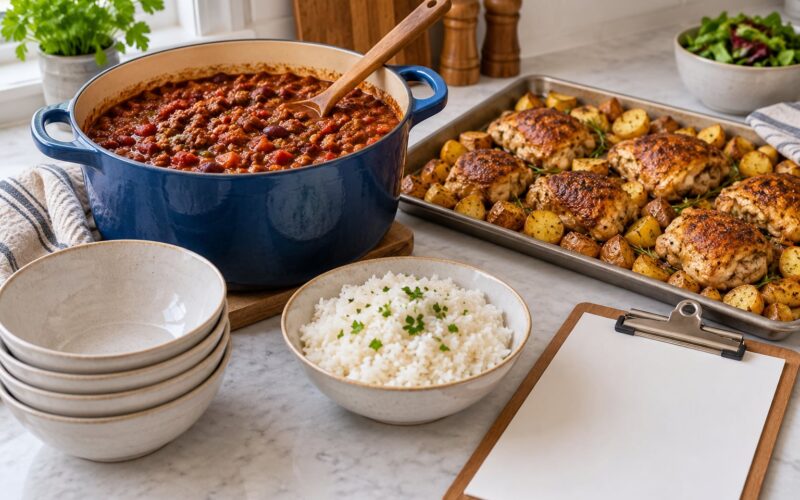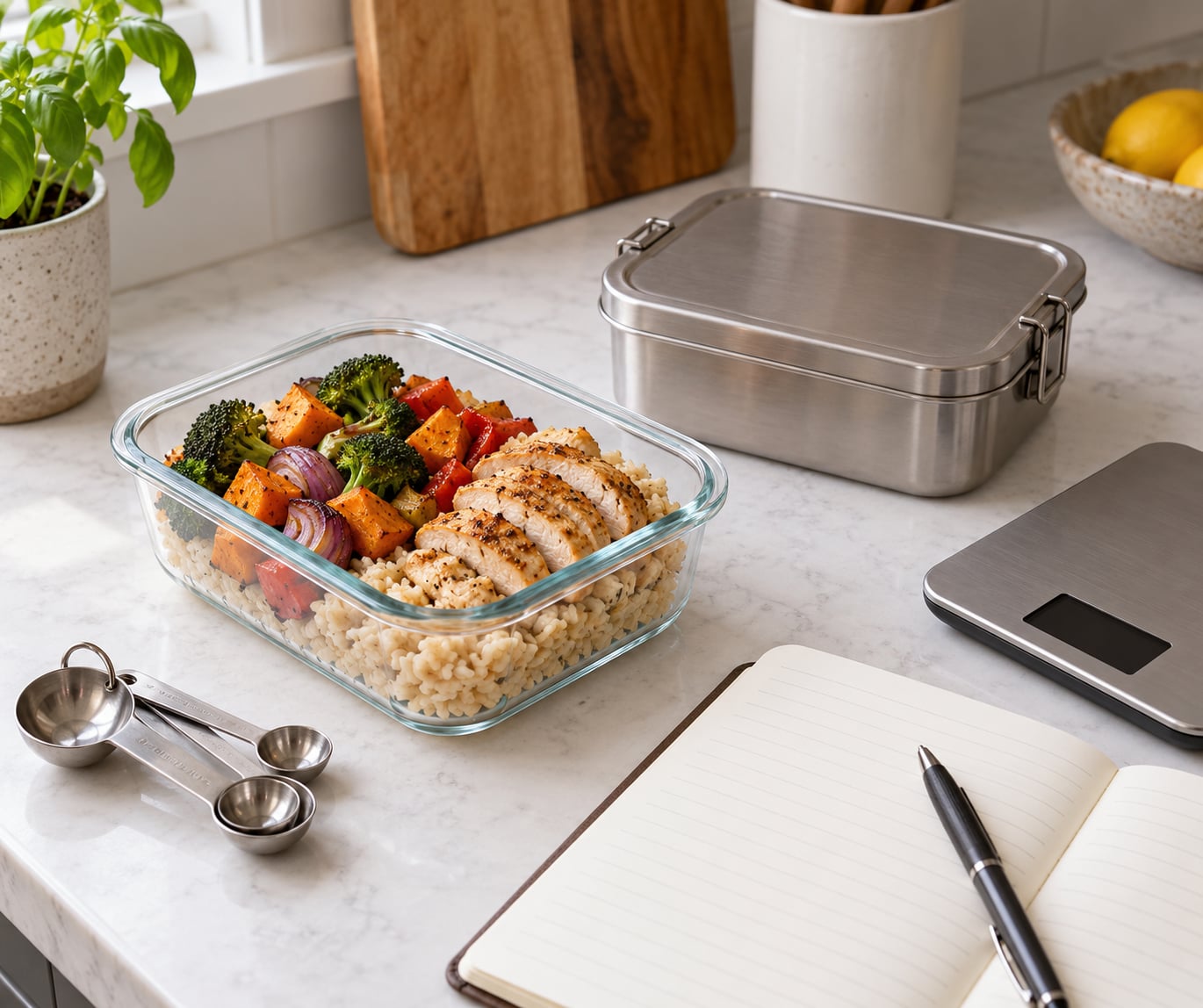
Meal prep for one person works best when you cook components instead of complete meals: a grain, a protein and a tray of roasted vegetables on Sunday, then two or three different bowls assembled from them all week. Scale every recipe to two servings, freeze the second portion right away, and nothing goes to waste.
Most of the work happens in one 90-minute session. What makes it possible is planning portions before you shop, because standard recipes and standard packages are built for four people and that is where the real waste starts.
Table of Contents
- What You Need
- Step-by-Step
- 4. Cool and Store Meals Safely
- Common Mistakes
- Frequently Asked Questions
- How many meals should I meal prep for one person?
- How long do homemade meal-prep meals last in the refrigerator?
- Can I meal prep for one person without freezing everything?
- What are the best containers for single-serving meals?
- How can I keep meal-prepped food from tasting boring?
- What foods should I add only when I eat the meal?
- Start With Two Meals and Three Portions
What You Need
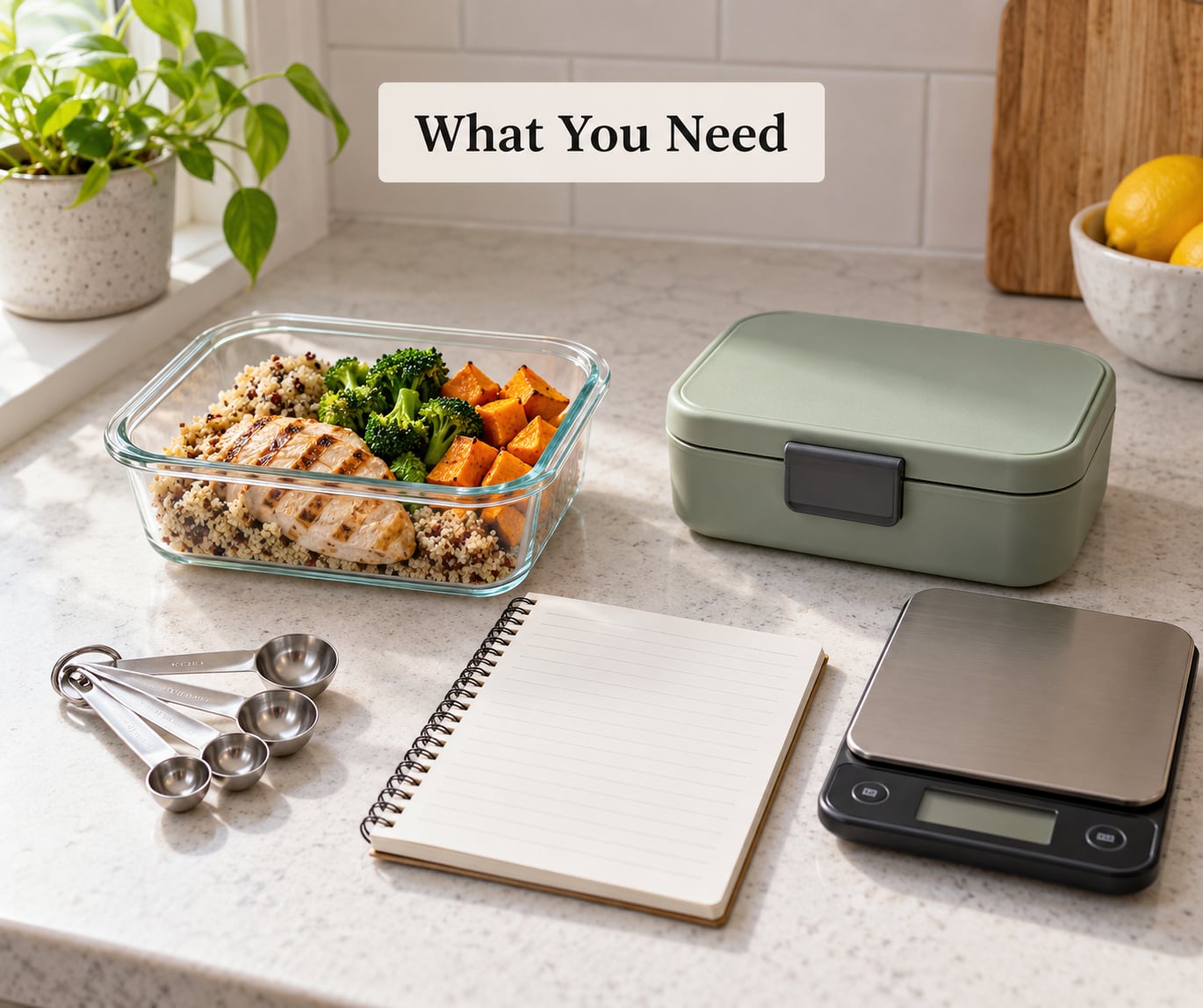
You need less than a family kitchen suggests. Two 2-cup glass containers with screw lids cover most of a week of lunches or dinners, and a small straight-sided jar or cup holds dressing or sauce so it never sits on top of the food.
For measuring, a set of measuring cups and spoons handles most recipes. A small kitchen scale is genuinely useful for grains and protein, where a quarter cup and three quarters cup behave very differently once cooked. Without one, hand portions work fine: a palm of protein, a fist-sized mound of grains, two fists of vegetables.
You also need a marker and either masking tape or small labels. Every container gets the meal name and the date. Two weeks of mystery containers in the back of the freezer is how cooking for one turns into food waste, and dated lids make you actually use what is in there.
For safety, add an instant-read thermometer, a couple of shallow containers, and a few ice cubes. Cooling a big hot pot slowly in the refrigerator is the most common way solo prepped food goes bad early, and a shallow dish cools in a fraction of the time.
On equipment, ignore family-size appliances. A 3-quart pot, a 6-inch skillet, a toaster oven or an air fryer all cook three or four servings without leaving you with a week of leftovers and a week of washing up.
Step-by-Step
This is the whole process, in order. It takes about an hour and a half the first time and closer to an hour once you know your own rhythms.
1. Choose Two or Three Flexible Meals
Pick a grain, a protein, a vegetable and a sauce, then let those four things become more than one meal. Brown rice, roasted broccoli, shredded chicken and a sesame-lime dressing sounds like one bowl, but the same rice works under salsa with black beans, and the last of the broccoli turns into soup at the end of the week.
That is the whole trick behind meal prep for one person. You are not cooking five finished meals, you are cooking four components that combine differently on different days. Cooking components at the weekend cuts evening cooking time roughly in half, because the knife work and oven time already happened.
Keep fresh extras to one herb and one bunch of aromatics a week. Parsley, cilantro or dill, and onions or scallions. Anything beyond that tends to wilt in the crisper while you are eating the same grain bowl on Thursday.
2. Plan Portions Before You Shop
Count the meals you actually eat, not the meals a recipe claims it makes. If you eat dinner every night and lunch three days a week, you need seven to eight containers, not fourteen. Shopping for twelve servings is how a prep session turns into a compost problem.
Cook two servings every time. Eat one, freeze one. It is the simplest rule in solo cooking and it solves two problems at once, since the frozen portion keeps until you are ready for it and never ages in the fridge.
Handle bulk packaging the moment you get home. Split a package of chicken thighs or cheese into single portions and freeze them flat on a tray before they become one solid brick. It turns an eight-serving package into eight separate decisions you can make one at a time, which is why portioning at purchase time is such common advice on frugal cooking forums.
Then write the list by store section and stick to it. Budget like a two-person household and shop like a one-person household, buying the larger pantry staples you will finish and the smallest produce sizes you can realistically eat before they turn.
3. Cook in One Efficient Session
Work from longest to shortest. Preheat the oven first, then start the grain, then chop and roast the vegetables while the grain finishes, then cook the protein last.
Use as few pans as you can. A sheet pan of vegetables and a pot of rice means two things to wash, and one pot of chili or curry means one. Set out your containers and labels before you start cooking so portioning happens while the food is still warm.
Check doneness rather than eyeballing it. Poultry reaches a safe internal temperature of 165F, ground meat 160F, and whole cuts of meat and fish 145F. A thermometer takes five seconds and settles the question every time.
Finish by portioning. Two cups of rice, three to four ounces of protein, a cupped handful of vegetables, sauce in the small jar on the side. Put the containers into the fridge and let the leftovers sit on the counter briefly until you are ready to box them for the freezer.
4. Cool and Store Meals Safely
Get food into the refrigerator within two hours of cooking, and never put a large steaming pot straight into a cold fridge. Divide the food into shallow containers so it cools fast, or set the pot in an ice bath first and portion it out once it stops steaming.
Keep the refrigerator at 40F or below and eat refrigerated cooked meals within three to four days. That window is shorter than most people assume, which is another argument for cooking two and freezing one. The freezer should sit at 0F.
Label every container with the dish and the date, and freeze meals flat so they stack without the lid popping off. Thaw in the refrigerator overnight rather than on the counter, and cook thawed food immediately.
| Prepped food | Refrigerator (40F) | Freezer (0F) |
|---|---|---|
| Cooked chicken, turkey or other poultry | 3 to 4 days | 3 to 4 months |
| Cooked ground meat | 3 to 4 days | 3 to 4 months |
| Cooked fish or shellfish | 3 to 4 days | 2 to 3 months |
| Cooked rice and other grains | 3 to 4 days | 3 to 4 months |
| Soups, stews and chili | 3 to 4 days | 2 to 3 months |
| Roasted or steamed vegetables | 3 to 4 days | 2 to 3 months |
| Sauces and dressings | 1 week | 2 to 3 months |
Some things do not freeze well, whatever the label promises. Salad greens, cucumbers, raw onions, avocado, milk-based dressings and anything with a crumb topping turn limp or watery. Freeze those separately or simply buy them fresh when you need them.
5. Reheat and Eat Without Overcooking
Reheat grains, proteins and sauces on the stovetop with a splash of water. That is the method that keeps chicken from turning rubbery and rice from drying out, because you control the heat instead of blasting it.
Use the microwave for vegetables and reheated rice, and put a damp paper towel over the container first. It steams the food rather than drying it, and takes about 90 seconds for a single portion.
Add the fresh parts last. Dressing, herbs, toasted seeds, pickled onions, a squeeze of lime and any crunch go on after reheating, right before you eat. Food that reheated badly on Wednesday still tastes fine with a fresh finish, and you stop throwing away perfectly good vegetables because they went soft.
Some meals are better eaten cold. A grain bowl with chickpeas, chopped greens and a vinaigrette is a perfectly good lunch straight from the container, no heat required. Reheat each portion only once or twice at most.
Common Mistakes
Buying a full week of ingredients in one trip. Fix it by shopping for the next three days and topping up mid-week with a corner market trip for produce. The half-used bunch of herbs from week one is not saving you anything.
Cooking five complete recipes at once. Fix it by cutting the session to two meals plus one component, then repeating on a second day. A ninety-minute session you look forward to beats a five-hour marathon you end up dreading by the third week.
Portioning by eye into whatever container is handy. Fix it by filling one container first and using that as your reference for the rest. The big glass jar holds nearly three times a small one and quietly becomes lunch plus an unplanned second lunch.
Skipping the thermometer. Fix it by probing the thickest part of the piece, not the edge. Poultry at 165F, ground meat at 160F, whole cuts and fish at 145F takes the guesswork out of every batch cook.
Underseasoned food. Fix it by mixing the sauce through the components while they are warm rather than layering it on top at eating time, and by keeping an acid on hand. A squeeze of lemon or a splash of vinegar fixes a flat bowl in seconds.
Forgetting the fresh add-ins. Fix it by keeping one herb, one crunchy topping and one dressing ready for the whole week. Meals built from the same components stop tasting repetitive once the finishing changes each day.
If you fix only one thing, make it the two-serving rule. It cuts waste, kills freezer clutter and means you are never stuck eating the same lunch six days in a row.
Frequently Asked Questions
How many meals should I meal prep for one person?
For one person, three to four meals is the sweet spot: enough to cover a short work week without leaving you eating the same bowl on Sunday. Cook two servings of each dish, eat one, freeze the other, and plan components rather than complete meals so no two days taste identical.
How long do homemade meal-prep meals last in the refrigerator?
Cooked meals kept at 40F or below stay safe for about three to four days, and that covers most people fine when the rest goes into the freezer on prep day. Get food refrigerated within two hours, divide it into shallow containers so it cools quickly, and label every lid with the date so you eat the oldest first.
Can I meal prep for one person without freezing everything?
Yes, and most people should not freeze everything. Keep two or three portions in the refrigerator for the first half of the week and freeze only the extras, in single portions, for the second half. Freezing everything at once means reheating the same portion repeatedly, which is exactly what makes prep food feel stale.
What are the best containers for single-serving meals?
Two-cup glass containers with screw lids handle most single servings and move safely between fridge, freezer and microwave, so one container does the whole cycle. Keep a smaller jar for dressing and sauce, and a divided lunch box if you eat away from home. Match the lid to the container for freezer storage.
How can I keep meal-prepped food from tasting boring?
Cook components rather than complete meals, so rice, roasted vegetables and shredded protein can become three different bowls instead of one. Store sauce on the side, change the finishing each day with a different herb, acid or crunchy topping, and add those fresh at eating time rather than during prep.
What foods should I add only when I eat the meal?
Anything that depends on crunch or freshness: salad greens, cucumbers, tomatoes, fresh herbs, avocado, pickled onions and toasted seeds. Dressing goes in a small jar and gets poured over at the table. These foods turn limp or watery in storage, so buying them small and fresh costs less than replacing a container that went soft.
Start With Two Meals and Three Portions
Do not plan seven days of meals this weekend. Pick two you genuinely want to eat, cook three portions of each, and stop there. Put one portion in the fridge for tomorrow, one in the freezer for later in the week, and one in the fridge for the day after.
Then pay attention. Which one did you actually look forward to, and which one were you just tired of eating by Wednesday? Build the next session around that answer rather than around a perfect plan, and add a third meal only once the first two are a habit.
Cooking for one is a skill with its own rules, and once you have the portions, the labels and the thermometer sorted, it stops being effortful at all. Two meals and three portions. That is the whole start.