How to dress for Pride in hot weather comes down to three things: loose, light, breathable fabric, shoes you can walk five miles in, and one rainbow piece doing the work of ten. Plan the outfit the night before, not the morning of, and the whole day gets easier.
I have watched too many people sweat through a beautiful look by mile two. Nobody remembers the outfit at the end of a four-hour march. They remember the blisters, the sunburn line on their arm, and how much fun they had once they stopped being hot.
So this guide goes in the order you actually dress: fabric first, base layer, bottoms, one statement piece, sun protection, accessories, then a test walk. It takes about 20 minutes to plan and it holds up from a 10 a.m. march to a late-night dance floor.
Table of Contents
- What You Need
- Step-by-Step
- Common Mistakes
- Frequently Asked Questions
What You Need
Before you pick a single outfit, gather the boring things. These are the items that decide whether the day is fun or miserable, and most of them are cheap or already in a drawer.
- Two breathable base layers. A cotton or moisture-wicking tank and tee in a color you would be happy to see in every photo.
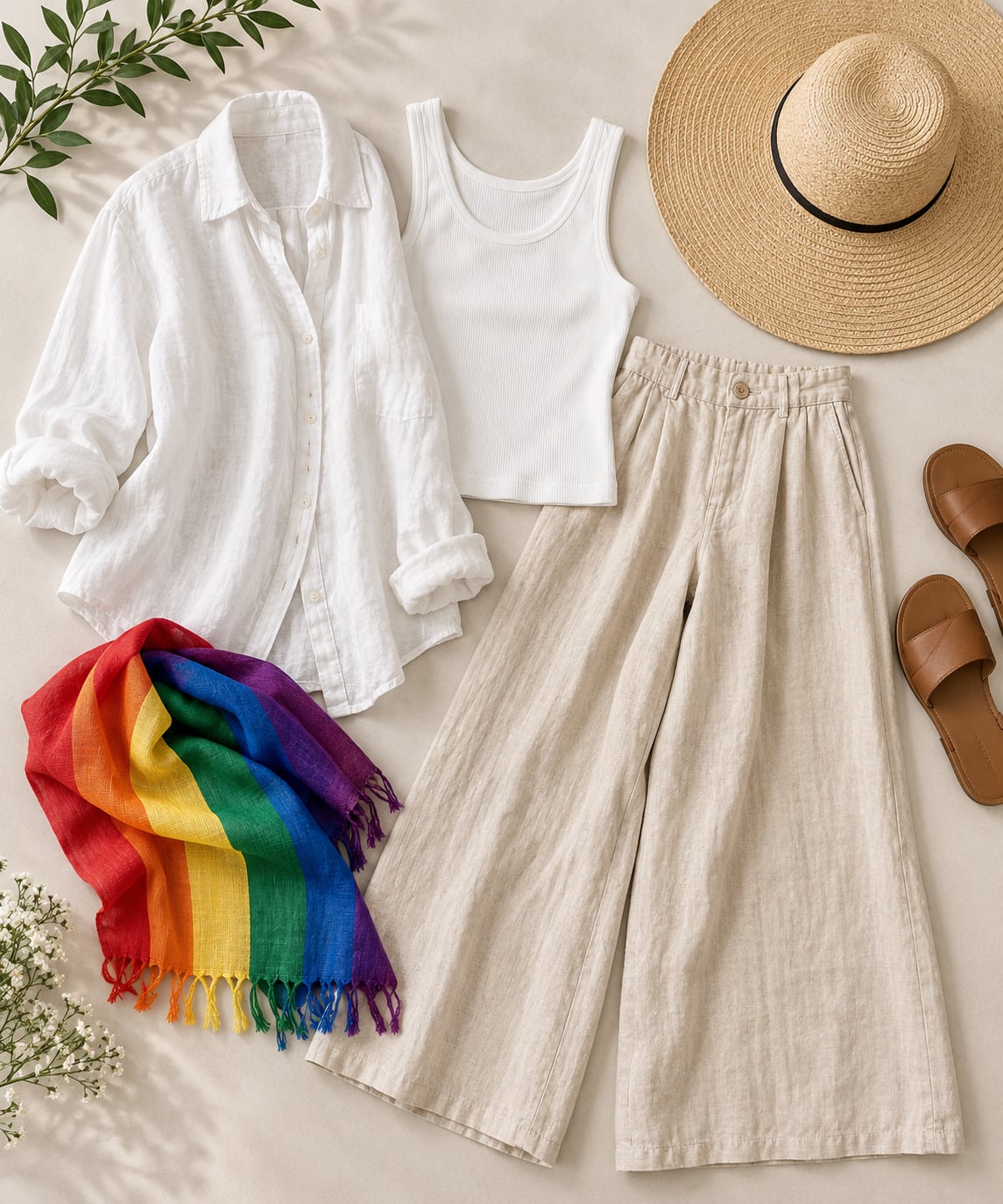
- One loose outer piece. A linen shirt, an open mesh layer, or a lightweight overshirt you can take off and tie around your waist.
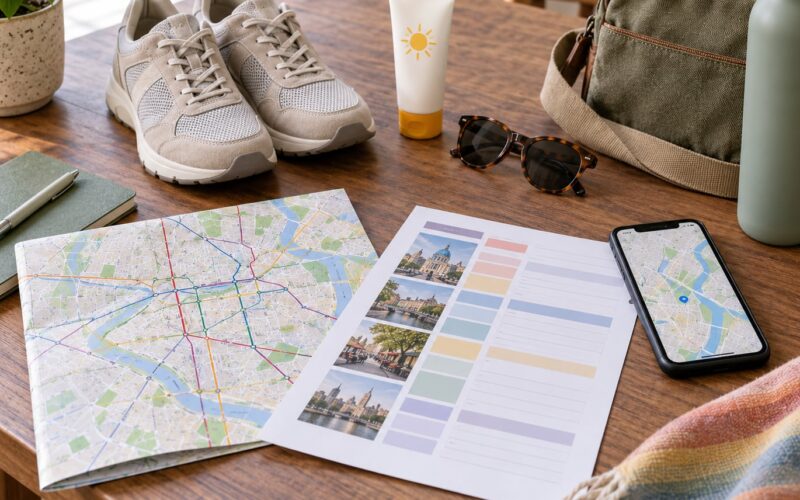
- Broken-in shoes. Sneakers or a cushioned sandal with a strap that stays put. New shoes on a parade route mean blisters.
- A sun hat. Wide-brim, floppy, or a baseball cap if that is your thing. Plus sunglasses.
- Broad-spectrum SPF 30 or higher sunscreen and a lip balm with SPF.
- A water bottle and a couple of electrolyte packets.
- A cooling towel and a small portable fan if you are heat-sensitive.
- A crossbody bag or fanny pack that sits on the hip, not the chest.
- One dry backup layer sealed in a zip bag, in case of rain, sweat or an unexpected change of plans.
- Blister plasters, hair ties and a charged phone battery. All three have saved more Pride days than any outfit choice.
Step-by-Step
1. Choose breathable, heat-friendly fabrics
Your body cools itself by evaporating sweat off your skin, and fabric decides whether that sweat can get out. Loose, light, woven, matte fabric lets it evaporate. Tight, dark, lined or shiny fabric holds moisture against your skin and turns your shirt into a hot towel.
Linen and lightweight cotton are the reliable picks: both absorb moisture and dry fast, and both look better rumpled than they look pressed. Bamboo, Tencel and rayon drape away from the body and cool quickly, which is why flowy dresses and wide-leg trousers in those fabrics are a heat decision, not just a style one. Mesh panels or a mesh overlay give airflow exactly where you need it.
Polyester is the villain people keep arguing about. A loose, matte performance knit in a sports blend does wick sweat away, but a shiny polyester or viscose top pressed against your skin traps heat and holds odor all afternoon. Denim, leather, vinyl and lined fabrics are for the afterparty, not the march. Sequins are heavy, scratchy and reflect the sun back at you.
| Fabric | Breathability | How it behaves in heat | Pride styling note |
|---|---|---|---|
| Linen | Highest | Loose weave, wicks and dries fast, creases easily | Unlined shirt, wide trousers, overshirt |
| Midweight cotton | High | Absorbs sweat, holds it a while, so keep it light | Tank, tee, shorts, midi skirt |
| Bamboo, Tencel, rayon | High | Drapes away from skin, cools fast, very light | Flowy dress, wide-leg pants |
| Mesh or sheer overlay | High | Airflow where heat builds up, needs a base layer | Layer over a tank for coverage |
| Lightweight performance knit | Medium | Wicks moisture when loose, traps heat when tight | Sporty Pride, best as a base layer |
| Denim | Low | Heavy, stiff, absorbs heat for hours | Afterparty only |
| Leather or vinyl | Very low | Blocks evaporation entirely | Evening only |
| Sequins and metallic | Low | Heavy, scratchy, reflects heat back at you | Dance floor, not the march |
2. Build a comfortable base layer
The base layer is the piece that does the actual work. A breathable tank, tee, sports bra or bodysuit in a matte, quick-dry fabric wicks sweat off your chest and back, and everything you wear over it stays drier longer.
Two checks before you commit. Hold it up to a window or a lamp: any fabric that shows skin, seams or color through it is a no unless something opaque goes over it. Then raise your arms overhead and sit down in it. If it rides up, digs in at the ribs or rides down, it will be worse after four hours and 12,000 steps.
3. Pick bottoms or a dress that allows movement
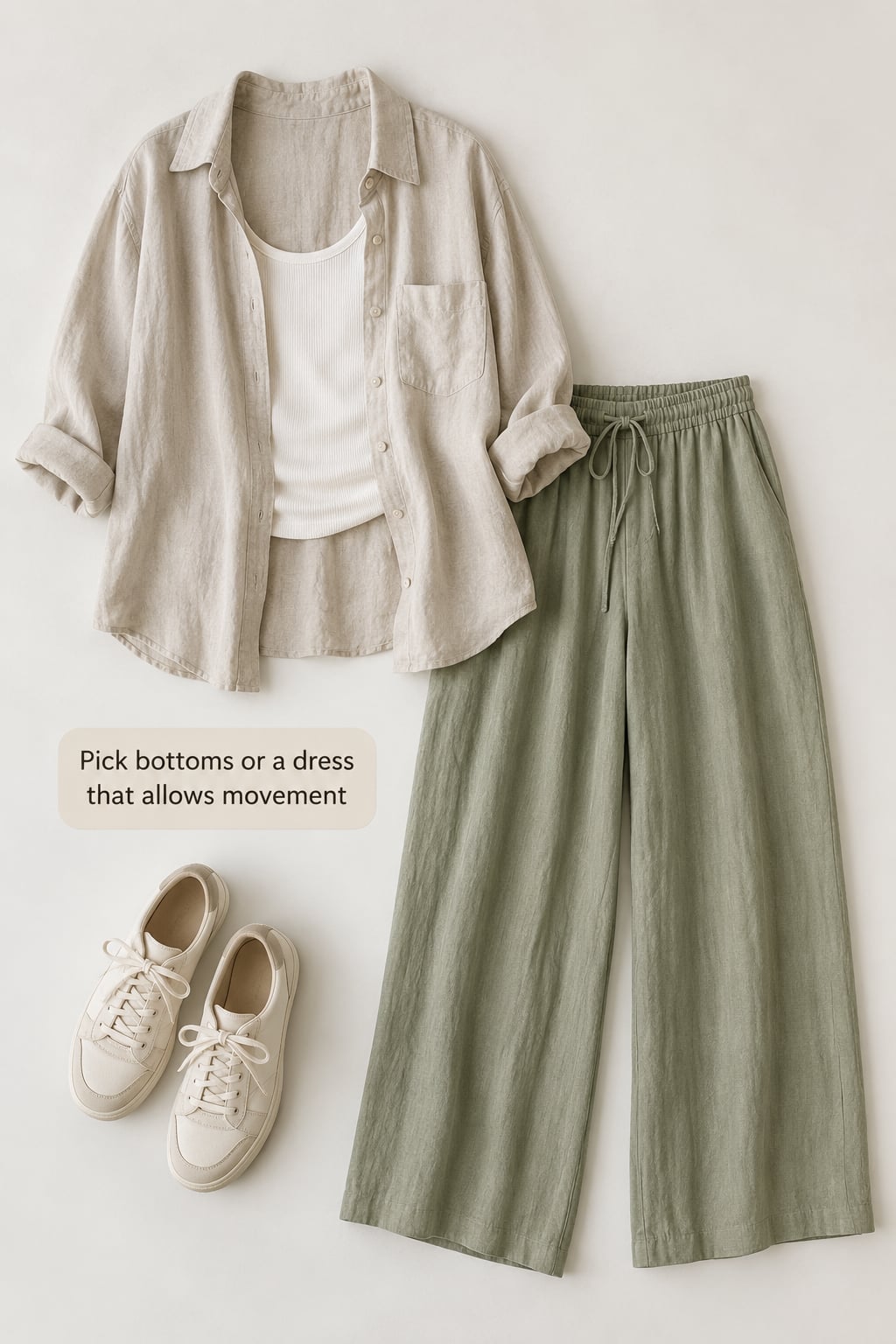
Match the bottom to what you will actually be doing. A parade route typically runs three to five miles of walking with long stretches of standing, and most people end up sitting on the curb more than they expect.
Shorts and lightweight skirts are the easiest for heat and the worst for sitting, because a damp hem plus a hard curb edge is a bad afternoon. Wide-leg trousers and loose linen or Tencel pants let air move and give you coverage without weight. A flowy midi or maxi dress is a single piece, which means fewer seams to dig and nothing to mismatch.
If you want coverage rather than exposure, take the long loose route instead of the fitted one: wide-leg trousers, a maxi skirt, or a slip-style dress with a light base layer underneath. Fabric does more for comfort than length does.
4. Add one Pride-focused statement piece
This is where most people go wrong in heat, by trying to say everything at once. Pick one expressive item and let it carry the look: a rainbow scarf, a graphic tee, a hat, a tote, a pin, a belt in your personal pride flag colors, or a pair of shoes nobody else will be wearing.
Rainbow does not have to be six stripes. A magenta top with an orange bag and a blue pin reads just as clearly, and three loose pieces are far cooler than one full outfit. Anyone can also borrow your flag. Plenty of people at Pride wear a plain shirt and a smile, and the energy comes from showing up, not from the pattern on your tee.
Thrifted and DIY pieces are genuinely the easiest to wear all day. The ones that survive a full parade day are the loose, flowy fabrics that let heat move away from the body rather than trapping it against you, and thrifted rainbow pieces keep coming up as the items people still love six hours later.
5. Protect your skin without overheating
Sun protection is a clothing decision as much as a skincare one. A wide-brim hat shades your face, neck and shoulders, which is most of the skin you will actually burn. Add sunglasses, and stick to light colors: dark fabric absorbs more solar heat, so black jeans in July are a sauna with legs.
Use a broad-spectrum SPF 30 or higher sunscreen and reapply as the label directs, especially after sweating or a drink break. Put it on before you leave, not when you notice you are pink.
Hydration is the boring part that decides the day. Sip water steadily rather than chugging at the first fountain, add electrolytes if you are out for more than three hours, and take a shade break every hour or so. Know the warning signs: headache, dizziness, nausea, chills, and confusion mean you leave the crowd and get somewhere cool immediately. Confusion or fainting is a medical emergency, not something to push through.
In Chicago, marches run in late June when afternoon highs commonly sit in the upper 80s and low 90s with lake humidity on top. Plan for the peak hour, not the morning temperature, and set a meeting point in the shade so your group can split off if someone needs out.
6. Finish with heat-tolerant accessories
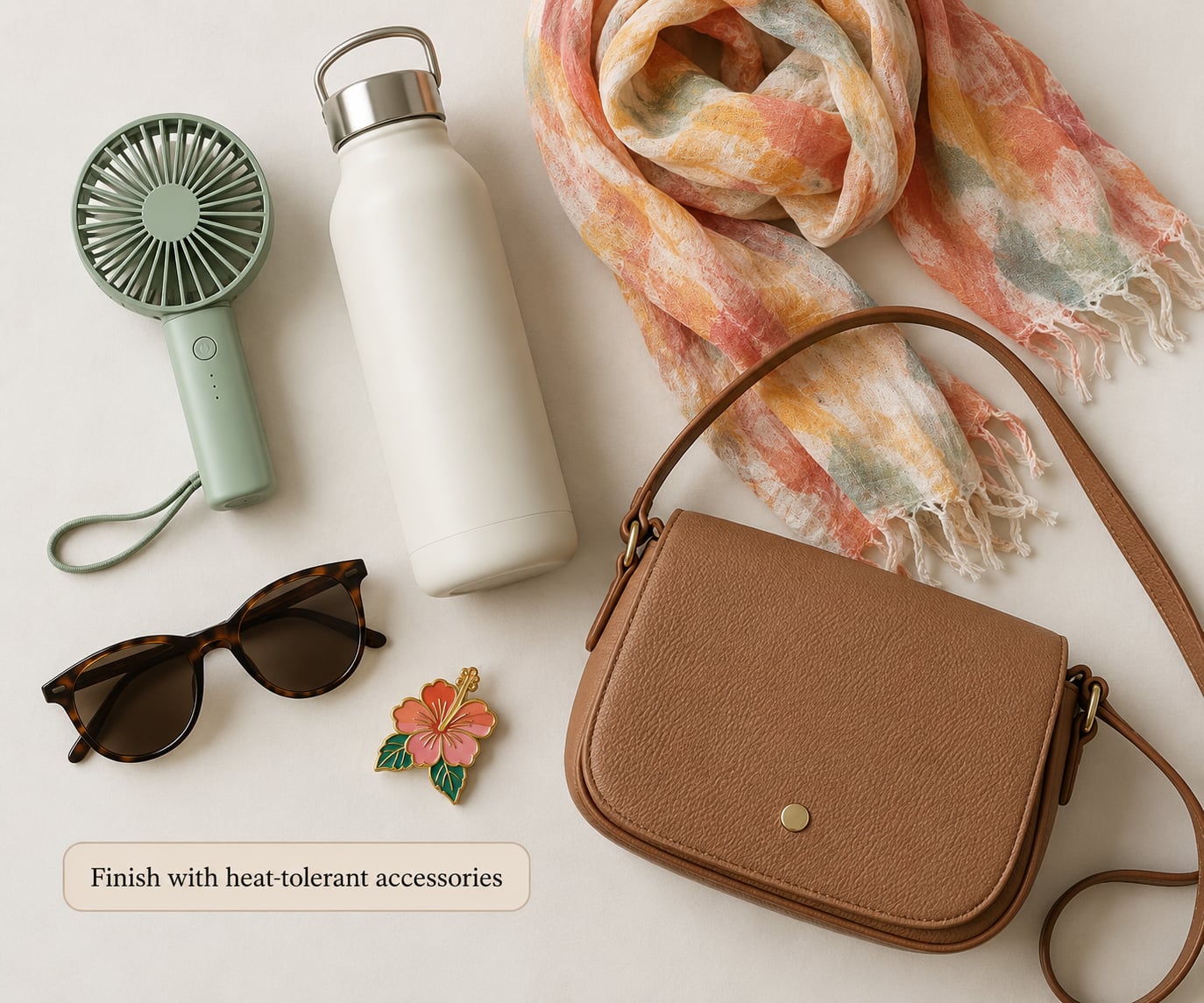
Accessories are where comfort gets lost, so choose the ones that do not fight you. A crossbody or hip fanny pack beats a shoulder bag, which bounces and digs into your neck while you walk. Anything that rests against your skin for hours, a thick waistband, a heavy tote strap, a chunky necklace, will leave a mark by the end of the day.
A compact handheld fan, a cooling towel and earplugs for the sound system all earn their space. Keep water in a bottle you can operate with one hand, and use sunscreen on your ears, the tops of your feet and the back of your neck, which people consistently forget.
7. Test the outfit and pack a heat backup
Ten minutes of testing saves six hours of misery. Put the whole outfit on and walk around the block, sit down for five minutes, bend over, and dance for two minutes. That catches the tight waistband, the gapping neckline and the rub spot under a strap long before a thousand strangers are watching.
Use temperature as the deciding factor. Under 80F, add a light layer and go for it. Between 80F and 90F, breathable everything, one statement piece, hat on. Between 90F and 100F, light colors, maximum airflow, minimal accessories, and a cooling towel in your bag. Above 100F, treat the march as a morning event, keep the outfit as close to undressed as you are comfortable being, and plan to change after.
Then pack the bag. Zip a dry base layer and a light cover-up into a small bag in case of rain, sweat or a wardrobe change after water activities, and seal it so it stays actually dry.
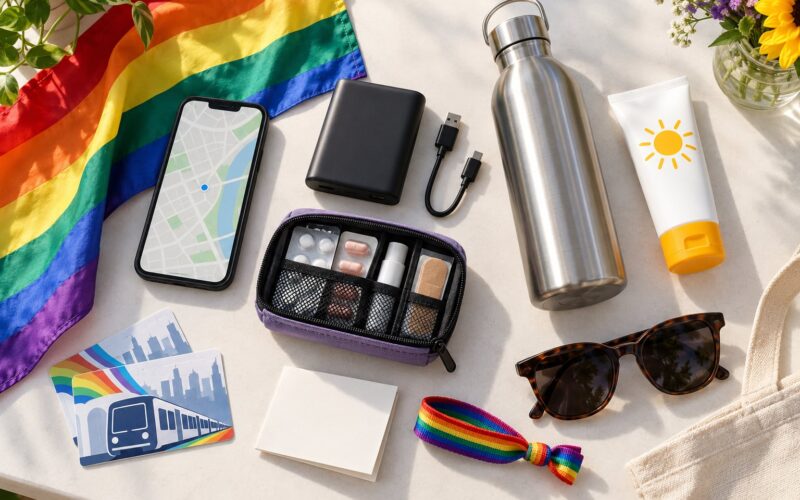
Your parade day bag
- Water bottle, plus two or three electrolyte packets
- Broad-spectrum SPF 30 or higher and SPF lip balm
- Compact fan and a cooling towel
- Blister plasters and any medication you take
- Phone battery or cable, and a hair tie
- Silly bubble, tape or a small Pride pin for strangers who drop theirs
- One sealed dry base layer and a light cover-up
Common Mistakes
Almost every bad Pride outfit I have seen in 90 degree heat comes from one of a handful of habits. All of them are easy to fix the night before.
- Denim, thick denim or leather from head to toe. Switch to linen, cotton or Tencel. Save the denim for the bar.
- A fitted silhouette because it looks better in a mirror at home. Pick a size with room to move. Loose is a style choice in 2026, not a concession.
- Dark colors head to toe in direct sun. Light colors reflect heat. Save black for evening.
- Brand new shoes. Wear your parade shoes for a full week before the march. Most blisters are fit problems, not heat problems.
- Wearing six rainbow pieces at once. Keep one. You will be more visible, and you will be cooler.
- Layers you cannot remove. Anything you cannot take off in ten seconds is not layering, it is a trap. Skip the sweater in 90 degree weather.
- No hydration plan. Decide where you will refill before you arrive, and drink before you are thirsty.
- No backup. One dry layer in a zip bag covers rain, sweat, a spill and the moment you want to change into something more comfortable.
One more thing worth saying plainly: if the forecast is brutal, dressing for Pride in hot weather does not mean suffering in the outfit of your dreams. A tank top, shorts and a flag in your hand is a complete Pride look, and it is better than a costume you cannot wait to take off.
Frequently Asked Questions
What is the best outfit to wear in hot weather at a Pride parade?
A loose linen or cotton shirt over a breathable tank, with wide-leg trousers or a flowy midi skirt, plus a hat and parade-safe shoes. Add one rainbow item such as a scarf, a pin or a colorful pair of shoes rather than head-to-toe color. The goal is airflow and shade on your shoulders, not the loudest possible look.
How do I stop sweating through my Pride outfit?
Choose matte, loose, woven fabric in light colors and skip anything lined, clingy or shiny. A moisture-wicking base layer under an open shirt handles most of it, and a cooling towel on your neck buys you an hour. Pack a dry top to change into at the first rest stop. Nobody has ever regretted a backup layer in July.
How do I dress for Pride as an ally?
Wear a rainbow pin, a shirt supporting LGBTQ+ or trans youth, or your city flag colors. A full rainbow outfit can read as costume, while one small genuine piece reads as support. If someone asks to take your photo, say yes and use their name. Standing with a group of friends is worth more than any slogan.
What shoes should I wear to a Pride parade?
Broken-in sneakers or a cushioned sandal with a secure strap. Parade routes cover three to five miles of standing, walking and dancing, and most blisters come from new shoes rather than heat. Wear your parade shoes for a week before the march, pick a roomy toe box, and carry blister plasters. Skip boots and anything with a flat sole.
What should I pack in a bag for Pride?
Water, electrolyte packets, broad-spectrum SPF 30 or higher sunscreen, a portable fan, a cooling towel, blister plasters, a phone battery, SPF lip balm, a hair tie and one sealed dry base layer. A crossbody or fanny pack keeps your hands free and your phone off the pavement. Keep the bag light, because you carry it for six hours.
Can I wear a sweater in 90 degree weather?
Only if you plan to take it off within the hour. Heavy knits hold heat and get heavier with sweat. If you want coverage for sun or skin reasons, choose a lightweight long-sleeve or a mesh layer over a tank, which gives you the same coverage for a fraction of the heat. A sweater can wait for the evening party.
Start at the base layer, because that is the decision everything else rests on. Get the fabric and the shoes right, add one piece that is unmistakably yours, and let the color do the talking. Dress for the walk, not for the photo, and you will still be yourself at hour six. This checklist gets refreshed every spring, so the numbers here hold up for 2026 and whatever summer brings.