Finding mutual aid groups near you takes three things: a map-based directory, a couple of neighborhood social pages, and a phone call to someone who already knows the local scene. Start with the exact phrase “how to find mutual aid groups near you” in a search engine, work outward to your city or borough, then verify that whatever you find is still active before you share a single personal detail. Most people spend under an hour on this, and the hard part is usually not the search. It is telling whether a listing from 2020 still describes a group that meets today.
That gap between a listing and a live group is the reason so many people give up. COVID-era networks formed fast, then thinned out when the emergency passed, and directories kept the old pages online. What follows is the process I would walk a friend through, written for LGBTQ+ readers and allies who may need a group that understands name and legal changes, chosen family, immigration status, or simply not being out at a neighborhood meeting.
Table of Contents
What You Need
Before you type anything, get four things straight. It makes the difference between a useful search and an afternoon of dead ends.
Your current location, narrowed down. Not your whole city. Mutual aid is usually hyperlocal, so your zip code, ward, borough, or county is the unit that matters. Groups routinely serve specific neighborhoods and quietly ignore everyone else.
A second location. If you can get to a meeting somewhere other than where you live, say so. Some city networks maintain one hub that several neighborhood groups draw supplies from.
A contact channel you actually use. Plenty of small groups run entirely on a messaging app you do not have. If you only use text, you may need to install a messaging app for one or two conversations, or find a group that answers email.
One trusted person. Not a bodyguard, just someone who can take a message for you or sit in on a first conversation. Organizers take that seriously, and so should you.
Also set your privacy settings before you join anything. If you plan to browse local groups on a social platform, turn off location sharing on your account and posting. If you are not out to everyone in your building, your profile should not tell them.
Step-by-Step: How to Find Mutual Aid Groups Near You
Search Local Directories and Community Websites
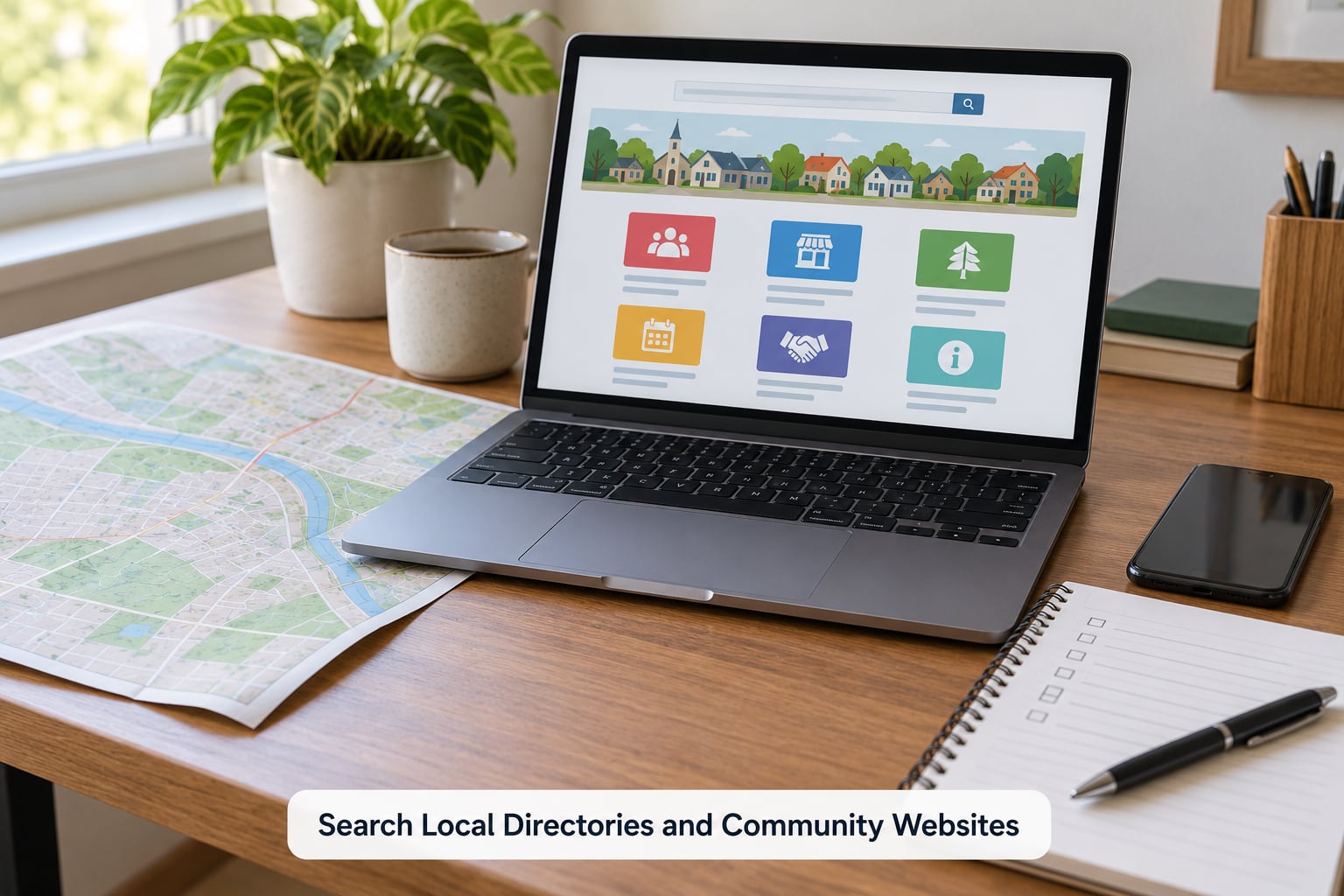
Begin with the plain keyword phrase and add your place. “How to find mutual aid groups near you” plus a city name surfaces the national maps and the city-specific sites. Mutual Aid Hub is the best-known map-driven directory, where you can filter by project type and submit a request or an offer directly. City networks are often better: New York and Los Angeles each run their own sites with categorized listings.
Then widen the vocabulary. Search terms that return different results include neighborhood mutual aid, community resource network, LGBTQ+ support group, emergency assistance, mutual aid directory, and community fridge. Each phrase surfaces a different set of pages, because no two groups describe themselves identically.
As you browse, record three details for every lead: the date of the most recent update, the service area, and one working contact method. A page last touched in 2021 is a historical document. A page with a distribution schedule for the current month is a group that exists this month.
Also check 211 and your city or county volunteer portals. They list nonprofit and government programs that operate on the same mutual aid logic, with the bonus that eligibility rules are written down somewhere.
Check Social Media and Neighborhood Networks
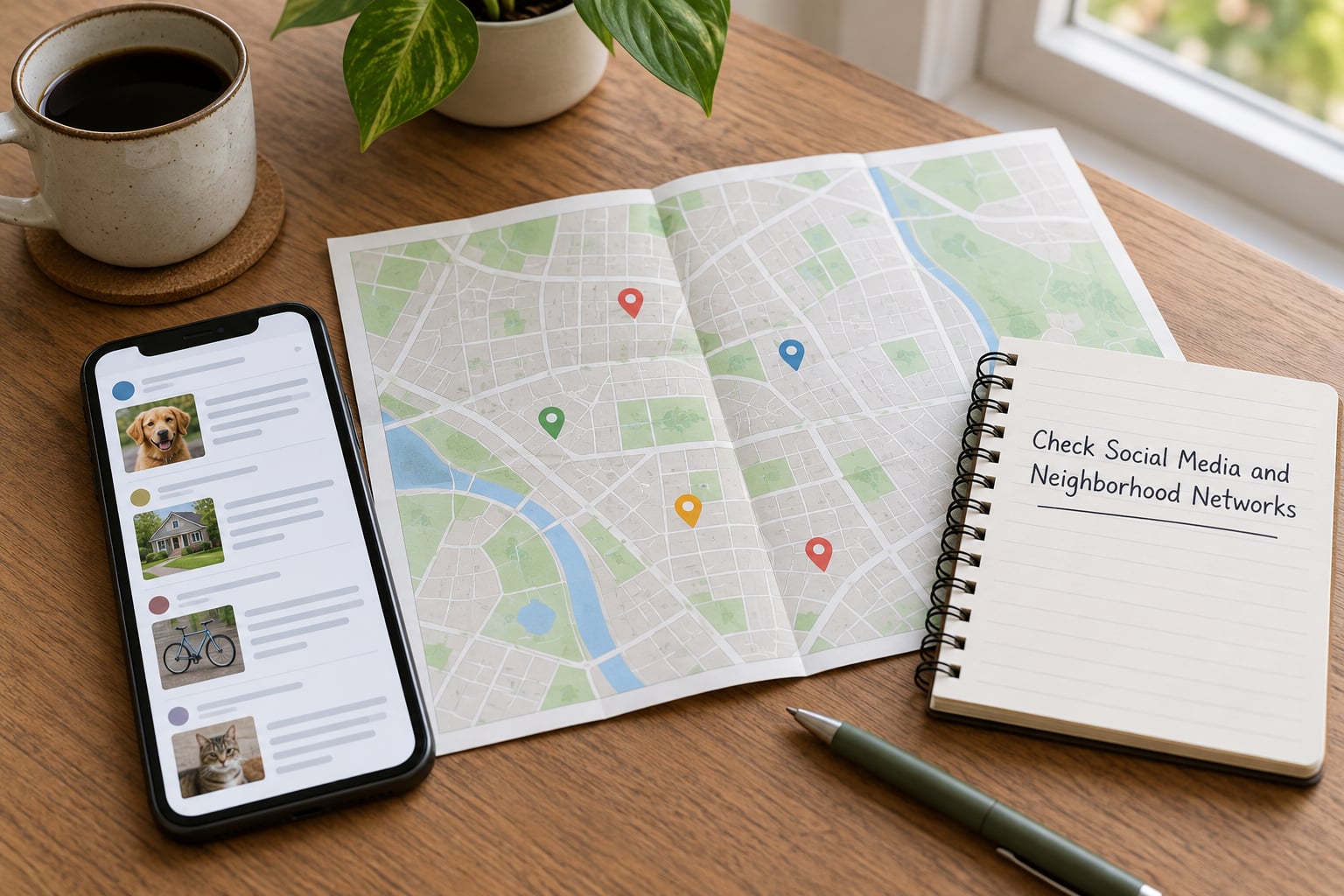
Most mutual aid groups have no website. They have a group page, a hashtag, or a chat. Facebook remains the single most common place local groups organize, and people regularly say the problem is not finding them, it is that they cannot be searched from outside the platform.
Work around it with three moves. Join neighborhood or city groups first, because those are public and searchable, then use the search inside them for “mutual aid,” “food share,” and “free store.” On Instagram, search a hashtag plus your city name. Hashtags work far better than account names here, since a group changes its handle but rarely changes its tag. On Reddit, city and regional subreddits often have a pinned resource thread that someone updates.
Now check whether the activity is current. Look at the last five posts, not the join date. A group with 40,000 members and nothing posted in eight months is a dead group, and joining it will do nothing except fill your notifications.
Queer and trans mutual aid networks often run on Discord or Telegram rather than public pages, for safety. That means you usually find them by asking a known organization rather than by browsing. It is worth knowing that before you assume a group does not exist.
Ask LGBTQ+ and Community Organizations
This is the step that produces the best results and the one people skip. Organizations that do this work daily already know which local groups are active, because the groups buy supplies from them or refer people to them.
Reach out to LGBTQ+ community centers, food pantries, public libraries, community health clinics, shelters, and city neighborhood offices. Libraries are underrated here: librarians hand out referrals constantly and rarely judge the question.
Keep the message short. Something like this works:
Hi, I’m looking for mutual aid groups that are currently active in the [neighborhood] area of [city]. I’m trying to connect with groups that are welcoming to LGBTQ+ people and that are sharing updates publicly. Can you point me to any groups you currently work with or hear from? I don’t need help right now, I just want to know what’s running. Thank you.
Organizers appreciate being told whether you need help or want to give it, and they will tell you honestly if nothing is running in your area. That answer is useful too.
Verify the Group Before You Share Personal Information
This is where how to find mutual aid groups near you turns into a small safety check. Before you hand over a name, a phone number, or an address, confirm a few things through a second, independent source.
Look for a consistent public schedule, such as a fixed distribution time that repeats weekly. Check whether the organizer names a real person or organization with a history you can trace elsewhere. See whether finances are open, or at least described plainly. Groups that say what they cannot do are usually safer than groups that promise everything.
Partnerships matter as a signal. A group that has existed for a year or more and has a relationship with a food bank, clinic, or community center has been checked by somebody else. Food Not Bombs chapters are the example people cite most often for longevity, since many have kept the same volunteer crew running for a decade.
Check accessibility too. Is the space step-free, is there a phone option instead of chat, are there hours when working people can come. If a group communicates only on a platform you do not use, that is an access barrier and worth saying out loud.
Some groups run an application before anyone can request help. The r/MutualAid subreddit uses that model, requiring approval before a request goes up. A vetting step is a good sign, not a red flag.
Attend or Contact the Group Safely
Make first contact in a public place and during daylight hours. A first meeting at a public distribution table, a library, or a community center meeting is safer and more common than people expect.
Give the minimum at first. Say your neighborhood and what kind of help would be useful. You do not need to explain your immigration status, your health, your family, or your legal name in a first conversation, and any group that pushes for that before offering anything is telling you something.
Bring your trusted person if it would make you steadier. Ask what the group does weekly, who handles money, and how decisions get made. Mutual aid tends to organize horizontally, so the honest answer is often that there is no single leader.
Leave when your gut says leave. You are not obliged to stay polite because someone organized something kind. A no is a complete answer, and no legitimate group will resent you for it.
Common Mistakes
Treating an old listing as current. The fix is simple: check the date of the last update before you invest any emotion. Search the group’s name in quotes and look at when the results were posted, not when the page was created.
Giving out personal information too early. Your first message to a stranger should carry your first name and your neighborhood at most. Fix: write the message before you send it, then delete every line that is not needed for the reply.
Assuming a listing means a verified group. A directory listing is someone else’s claim, not an inspection. Fix: find a second source, ideally an organization that works with the group regularly.
Confusing mutual aid with therapy or emergency services. Mutual aid groups offer material support and connection. They are not clinicians, and they are not a substitute for a crisis line, a shelter, or legal counsel. If you need medical or legal help, ask for referrals to licensed services instead, and treat anything else as a secondary resource.
Ignoring accessibility and your own schedule. A group that meets at 6 p.m. on a workday in a third-floor walkup is not usable no matter how good it is. Fix: ask about location, timing, and remote options before you commit.
Not starting one when nothing exists. In rural and suburban areas, the honest answer is often that no group covers you. Fix: pod mapping. Identify five to ten people you can rely on and who can rely on you, then build outward from that list. Many groups that exist today started as one person’s spreadsheet of neighbors.
Frequently Asked Questions
How do I find mutual aid groups near me if none are listed?
Start with pod mapping. List five to ten people in your building, street, or town who you can rely on, and who can rely on you. Then tell three local organizations that you are trying to build something small, such as a library branch, a faith group, or a tenant association. Several national networks let you post a request for organizers in an area with no coverage. Expect the first version to be three people and a shared spreadsheet.
Are there mutual aid groups specifically for LGBTQ+ people?
Yes, and they are usually harder to find because many run on private messaging apps for safety rather than public pages. The best route is an LGBTQ+ community center or a queer-serving health clinic in your area. Ask them directly which groups they currently work with. Queer and trans networks also appear through national directories and through citywide resource pages that list support services by category.
How do I know if a mutual aid group is legitimate?
Check for a consistent public schedule, a named organizer you can trace elsewhere, and a partnership with an established organization such as a food bank, clinic, or library. Groups that state clearly what they cannot do are usually more reliable than groups that promise everything. An application or approval step before requests are posted is a good sign. If a group asks for your legal name, immigration status, or bank details in a first message, walk away.
Why do so many COVID-era mutual aid groups look inactive now?
Most of them were built for an emergency that has passed. Many dissolved once the immediate need faded, and the pages stayed online because nobody removed them. A directory is an archive, not a live feed. Always check the date of the most recent post or update before you contact anyone, and expect a lower hit rate than the number of results suggests.
Can I find mutual aid groups entirely online?
Partly. Online groups handle resource sharing, skill swaps, and coordination, and plenty of people give and receive help without ever attending a meeting. Physical distribution still tends to happen locally, though. If you cannot attend in person, say so early and ask what the group can do remotely, because the honest answer depends on how the group is organized.
Conclusion
To find mutual aid groups near you, search the exact phrase with your city or zip code added, then open two or three leads that show activity from the last month. Confirm the organizer and the current schedule through a second source, and send one short message with your first name and neighborhood. That is the whole first step, and it takes less time than most people expect.