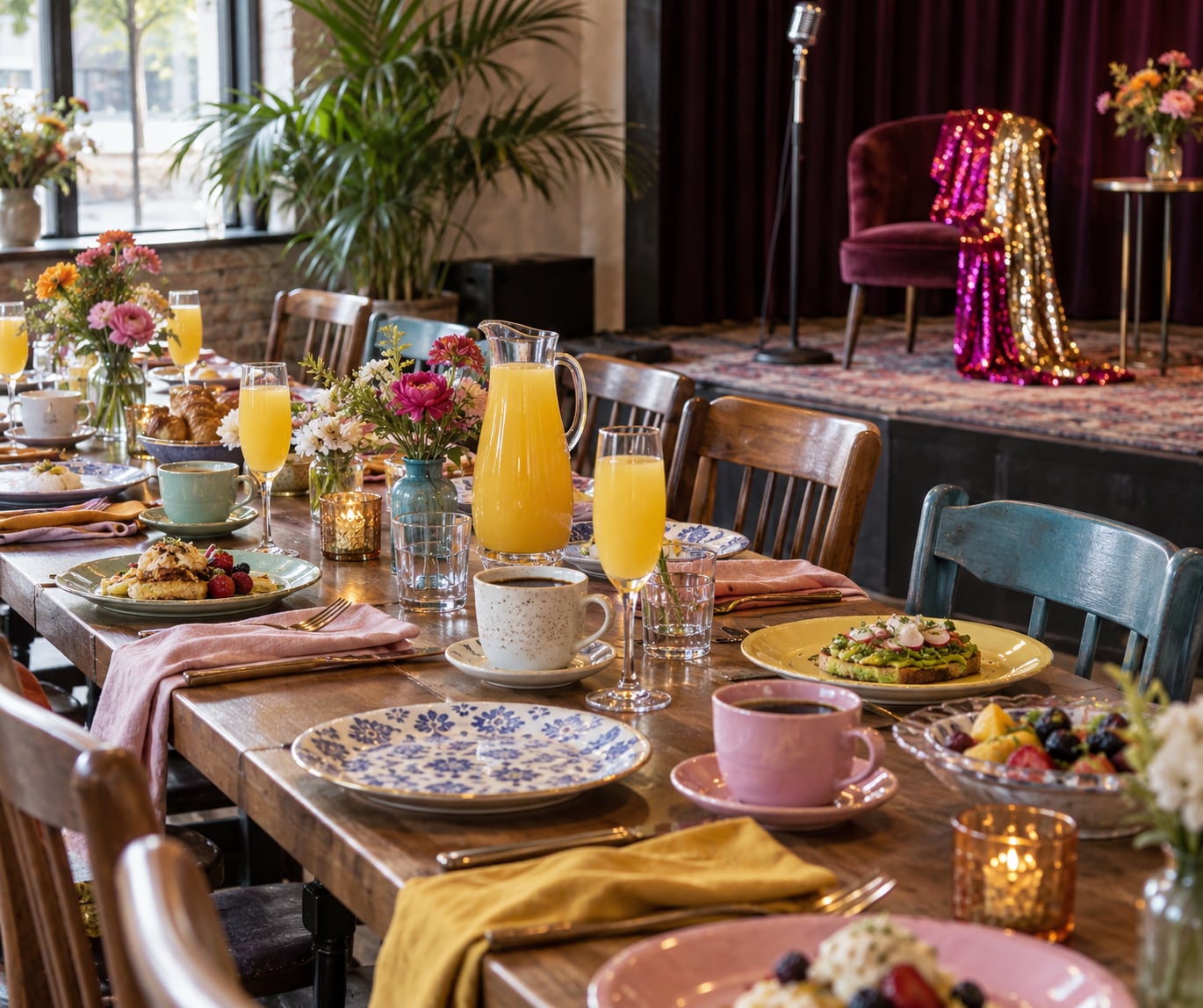
If you have never been to one, the honest answer is that a drag brunch is a restaurant meal with a live drag show running while you eat, drink, and tip the performers. You buy a ticket or reserve a table, show up early, eat your eggs while queens lip-sync, dance, tell jokes, and pull guests onto the floor, and the whole thing usually runs somewhere between ninety minutes and two hours. Nobody is grading your outfit, and nobody will hand you a test.
What makes a first drag brunch genuinely nerve-wracking is not the performance. It is the small logistics nobody explains to you: how tipping works, whether the meal is already on your ticket, who pays the gratuity, and what the room will sound like when forty strangers start yelling at the same time. Get those four things straight and the rest is a very good Sunday.
This guide walks through the whole thing, from picking an event to walking out the door. It draws on how these events are actually produced, what first-timers consistently ask, and the recurring mistakes people make in the first twenty minutes.
Table of Contents
- What Is a Drag Brunch?
- What to Expect at Your First Drag Brunch
- How to Choose a Drag Brunch for Your First Time
- What to Wear and Bring
- How Ordering Usually Works at a Drag Brunch
- What Kind of Performances May Happen
- Drag Brunch Etiquette for First-Time Guests
- How Tipping and Paying Work
- How Much Does a Drag Brunch Cost?
- How to Make Your First Drag Brunch a Good Experience
- Frequently Asked Questions
- Conclusion
What Is a Drag Brunch?
A drag brunch is a daytime drag show attached to a restaurant meal. Drag performers lip-sync, dance, do comedy, and interact with the audience while you eat brunch and drink, usually with a bottomless mimosa or cocktail package involved. The performance is the point, and the meal is what you do while it happens.
Three formats cover most of what you will find on an event listing.
Drag brunch
Seated, ticketed, and loud. You get a table, a meal, and a run of show that usually involves several solo numbers, at least one ensemble number, and a party game with the crowd. This is the most common format and the one this guide focuses on.
Drag show
The evening version. Same performers, same lip syncs, but seated theater-style with no meal and no conversation. Tickets are usually cheaper and the room is quieter. A drag show is a good first outing if brunch feels like too much at once.
Drag brunch bingo
A recurring brunch where you get a bingo card at the door and mark it off as the evening unfolds: walk-on entrance, a joke, an audience volunteer, a costume change you did not see coming. Monthly cadences are common. It is the same show with a game layered on top, and first-timers tend to love it because the card gives you something to do.
| Format | Setting | Typical length | Meal | Audience participation | What to bring |
|---|---|---|---|---|---|
| Drag brunch | Restaurant with a stage or raised platform | 90 minutes to 2 hours | Usually included or prix fixe | Common, often a party game | Cash singles, ID, reservation |
| Drag show | Theater, bar, or club | 60 to 90 minutes | None, sometimes a full bar | Occasional | Cash singles |
| Drag brunch bingo | Restaurant, often a recurring series | 2 hours or more | Included with the card | High, it is the point | Cash singles, a sharpie |
What to Expect at Your First Drag Brunch
The day runs in a predictable order, and knowing it in advance is the difference between relaxing and bracing. Here is how a typical drag brunch unfolds from parking to the after-show.
You arrive 20 to 30 minutes early
Do it anyway. Doors open, a host or a volunteer checks your name against a list, and you get pointed to your table. Arriving at the minute the show starts usually means standing at the back, or worse, a scramble. This is the single most common first-timer mistake.
You get seated, and the money conversation happens
Sometimes the server takes your drink order and explains the gratuity. Sometimes the host explains it from the stage in a welcome speech that is genuinely part of the show. Either way, you will hear what is on your bill before the first number.
Food arrives, and a host or house mother says hello
One performer usually acts as the emcee for the afternoon. They welcome the room, make a few jokes, announce birthdays, and remind you where the bathroom is. Eat while this happens. The food comes out fast so it is there for the show, not after it.
The solo numbers start, one performer at a time
Expect walk-on entrances: a performer appearing at the top of the stairs, through a door, or from behind a partition in full costume, hitting a pose while music plays. Each does a number, usually lip-synced, sometimes live singing. Between them, the emcee talks, reads the room, and takes requests.
An ensemble number breaks up the middle
Somewhere in the middle, several performers do a number together. This is usually the loudest, most rehearsed part of the show, and it is where the room stops being a restaurant and starts being a party.
The party game happens
Audience participation is standard at most brunches. A performer pulls two or three volunteers onto the floor for a lip sync challenge, a shoe-tying contest, a dance-off, or a game with a prop and an arbitrary set of rules. Participation is nearly always voluntary, and watching is a perfectly good choice.
The show ends, the music does not
Performances usually wrap within the window the listing promised, and the last twenty minutes are for talking, taking photos with friends, and sometimes a slower closing number. Many venues keep the bar open afterward, so do not schedule your ride home on the assumption that the event ends the second the last performer leaves the stage.
How to Choose a Drag Brunch for Your First Time
Pick the event that matches your tolerance for noise, surprise, and being looked at. For a first time, a recurring Sunday brunch at a restaurant with table seating is the least risky option, and a seated show is easier than a standing club night.
Read the listing for six things before you commit to a date.
- Who is hosting. A named producer or a known venue is a good sign. “Featuring queens from the local scene” tells you less than the name of the person who runs it.
- What the format is. Seated table, long banquet table, bar rail, or standing. Seated means you can talk during the numbers; standing means you mostly watch.
- Start time and end time. Drag brunches often start eating an hour before the performance, and plenty of them run long. Do not book a train right after.
- Age limit. Frequently 18 or 21 for alcohol packages, and sometimes higher with a card-matching rule. Some events publish a number in the small print. Look for it.
- What is included. Whether the meal is on the ticket, whether bottomless drinks are separate, and whether the gratuity is billed at the end of your seating.
- Accessibility. Step-free entry, accessible restroom, and whether the performance area is visible from every seat. Email or call ahead; most venues answer honestly.
On audience, a dedicated brunch tends to draw regulars who know each other, which is friendly but can feel closed on your first visit. A holiday or birthday edition draws bigger, louder, more tourist-heavy crowds. A quiet Sunday morning show with six performers and a full room of tables is easier to settle into than a packed holiday production.
What to Wear and Bring
Wear something comfortable, seasonally appropriate, and easy to move in. Nobody is going to hand you a dress code list at the door, and performers dress for the stage while guests dress for a three-hour sitting that includes applause.
What works: your favorite jeans and a nice top, a jumpsuit, a cocktail dress you already own, a clean sneaker if you plan to be dragged into a dance-off. The advice that circulates in r/Drag is the right one, comfort beats spectacle for a first show.
What to skip: anything you would be upset to spill a mimosa on, shoes you cannot stand in for two hours, and loose glitter if the venue has banned it. Glitter ends up in every drink and on every table, and some venues genuinely do not allow it.
Then handle the practical items.
- Cash. Ones, fives, and tens. This is the one thing that cannot wait until you get there.
- Photo ID. Many venues check it at the door when the ticket includes alcohol.
- Your reservation name. Some venues seat by list rather than ticket number.
- A charged phone. Useful for the venue page, the resale confirmation, and looking up the lineup afterward.
- A card, for the bill. Most venues take cards for food and drink, but not for tips.
- Lip balm and a light layer. Restaurants get warm when forty people start cheering.
How Ordering Usually Works at a Drag Brunch
Food at a drag brunch is almost never ordered off a menu at the table. It arrives on a schedule so the meal lands while the show runs, which means your choices were made weeks ago on the event page.
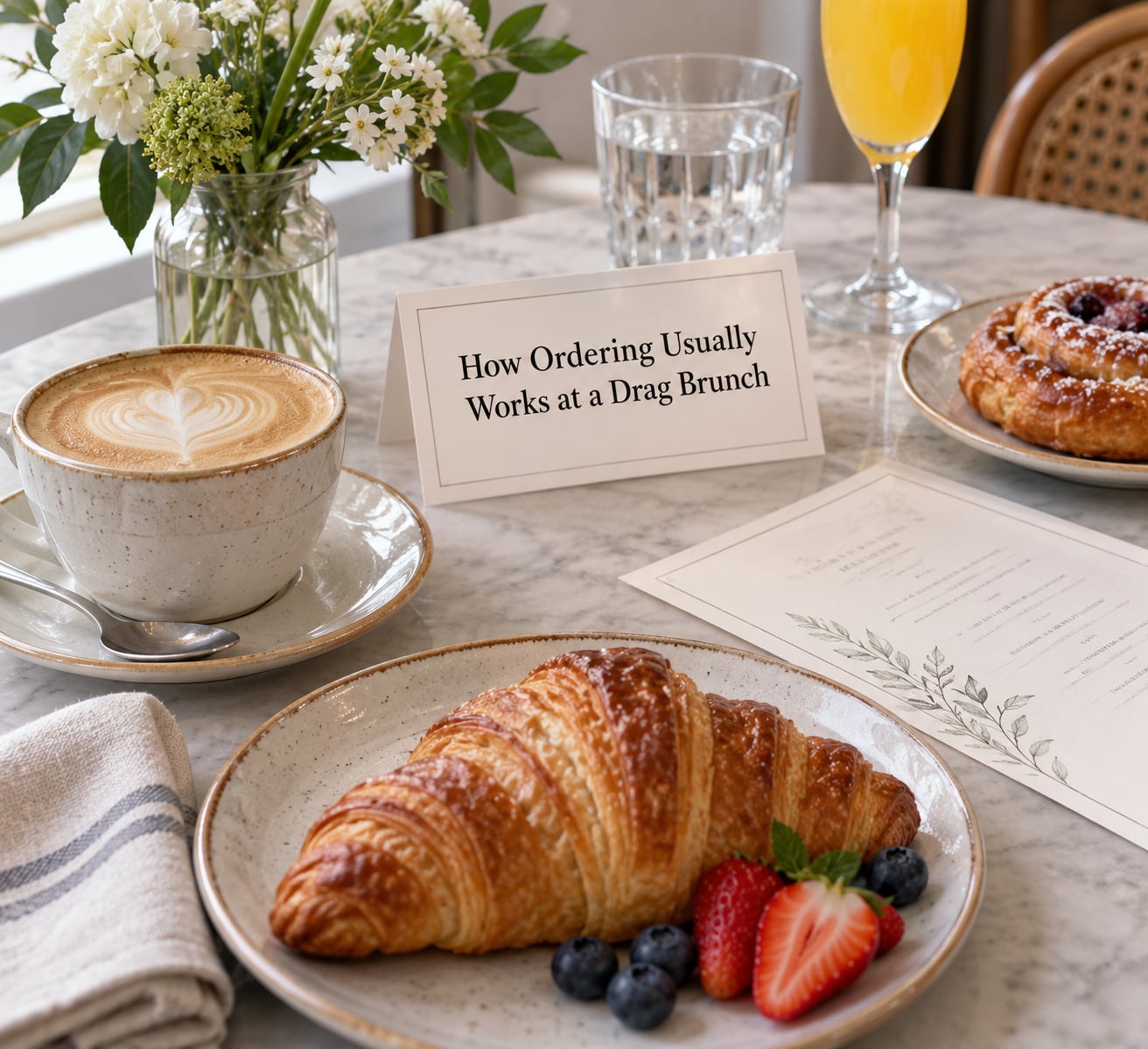
Four models cover nearly every event you will book.
- Seated a la carte. Rare, and usually on the early end of a restaurant’s service. You order from a limited menu and eat when it comes.
- Prix fixe. One set meal, often a choice of a few entrees, with the price set at booking. Dietary restrictions are usually noted on the ticket form rather than asked for at the table.
- Ticket plus separate food. Your ticket covers the performance, and you pay for a meal when you are seated. This is common at bars running a show on the side.
- Ticket plus drink package. A bottomless mimosa or cocktail window, usually running from seating to the end of the performance, with a time limit printed on the ticket.
Some venues also set a drink minimum or require a minimum spend per table. A few put singles out for tipping performers at the host stand, which tells you how expected the tipping is before a single number happens.
Check the event listing rather than assuming. If it does not say whether the meal is included, phone the venue and ask, and you will get a straight answer nine times out of ten.
What Kind of Performances May Happen
Expect a mix of lip syncing, live singing, comedy, impersonation, dance numbers, and an emcee holding the whole thing together. Which of those you get depends entirely on the cast and the room, and the same show will feel different on a slow Sunday than on a holiday weekend.
Lip sync is the backbone. A performer takes a microphone, mouths the words to a track, and sells it with timing, face, and a costume change you will not see coming. Live singing is rarer and usually reserved for the more established performers, so treat it as a bonus rather than the plan.
Comedy fills the gaps between numbers, and this is where adult material shows up. Performers joke about sex, dating, exes, family, and the guests in the room, and they will occasionally work someone in the audience into a bit. A drag brunch producer described the intended room as one where guests laugh, scream, and dance, but also just sit comfortably and chat with friends or the next table. Both of those things are normal at the same event.
Impersonation and character work show up constantly. Drag kings, celebrity impressions, and heavily themed personas all turn up, often with an homage or a joke that only makes sense if you have seen the show being referenced.
Drag Brunch Etiquette for First-Time Guests
Watch the room during the first number and you will see the etiquette without anyone explaining it. Performers work hard, often for weeks, for a show that lasts two hours, and guests who respect that are the norm rather than the exception.
- Watch the performance. Your table is not a dinner conversation to be had over the top of a number. The room goes quiet, and so should you.
- Do not touch a performer. Not their costume, not their wig, not their arm. Read the room, and let them come to you.
- Photograph with care. Ask before you turn your camera on a performer, and never film another guest without asking. Many venues ask you not to record the numbers at all, because performers record their own content and hate surprise footage circulating.
- Laugh at the jokes. Including the ones aimed sideways at someone at your table. Responding to a read with a grin is a compliment to the person who threw it.
- Shout, dance, and react. Volume is part of the show. Standing on your chair is not something you need permission for.
- Do not heckle. There is a difference between a loud, delighted audience and someone talking over a number to be a jerk. Performers notice the difference.
- Keep the volume of your own conversation down when a number starts, even at the next table over.
- Tip. Not required, and not the price of entry. It is how you say thank you, and how a lot of performers pay for wigs, tailoring, and the rent on a pair of heels.
Straight allies, women, and first-timers all belong
Yes, you can be straight, a woman, an older person, or a curious friend of a friend. Drag brunches draw a genuinely mixed crowd, and audience members on r/AskChicago and r/AskLGBT describe plenty of first-timers showing up alone and having a great time.
You will not look out of place. Most of the room came with somebody and is busy watching the stage anyway. If you want an easy start, book with one or two friends, sit near the back or the end of a table, and let the first number happen before you decide how you feel about it.
How Tipping and Paying Work
Tips go in cash, during the performance, and the rest of the bill is handled normally afterward. The food and drink tab is a normal restaurant charge, usually with an 18 to 20 percent gratuity added at the end of your seating, and the tip for the performers is separate from all of it.
Bring singles. Ones mostly, some fives and tens. A performer works the room during a number or after one, and the handoff is quick and low-key: hold the bill, make eye contact, hand it over. A twenty on a fifty-dollar bill is a generous gesture. One dollar is a normal one. Nobody announces what you gave unless you make a production of it.
Why cash? Card readers and phones exist now, and plenty of performers take them, but a card feels like a transaction and a bill feels like a gesture. Cash also skips fees, so more of it reaches the person holding the mic.
If you do not tip, you are not being rude, and you will not be asked to leave. Advice on r/AskLGBT is direct about this: nobody needs to tip if they cannot afford to. Plenty of guests are saving for a birthday dinner or a weekend trip, and the community does not treat a no-tip as a moral failing. Tip if you can and want to. Do not feel pressure you did not ask for.
How Much Does a Drag Brunch Cost?
Expect the price to be built from up to five separate pieces, and read the listing to see which ones apply to your ticket. There is no single national price, and a holiday production in a big city will sit well above a quiet Sunday brunch at a neighborhood bar.
| What it covers | Usually included in | Notes for a first-timer |
|---|---|---|
| The performance itself | Your ticket | The cheapest way in. Some venues let you buy a seat without a meal. |
| The meal | Ticket or prix fixe menu | Check whether it is bundled or separate. Dietary options are usually chosen at booking. |
| Bottomless drinks or a drink minimum | Add-on, sometimes required | Often runs a set number of hours from seating. Check the window and the minimum. |
| Gratuity | Added at the end of your seating | Frequently 18 to 20 percent, frequently not included in the advertised price, and it goes to the restaurant and service staff, not the cast. |
| Tips | Cash, during the show | Entirely up to you. Cash singles, and more than you think you need. |
Prices here are typical United States ranges rather than fixed amounts, and they shift by city, by neighborhood, and by season. Holiday brunches in major cities run well above ordinary Sunday ones, and a seated show with a multi-course meal at a restaurant venue costs more than a show attached to a bar.
Before you go, confirm the current total with the venue. Ask what the ticket includes, what the gratuity is, whether there is a drink minimum, and whether there is a time limit on bottomless drinks. Four questions, one phone call, and you will not be surprised at the end of the afternoon.
How to Make Your First Drag Brunch a Good Experience
Arrive early, pick a good seat, and pace yourself through the run of show. That combination does more for a first time than any amount of preparation.
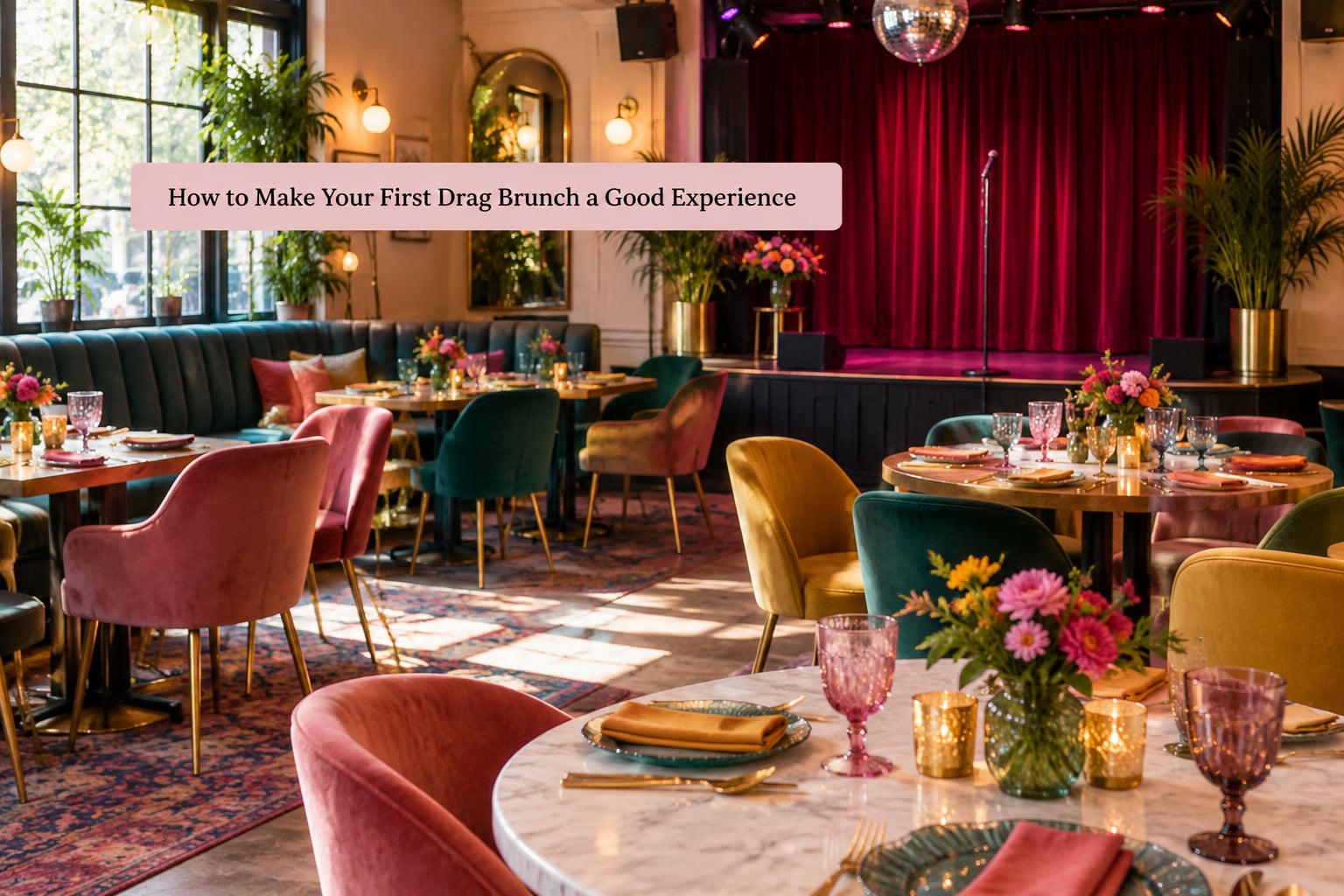
Arrive 20 to 30 minutes early. It gets you seated, it gets you a better seat choice, and it means the emcee sees you in the room before the show starts. A friend of mine learned this the hard way, walking in at showtime to a room already on its second number and a table of four strangers with one empty chair.
Choose your seat on purpose. End of a table is good for a nervous first-timer, since you can leave without anyone noticing. A seat with a clear sightline to the stage matters more than being in the middle, because you will want to watch the lip syncs, not crane your neck. If a group of friends is celebrating something, a table near the stage is worth the extra money when the budget allows.
Eat early and pace the drinks. The food is designed to come out during the first number, and a table that is still finishing appetizers when the ensemble number starts misses the best part of the afternoon. Same logic on the drink package, which usually has a start and end time printed on it.
Introduce yourself to your table the way you would anywhere else. Names, where you are from, whether this is your first time. The tables next to you are the most welcoming part of the room and people are curious about first-timers, especially if you say so plainly.
Participate when you want to, and only then. A hand up is not required, and sitting out is completely normal. If someone pulls you up, go with it and laugh at yourself afterward, because that is exactly what the room is doing too.
Leave enough time for the whole thing. The last twenty minutes are when the show settles into conversation and photos, and the energy is different from the first hour. A friend who checked out after one number missed the ensemble number, the party game, and the best conversation of her night, and she still talks about that table she met at the next one.
Frequently Asked Questions
Do I have to be gay to go to a drag brunch?
No. Drag brunches draw a genuinely mixed crowd of queer people, straight allies, women on girls’ days out, couples, and people who came with a friend. You will not be asked to explain yourself at the door and you will not stand out. The only requirements are usually age, a photo ID when the ticket includes alcohol, and paying for your own meal. Book with a friend if it makes you feel better, but plenty of first-timers show up alone.
Do I have to tip at a drag brunch?
Tipping is strongly expected but never required, and skipping it will not get you questioned or turned away. Performers often pay for wigs, tailoring, travel, and the cost of being on stage out of what they make that afternoon. Bring cash singles if you can. If money is genuinely tight this month, that is a normal situation and nobody will hold it against you.
What should I wear to my first drag brunch?
Wear something comfortable, seasonally appropriate, and easy to move in. Jeans and a nice top, a jumpsuit, or a cocktail dress you already own all work. You are not expected to dress like the performers. Skip anything you would be upset to spill a drink on, uncomfortable shoes, and loose glitter, which some venues ban because it ends up in every mimosa. Nobody at the door is checking your outfit.
How much money should I bring to a drag brunch?
Bring enough for the ticket, the meal, any drink package or minimum, an 18 to 20 percent gratuity billed at the end of your seating, and cash singles for performers. Many venues do not take cards for tips at all. A practical approach is to set aside your full expected cost plus a stack of ones before you leave the house, so you are not doing arithmetic in the middle of a dance-off.
Can I bring my kids to a drag brunch?
Check the age limit on the listing and call the venue directly before buying tickets. Some events publish a minimum age, many set 18 or 21 when alcohol is involved, and the ones marketed as family-adjacent can still produce adult humor without warning. A parent on r/Drag described calling ahead and being told it was appropriate, then watching a performer aim a joke at their child. Ask specifically what content to expect, not just whether kids are allowed.
What if I feel uncomfortable and need to leave early?
Leave. Nobody has earned the right to your afternoon. Sit at the end of a table, step outside to the bar or the sidewalk, and come back when you are ready. Nobody will comment, and you will not be asked to explain yourself to the emcee. If the humor is the problem rather than the atmosphere, that is worth telling a friend about, because the venues that care about a good reputation are the ones that respond to it.
Conclusion
A first drag brunch is a long table, a good meal, and ninety minutes of loud, generous, well-rehearsed nonsense. Almost everyone who is nervous about going is nervous about the same three things, and all three have simple answers: nobody cares what you are wearing, cash singles are the only tip that matters, and you can leave whenever you want.
Check the event listing for the start time, the age limit, and what your ticket actually covers. Then call the venue if anything is unclear, arrive half an hour early, and go at your own pace.