At a Pride interfaith service, clergy and lay leaders from many traditions lead a shared worship and reflection that affirms LGBTQ+ people, usually with music from a queer chorus and a reception afterward. It typically runs 90 minutes to two hours, and it is open to LGBTQ+ attendees, allies, families and friends. Formats change from city to city, so here is what a well-run one usually feels like.
Table of Contents
- What Happens at a Pride Interfaith Service?
- Who Usually Attends a Pride Interfaith Service?
- What Should You Expect During the Service?
- Will There Be Prayers, Readings, or Speeches?
- How Does a Pride Interfaith Service Differ From a Traditional Religious Service?
- What Can You Do or Say During the Service?
- How Should You Prepare to Attend?
- Is Everyone Welcome at a Pride Interfaith Service?
- Frequently Asked Questions
- Conclusion
What Happens at a Pride Interfaith Service?
The short version: a room of people from different faiths gathering to be explicit about LGBTQ+ belonging, to remember queer elders who died, and to pray or reflect together about the justice work still ahead.
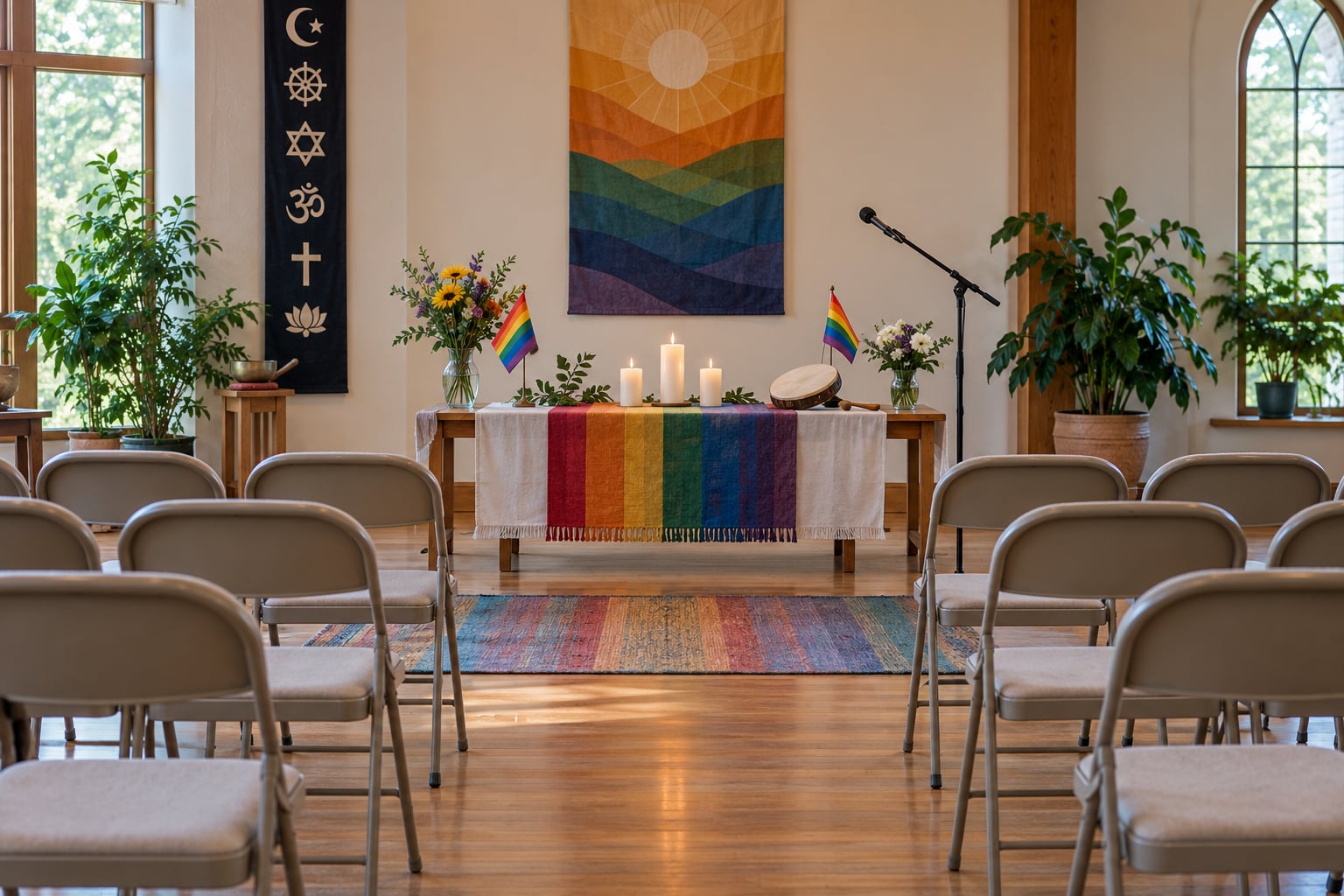
The elements that show up most often are an opening invocation or call to the elements, a libation to LGBTQ ancestors, short readings or reflections from leaders of different traditions, choral and congregational music, community announcements, a closing blessing, and a reception with food. None of that requires you to believe anything on display.
One detail worth knowing up front: the emotional center of the service is usually remembrance. A libation is a ritual pouring of water while people call out the names of those who came before. At the 2024 Capital Pride Interfaith Service, attendees named people including Marsha P. Johnson and Bishop Thomas Gumbleton. Some people cry. That is normal, and nobody hands you a tissue and asks what is wrong.
Who Usually Attends a Pride Interfaith Service?
Everyone, and that is the part most event pages never spell out. Queer and trans people show up, many of them because their own congregations never wanted them. Allies and spouses come with them, as do parents, friends and curious straight people who want to be present for something meaningful rather than only watching from a parade float.
You will also find the clergy and lay leaders named on the event listing, plus lay readers, ushers, choir members and volunteers. The range of religiosity in the room is wide. Some attendees hold firm religious faith, some are spiritual without belonging to a congregation, some are entirely secular, and some are exhausted ex-religious people who never planned to be in a sanctuary again.
What Should You Expect During the Service?
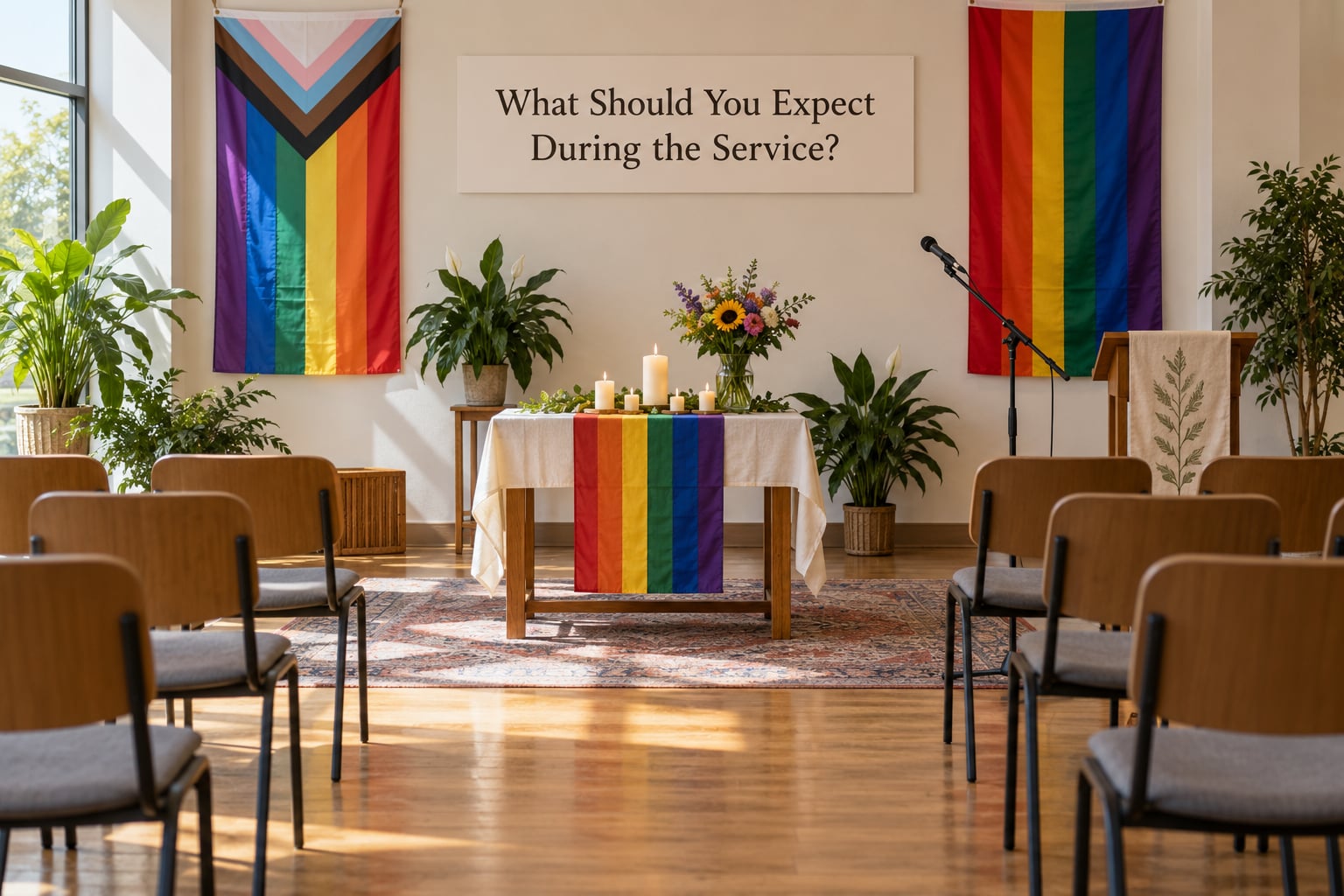
Services follow a recognizable arc, and once you know it you can relax and just watch. Most run somewhere between an hour and a half and two hours, usually on a Sunday evening or mid-afternoon.
- Arrival and greeting. You come through the door, an usher or volunteer hands you a bulletin and a piece of fruit, and people greet you by name. Nobody asks what your pronouns are before you are ready to say them. A drum call may be sounding under the chatter.
- Procession of presenters. The leaders enter together rather than one at a time. The 2024 Capital service opened with a drum call and a procession of all its presenters, and the visual effect is deliberately larger than any single clergy member.
- Opening invocation or call to the elements. This is where sacred space gets declared. Some services call the elements, some light a chalice flame, some say an interfaith prayer or a call to prayer. It is brief, and it is done by more than one tradition.
- Libation to the ancestors. Water is poured while the room calls out the names of LGBTQ people who died. At the 2024 Capital service the names included Marsha P. Johnson and Bishop Thomas Gumbleton. This is usually the emotional peak.
- Readings and reflections. Short passages and personal reflections, each in the voice of a different tradition. A 2024 program included a tribute built around a shofar blast and a Jewish funeral piece for co-founder Allan Armas.
- Music. A chorus usually performs before the reflections and sometimes during the close. GenOUT Chorus, the youth chorus of the Gay Men’s Chorus of Washington DC, opened the 2024 service with Philip Silvey’s Always a Place for You. Congregational singing turns up too, especially for songs people already know.
- Justice moment. Announcements, a call to action against anti-LGBTQ legislation, or a short word on what an outreach or justice committee is doing next. The 2024 service closed its arc with a vision of the future and a handoff to the next year’s gathering.
- Blessing and reception. A collective closing blessing, then everyone moves to a reception. A Bethel, Connecticut service paired its reception with a food pantry collection running at the same time, which is a common way these services turn into actual service.
Will There Be Prayers, Readings, or Speeches?
Yes to all three, though the mix depends entirely on the organizers. Expect brief prayers, at least one reading, and a short address that usually ties faith language to LGBTQ+ justice rather than doctrine.
If you are not religious, the non-Christian and non-Christian-adjacent traditions are worth watching, because they are not a formality. An Asheville service was led by Buddhist leaders from two different Buddhist organizations alongside Jewish clergy and other participants. Traditions that show up regularly across Pride services include Christianity, Judaism, Islam, Buddhism, Unitarian Universalism, Pagan, Wiccan, Hinduism and Indigenous spirituality.
Some events lean philosophical instead, using meditation, silence or community statements where a service of worship would go. Treat this section as a general guide rather than a contract: your event listing is the authority on its own program.
How Does a Pride Interfaith Service Differ From a Traditional Religious Service?
A traditional service draws its shape from one denomination’s order of worship. A Pride interfaith service deliberately does not, so the service you attend will not feel like the church, synagogue or mosque you may have grown up in.
The difference is in the structure of the leadership, not just the guest list. Six or seven people from six or seven traditions may each own a few minutes, and no single voice sets the theology. Organizations often reflect that in how they plan: the Fort Worth service was run by the Justice Network of Tarrant County’s LGBTQ+ Action Team together with the Tarrant Interfaith Justice Coalition and Makom Shelanu Congregations, which is a very different governance model from a congregation holding its own service.
The purpose also shifts. The emphasis moves from worship of a congregation toward affirmation, remembrance and social justice. A traditional service asks what you owe your community. A Pride interfaith service asks whether your community has room for you.
What Can You Do or Say During the Service?
You can participate as much or as little as you like, and the people leading will not track you. Most first-timers sit, listen and let the room wash over them, and that is a complete way to take part.
Beyond that, there are usually a few open invitations. You might join a song the whole room is already singing. You might say a name during the libation if you are comfortable doing that. You might share a short reflection if the leaders explicitly open the floor, often by saying something like sharing is welcome or this space is held for those who need it. Some services pass a peace offering or a token from row to row.
What you never have to do is take communion, recite anything, pray out loud, or stand. Sit through the whole thing if that is more comfortable. Physical participation is genuinely optional at nearly every Pride interfaith service.
How Should You Prepare to Attend?
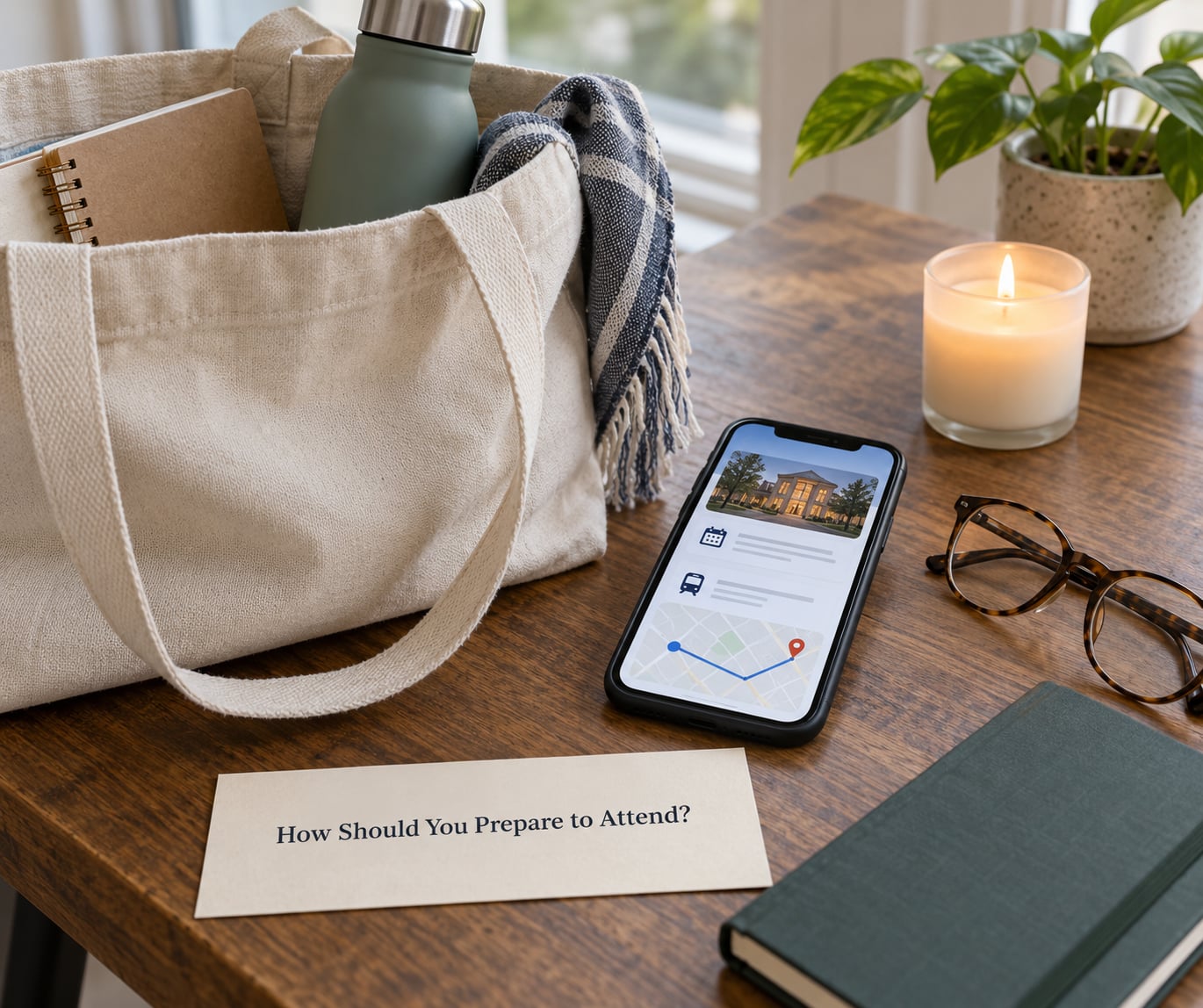
Preparation is mostly a matter of reading the host’s own page. Check whether the space names LGBTQ+ people as welcome, whether the congregation carries a public accreditation, what the start and end times are, and whether the reception or food collection needs something from you.
For dress, there is no code. Church architecture pulls a little dressier than a parade does, so you will see both jeans and suits in the same room, and anything in between is fine. Comfortable shoes matter more than anything else if the building has a lot of stairs.
On access, contact the organizers directly when you need to know about wheelchair seating, reserved seating, hearing assistance, interpretation, childcare or quiet space. Event listings rarely spell this out, and a quick email or call gets a straight answer. There is usually no ticket and no fee, but bringing a small food pantry item costs you nothing and helps the collection run alongside the service.
Do you have to be LGBTQ+ or religious to go? No. Allies are a large share of the room, and plenty of attendees are not religious at all. The one thing worth checking is whether the specific service you are looking at is open, since that is set by the organizers.
Is Everyone Welcome at a Pride Interfaith Service?
Yes, and the welcoming is the point. These gatherings exist because many LGBTQ+ people were excluded from the congregations they grew up in, so an explicit, named welcome is not a courtesy added on top. It is the reason the service is happening.
You can read the organizers’ posture before you go. Listings often carry accreditation language such as Open and Affirming, Reconciling or LGBTQ Welcoming, and they usually name the faith traditions actually leading, which tells you whether the interfaith claim is real. Trust a program that lists a shofar and a Buddhist bell over one that says only diverse faiths together.
Honest note: not everyone in a local faith community supports these services, and at some events that disagreement shows up in the room. The 2024 Capital service was interrupted by two protesters, and the response described afterward was attendees singing This Little Light of Mine while ushers escorted them out. Ushers and volunteers at the door are there for exactly that, and no one is asked to argue theology at a Pride service.
Frequently Asked Questions
Can I go to a Pride interfaith service if I’m straight?
Yes, and allies are a common and expected part of the room. Pride interfaith services are planned as affirming, welcoming gatherings, and partners, parents, friends and other straight attendees are usually a meaningful share of the congregation. Nothing about the service requires you to be LGBTQ+, to speak, or to hold any particular belief. If you want more certainty for a specific event, the host listing usually says who it is open to.
Is there a dress code for a Pride interfaith service?
No formal dress code exists. Church architecture and evening services tend to pull a little dressier than a Pride parade, so you will see suits, dresses and jeans in the same rows. The practical advice is to wear what makes you comfortable for two hours of sitting, and to pick shoes you can manage on stairs. Some attendees wear rainbow accessories, plenty of others do not, and neither is expected.
Do I have to be religious to attend?
No. There is no belief test and no requirement to pray, recite, take communion or stand. The service does contain genuine religious content, including prayers and readings from Christian, Jewish, Muslim, Buddhist, Pagan and other traditions, so an entirely secular attendee should know that in advance. Plenty of people attend for the affirmation, the remembrance of queer elders, and the music rather than for theology.
How long does a Pride interfaith service last?
Most run between 90 minutes and two hours, with most of that time in the service itself. Evening events commonly run 7:00 to 9:00 pm, while Sunday afternoon services may start around 3:00 pm. Some add a reception, food or a community collection afterward, which is the easiest part to drop if you need to leave early. Arrive ten minutes ahead so an usher can seat you before the opening drum call.
Can I bring my kids to a Pride interfaith service?
Families bring children, and there is no set age limit, though it depends on the venue rather than the event. A two-hour service with a remembrance segment naming people who died can be heavy for a young child, so many parents bring a trusted adult or another adult to sit with them. Ask the organizers about childcare, family space and noise expectations. Expect adults to cry during the libation, and be ready to explain it calmly.
Is the reception after the service worth staying for?
Often, yes, especially if attending alone. The reception is where names get exchanged, where volunteers sign up, and where a lot of first-time attendees turn into people who come back. Receptions commonly include food, announcements about local justice work, and sometimes a collection such as the food pantry drive that ran alongside a Bethel, Connecticut service. If the service cost you emotionally, an hour of conversation with people is a gentle way to land.
Conclusion
A Pride interfaith service is a two-hour affirmation with prayers, music and a long memory of people who died before they got to see this. Start by reading the host’s own event page for the start time, the leadership and the access details, then pick a service that names its traditions out loud.
Arrive ten minutes early, stay for the whole thing even if the libation gets you, and tell the people you came with what you saw. That is the ordinary version of how these services keep going.