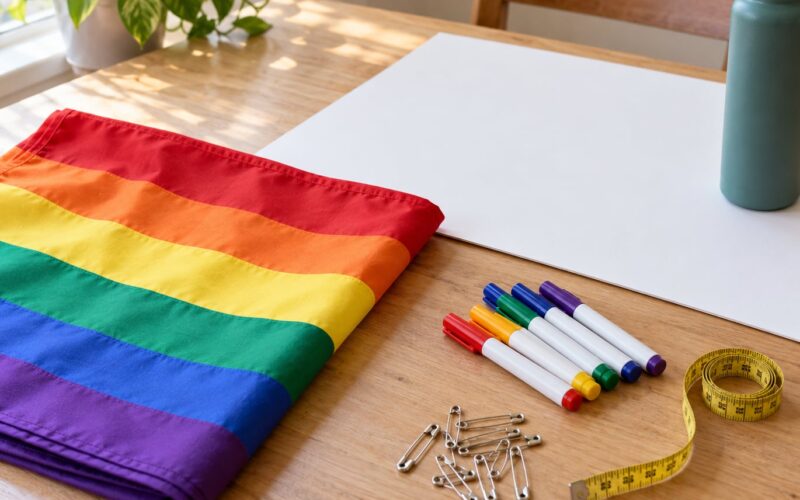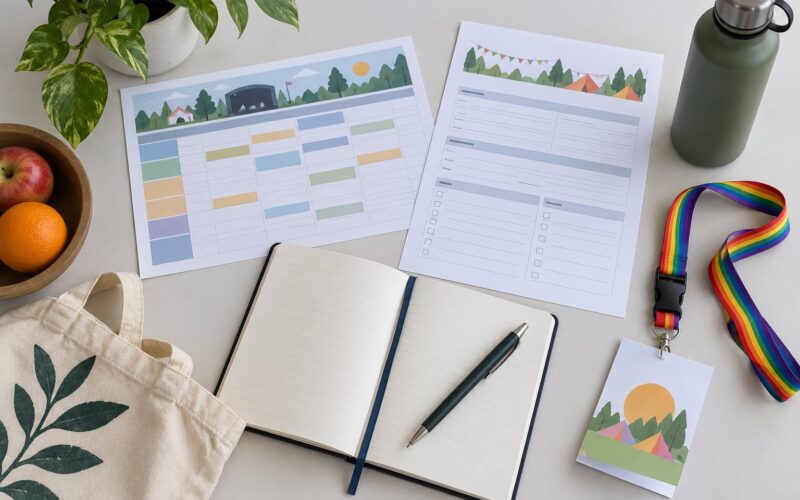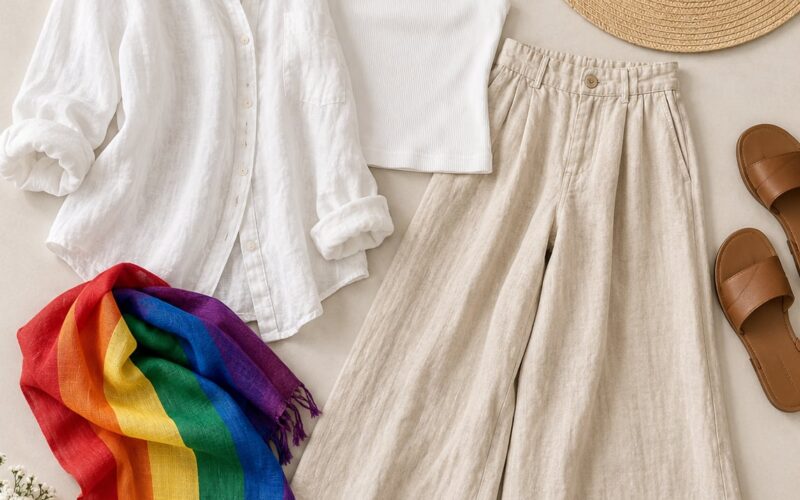
Pride is loud, and if you are an introvert you already know the loud part was never the part you came for. Learning how to survive pride as an introvert is mostly logistics rather than stamina: pick one or two anchors, protect your energy, and leave on your own terms. You can have a genuinely good day and still be asleep by ten that night.
Two things stack up at Pride that do not stack up at most events. There is the sensory load of bass, strobes, heat, bodies and glitter that gets everywhere. Then there is the social script, which assumes you want a new conversation every four minutes and that alcohol is how you have one.
Add the part nobody says out loud. The crowd is mostly made of people who already have their group. The day is built around couples. If you are ace, aromantic, single, trans or not out yet, it is easy to spend a whole weekend feeling like a footnote at your own party.
Budget roughly twenty minutes of planning the night before, and one full hour of quiet recovery built into the day itself. Most of the work is deciding what you are skipping.
Table of Contents
What You Need to Survive Pride as an Introvert
You need six things, and five of them take under half an hour to sort out.
- A way in and a way out. Your transit plan is the single most underrated introvert tool. A car, a rideshare account or a friend who genuinely does not mind leaving early is worth more than any pair of earplugs.
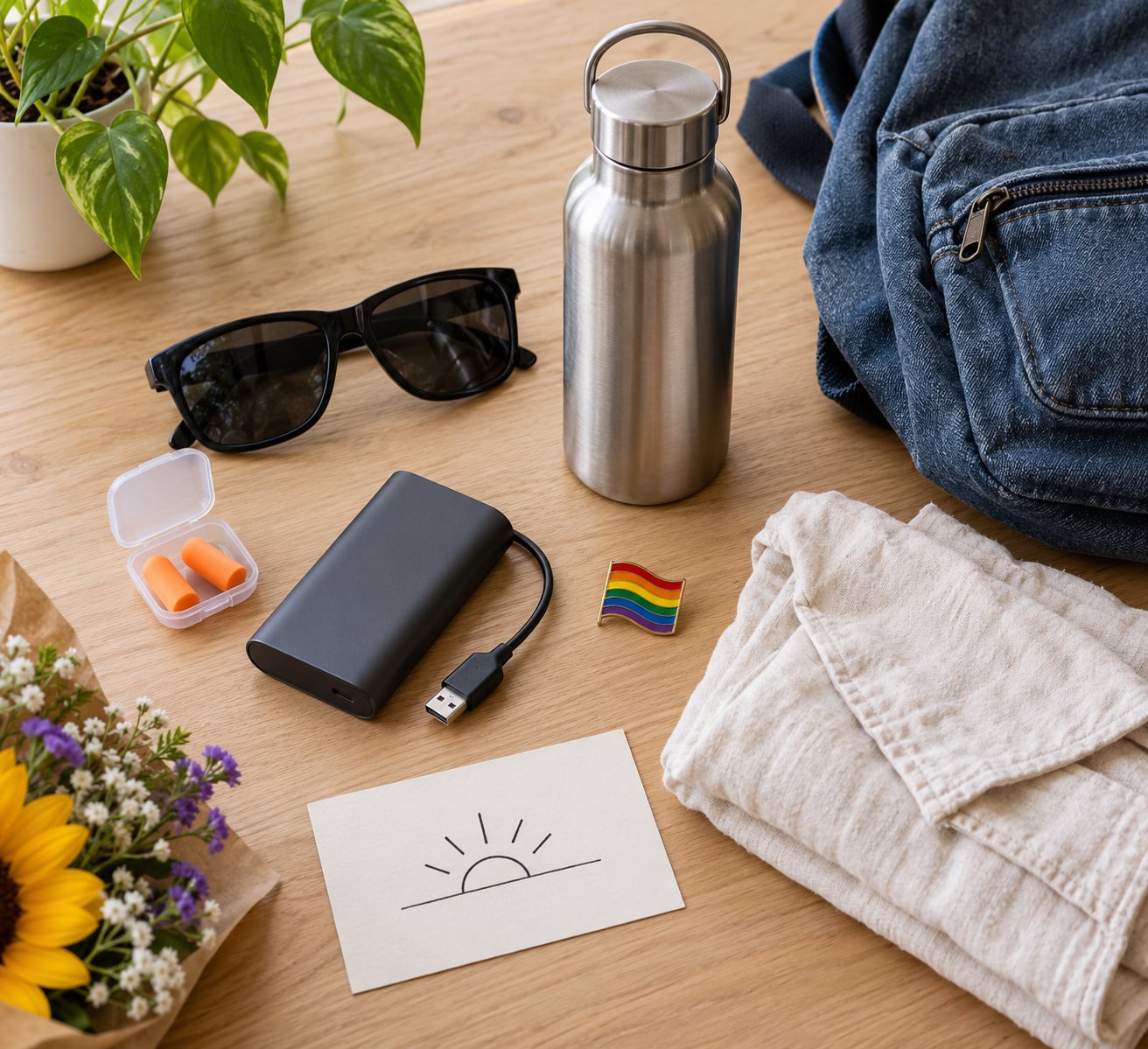
- Sensory supports. Earplugs or filter earbuds, sunglasses for the hours when the sun hits a plaza at midday, and something to hold if you want a reason not to talk.
- Communication tools. A charged phone, a set of earbuds that signal unavailability, and one person who knows your real plan rather than the version you told everyone else.
- Flexible timing. A hard departure time, even a boring one like 3:30. Timelines are permission.
- One or two anchors. A parade viewing point, a drag show, a small community gathering, a queer-owned coffee shop with Pride programming. Not four things.
- A recovery block. Ninety minutes or more with nothing scheduled after you get home. Non-negotiable if you are driving home.
Here is the whole plan on one screen, so you are not reconstructing it in the middle of a crowd.
| Before | During | After |
|---|---|---|
| Rank the events you actually want | State your departure time out loud when you arrive | Keep the next morning completely empty |
| Check transit, entrances and quiet spaces | Water every hour, earplugs when the volume climbs | Let the crash land instead of filling it |
| Pack the kit the night before | Take one scheduled reset break, not a random one | Note one thing worth repeating next year |
| Tell one person your real plan | Leave with the group or on your own, either is fine | Do not schedule brunch you will dread |
Step-by-Step
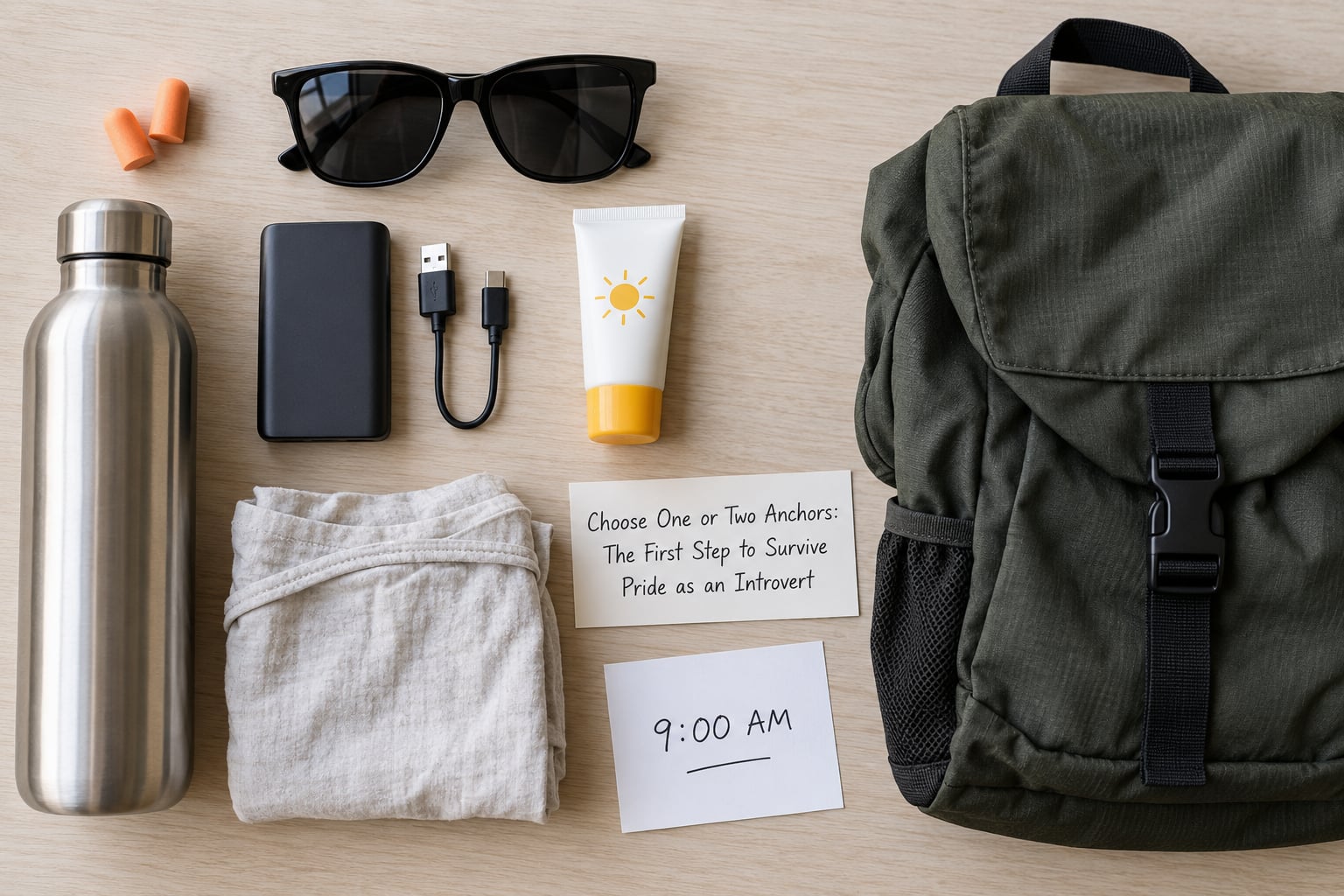
1. Choose One or Two Anchors: The First Step to Survive Pride as an Introvert
Rank everything on the schedule, then keep the top two and delete the rest. A parade viewed from one good corner and a drag show at a half-empty matinee will leave you with more actual memories than a full weekend of turning up and leaving early.
Noise is usually the deciding factor. Festival grounds and club takeovers run loud from the first hour, and the volume does not really come down later. A morning picnic, a bookshop reading, an indie screening or a community breakfast will be calmer and give you actual conversation instead of shouting across a speaker.
Low-key does not mean minor. Queer-owned bookstores, coffee roasters, record shops and small theaters often put on Pride programming in June that is calmer than anything happening downtown, and the smaller room is where people actually talk to each other.
2. Map Your Arrival and Exit Plan
Before you go, find out when the event actually starts and ends, where the entrances are, and which entrance is least crowded. Look at the venue map for restrooms and for anything labelled quiet, low-sensory or accessible seating. Those rooms are the whole reason your day works.
Then pick your exit. Note two ways out, and know which one avoids the main crowd. Most Pride venues dump everyone through the same door at once, and being the person squeezing past a thousand moving bodies at 11pm is how a good day turns into a bad memory.
If you are travelling to a festival, check the local transit schedule before you go rather than during. Service changes on big weekends happen, and being stranded at midnight with a depleted phone is a very specific kind of bad time.
3. Bring Sensory and Practical Supports
Pack the kit the night before, not in the morning. The short list: earplugs or filter earbuds, sunglasses, a full water bottle you refill hourly, sunscreen, a portable charger and cable, whatever medication you take, broken-in shoes, and a light layer for when the sun drops and the AC takes over.
Earplugs dull the bass and the strobes stay exactly as bright. That is worth saying plainly so you are not disappointed. Noise-cancelling earbuds handle the wall of sound but cut you off from the people around you, which is sometimes the point and sometimes the problem.
Blue light-blocking glasses are a comfort item more than a proven one, but plenty of people find that a tinted lens makes a crowded plaza easier to sit in. A fidget item, a grounding exercise on the way to the bathroom, or a scent roller that only you can smell are all reasonable tools. None of them are a crutch.
4. Set Simple Social Boundaries Before the Event
Decide three things in advance: how long you are staying, how much conversation you want, and what you do when someone will not take a hint. Deciding at the door is too late, because at the door you are already tired.
The scripts are short and boring, which is the point. “I am going to hang out on my own for a bit” ends most approaches politely. “It was really good to meet you, I am going to find my friends now” closes a conversation without inviting an argument. For unwanted attention, most people just look at their phone and walk, and that is a complete strategy.
If you are the kind of person who plans a holiday cover story, decide now what you are saying about who you went with and why. An answer that is dull and unremarkable gets you past a question far better than an elaborate one.
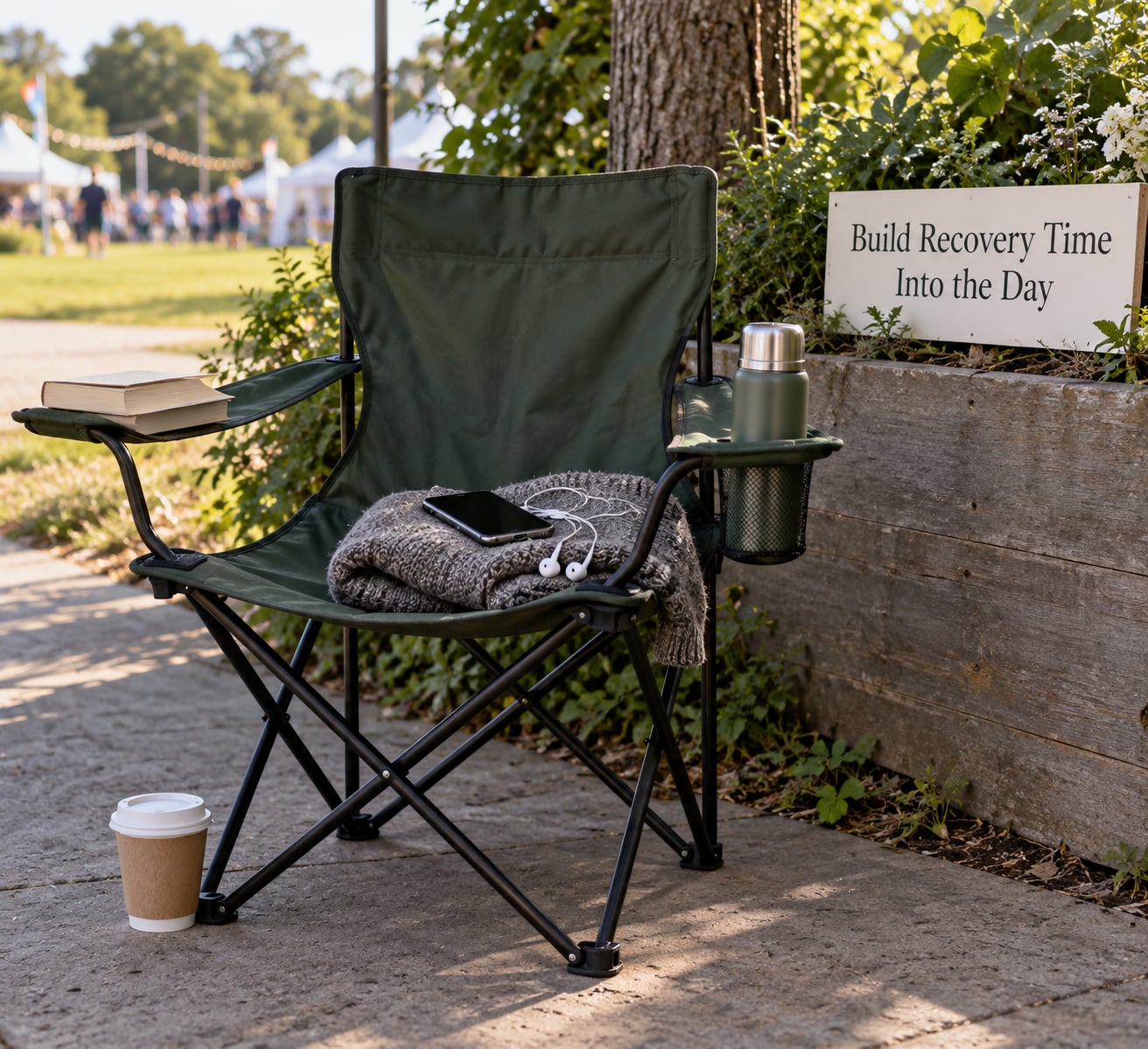
5. Build Recovery Time Into the Day
The classic introvert Pride plan fails because it treats every minute as an opportunity. Leave gaps. Go home between events. Sit in the quiet room for twenty minutes without making it feel like a defeat.
A phone-free reset works better than scrolling. Ten minutes of stretching, sitting somewhere with your back against a wall, feet on the ground, and counting five things you can hear will do more for your evening than another hour of people.
Plan the morning after like part of the event. No errands before noon, no lunch obligation, nothing that requires you to be a functioning person. The post-Pride crash is real and it lands harder when you stacked a Saturday night brunch on top of it.
6. Connect on Your Own Terms
Making friends at Pride as an introvert is harder because most groups are already closed. The low-pressure routes work better: volunteer at a booth, join a small-group meal with a set start and end time, or go to a reading where the shared thing is already the conversation.
On r/lgbt, the most common advice in threads about making friends at Pride is exactly this. Get a job that puts you next to the same people all day, join something with a repeating schedule, and let a second meeting happen before you count it as a friendship.
Going solo is fine, and not a fallback. People post in r/lgbt about attending Pride alone year after year because their queer friends live too far away, and describe it as normal rather than pitiful. If that is your situation, the safety plan matters more than the networking.
Exchanging numbers with someone you talked to for ten minutes is a real connection even if you never see them again. Not everything has to escalate to a friendship to have counted.
7. Leave Before Your Battery Is Empty
Watch for the early signs rather than waiting for the crash: getting irritated at small things, scanning for exits, going flat in conversation, checking your phone hoping the friend you are with will suggest leaving.
Leaving at the two-thirds mark of your planned time is the move. You remember the good part, you are not tired enough to be rude to anyone, and getting home tired is a very different experience from getting home wrecked.
If you are drinking, decide the ceiling before you arrive and keep counting drinks rather than time. The people who say “just one more drink” are not trying to trap you, but they are definitely counting on you losing track.
Common Mistakes
Overloading the Weekend With Events
The fix: two anchors maximum, everything else optional. A weekend that is mostly travel between events leaves no room for recovery, and you will spend Sunday cancelling plans you never wanted.
Arriving Without a Quiet Option
The fix: identify the quiet room, the seated area or the nearby cafe on the venue map before you go, and confirm you have a transport plan that does not depend on the crowd clearing. The bathroom is a decent short-term refuge, but it is a bad place to spend an hour.
Saying Yes to Keep Other People Comfortable
The fix: short, kind, final. “I am only staying for the hour, but I am glad you asked” and “I am going to head off” need no justification. If someone is genuinely disappointed, that is their feeling to manage, not your evening to donate.
Pushing Through Exhaustion
The fix: treat leaving as part of the plan. The difference between celebration and endurance is whether you went home and thought about it, or went home and could not remember any of it.
Skipping It Because Pride Is Not Built for You
Plenty of people read r/aromanticasexual posts about dreading Pride, feeling left out because there is no relationship to celebrate, and decide the whole month is only for loud couples. The better read is that the main-stage version was never the version aimed at you, and there are other ones: a bookshop reading, a small dinner, a march where you march beside one person and leave when you are done.
If you are not out yet, the same logic applies with more care. Celebrating privately counts fully. So do anonymous online communities, a closed-door dinner with people who already know your name, and volunteering for something that has nothing to do with being visible. If any part of your plan touches your family, your employer or your housing, look at what Trevor Project, Trans Lifeline, PFLAG and GLAAD publish about privacy and safety before you make it real.
Frequently Asked Questions
Can introverts still have a fun and meaningful Pride experience?
Yes, as long as you choose the version of Pride you are actually willing to attend. A parade corner, a morning community breakfast, a drag show matinee or a small dinner gives you the belonging without the twelve-hour festival. Most introverts who enjoy Pride report that the best days were the ones with two anchors and a clear exit time, not the ones where they tried to do everything.
Is it okay to go to Pride alone?
It is completely normal, and people on r/lgbt post about doing it every year because their queer friends live too far away. Share your live location with one person, pick a public venue, tell someone your hard departure time, note the restrooms and two exits when you arrive, and keep your phone charged. The only real difference solo is that nobody is watching your back.
How do you deal with sensory overload at a Pride parade?
Position matters more than gear. Stand at the back or on a side street, arrive early for a quieter hour, and keep your exit route in front of you rather than behind. Earplugs handle bass but not strobes, sunglasses help with glare, and scheduled twenty-minute resets in a known quiet spot do more than anything else. Leave at the first sign of irritation rather than waiting for the full overload.
Can you celebrate Pride if you’re not out yet?
Yes, and your pride is not a lesser version of anyone else’s. Private dinners with people who know your name, volunteering, anonymous online communities, reading lists and watching from home all count as celebrating. The extra work for closeted people is privacy planning: use a separate account where it matters, keep your phone secure, and check guidance from Trevor Project, Trans Lifeline, PFLAG or GLAAD before anything that touches people who do not know yet.
How do you leave a Pride event early without feeling awkward?
Say your departure time out loud when you arrive rather than slipping away, which turns an exit into something everyone planned. A simple line works: I am heading off around four, it was really good to meet you. Do not apologise twice and do not explain. Leaving while the day is still good is the single best thing an introvert can do for their whole June.
Start Small: What to Do First
Do one thing tonight: open the schedule, pick the two events you would regret missing, and write down the time you will leave each one. Everything else in this guide hangs off that decision.
Knowing how to survive pride as an introvert is not about becoming the person who stays until 2am. It is about being the person who went, felt something real, and still has energy on Wednesday. Nothing about your queerness requires you to be the loudest person in the crowd. Most of the people who go quietly have been going for years.