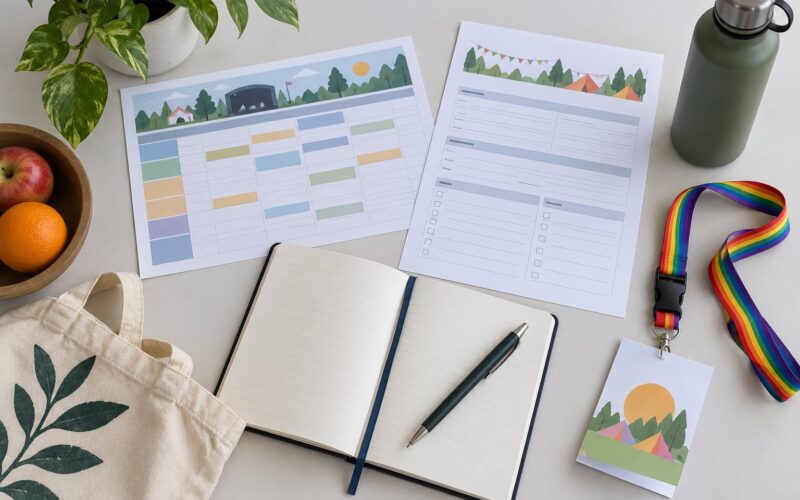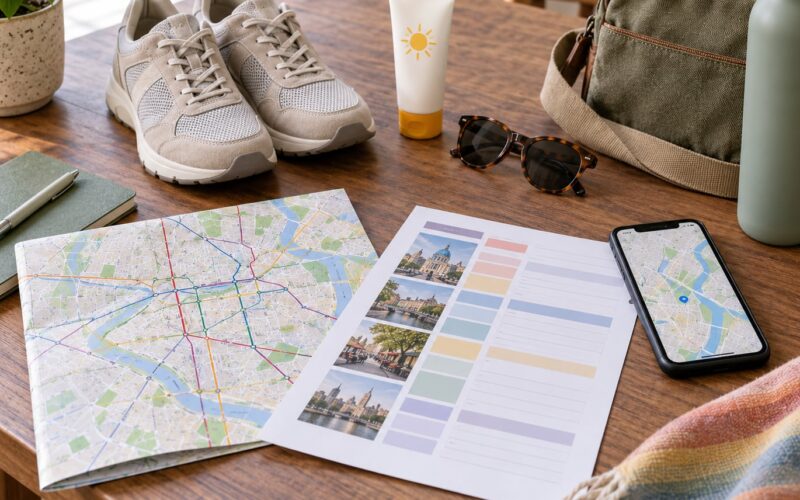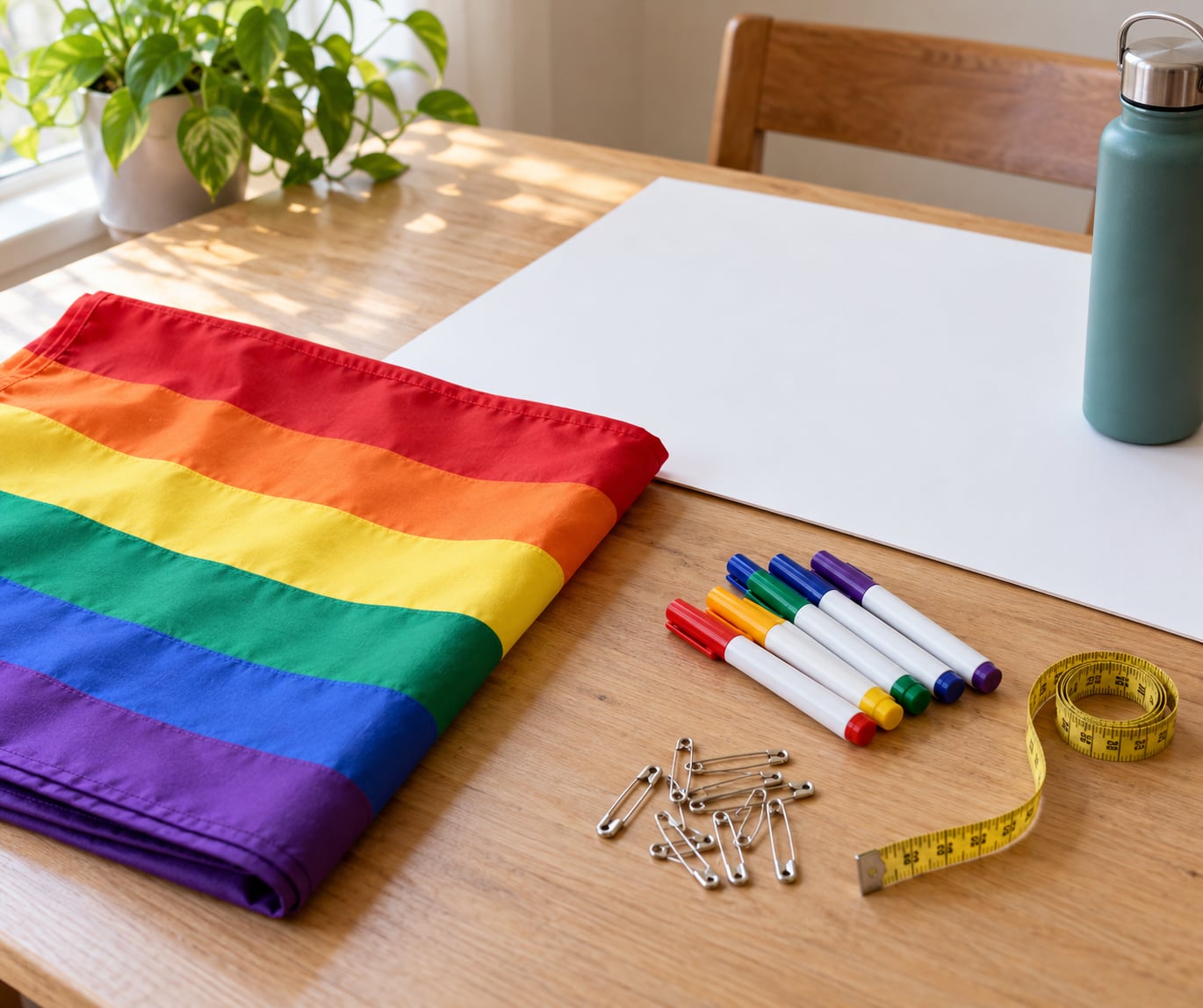
To march in a Pride parade with a group, register your crew as a contingent (or join an existing one), assign a handful of roles, and stage together at your assigned check-in point. Arrive 15 to 45 minutes early, bring a banner or signs for the front of the lineup, pack water and sunscreen, and agree on one meeting point on the far side of the route before anyone sets off.
Group marching is the difference between a fun day and a stressful one. On your own, a parade is a few thousand strangers and a route you half remember. With a crew, somebody carries the banner, somebody counts heads, and nobody gets stranded when the route dumps out into a festival with fifty thousand people in it.
This guide covers the whole arc, from the organizer email to the group photo. It also covers the parts first-timers worry about most: what if I get separated, is it safe, can I march if I am straight, and what do I do if I did not register in advance. Straight allies, families, coworkers, and anyone nervous about their first Pride are welcome here. Most of the logistics below are the same for everyone.
Table of Contents
- What You Need
- How to March in a Pride Parade with a Group
- Choose a coordinator and confirm the parade details
- Set a meeting point and communication plan
- Make signs, outfits, and messages group-friendly
- Pack for comfort, safety, and changing weather
- Gather, brief everyone, and enter together
- Stay together, engage safely, and leave as a group
- Common Mistakes
- Parade Etiquette and Safety Tips
- How to join a pride parade group at the last minute
- Frequently Asked Questions
- What should a group do if members get separated during the parade?
- How can a Pride parade group make signs that are safe and easy to carry?
- How should marchers stay together when cell service or GPS is unreliable?
- How can a group include children, older adults, or people with disabilities?
- What should a group bring for heat, rain, or a long day outdoors?
- What should marchers do if they witness harassment or feel unsafe?
- Conclusion
What You Need
You need a few things settled before parade day, and most of them take a single group conversation. The list below is what a group of any size, from three friends to a thirty-person nonprofit team, should have nailed down.
- A coordinator and a backup. One person owns the plan. One other person can answer questions when the coordinator is in a bathroom line.
- One meeting point before the march, one after. A specific spot, not “somewhere near the start.” A cafe awning or a transit station entrance you can name over text beats a vague corner.
- A communication plan. A group chat that everyone actually reads, plus a backup for when cell service dies in a crowd of thousands.
- The organizer’s details. Registration confirmation, contingent number, staging window, check-in location, route end point, and the day-of phone number for the event.
- Supplies. Reusable water bottles, sunscreen, hats, comfortable shoes, a portable charger, any medications, and a small first-aid pouch.
- Accessibility logistics. Where accessible restrooms and seating are, whether a support vehicle can join at staging, and how anyone with mobility needs will enter and exit the route.
- Paperwork, if you are registering as a group. Some organizers ask for a waiver, a code of conduct signature, a certificate of insurance, or a deposit for floats. Businesses and nonprofits usually get more paperwork than a group of friends.
- Signs and a banner. Whether the organizer requires mounting hardware, limits sign size, or bans rigid poles, the rules are set by the parade, not by taste.
Most amateur groups skip the permits question entirely and find out the hard way. A rule you read on a web page in April is worth more than guessing on a hot sidewalk in June.
If you are not sure whether you need to register at all, treat registration as the default. Plenty of contingents are happy to add walkers, and it costs a message to ask.
How to March in a Pride Parade with a Group
Here is the process in the order it actually happens: you confirm details, you set your meeting and communication plan, you make your materials, you pack, you stage, you march, and you leave together. Skip a stage and it usually bites you on the route.
Choose a coordinator and confirm the parade details
One coordinator, one backup, and everyone else stops getting contradictory texts. Before anything else, read the organizer’s own materials end to end, because every parade runs on slightly different rules.
Confirm these details with the organizer and put them in the group chat the same day:
- Registration deadlines, contingent numbers, and any waiver or insurance certificate required for your group
- Whether you are a walking contingent or a float, and what each category requires
- The staging window, the check-in location, and the contingent number to look for on arrival
- Route length, expected march duration, and where the route ends
- Sign rules: maximum size, whether poles are permitted, whether mounting hardware is provided
- Prohibited items, bag rules, the code of conduct, and the anti-harassment policy
- Accessibility services: accessible restrooms, viewing areas, seating, captioning, quiet or sensory-friendly space
- Weather policy, including cancellation, delay, or shortened-route announcements
Organizer guidance tends to be more specific than people expect. One published set of staging instructions gave a one-hour staging block, a specific contingent number, and a firm instruction that marchers keep one lane clear for emergency vehicles. Your parade will have its own version of those numbers, and finding them is the entire job of this step.
How do you know the step worked? Everyone in the group can state the staging time, the meeting point, and the name of the organizer contact without looking it up.
Set a meeting point and communication plan
Set one meeting point before the march and one after, then tell every person both locations in writing. Post a photo of each spot in the group chat, because “the north end of the park” means something different to everyone who is looking at it.
For the pre-march meetup, pick somewhere with a fixed landmark: a specific transit station entrance, a numbered corner, a coffee shop people can sit inside. For the post-march point, pick something near the route’s end that you can walk to or get a rideshare from, since half the group will have wet feet and low batteries by then.
Then handle the case everyone underestimates: cell service. It gets thin in a dense crowd. Agree on a buddy system so nobody is alone, and pick a fallback that does not need a signal.
- Pair each person with a buddy, and pair each buddy pair with another pair for small groups
- Agree that a group chat message like “at the coffee shop, north corner” is enough, no essay needed
- Print or screenshot the organizer number and the meeting point in case phones die
- Agree on a time, not a feeling, for the after-march rendezvous
How do you know it worked? Ask one person who was not in the original planning thread to repeat both meeting points and their buddy’s name.
Make signs, outfits, and messages group-friendly
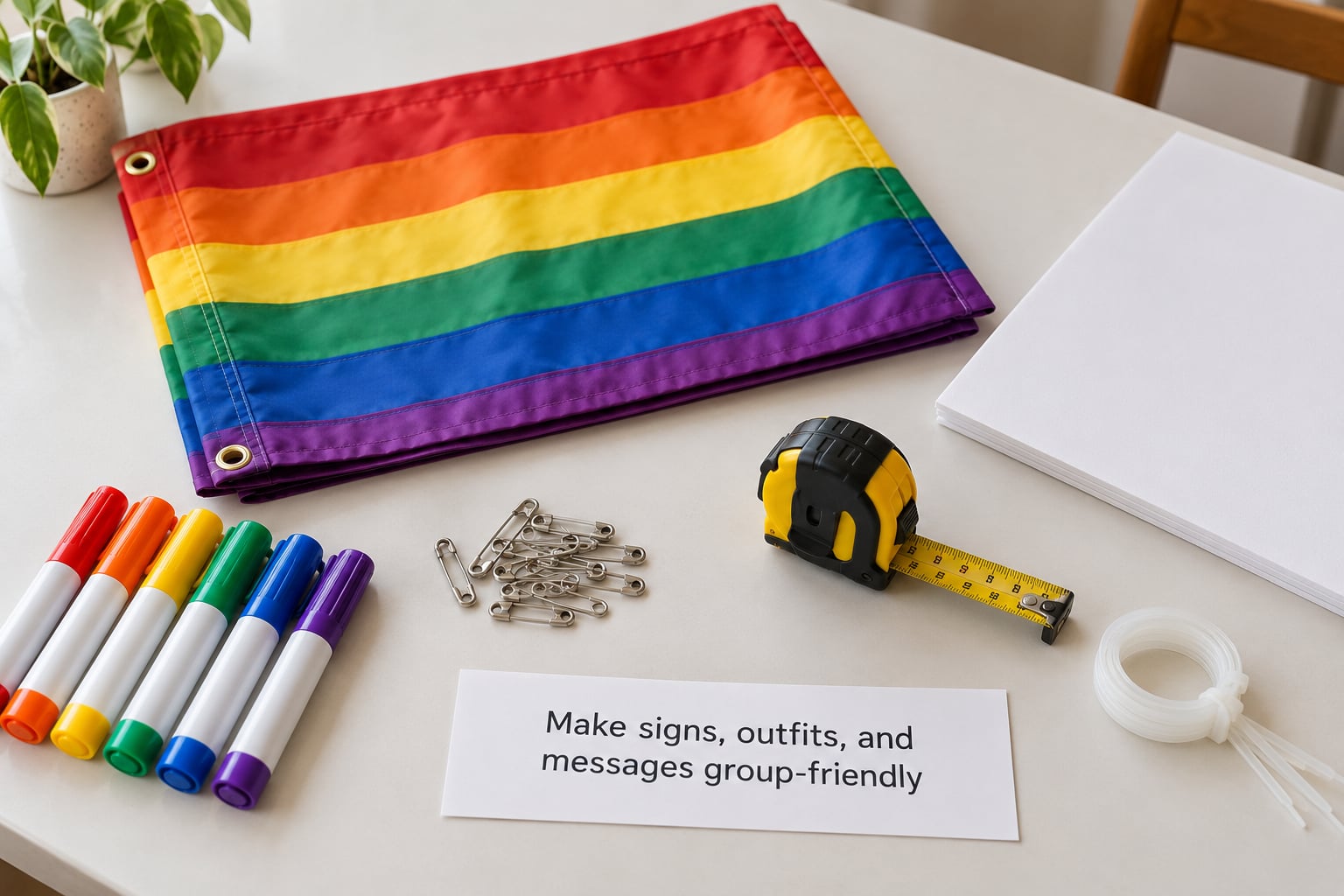
Signs should be readable from the sidewalk, not just from your own contingent. Big letters, few words, high contrast, and a surface that holds up in a breeze.
Measure before you commit. If the banner is going across a street, people need to be able to read it from a distance; if it is carried at chest height, keep it under about shoulder width so it does not catch on strangers. Some organizers ban rigid poles entirely because of the wind loading they create, and some hand out mounting hardware at check-in. Find out which situation you are in.
For clothing, matching colors or a shared accessory reads as a group in a photograph without anyone having to coordinate an outfit. That is usually enough. Skip heavy costumes, especially anything that restricts your vision, your hearing, or your ability to walk quickly.
For messages, the useful ones are specific to your group rather than generic. A sign that says your clinic’s name, your union local, your school, or your family name starts a conversation that a slogan cannot. Slogans are good for the front banner, where they set the tone for the walk.
Flag handling deserves one line: never lay a flag on the ground, and if someone drops one, hand it back or pick it up respectfully rather than stepping over it.
How do you know this step worked? Every sign fits its holder’s hands and can be carried for an hour without dropping it, and no sign needs a pole if poles are banned.
Pack for comfort, safety, and changing weather
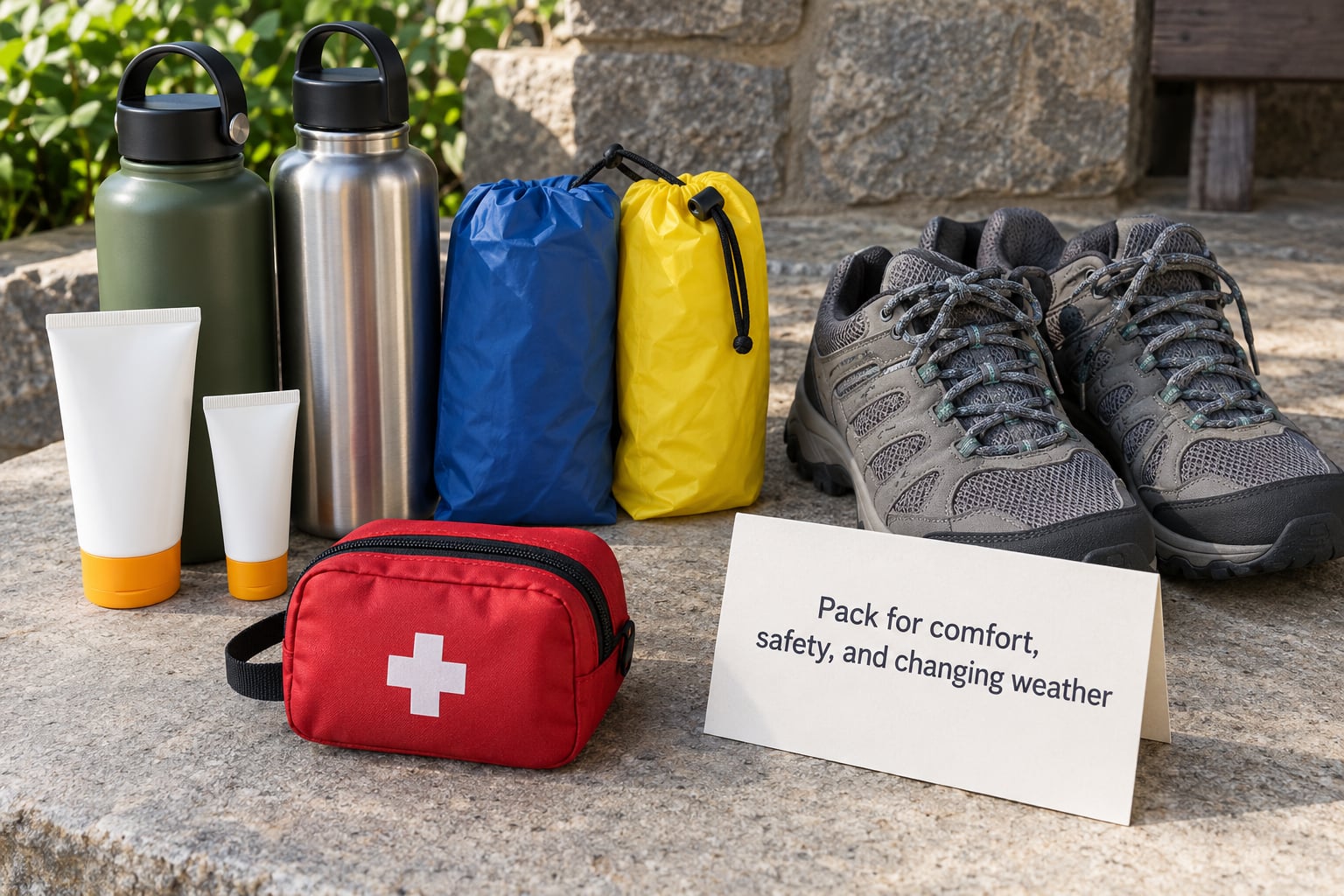
Pack for a long day outdoors, because that is what it is. Most contingents walk for over an hour, and a lot of people spend two to three hours standing in staging before the march even rolls.
The core kit, every time:
- Reusable water bottles, one per person, refilled before you leave home and again at staging
- Sunscreen applied before you arrive, plus a hat or cap
- Comfortable shoes you have already broken in. You will walk miles.
- Medications anyone takes regularly, in a labeled bag, plus a small first-aid pouch
- A portable charger and a short cable, because a dead phone is a lost person
- Light layers, a poncho, and a compact umbrella for a rainy forecast
- A catch-all bag or backpack for freebies, candy, and stickers that get handed off along the route
- Identification, a little cash, and transit fare if you are riding to staging
Plan for the specific weather, because the same base kit handles three very different days:
| Forecast | Add or change |
|---|---|
| Hot and sunny | Extra water, electrolytes, wide-brim hat, light loose clothing, more sunscreen reapplication, and a plan for who notices heat exhaustion first |
| Rain | Ponchos rather than umbrellas if the route is crowded, waterproofed phone pouch, spare socks, and a dry change of shirt for the person most likely to need one |
| Cool or windy | A warm layer for staging, which is where you stand still longest, plus a hair tie for anyone whose banner will not stay put |
Restroom lines are the single most common complaint from people who have marched before. Go before you line up, and again whenever a portapotty station or a public restroom appears along the route. Facilities along a parade route are limited and the lines are long, so build the bathroom break into the plan rather than treating it as an interruption.
How do you know this step worked? Nobody in the group had to borrow a bottle, a charger, or a bandaid from a stranger on the route.
Gather, brief everyone, and enter together
Arrive 15 to 45 minutes early. Volunteers and organizers set up hours before marchers do, and a group that arrives with ten minutes of slack is a group that cannot find a marshal.
The check-in sequence, in order:
- Find your contingent number. Marshals organize by number, not by group name, so the number is the fastest way to get pointed at the right staging area.
- Check in with the marshal. They confirm your group, hand over wristbands or stickers, and tell you where to line up and what the rules for the route are.
- Collect hardware. If signs need mounting, this is where you get the pole, tape, or bracket.
- Line up in your walking order. Front, middle, back, decided now and not in the moment.
- Use the restroom. Do it before you are committed to the staging area.
Then run a two-minute briefing. Say the meeting point out loud, say the after-march time, name who has the first-aid pouch and who has the water, and confirm nobody is marching alone. Buddy pairs introduced face to face remember each other far better than names in a chat thread.
Agree on your walking order. Banner and flags at the front, the loudest energy in the middle, the people who need to step off the route or take breaks in the middle, and a designated sweep person at the back. A group that drifts apart usually drifts because nobody was assigned to be last.
Follow marshal instructions without negotiation, and keep the space beside you clear so emergency vehicles and other contingents can pass. When you enter the route, enter together at the pace of the slowest person in your group, not the fastest.
How do you know this step worked? Your group entered the route as a single unit rather than arriving in three waves.
Stay together, engage safely, and leave as a group
The route is the easy part. Most group separation happens in the first ten minutes, when spectators surge the curb line and someone stops to film.
A few habits keep a contingent intact:
- Set a pace at the start and hold it. The parade moves at the speed of the contingents ahead of you, and stopping repeatedly is what breaks groups up.
- Pick two regroup points along the route, like a specific corner and a specific storefront, and decide in advance that the sweep person waits there if the front of the group passes it.
- Check in with buddy pairs at those points, not constantly over text.
- Take planned breaks rather than drifting. If someone needs water, a seat, or ten quiet minutes, the group pauses together.
- Disagreements get handled off the route and after the march. Nobody argues with a stranger at full volume in front of a camera.
For members with disabilities, the group adapts rather than the person adapts. Someone using a wheelchair rides near the front of the contingent where the pace is steadier, someone with a service animal walks beside them rather than behind, and someone who needs low stimulation walks at the quiet end of the group. If your group includes an elder, a small child, or anyone who cannot stand for a long staging wait, ask the organizer in advance about vehicle support or a shortened route, and take that option at staging if it is offered.
For children, write a phone number on a card in their pocket, agree on a name they will use with a marshal or volunteer if they get lost, and pair them with a specific adult rather than a rotating one. For anyone who is not out, trans, or simply does not want to be publicly identified, agree in advance on what the group does if a camera comes up, and let anyone leave the route without explaining why.
After the route ends, the parade does not stop, and this is where a group without a rendezvous plan falls apart. Walk to the after-march meeting point together, count heads, then split up with a clear plan for festival entry, meeting again later, or catching transit home. If someone is riding a vehicle with mobility support, confirm the driver knows exactly where to go before the contingent disperses.
How do you know this step worked? The last person in your group arrived at the meeting point on their own, without anyone backtracking down the route.
Common Mistakes
These are the failures I see most often, and each one has a cheap fix.
- Relying on cell service to hold the group together. Service fails in the thickest part of the crowd, which is exactly where you need it. Fix: buddy pairs, a printed organizer number, and a meeting point that does not depend on a map pin dropping.
- Arriving without a shared endpoint. Groups that say “we’ll find each other” split permanently. Fix: name the after-march spot and the clock time, and put it in the chat the night before.
- Carrying oversized signs. A banner wider than a person catches wind, blocks the view of marchers behind you, and gets flagged by marshals. Fix: measure it, check the size rule, and test the carry for a full block before parade day.
- Ignoring accessibility planning. The person with a wheelchair or a service animal ends up improvising on a curb cut while the group walks ahead. Fix: plan the accessible restroom and viewing points in advance and assign someone to walk at that pace.
- Leaving without a headcount. Fix: the sweep person counts heads aloud at every regroup point and at the meeting point after the march.
- Registering nothing and showing up cold. Some parades accept walk-ups, but others will not let an unregistered group onto the route. Fix: ask the organizer, and if you cannot register, join an existing contingent.
- Staging in full sun with no water plan. Fix: the water monitor carries extra bottles and calls the first water stop before anyone feels thirsty.
- Treating a float like a walking contingent. Vehicle rules, insurance, drivers, and drop-off points are different from walking rules. Fix: read the float category requirements before you promise anyone a ride.
One fix for the walking-together problem is worth repeating because almost nobody does it: get near the beginning of the line. Marchers commonly point out that staging early puts you in the sun and lets you leave sooner, which is a shorter, cooler walk. If your group wants a comfortable march more than it wants to march last, stage early.
Parade Etiquette and Safety Tips
Parades are a mix of protest history, community celebration, and street party, and good etiquette covers all three. The rules are short, and most of them are just being a decent person in a crowd.
- Ask before you photograph people. Especially kids, people in costume, and anyone whose expression suggests they would rather not be pictured. Getting consent takes two seconds; a bad photo travels forever.
- Do not publish someone else’s coming-out. If you post group photos, say who asked not to be tagged, and respect that.
- Keep space for other contingents. Do not spread out to grab curb space, do not link arms with a neighboring group without asking, and leave the emergency lane clear.
- Treat volunteers, marshals, and police as people doing a job. They answer route questions all day. A thank-you goes a long way.
- Respect businesses and residents. You are on their street. Keep music at a level people can talk over, and skip litter, especially if you did not carry it in.
- Do not engage counter-protesters. Some people come specifically to pick a fight or to film faces for a channel that targets people. Marshals and volunteers exist to handle that. Your job is to keep your people together and moving.
- Plan for harassment without living in fear of it. March with people you know, keep the buddy system, know the route’s exit points, agree in advance on a safe place to regroup, and leave if anyone in the group wants to leave.
- Skip costumes and in-group jokes that read badly from the sidewalk. A sign that embarrasses one person in the group is not worth the laugh.
- Allies: wear the rainbow, not the punchline. A plain rainbow shirt or flag and a genuine willingness to listen is the whole job. Being loud about being an ally is not.
Marching as a business or an organization brings one extra question. Support is welcome, but the parade is not a billboard, and corporate or institutional contingents are often asked to keep branding restrained, keep the message on community rather than product, and fund access work alongside the float. Ask your organizer what they expect. Doing it your way and getting asked to tone it down on the route is the worst version of this.
How to join a pride parade group at the last minute
You do not need a friend group to march. Walk-ups work in many cities, and people who marched this way say it is the easiest on-ramp there is: get to the start of the route in the morning, find a community contingent, and ask. A person walking alone and asking to join is a routine request, not an odd one, and a group with a shortage of marchers is usually glad to have you.
The other last-minute route is volunteering. Volunteers work check-in, hand out water, staff marshal stations, and clean up afterward, and volunteering is a way to be fully part of the day without carrying a sign.
Frequently Asked Questions
What should a group do if members get separated during the parade?
Stop where you are rather than backtracking through a moving crowd, and send one person toward the last agreed meeting point while another stays put. Text the organizer number and the group chat with your exact position, since crossing streets to find each other is what usually separates people further. Agree beforehand on two regroup points along the route, and treat the time you meet at the after-parade point as the real reunion.
How can a Pride parade group make signs that are safe and easy to carry?
Keep letters large, few, and high contrast so the message reads from the sidewalk, and size each sign to the person carrying it. Measure before you build, avoid rigid poles unless the organizer permits them, and test the carry for a full block. Corrugated plastic or foam board holds up better in a breeze than poster paper, and mounting hardware is usually handed out at check-in.
How should marchers stay together when cell service or GPS is unreliable?
Use buddy pairs, printed meeting points, and landmark descriptions rather than map pins. Name a specific corner, storefront, or station entrance people can describe out loud, and pair each buddy pair with another pair in small groups. Screenshot the organizer contact and the meeting point before you leave home, and pick a sweep person who stays at the back so nobody is unaccounted for.
How can a group include children, older adults, or people with disabilities?
Plan the accessible route in advance: accessible restrooms, viewing areas, curb cuts, and vehicle support for anyone who cannot walk the full distance. Assign a specific adult to a child rather than rotating, put a contact number in their pocket, and agree on a name they will use with a marshal if they get lost. Ask the organizer about seating and shorter-route options, and build breaks into the walking order so the group slows down for whoever needs it.
What should a group bring for heat, rain, or a long day outdoors?
Always: a reusable water bottle per person, sunscreen, a hat, comfortable shoes, medications, a small first-aid pouch, and a portable charger. Add electrolytes, loose light clothing, and a wide-brim hat for heat, and ponchos, a waterproof phone pouch, and a dry change of shirt for rain. Build in a restroom stop before staging and at every station along the route, because lines are long and facilities are limited.
What should marchers do if they witness harassment or feel unsafe?
Move the group together toward a marshal station or another contingent, and use the buddy system rather than splitting up to look for the person responsible. Tell a marshal or volunteer, and call emergency services if there is an immediate threat. Agree in advance that anyone can leave the route without explaining why, and pick one safe place to regroup. Marchers are not expected to argue with counter-protesters or to disengage from a confrontation on their own.
Conclusion
Start with three things this week, not parade morning. Confirm the parade details with the organizer, name a coordinator and a backup, and put one meeting point before the march and one after into the group chat where everyone can see it.
Everything else in this guide hangs off those three decisions. The roles, the signs, the water, the buddy pairs, and the etiquette all get easier once your group knows where it is meeting and who is in charge of telling people when that changes.