Pride parades are organized by a volunteer-run nonprofit or steering committee that incorporates, buys insurance, files for a city special-event permit and street closures, recruits contingents and volunteers, writes a safety plan, and then runs the day itself to a minute-by-minute schedule. Understanding how pride parades are organized matters because almost nothing about a parade route looks spontaneous. It is the output of nine to twelve months of permits, contracts, shift schedules and liability decisions made by a small number of people.
This guide walks through the whole machine, from forming the organizing body to the post-event debrief. It is written for first-time organizers in a city that does not have a Pride yet, for volunteers inside an established one, and for community members who have always wondered what is happening behind the barricades.
Parade structure changes from city to city. San Francisco Pride, Chicago Pride, NYC Pride and Toronto Pride each run different models, and a small-town Pride operates on a fraction of any of those budgets. The mission, the permits, the route, participant coordination and the safety plan are the parts that never vary.
Table of Contents
- What You Need
- Step-by-Step: How Pride Parades Are Organized
- 1. Define the Parade’s Mission, Audience, and Scope
- 2. Form an Organizing Team and Governance Structure
- 3. Choose a Date, Route, and Event Format
- 4. Secure Permits, Insurance, and Key Partnerships
- 5. Build the Budget and Secure Funding
- 6. Recruit Participants and Coordinate the Route
- 7. Prepare for Safety, Accessibility, and Contingencies
- Common Mistakes
- Frequently Asked Questions
- Conclusion
What You Need
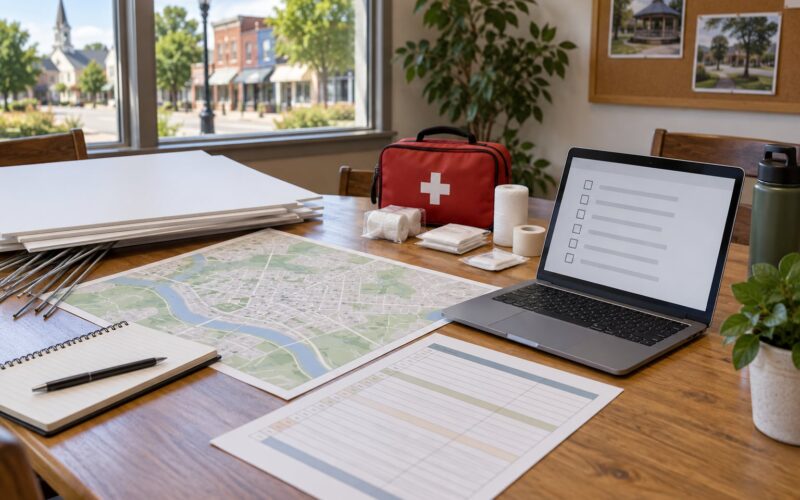
Before the first planning meeting, organizers need a short list of things in hand. Some are non-negotiable. Others scale with the size of the event and the city it runs through.
- An identified organizing body with named leads for operations, permits, money, participant communications, safety and accessibility. A group chat and a shared document count at the start, even if they do not count by parade week.
- Named city contacts in the special-events office, the police traffic unit, the fire or EMS division, the transit agency and the sanitation department. Find these names before you need them.
- General liability insurance with a certificate of insurance naming the city as an additional insured. Most cities require this before a permit is issued.
- A written budget and a bank account in the organizing entity’s name.
- Vendor and production contacts for staging, sound, barriers, portable restrooms, generators, water, first aid and cleanup crews.
- Safety resources: a risk assessment, a code of conduct, a police or city liaison, and a contracted medical team.
- Accessibility services: accessible transportation, viewing platforms, interpreters when requested, trained access staff and an accessible restroom plan.
- Volunteer tools for scheduling and shift coverage, plus radios, high-visibility vests, water, sunscreen, signage cones and a weather kit.
A first parade in a small city needs fewer of these than a 100-unit city parade. Insurance, permits and a medical plan are the three that exist everywhere, however small the event.
Step-by-Step: How Pride Parades Are Organized
Pride parades are organized in seven stages. The order matters less than the fact that nobody skips ahead: a route cannot be announced before the permit is filed, and contingent rules cannot be published before the organizer knows what the city will allow.
1. Define the Parade’s Mission, Audience, and Scope
The mission statement is a working document, not a slogan. It settles the parade’s purpose, its audience, its expected size, whether the format is a march-only route or a street festival with stages and vendor booths, and how decisions get made.
Scope is where most first-time organizers get stuck. A parade and a festival week are different projects with different budgets. Decide early whether this year’s event is a march with a reviewing stand, or a full week of parties, panels and a street fair.
Write down what the parade is optimizing for. Celebration, political visibility, community inclusion, sponsor exposure and accessibility can all matter, but they pull in different directions when the budget gets tight. A parade in a city with a hostile council may lean into visibility. One in a small town may prioritize safety and a low barrier for first-time marchers.
Copying another city’s parade without asking why it works there is the most common early mistake. Chicago Pride grew out of a specific political and cultural context. Pulling that model into a town of 20,000 without adapting it usually produces a thin version of a festival that already exists somewhere better.
2. Form an Organizing Team and Governance Structure
There are three workable structures. A nonprofit committee with a board and officers has the cleanest authority to sign contracts, hold funds and apply for grants. A fiscal sponsor lets a smaller group operate legally under an existing 501(c)(3) without waiting months for incorporation. An informal coalition works for a first event that already has a partner organization willing to carry the paperwork.
Either way, assign clear leads: operations, permits, finance, programming, participant communications, volunteers, safety, accessibility, vendors and publicity. Each lead owns decisions in their lane and reports at a meeting on a fixed cadence.
Document how decisions get made. Simple majority, or consensus, or a named chair with a tiebreak. Put it in writing before the first argument, not during it. Add a conflict-of-interest policy so a sponsor, a contingent leader and a board member are not quietly approving each other’s spending.
The structural rule that matters most: no single volunteer should control more than one critical function. Organizing committees that depend on a single coordinator do not survive that person’s burnout or a bad season.
3. Choose a Date, Route, and Event Format
Route selection drives everything else. The committee maps the full path block by block, then confirms street closure feasibility, transit service changes, emergency access, crowd capacity at the widest point and where the parade ends. A review of how pride parades are organized always comes back to the route, because route problems surface in permits, in budgets and on the day.
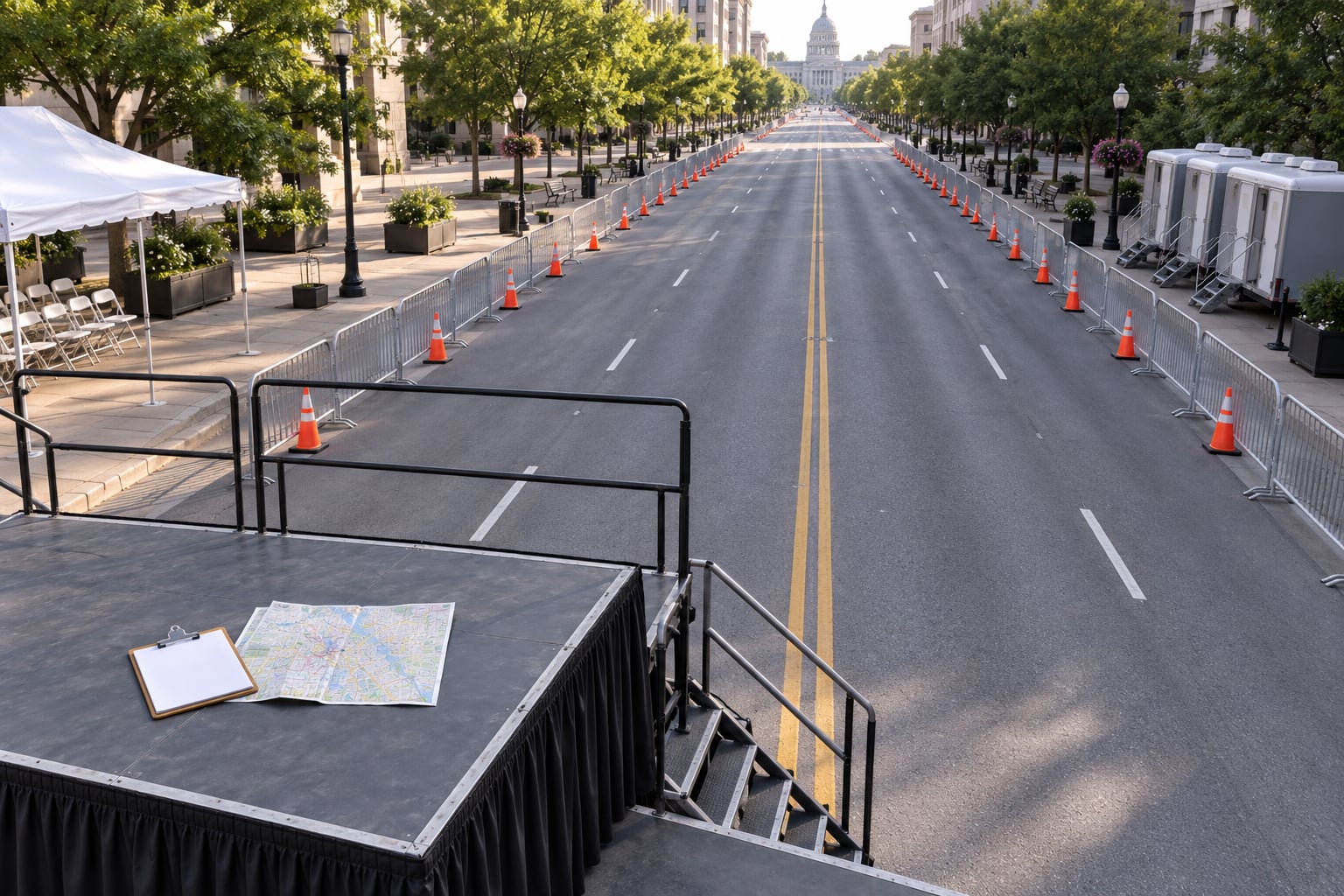
Every route needs a staging area where contingents assemble, a dispersal or de-staging area where floats break down and vehicles exit, viewing areas along the route, and a clear emergency corridor that stays open the whole day.
Check who lives and works along the route before announcing it. Door-to-door outreach and a letter to every business on the path prevent most of the neighborhood friction that eats planning time.
Weather drives the date choice more than sentiment. Organizers in most cities plan a primary date and a rain date that falls on a weekend, and they check the historical forecast pattern for that stretch of June before locking anything in.
4. Secure Permits, Insurance, and Key Partnerships
Most cities require a special-event permit for a march and a separate street-closure approval for the route. Some departments also regulate amplified sound, food vendors, temporary structures, fire extinguishers and the number of people allowed at any point on the route.
Application lead times run from weeks to several months depending on the city, and parade applications are frequently reviewed on a fixed monthly cycle. Find the deadline first, then work backwards from it. A parade that files late does not get a shorter review.
Insurance is the item practitioners describe as the hardest part of the whole job. Most cities require a general liability policy with a specific minimum, a certificate naming the city as additional insured, and sometimes a separate rider for floats or vehicles. Some also require vehicle documentation and driver qualifications for every float in the parade.
The partnerships work the same way. The police traffic unit controls the closures, fire or EMS sets up medical along the route, the transit agency reroutes buses, sanitation provides crews and dumpsters, and neighborhood groups along the route get a seat at the planning table. Confirm every requirement directly with the agency involved, because rules differ substantially between cities even a short drive apart.
5. Build the Budget and Secure Funding
Build the expense side first, then work out what covers it. Typical expense categories include permits and fees, insurance, street services, barriers and traffic control, production and staging, sound, sanitation, medical and safety staffing, accessibility services, contracted crew, entertainment, volunteer support, marketing and a contingency reserve.
Plan the contingency as a real line, not an afterthought. A reserve somewhere between five and ten percent of the total budget is the usual target, and it exists for weather cancellations, last-minute permit changes, extra police hours or a generator that dies at hour nine.
Revenue usually mixes four or five sources. Sponsorships at several tiers, small business contributions, individual donations, contingent registration fees, vendor booth fees and merchandise. Foundations that fund community health and education are a real source in many regions, and they want a budget narrative and an impact report rather than a poster.
Publish what the money did. Financial transparency is the single strongest defense against the recurring question of why sponsors pull out, because sponsors who can see exactly where their money went are far more likely to return. Publish a statement of income and expenses within a couple months of the event, and keep the reserve documented.
Budget figures change every season and differ widely by city. Share-of-total planning is more durable advice than any fixed number.
6. Recruit Participants and Coordinate the Route
Participants register as contingents. A contingent is a group marching together under one banner with one point of contact, and contingents are almost always self-organized by community groups, businesses or informal friend groups rather than assigned by organizers. That detail matters when a community sees itself missing from the parade: the absence usually means nobody local started a group, not that organizers refused one.
Publish a contingent packet covering application deadlines, float dimensions, sound limits, vehicle safety, waste and de-staging requirements, insurance, code of conduct, accessibility expectations and the theme or branding rules for the year. Every question a contingent lead would otherwise ask you by text should be answered in that document.
On the day, the route runs on a run of show: contingent call times, staging order, marshal posts at intersections, cue times for the stage, band and speaker slots, crossing points, and a named person authorized to make the call if a float breaks down or a unit arrives out of order.
7. Prepare for Safety, Accessibility, and Contingencies
The safety plan is a document, not a vibe. It names who has authority to pause or cancel the parade, how that decision gets communicated, and who talks to police, press and participants during an incident. Write the chain of command down before anyone needs it.
Common safety rules for parades cover staying with your contingent, no glass or metal in float beds, spotters at every vehicle edge, safe distances between moving vehicles and spectators, no climbing on vehicles in motion, clear pedestrian crossing points, and a defined limit on what a contingent can throw. Most cities also require a code of conduct covering harassment, hate speech and physical contact, with named people empowered to enforce it on the spot.
Accessibility is planned, not added. That means accessible transportation and vehicles, raised or level viewing areas at the route and the reviewing stand, accessible restrooms along the route and at both ends, water stations and shaded rest points, interpreters when requested ahead of time, and trained access staff who can handle a mobility device breakdown or a service animal in a crowded staging area.
Write the contingency plans for the things that actually happen: severe weather, heat, a missing child, harassment, a protest at the staging area, a vehicle incident, a power failure, a medical emergency, and a lost or blocked child. For each one, name the trigger, the person who decides, and the action. Decide the cancellation threshold in advance so the call is not made by whoever is most exhausted.
Common Mistakes
These are the failures organizers regret most, with the fix that works.
Waiting too long for the permit
Most cities process parade applications on a monthly or seasonal cycle. Find the deadline, count back from the parade date by the full lead time the city states, and submit early. Everything else in the plan waits on this.
Underestimating street and sanitation costs
Closures, barriers, traffic officers, portable restrooms and cleanup crews are usually the largest line items and the most underestimated. Get written quotes from the city’s contractor list before the budget goes public.
Depending on one coordinator
One person holding permits, money, participant communications and vendor contracts is a single point of failure. Assign named leads with deputies and keep shared access to every account and document.
Publishing incomplete participant rules
Contingent leads find out about insurance, float height, de-staging time and sound limits through word of mouth otherwise. Publish one complete packet, version it, and date it.
Skipping neighborhood outreach
Businesses and residents on the route learn about the closure from a sign. Walk the route in person, leave a printed notice at each business, and give them the liaison’s phone number.
Treating accessibility as an afterthought
Requests arrive late, vendors are already booked, and level viewing areas do not appear on their own. Budget for accessibility early and assign it to a named lead with authority to spend.
Having no weather plan
A rain date that falls on a weekday, a heat threshold, and a written cancellation communication chain. Also publish what happens to vendor fees and grants if you cancel.
Unclear emergency authority
Everyone should know who can stop the parade and who communicates the stop. One name, one deputy, one backup. Write it on the run of show.
Final planning tip: keep one master tracker with every task, its owner and its deadline. Most parade-day disasters trace back to a line item that had no name next to it.
Frequently Asked Questions
Who organizes a Pride parade?
Pride parades are usually organized by a volunteer nonprofit or steering committee, sometimes working under a fiscal sponsor like a community center or a parent group. A board handles money and contracts while working leads run permits, safety, volunteers, route and participant communications. A parade is usually one piece of a larger festival week rather than the whole event, so organizers often describe their scope that way from the start.
How early should organizers start planning a Pride parade?
Start nine to twelve months out, and earlier if your city reviews parade permits on an annual cycle. The first three months go to forming the organizing body, defining the mission, choosing a date and opening insurance. Permits and route work usually begin around six months out. Contingent recruitment and volunteer scheduling start three to four months ahead. A first-time parade in a small city can move faster, but never compress the permit timeline.
How do Pride parade permits and street closures work?
Most cities require a special-event permit for the march itself and a separate street-closure approval for the route, with additional rules for amplified sound, food vendors and temporary structures. Applications are reviewed on a fixed monthly or seasonal schedule, and the city typically requires a certificate of insurance naming it as an additional insured before issuing anything. Confirm deadlines and insurance minimums directly with your special-events office, because requirements differ between cities.
How much funding does a Pride parade need?
The honest answer is that the number depends almost entirely on scale and city costs, which change every season, so organizers plan by share rather than by a fixed figure. Sponsorships, individual donations, contingent fees and vendor booth income usually cover a share of a total that also includes permits, insurance, street services, production, sanitation, safety and a contingency reserve. Publish what the money did after the event, since sponsors return to transparent groups.
How do Pride parades keep participants and spectators safe?
Safety comes from a written plan with named authority, not from improvisation. Organizers publish a code of conduct, set float rules covering vehicle edges, spotters, sound limits and de-staging times, station trained marshals at intersections, contract medical teams along the route, and run a briefing for every contingent lead. The plan also covers harassment response, missing children, severe weather, protests and vehicle incidents, with one person authorized to pause or cancel.
Conclusion
The sequence does not change much between cities: form an organizing body with named leads, define the mission and scope, lock the date and route, file permits and buy insurance early, build the budget with a real contingency, recruit contingents and volunteers against a published rulebook, and write the safety and accessibility plans before the route is announced. Once you know how pride parades are organized, that dependency list is the whole job.
The first action is small. Convene a planning group of five to eight people, put the city’s permit deadline and insurance requirements on a calendar, and build one tracker listing every task, its owner and its deadline. Everything else on this list hangs from that document.
Pride marches date to 1970, in the years after the Stonewall Inn uprising, and the events now run in June as Pride Month in cities from small towns to the largest marches in the country. The scale changes. The work does not.