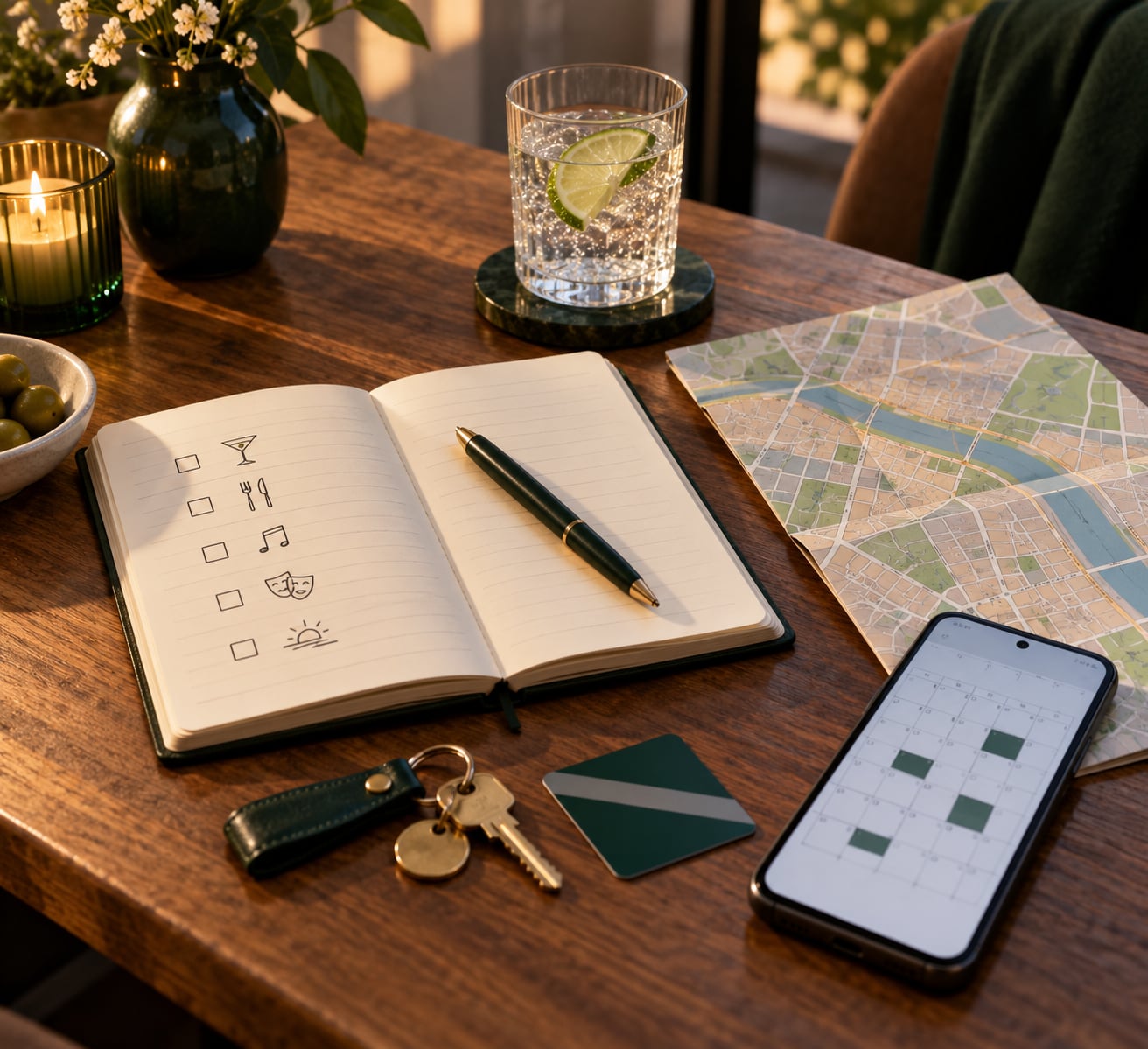
Planning a sober night out comes down to four things: pick a venue that takes non-alcoholic drinks seriously, decide what you are drinking before you leave the house, tell your friends in advance, and plan how you are getting home. Do those four and the evening is just an evening out. Skip them and you spend the night improvising, which is where most people find it hard.
The good news is that the whole plan takes about twenty minutes, most of it the evening before. Here is the short version before the detail.
- Decide the kind of night you want: dancing, live music, dinner, a show, or a low-key gathering.
- Choose a venue where non-alcoholic drinks are a real option, not an afterthought.
- Name the exact drink you will have. Deciding in advance is easier than deciding at the bar.
- Tell your friends before you go, so nobody has to ask you why you are not drinking.
- Set a budget and add a cushion for cover charges, taxis and extras.
- Solve the trip home in advance, including what happens if the plan changes.
- Pack a charger, water and a snack, then agree on a backup plan for the night.
None of that requires being a planner type. It just means the decisions happen at a table with no music, instead of on a pavement at midnight with four people trying to buy a round.
Table of Contents
- What You Need to Plan a Sober Night Out
- Step-by-Step: How to Plan a Sober Night Out
- Common Mistakes When Planning a Sober Night Out
- How to Stay Comfortable Without Making It a Big Announcement
- Frequently Asked Questions
- How do I find a venue that works well without alcohol?
- What should I drink at a bar when I am not drinking alcohol?
- How do I explain that I am not drinking without making it a whole thing?
- How do I get home safely after a sober night out?
- Why do sober nights out feel more tiring than drinking ones?
- What do I do if I drink on a night I planned to stay sober?
- Conclusion
What You Need to Plan a Sober Night Out
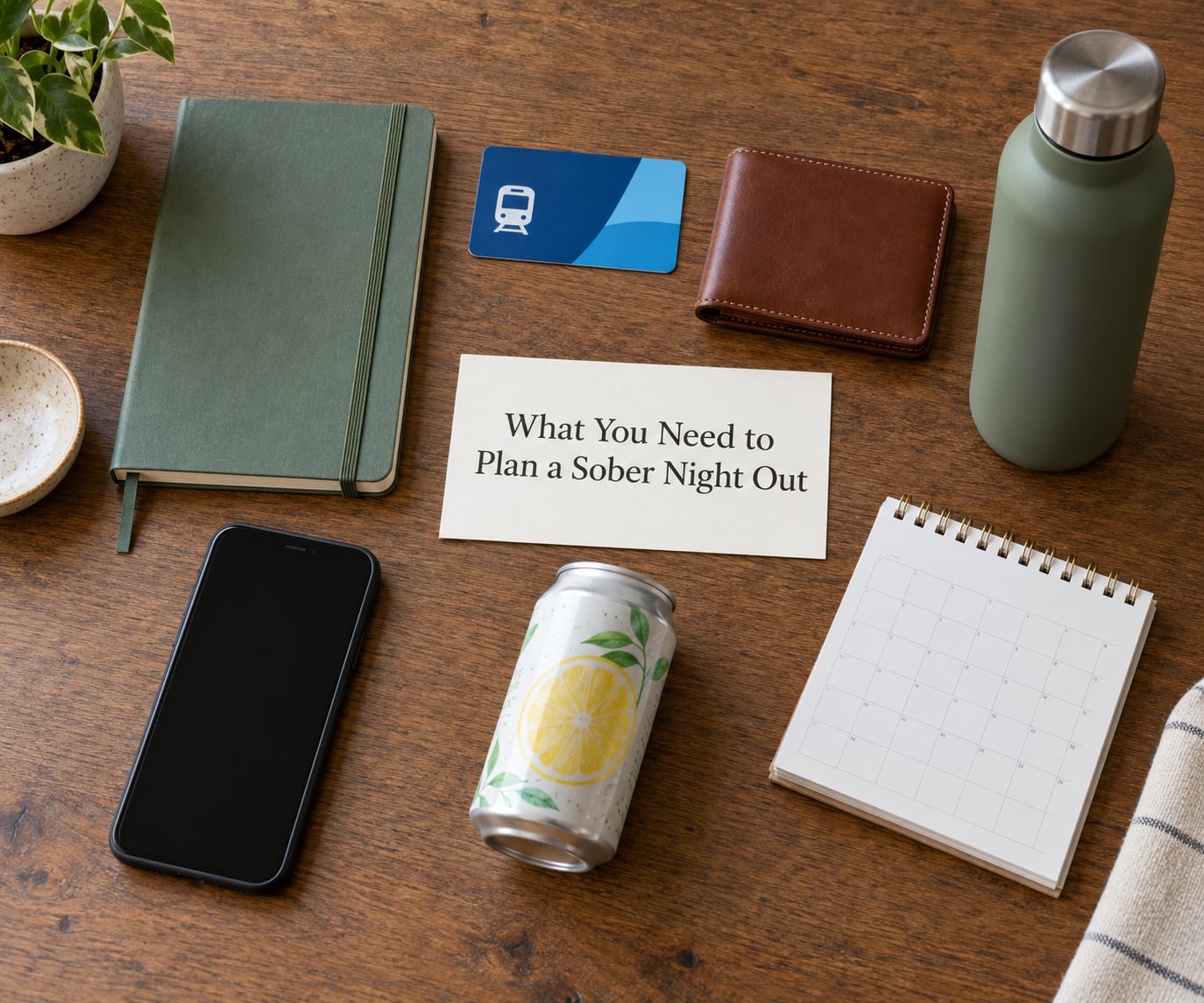
Six things need to be settled before you go. Everything else can stay loose.
A chosen activity or venue. A decision, not a shortlist. If it is still “we’ll see what feels like it” on the night, you will end up wherever the loudest group heads, and that group’s plans rarely account for you. Pick the place, the neighbourhood and the start time, and write them down.
Transportation. Both directions, decided before you leave. The trip home is the part everybody postpones, and it is the part that turns a good night into an expensive one.
A budget. A number you are comfortable with, plus a little padding. Sober nights out are cheaper than drinking nights out, but only if you set the figure on purpose.
A support person. Someone who knows you are not drinking, will not make it a thing, and will not leave you stranded if you want to go early. Chosen family counts. So does a flatmate, a colleague or the friend who already prefers early nights.
A drink and some food in mind. Decide the drink before you go, and eat something real beforehand. Arriving hungry and holding nothing tends to end badly.
A backup plan. One alternative venue, one meeting point, one way out. Not because something will probably go wrong, but because something usually does, and a backup removes the stress of deciding while tired.
If your night is built around chosen family rather than relatives, the order of those conversations matters. Tell that specific group first, before you broadcast anything wider. They are the people who will be standing next to you when someone asks the question twice.
Step-by-Step: How to Plan a Sober Night Out
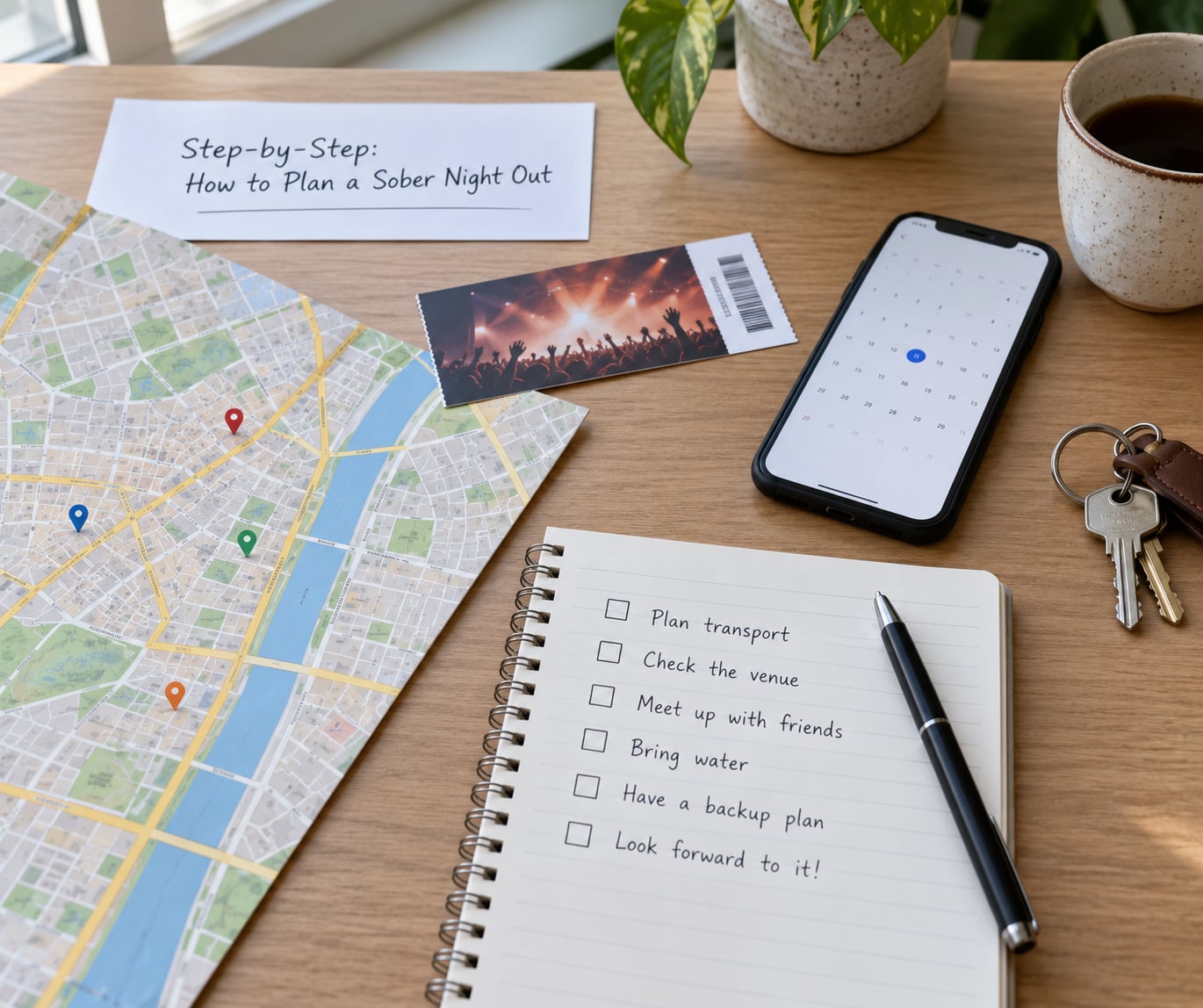
Work through this in order, roughly a day before. Each step takes a couple of minutes and removes a decision from the night itself.
1. Decide What Kind of Night You Want
Start with energy, not with the venue. A dance floor night, a seated dinner and a gallery visit ask completely different things of you, and mixing them is how people end up having a miserable time at a brilliant event.
- A dance event or club night suits people who want movement and noise. Plan to arrive nearer the peak time than the doors.
- A gig or live music night is the easiest sober night out there is. The music is the reason you are there, so nobody is watching you.
- A bar or pub quiz, karaoke or darts night works because the activity structures the evening for you.
- A restaurant suits lower energy and conversation, and the pace is entirely yours.
- A comedy show, cabaret or drag night gives you something to watch rather than perform.
- A community event or a chosen-family dinner is the easiest of all, because nobody is tracking what is in your glass.
You will know the choice worked when you can answer three questions without hesitating: where you are going, what time it starts, and what you are doing there. If any of those is a shrug, the plan is not finished.
2. Check Whether the Venue Works Without Alcohol
This is the single biggest factor in whether the night feels good, and it takes five minutes to check. Look at the drinks menu online first, then message or call the venue if the answer is not obvious.
You want to know whether non-alcoholic beer, a mocktail list or a decent soda and lime is available rather than a single warm ginger ale from the bottle. Whether the evening is programmed around something, so there is a reason to be there besides the bar. Whether there is a door charge or a minimum spend, and whether that applies to everyone.
Also check the practical details: the dress code, whether the venue is step-free or otherwise accessible, how late it runs, and whether the restrooms are easy to find. On a dance floor, knowing where the water is saves you a lot of guessing.
Plenty of venues will answer this plainly if you ask. Message, do not over-explain, and ask simply whether they have alcohol-free options on the menu.
3. Set a Budget and Bring Cash or a Card
Spend is the easiest thing to control on a sober night out, because you set the figure before you arrive rather than reacting to rounds you did not plan for.
List your likely costs: admission or the door charge, getting there and back, food, non-alcoholic drinks, tips, and anything optional such as a snack board or a second ticket. Then add roughly ten percent for the thing you forgot, which is usually a taxi when the last train has gone.
Decide two things in advance. The figure you are happy to spend, and the point at which you stop adding anything else. People who set a limit before the night are the ones who end up on a sofa at 2am with a card statement they did not expect.
Take both a card and some cash. Card machines fail, and a small note covers a taxi, a snack or a round of coffees when the machine is down.
4. Build a Simple Transportation Plan
Solve the trip home before you go. This is the step people skip, and skipping it is the most common reason a sober night out turns into a bad one.
Check the last service time for your train, bus or tram, and build your departure around the end of the night rather than the start. If the last service finishes well before the venue does, plan a rideshare or a taxi and accept that you are paying for it.
Decide who is driving, or confirm that you are not going with someone who intends to drink. Being the designated driver is a fine role, and it is a genuinely bad substitute for a plan of your own.
Set a meeting point for the end of the night: a specific door, a specific corner, a specific bar with an address you can text. A named place beats “wherever we end up” every time.
And decide now what you do if the room gets too loud, too packed or uncomfortable. The answer is usually to move outside for air, change venue with your support person, or head home early. Any of those is a normal outcome, not a failure.
5. Tell Your Friends What You Need
The repeated question, “why are you not drinking?”, is much easier to answer before the night than at the bar. A short message sent a day ahead does the heavy lifting for free.
Keep it ordinary and brief. Something like: not drinking this week, I am still coming, I will meet you there. You never owe anyone a medical explanation, a diagnosis or a history. A preference is a complete reason, and you can repeat it the same way every time without adding detail.
Tell the one or two people who will actually be standing with you. People on your night are not all equal: a chosen-family member who knows your boundaries will step in if a stranger gets pushy, and that is worth having.
If you are going to a work event, a wedding or a family gathering, say it early in the day rather than in the moment. Questions asked at 9pm in front of other people are much harder than the same question asked at lunch.
6. Pack the Small Things That Make the Night Easier
A small bag solves most of the physical friction of a long evening out.
- Phone charger or portable battery. A dead phone is the most common reason people stay out too long and get stranded. It is the item people most often regret leaving behind.
- Water. Dancing and talking are thirsty work, and water keeps you steady through a long evening.
- A light layer. Venues that are packed are hot; venues you leave early are cold.
- Identification and a card, plus some cash. For the door, the taxi and anything bought on the way home.
- Anything you need medically. Keep it in the original packaging and keep it with you, not in a bag someone else is carrying.
- A small snack. A protein bar or a bag of nuts covers the 11pm gap between dinner and home.
7. Have a Backup Plan Before You Leave
Agree a backup with yourself, and with one other person, before you walk out the door. Cover the four things that most often go wrong: the event is sold out, the weather turns, the room is too packed, or your energy drops after an hour.
Write down the alternative venue and its start time, so switching does not require a research session. If it is a second act at another bar, check that it is somewhere you would enjoy sober on its own, not just somewhere that happens to be open.
Choose a natural exit window as well. Deciding in advance that you will aim to be home by a certain hour, and that 1am is not the goal, means leaving early is simply following your own plan. The first evening out is usually the hardest, and after a few attempts the whole thing stops feeling like a project.
Common Mistakes When Planning a Sober Night Out
Almost every bad sober night out traces back to one of these.
Assuming every venue has good alcohol-free options. Some have a thoughtful mocktail list. Others have one warm ginger ale. Check the menu before you commit, and pick the venue that takes non-alcoholic drinks seriously.
Not checking transportation. The most common failure, and the one with the worst consequences. Know the last service time and have a paid fallback ready.
Skipping the budget. A sober night out is cheaper than a drinking one, but only when the number is decided first. Without a figure, the night still costs whatever it costs.
Arriving with no phone charger. A dead phone at midnight is how a good night turns into an expensive taxi and a long wait.
Relying on your friends to get you home. If the whole plan is that someone else will remember, it is not a plan. You go out sober as the driver, the passenger, or not at all.
Trying to match other people’s drinking pace. You will lose. That pace is built around a substance you are not using, and trying to imitate it is the fastest route to a miserable evening.
Forgetting that sober socialising is more tiring. People who drink for social lubricant lose the inhibition that makes conversation easy. Sober people report a harder night for the same reason, and the honest fix is pacing: go later rather than earlier, sit down between standing, and plan on finishing before the room peaks.
Treating one drink as a total collapse of the plan. All-or-nothing thinking turns a small deviation into an excuse to stop trying. If it happens, notice what triggered it, decide whether the night is still worth finishing sober, and put the next night back on the calendar without treating it as a verdict.
How to Stay Comfortable Without Making It a Big Announcement
The goal is a small, boring answer delivered with no fuss. Big explanations invite bigger follow-up questions.
Ordering: ask for what you want by name. A tonic and lime, an alcohol-free beer, a specific mocktail. People who have a specific order look like people who know what they want.
Declining: no is a full sentence. If a second round arrives, repeat the same words, unprompted and at the same volume. Repetition reads as calm; explanation reads as a defence.
Under pressure: a drink is optional, so the offer is not really an offer. That one sentence ends most of it, and it works on family as well as strangers.
Leaving early: say where you are going and when you will be back in touch, then actually go. A clear departure is far less awkward than a slow fade followed by a panicked group chat asking where you went.
The awkwardness is mostly front-loaded and temporary. The first few times need a script, and after that the script turns into habit. The venue choice matters more than any of it, by the way: a pub session works far better when the alcohol-free beer is actually on tap and nobody has to ask the bar for it.
One more thing nobody warns you about: you can wake up feeling like you drank anyway, purely from a late finish and an adrenaline-charged dance floor. It is tiredness, not a relapse, and knowing that in advance saves a strange morning.
Frequently Asked Questions
How do I find a venue that works well without alcohol?
Look for venues with a real non-alcoholic menu rather than a single soda, and check whether the evening has its own activity such as trivia, karaoke, darts or live music. Call or message the venue the day before and ask simply whether they have alcohol-free options. If they can tell you what is on the menu without hesitating, you have your answer before you pay anything.
What should I drink at a bar when I am not drinking alcohol?
Decide the drink before you leave the house. Tonic and lime, ginger ale with citrus, a well-made mocktail, or alcohol-free beer all work, and having a specific order means you are not improvising at the bar. Choose a drink you can sip slowly so it lasts as long as the others do, and order the next one when the glass is nearly empty, not when someone else is buying.
How do I explain that I am not drinking without making it a whole thing?
Say it early, say it once and do not add detail. A short message such as not drinking this week, still coming, see you there removes the question before the night starts. You never owe anyone a medical disclosure, a diagnosis or an explanation of your history. A preference is a complete reason, and repeating the same words calmly is easier than defending them.
How do I get home safely after a sober night out?
Decide the trip home before you leave, not at 1am. Check the last train, bus or tram and work back from the end of the night rather than the start. If the service finishes earlier than the venue, plan a rideshare or taxi and accept the cost. Name a meeting point with one trusted friend, and go with whoever is not drinking, or arrange a sober driver.
Why do sober nights out feel more tiring than drinking ones?
Alcohol lowers inhibitions and takes the edge off social effort, so without it you are doing that work consciously. Long finishes, loud rooms, no sleep and a full dance floor add up faster than people expect. Manage it by going later rather than earlier, sitting down between standing, pacing your drinks, and planning to finish before the room peaks. Expect the tiredness to ease with practice.
What do I do if I drink on a night I planned to stay sober?
Treat it as one evening, not the end of the plan. Note what triggered it, usually stress, an argument, or someone asking repeatedly. Decide whether the rest of the night is still worth finishing sober and simply stop drinking for the remainder, or head home early. Then put the next night on the calendar straight away. All-or-nothing thinking is what turns a slip into a collapse.
Conclusion
Start with three things and the rest gets easy. Pick a venue that takes non-alcoholic drinks seriously, solve the trip home before you leave, and tell one trusted person so you are not standing alone with the question. Decide your drink in advance, keep a backup plan in your pocket, and the night out you have been avoiding becomes a normal Thursday.