You can go out alone and still have fun: pick a venue with something happening in it, tell one person where you are, arrive early enough to settle in, and give yourself a set amount of time. Most of the fear is about being watched, and nobody is watching nearly as much as you think.
I have gone to bars, shows and museums by myself more times than I could count. The first twenty minutes are the hard part, and almost everything people tell you about solo outings is really advice about those twenty minutes. Get through them and the rest is just an evening.
This guide is written for LGBTQ+ adults specifically, because queer venues have their own unwritten rules. Plenty of advice out there assumes a straight cis audience, and some of it will not transfer. Solo dating apps, chosen-family hosting and door-staff culture all change how a solo night works.
Table of Contents
- What You Need Before You Go Out Alone
- Step-by-Step: Six Moves for a Night That Works
- Common Mistakes to Avoid When You Go Out Alone
- Frequently Asked Questions
- How can I go to a bar alone without feeling awkward?
- What are the safest places to go out alone?
- How do I meet people when I am out by myself?
- Should I drink alcohol to feel more comfortable going out alone?
- What if I arrive at a busy LGBTQ+ venue and know nobody?
- How do I leave an event early without feeling guilty?
- The First Thing to Try This Week
What You Need Before You Go Out Alone
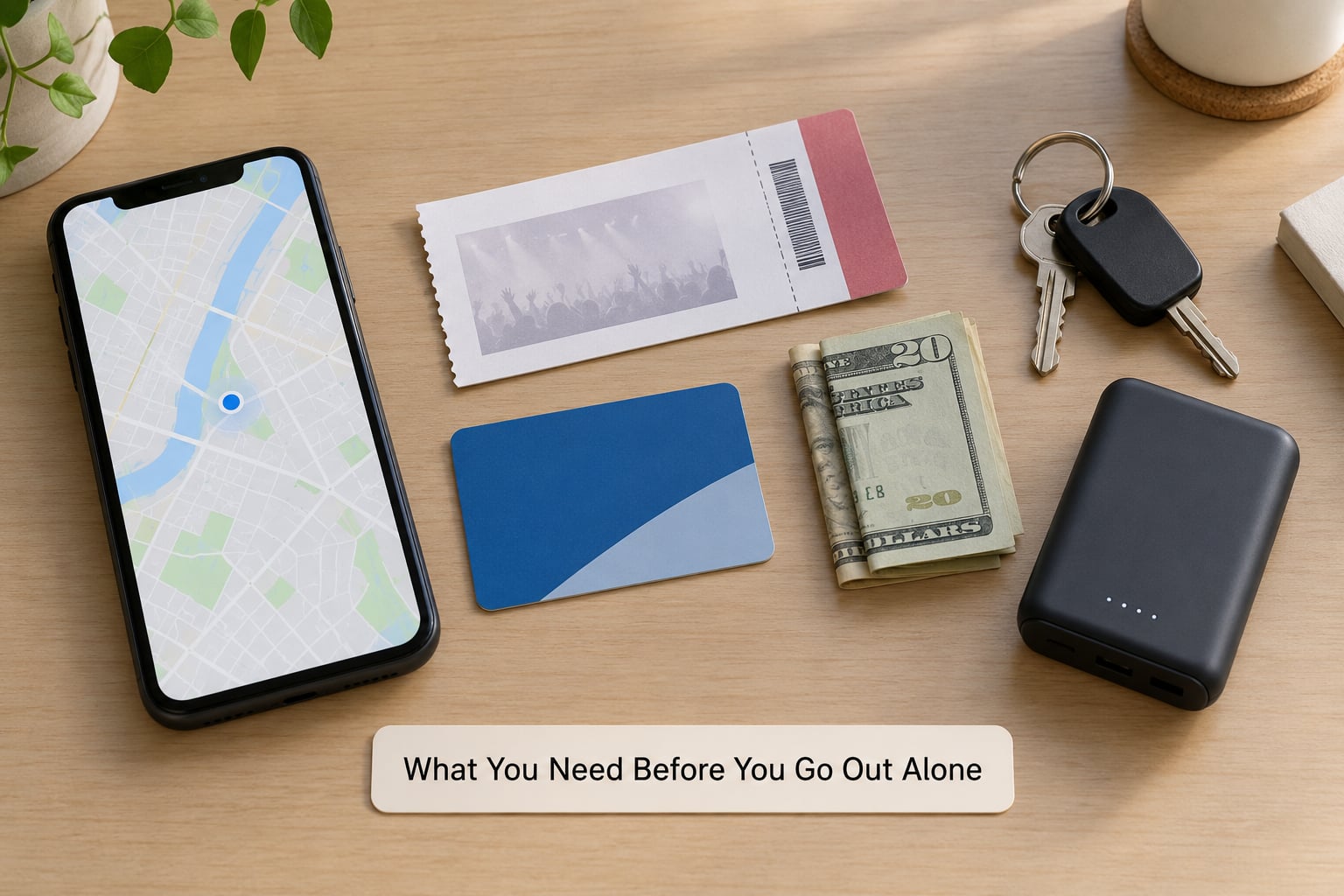
Solo outings fail on logistics long before they fail on nerves. Ten minutes of preparation turns “I might feel awkward” into “I know where I am and how I get home.”
A charged phone and a way to pay without fuss
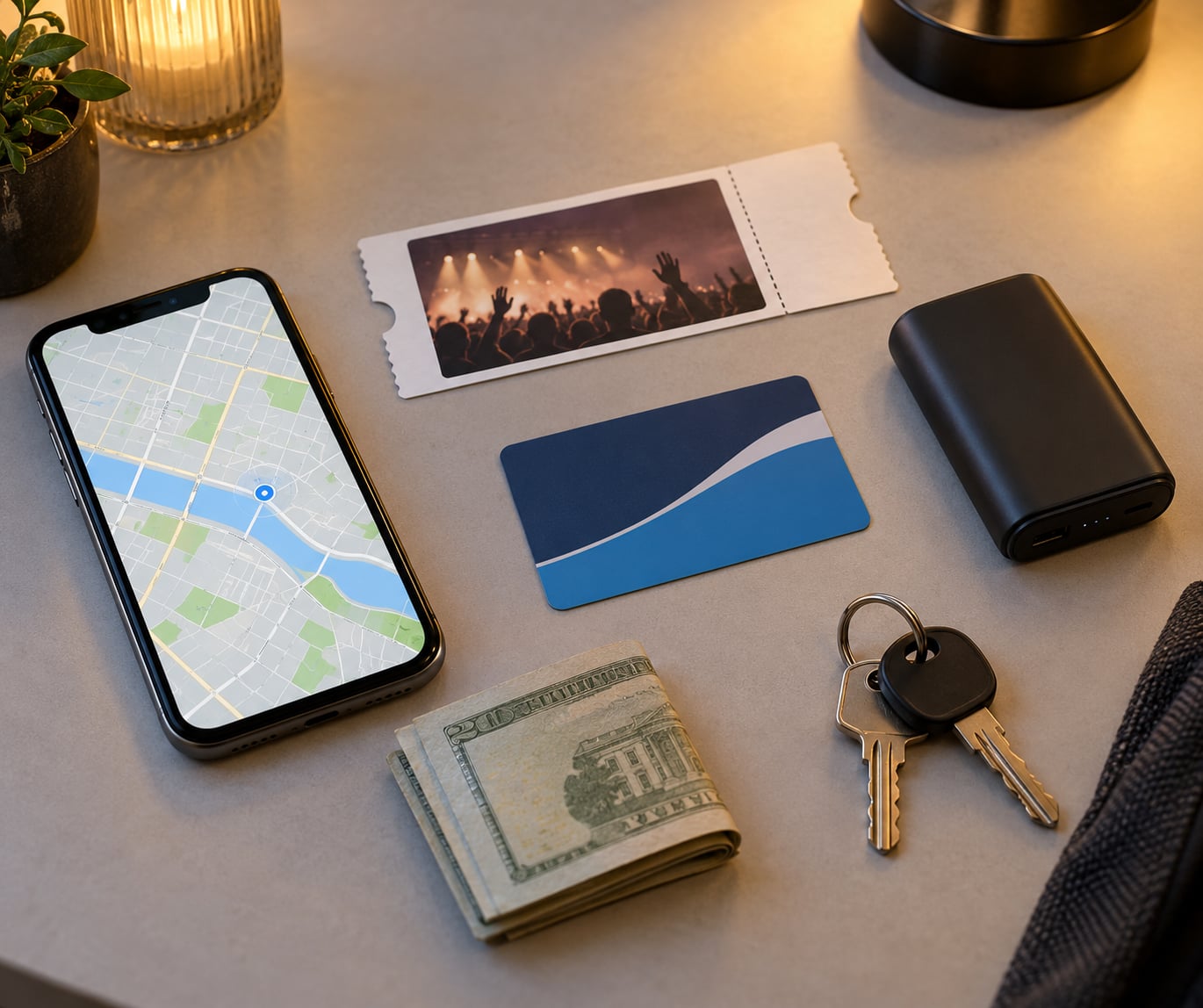
A phone at 4 percent is a trap. Charge it fully, and pack a small power bank if you are out past midnight, since a dead phone means an awkward wait for a ride and no way to check in. Bring a card and a little cash so you are not fumbling with an app while a line forms behind you.
A transport plan you do not have to think about later
Decide how you are getting there and getting back before you leave the house. Rideshare, a taxi number saved in your phone, a late bus you have checked the schedule for, or a friend who is awake and willing to answer. Knowing the ride home exists is what lets you stay as long as you actually want.
One trusted contact who knows the plan
Not a group chat. One person, with the venue name, roughly when you are heading home, and a text when you are on the way. That text is the whole safety system, and it works better than anything else on this list. If you go to Pride alone or a queer event in a city you do not know, make this non-negotiable.
Clothes that let you forget about your outfit
The fastest way to relax in a room alone is to stop having an opinion about what you are wearing. Layers for a venue that is hot on the dance floor and cold near the door, and shoes you can stand in for three hours. Nothing that makes you feel like you are being assessed.
An exit strategy and a drink plan
Know which door you came in by and keep a drink in sight or in your hand. Never leave a drink unattended and never accept one from someone you have just met, which is the single most repeated piece of advice in every forum thread on going out solo. A cheap drink in a sealed bottle or a bottle you watched being opened is a reasonable compromise if you do not drink.
Step-by-Step: Six Moves for a Night That Works
If you only take one thing from this guide, take the structure. Most people trying to learn how to go out alone and still have fun jump straight to a club on a Saturday and blame themselves when it does not click. Work down this list instead, in order.
Choose an activity with built-in structure
The best first outing is not a bar where you have to perform. It is a room where something is already happening and your presence is explained by being an audience member. Live music and drag shows, trivia nights, open mic karaoke, a museum exhibition, a bookstore with a reading in the back, a scheduled pottery or dance class, a comedy showcase.
Each of those gives you a reason to be there that has nothing to do with socializing, which means you can be alone without it reading as failure. Trivia and game nights are the sweet spot for meeting people too, because teams form themselves and you can join a table that is one person short without announcing yourself as looking for friends.
Make a simple plan before leaving
Check the venue hours, whether it is step-free or has accessible bathrooms, whether it takes cards, and what the door policy looks like. Then decide how long you want to stay. An hour and a half is plenty for a first visit, and having a target makes leaving easy instead of awkward.
Over-planning is the other failure mode. If you spend forty minutes mapping a whole route and backup route, you will talk yourself out of going. Six decisions is the ceiling: where, when, how long, how I get there, how I get home, who knows.
Start with a comfortable arrival ritual
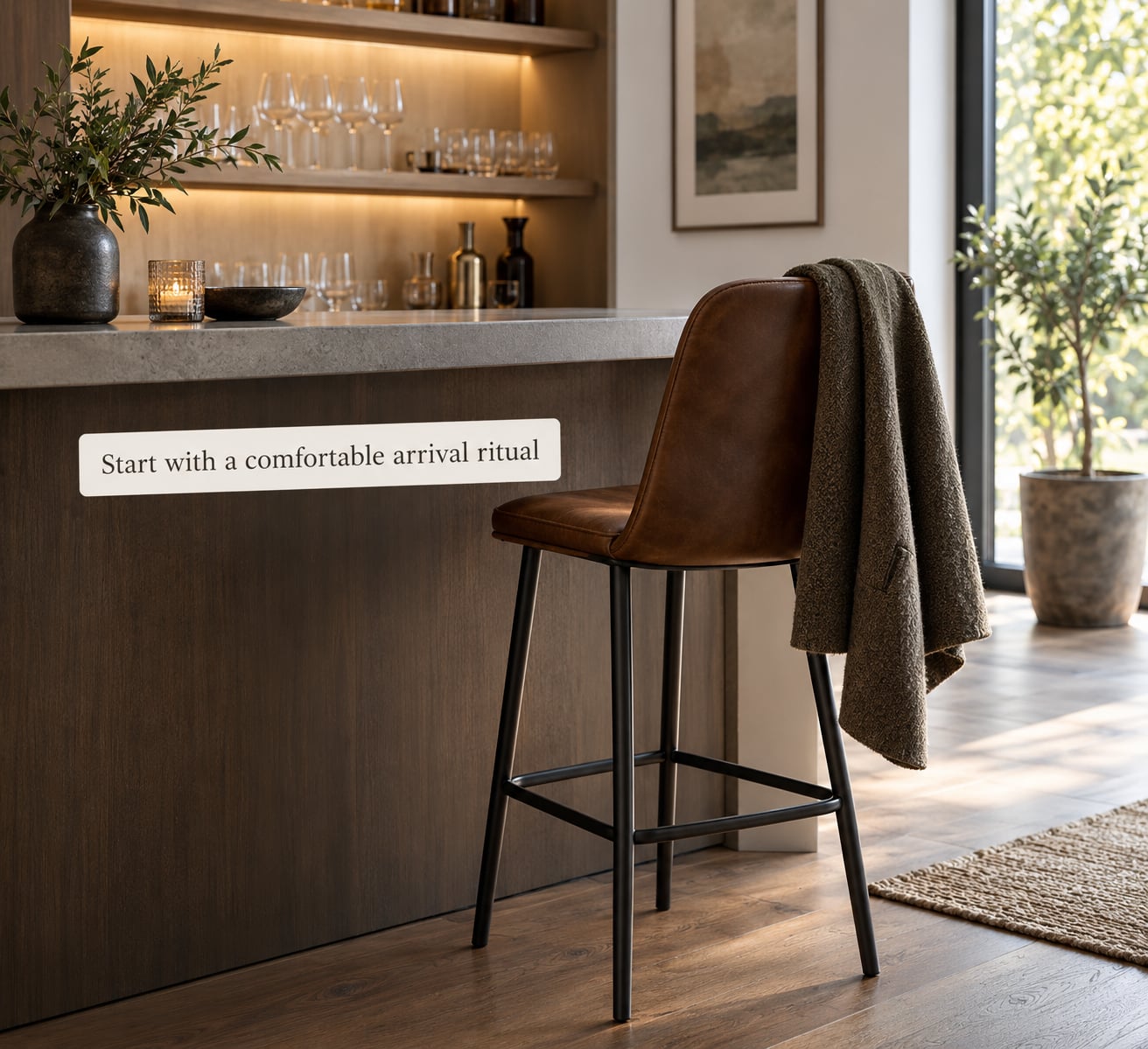
Aim to arrive in the first third of the night. Early, the staff are not slammed, the music is still at conversation volume, and you get to choose your spot instead of taking what is left. That choice does more for your nerves than any mindset shift.
Sit at the bar rather than a table. This is the single most-repeated comfort tip in queer nightlife conversations and it holds up: the bar is where bartenders talk to you, where you can see the room, where you are not a group of one at a four-top. Order something simple the first time so you are not performing a complicated drink order while alone.
Then orient. Find the bathroom, find the exit, find one friendly face or one staff member. Twenty minutes of low-stakes watching gets the hardest stretch over. If you need a reset, the bathroom trip is a legitimate tactic, not an admission of defeat.
At queer venues specifically, go to the bar or the door person and say you are here on your own. Regulars read a solo person quickly, and in lesbian and gay bars a large share of the crowd arrived alone or in pairs that split up. Introduce yourself with your name and you will often be looked after for the rest of the night.
Use low-pressure ways to connect
Activity-based conversation works far better than small talk. Comment on the show, ask the trivia table a question, ask the bartender what they would order, tell someone you are new to a neighbourhood. Compliments are fine if they are about a thing rather than a person.
There is one social advantage people underestimate: a group signals closed, and a solo person signals available. People in groups get asked nothing all night. You can be approached far more easily than you expect, so decide in advance whether you want that, and tell your friends where you are either way.
And have a clean decline ready. No, thank you. I am just hanging out tonight. Short, unbothered, and then turn back to your drink. You never owe a stranger an explanation for being there.
Build in a midpoint and an easy exit
Check in with yourself halfway. One set, one course, one round. Ask what you are actually enjoying, not what you think you should be enjoying. If you are having fun, stay. If you are performing fun, move somewhere quieter or head home.
Leaving early is not a failed night. It is the plan working. Send your contact the text you promised, and text whoever you want to see next: the night is not over because you stopped at one venue. Bar hopping with a friend you make at the first stop is a completely normal way to spend a Saturday.
Make the night yours
Solo outings get better when you keep a record, even a bad one. A note on your phone with the venue, the time you went, who you talked to. Over a few months you find out that you like an early seat at that bar, that karaoke on a Tuesday works better than a club on a Friday, that the drag show is worth the line.
Try one small new thing each time, and keep at least one thread going with someone you met. That is how solo outings turn into a social life rather than a series of empty rooms. Your people are already out there on their own nights too.
Common Mistakes to Avoid When You Go Out Alone
Using alcohol as courage
This one comes up constantly, and the forum consensus is that drinking to lower the stakes raises them. One drink takes the edge off. Three makes the walk home harder, the check-in text get forgotten, and a fun night end badly at 1am. Go sober or near-sober for your first few outings and learn that you are fine without it.
Choosing an unstructured venue
A bar with no programming, no show, no theme night, and nothing to watch is the hardest kind of room to be alone in. Pick venues where something is going on and being an audience member is a full-time job. You can always graduate to the unstructured bar later.
Arriving after the crowd has formed
Walking into a packed room at 11pm as a group of one is the most common source of first-night nerves. The loudest, most established groups have already formed, and you are walking into the social equivalent of a hallway. Arrive early, or go late when things are thinning out. Early is easier.
Ignoring what a space is telling you
If the venue feels wrong, leave. Staff who hover, bouncers with a hard look, a room where nobody makes eye contact with anyone. Trust the read you got in the first two minutes. Queer venues vary a lot in atmosphere, and a lesbian bar, a bear bar and a dancing bar are three different social contracts.
Treating every solo outing like a dating mission
You will have nights where nobody talks to you, and the night can still be good. If the goal is meeting someone, you will spend the whole evening evaluating every interaction instead of enjoying it. Go out to enjoy the venue. Meeting people is a side effect, not the assignment.
Ignoring the nights that leave you lonelier
Some outings just do not work. You sat at the bar for three hours, nobody talked to you, and the walk home felt longer than the drive there. This is common and almost nobody talks about it, because it feels like evidence that going out alone does not work.
What usually helps is changing the variable rather than trying harder. Go earlier, go somewhere with programming, bring a book, sit outside, or bring a friend along the second time. Some nights are just bad data. The habit is what carries you, not any single evening.
Frequently Asked Questions
How can I go to a bar alone without feeling awkward?
Arrive early, sit at the bar instead of a table, and order something simple so you are not performing a drink order. The first twenty minutes are the hard part, and people-watching gets you through them. Have one thing you are doing there: the show, the game, the drink you like. Nobody is evaluating your posture, and a short decline script keeps unwanted approaches easy.
What are the safest places to go out alone?
Busy public venues with staff who know you look out for themselves: bars with a door person, cafes, bookshops with readings, museums during the day, and trivia nights where you sit with a group. Avoid empty rooms, isolated bars with no staff on the floor, and anywhere you cannot comfortably leave. Tell one person your venue and your ride home before you go.
How do I meet people when I am out by myself?
Start with the activity, not the person. Join a trivia table that is one short, ask about the show, compliment a drink rather than someone, and let the venue do the introductions. Solo people get approached more than groups do, because groups read as closed. Keep your drink in sight and remember you never have to continue a conversation that is going nowhere.
Should I drink alcohol to feel more comfortable going out alone?
Not as a strategy. One drink takes the edge off, and more than that works against you: the check-in text gets forgotten and the ride home gets harder. Going sober for your first few outings teaches you that you are comfortable in the room, which is the actual skill. If you do drink, eat first, keep it to one or two, and never accept one from a stranger.
What if I arrive at a busy LGBTQ+ venue and know nobody?
Go to the bar or the door person and say you are here on your own. A large share of queer venue crowds arrived alone or split up from a pair, so solo regulars are normal there, not a sad sight. Arrive before the peak if you can, and give your name out. Being visibly new gets you looked after faster than standing around hoping.
How do I leave an event early without feeling guilty?
Decide how long you are staying before you arrive, then treat that as the finish line. Send the check-in text you promised, say a quick goodbye to anyone you talked to, and go. Solo outings work because you can leave whenever you want without negotiating with anyone, and using that freedom is the whole point.
The First Thing to Try This Week
Pick a trivia night, a drag show, or a reading at a bookshop you can get to alone. Tell your contact where you are going and text them when you leave. That is it, that is the whole assignment, and once you have done it twice the bar stops being a big step.
This guide was put together for 2026, and the advice in it has not changed much, because the thing that makes a solo night good has never been confidence. It is a plan, a venue with something happening in it, and the willingness to stay for the first twenty minutes.