Most people meet the word gayborhood for the first time in a headline about a Pride parade or a list of the best bars in a city. Then they find out it is more complicated than that. A gayborhood is a real place with a real history, but the label covers everything from a dense urban district to a loose cluster of venues people describe as not really a neighborhood at all.
There is also honest discomfort with the term. It can sound like it was built for straight tourists, and plenty of queer people say it flattens a community that is trans, bi, queer of color, older, disabled, or just poor. Both things are true. Here is what the word means, where these districts came from, and how to think about one today.
Table of Contents
- What Does Gayborhood Mean?
- How Gayborhoods Developed in U.S. Cities
- What Makes a Neighborhood a Gayborhood?
- How Is a Gayborhood Different from an LGBTQ+ Community?
- What Is Life in a Typical Gayborhood Like?
- Why Are Some Gayborhoods Shrinking or Disappearing?
- Which U.S. Cities Are Known for Gayborhoods?
- What Does Gayborhood Mean for Visitors and Newcomers?
- Why Is the Term Gayborhood Important?
- Frequently Asked Questions
- Conclusion
What Does Gayborhood Mean?
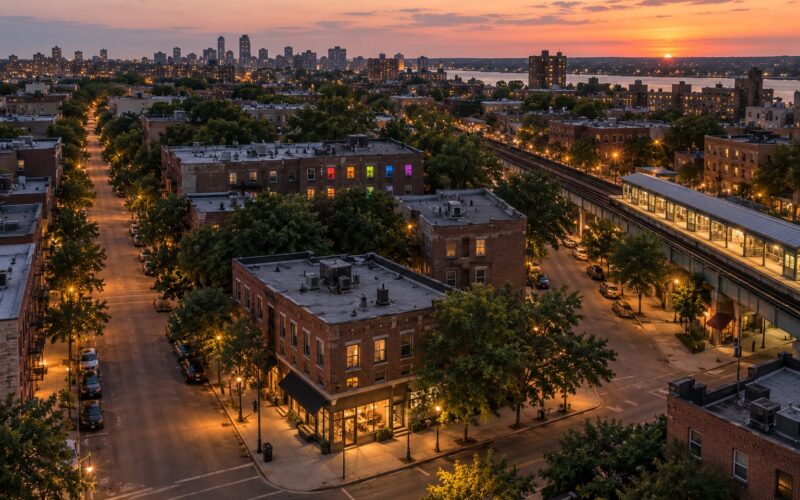
A gayborhood is a city neighborhood with a high concentration of LGBTQ+ residents and a visible, long-running LGBTQ+ presence, built around bars, clubs, shops, organizations, and public spaces that served queer life for years. No gayborhood is exclusive. Most are mixed with heterosexual residents, and many today look like ordinary blocks with a few signboards.
Why it is called a gayborhood
The word is a portmanteau: gay plus neighborhood, the same way brunch combines breakfast and lunch. Dictionaries record first print use around 2005, which tells you something useful. Long before the noun existed, people were already saying gay neighborhood and gay district.
The joke built into the name is that gay means happy. That pun is probably why it spread so fast, and it is also part of why some people roll their eyes. A word that can mean both things gets flattened into the wrong one fast.
Words people use instead
Gay village, gay district, gay quarter, gaytown, and queer neighborhood all describe the same basic idea. Toronto’s is officially Gay Village, and several cities use a version of these in their own branding. One synonym you will see in older writing is gay ghetto, which is dated and reads as an insult. Skip it.
How Gayborhoods Developed in U.S. Cities
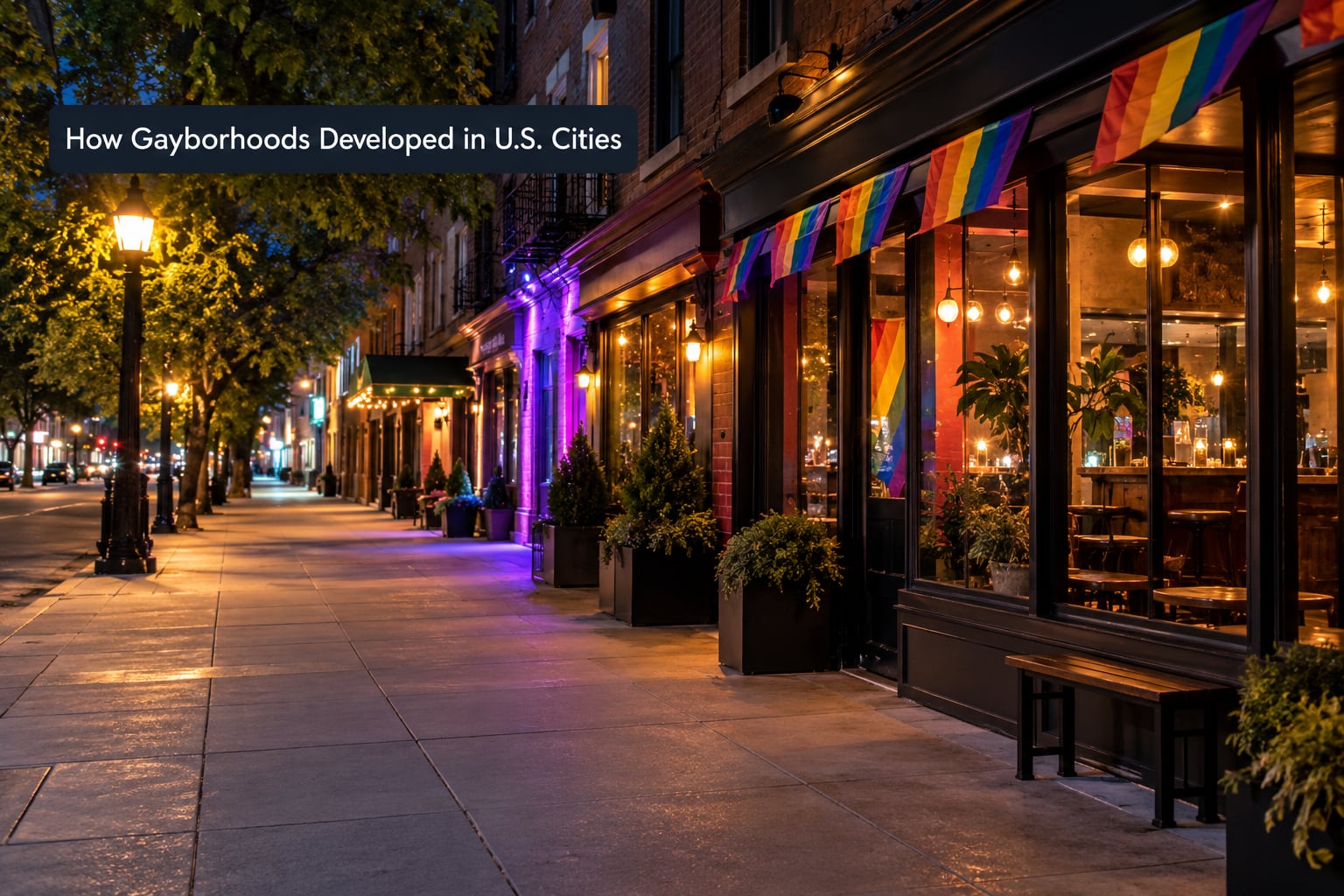
These districts did not appear all at once. They accreted over decades, usually in this order.
Somewhere to meet. Before the postwar years, queer social life was scattered and private. Beaches, parks, road stops, and a few risky apartment buildings carried most of it. In Chicago, the Near North Side district known as Towertown was already a bohemian draw by the 1920s, drawing artists, writers, and people who lived outside the lines.
A place to drink. Bars became the anchor because a bar is cheap, public, and open late. Then came bathhouses, back rooms, and dance clubs. Concentration followed concentration, which is how a few blocks turned into a district.
A rights movement. Police harassment was constant and organized. Chicago’s first Liberation Dance in April 1970 drew about 2,000 people in the wake of a harassment lawsuit. The uprising at the Stonewall Inn in New York in June 1969 gave the country a symbol, and Pride marches turned the neighborhood into a stage once a year.
A name. Districts got branded. Some kept their old name. Chicago’s stretch of North Halsted Street was Boystown for decades; residents and businesses pushed to retire it, and the alternative Northalsted now appears on maps. Philadelphia went the other direction and officially branded its district the Gayborhood.
What Makes a Neighborhood a Gayborhood?
No single business decides it, and any checklist is a rough guide rather than a scorecard. In practice four things tend to show up together.
- Density of LGBTQ+-owned businesses. Not just rainbow flags. Ownership, and how long those owners have been there.
- Nightlife that exists all year. A bar open six nights a week says something different from a pop-up for one weekend a year.
- Community institutions. Community centers, bookshops, HIV and health services, food programs, meeting spaces, and support groups that operate during the day.
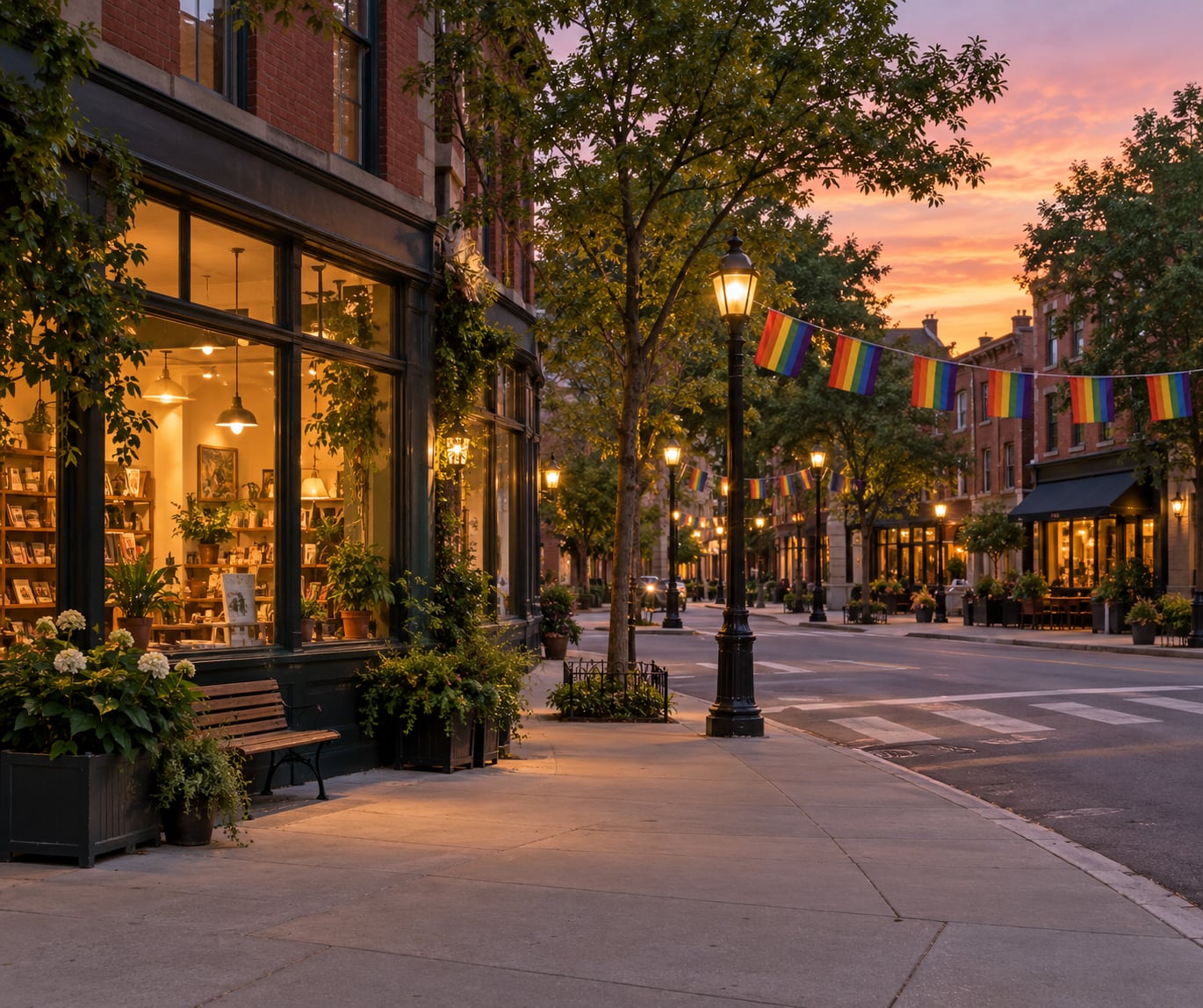
- Physical signals. Rainbow pylons, street banners, heritage plaques, and Pride parade routes. These are cosmetic on their own, but they signal that the city has officially recognized the district.
If your city has two good bars and nothing else, people in that scene will usually tell you there is no gayborhood there. Just informal clusters. That reaction comes up constantly, and it is not wrong.
How Is a Gayborhood Different from an LGBTQ+ Community?
A gayborhood is a place. An LGBTQ+ community is a set of people, spread across an entire city or country, connected by identity, family, friendship, and politics. Someone can be deeply part of the community and live nowhere near any district. Plenty do, especially in suburbs, small towns, and cities that never had a gayborhood to begin with.
The related terms break down roughly like this.
Gayborhood points at a specific neighborhood with a queer concentration and history. Queer neighborhood is the same idea with a word that covers the whole LGBTQ+ spectrum more accurately. Queer space is broader still: any place where queer people feel safe or accepted, which can be a bookstore reading group, a church basement, a beach, or a coffee shop with a good queer staff.
If someone corrects you on this, they are usually right to.
What Is Life in a Typical Gayborhood Like?
Daytime is quieter than the postcards suggest. Coffee, a laundromat, a clinic, a hardware store, and a senior center with a queer board. If a neighborhood has no daytime presence at all, it is a nightlife district, not a community.
Evenings bring restaurants, bars, dance floors, drag shows, and the people who work them. Many businesses are still owned by the same families or partners who opened them decades ago. Long-term ownership is a strong signal of a real community rather than a themed strip.
Then there are the informal networks. Chosen family, childcare swaps, someone who always has an extra room, the group chat that knows which ride is late. Forum conversations about moving to a new city keep coming back to exactly this, and the answer is rarely a bar. People describe wanting somewhere to be that is not a bar.
Do not expect every district to look alike. Provincetown in summer and Provincetown in February are different places. Atlanta, Minneapolis, and Los Angeles each have a nightlife scene with different hours, different crowds, and different relationships to the neighborhoods around them.
Why Are Some Gayborhoods Shrinking or Disappearing?
The honest answer is that these places are under real pressure, and no single cause explains it. Historian Cleve Jones, a founder of the 1969 march on Washington and one of the few survivors of that era’s violence, said in a 2022 New York Times piece that gayborhoods are losing LGBTQ+ residents in major American cities. The specific mechanics vary by place, but these forces recur.
- Rent and redevelopment. A successful district raises property values, and successful districts are exactly the ones developers want to rezone. Philadelphia’s merchants association fought a 2006 rebrand for years partly over the arrival of high-rise construction nearby.
- Bar closures. A venue closes, and if it was the only anchor on a block, the reason people came to that block disappears with it.
- Dating apps. Meetups moved to phones. People still go out, but they no longer need to live near the bar to find someone.
- Mainstream tolerance. A generation that could not imagine holding hands in most cities now can, in many of them. That is a genuine win, and it weakens the reason for geographic concentration.
- Dispersal. Younger queer people, trans people in particular, are more likely to find their community online than at a specific address.
Evolution is the more accurate word than disappearance. Philadelphia’s district still exists as a concentration of businesses, even with a different official name and a different population. Established districts tend to change their mix rather than vanish.
Which U.S. Cities Are Known for Gayborhoods?
Here are seven, with the caveat that this list is not exhaustive and that a city absent from it may still have a scene worth finding.
| Neighborhood | City | Known for | Status note |
|---|---|---|---|
| The Castro | San Francisco | Theatres, cafés, a walkable retail street | Tourist-facing, with longtime residents |
| Northalsted | Chicago | Rainbow pylons, bars, Legacy Walk plaques | Formerly called Boystown; renaming contested |
| Christopher Street and Hell’s Kitchen | New York | The Stonewall site, bookshop culture, clubs | Commercial pressures have reshaped the blocks |
| West Hollywood | Los Angeles | A dense entertainment district, heavy tourist traffic | More of a nightlife zone than a residential one |
| Midtown Village | Philadelphia | Officially branded, historically a shopping strip | Renamed from the Gayborhood in 2006 |
| Wynwood | Miami | Galleries, murals, bars, LGBTQ+ events | A wider arts district with a queer core |
| French Quarter | New Orleans | Late-night bars, parade culture, a queer bar scene | Small, walkable, heavily seasonal |
| Provincetown | Provincetown | A queer resort town, not a city neighborhood | Off-season population collapses |
What Chicago calls its gayborhood: Northalsted and the name Boystown
The most asked-about version of this question is local. Chicago’s gayborhood runs along North Halsted Street between Belmont and Diversey, and for roughly fifty years it was called Boystown. In the late 2010s, residents and businesses pushed to retire that name, and Northalsted is what maps use now. The area also has the rainbow pylons at Belmont and the Legacy Walk, a half-mile of heritage plaques outside city hall marking Chicago’s queer history.
What Does Gayborhood Mean for Visitors and Newcomers?
Some practical rules, most of them common sense once you think about it.
Support the businesses that are actually there, which increasingly means independent restaurants and shops rather than souvenir stores. Go to public events, where a Pride parade or a block party is genuinely open to anyone. Follow venue rules, since door policies vary and nobody wants to be the person who makes a mistake.
Never out someone. A person holding a woman’s hand is not a statement about their sexuality, and a request to take a photo of a queer couple in a bar is a request they can refuse. Assume that appearance and identity do not match, particularly in small towns.
Skip the nightlife reputation you inherited. A district that was famous in 1995 may have changed its hours, its crowd, and its address since. Check current local sources, read recent reviews, and call ahead. If you are moving rather than visiting, ask residents where they actually go now.
Why Is the Term Gayborhood Important?
Because the word names something real. Gayborhoods were the infrastructure of queer survival: places to meet when being out carried genuine risk, to get health information, to organize politically, and to find people who would become family. Calling that only a nightlife zone erases the rest of it.
The word also tells you a city’s queer history is written into its geography. A district with heritage plaques and a contested name is a place where people argued publicly about who the neighborhood belongs to, which is more than most blocks can say.
Then there is the criticism, which deserves the last word here. The name centers gay men, flattens a spectrum, and often describes a neighborhood for the benefit of visitors. If that is how it lands for you, use queer neighborhood instead. Language shifts when people use it differently.
Frequently Asked Questions
Is a gayborhood only LGBTQ+?
No. Straight residents live in nearly every gayborhood, along with queer people who do not use the term, families, and businesses serving a general crowd. What makes the area distinct is a concentration of LGBTQ+-owned businesses and a long queer history, not an exclusive population. Several historically gay neighborhoods now have majority-straight census blocks while keeping their bars, plaques, and parade routes.
What is the difference between a gayborhood and a queer district?
Very little in practice, and the difference is mostly in emphasis. Gayborhood centers gay men, which is often accurate historically but narrower than the community living there. Queer district or queer neighborhood covers lesbian, bisexual, trans, non-binary, and queer people of color more accurately. People pick the word that fits them, and local residents may prefer one term over another for their own block.
Do people still live in gayborhoods?
Yes, though fewer than at their peak. Rent, redevelopment, bar closures, and dating apps have pushed some residents out, while others have stayed for decades and prefer the community institutions nearby. Surveys of major cities have shown shrinking LGBTQ+ populations in once-dense districts. Plenty of people still choose to live in them for the proximity to friends, chosen family, and services.
Is every LGBTQ+ neighborhood considered a gayborhood?
No. There is no official designation, registry, or legal status attached to the word. It is a descriptive label people apply to neighborhoods with a recognizable queer concentration and history. A city with a modest cluster of LGBTQ+-owned businesses may have no gayborhood at all, and residents often reject the label when it overstates how coherent the area actually is.
Why do gayborhoods have bars and clubs?
Because bars were among the few places queer people could gather in public without hiding, and they stayed open when other social options did not. Concentration followed, since people went where other people already were. Bars also served functions beyond drinking: health outreach, meeting strangers, hosting political groups, and building the social networks that function as family for many people.
What should visitors know before going to a gayborhood?
Expect a mixed crowd, not a themed attraction, and check whether the area has a daytime side or is only a nightlife strip. Look up current sources rather than trusting a nightlife reputation from years ago. Support independent businesses, follow venue door policies, and never assume someone’s appearance tells you their sexuality. If you go once, go back a second time.
Conclusion
A gayborhood is a diverse LGBTQ+ place with a visible cultural presence and a history worth knowing, not an exclusive enclave or a nightlife brand. Start with the definition, then look at the block in front of you rather than the reputation it had ten years ago. If the term does not sit right with you, use queer neighborhood and keep asking local people what the place is now.