To research your local LGBTQ history, you start with one narrow question about one place and one decade, then work outward through archives, newspapers, city directories, and interviews with people who remember. The whole thing takes a few evenings of desk research and a handful of repository visits, and you can make real progress without a single academic credential.
People ask this question constantly in genealogy forums and local LGBTQ+ community groups, usually with the same worry attached: where do I even begin? The answer is that the history is already there. It sits in library special collections, in back issues of community papers nobody has digitized, in court files and city directories, and in the memories of people still living a few blocks from where it happened. What it is not doing is announcing itself.
This guide walks through a six-step method for beginners, the terminology you will need to search old catalogs, and the ethical lines worth holding when the people you are writing about have not died yet. If you want the short version: pick one question, learn the old words, check the local repositories, read what the papers actually said, talk to people, and record where every claim came from.
Table of Contents
What You Need
Good local history research is mostly preparation done before you walk in the door. Six things cover nearly everything, and you probably already own four of them.
A research question with edges. “The queer history of my city” is a decade of work. “Which bars and restaurants on Addison Street hosted queer social life between 1968 and 1979” is a project. Put the question in writing at the top of your file, because everything you find either answers it or tells you where to look next.
A timeline you can edit. A spreadsheet with columns for date, event, people, place, source, and how confident you are works better than a pile of screenshots. Dates in the 1950s and earlier are often approximations, so keep a column for “circa.”
A citation record. Every box, folder, and page number you photograph, write down immediately, including the collection name, box number, folder title, and repository. Archive box numbers get reshelved, and a citation without them is a dead end six months later.
A list of repository contacts. Your city library’s local history room, the nearest university library’s special collections, the county clerk, the state archives, and any historical society in the neighborhood. Include the archivist’s email, the reading room’s hours, and whether an appointment is required.
Maps and directories. Historical street maps, fire insurance maps, and city directories from the years you care about. Directories list every business on every block, which makes them the single most useful source for finding venues that never got a newspaper write-up.
A recorder and a consent form if you plan to interview anyone.
One more thing before you start searching: a content warning. Old catalogs and newspaper databases index slurs, medicalized diagnoses, and archaic terms because those are the words the documents use. You will type them into search boxes. That is unpleasant and it is also how the material is found.
Step-by-Step: How to Research Your Local LGBTQ History in Six Moves
1. Define the history you want to understand
The fastest way to get stuck is to try to document a whole community at once. Narrow it to a place, a span of years, and a thread.
Place can be a single block, a neighborhood, or a whole city. If you pick a neighborhood, you get the bonus that census sheets, city directories, and police reports tend to be organized the same way, so one afternoon of work lines up across three record sets.
Time period matters because the records change character over time. The 1920s through the 1940s is mostly silent, indirect, and full of euphemism. The 1970s onward is loud, because community papers, gay rights organizations, and later Pride events generated their own paper trail.
Choose your thread last: a business, a neighborhood, an organization, an art scene, a police crackdown, a specific person, or a service or community network. Threads like “who ran the room” or “where did people actually meet” tend to produce findings, because they connect to physical places you can still look up.
Finish by sketching a preliminary timeline before you open a single finding aid. List the names, places, and dates you already know, even if they come from family lore. Mark each one as confirmed or unconfirmed. That starting list is what you will test.
2. Map places, institutions, and community networks
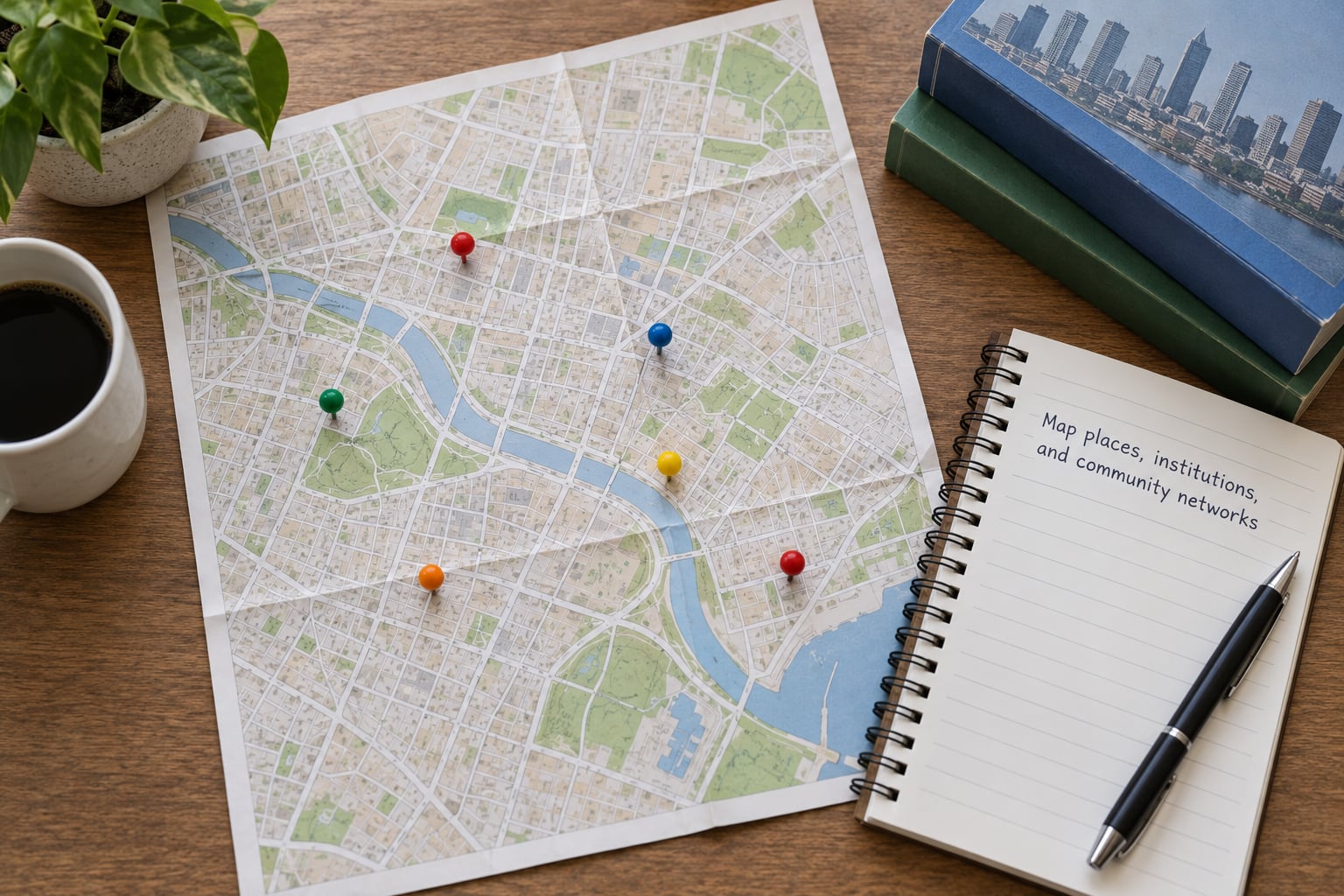
Queer life in a city is physical. People met in rooms with addresses, and those addresses show up in records that were never written for historians.
City directories are the workhorse. Published annually for most American cities, they list every business, its address, and sometimes its proprietor or manager. Walking through them year by year and looking for bars, restaurants, hotels, baths, clubs, and theatres tells you where the neighborhood’s commercial life clustered, and the cluster is usually the story.
Fire insurance maps, drawn for underwriting rather than sightseeing, mark building footprints and often label the business inside. They are especially good for restaurants and storefronts that directories abbreviated.
Then check civic records: business licenses, liquor licenses, health department permits, taxi permits, and property transfers. Any of them can turn a name into a proprietor, a corporation, or an out-of-state owner, and that is often the thread that leads to an interview three decades later.
For institutions, search for the early homophile and gay rights groups, social clubs, choruses, theater groups, and religious congregations in your area, then look for the buildings they used. An organization listing in a newspaper or an annual report often includes a meeting address, and that address is your way into court records and lease disputes later.
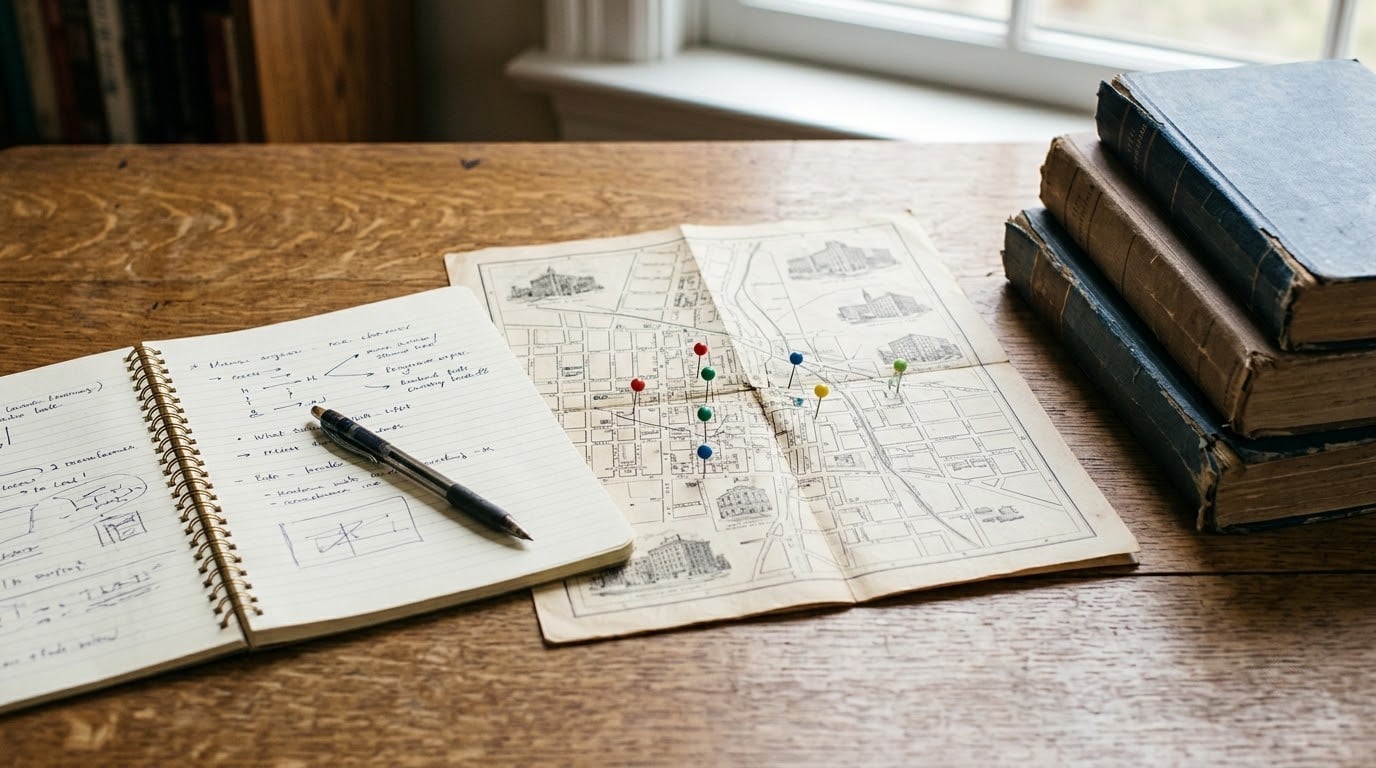
Draw all of it on one map. Clusters are meaningful: a bar on a corner next to a diner, a bookstore two blocks over, and a meeting hall a short walk away describe a social circuit that no single document ever describes.
3. Search archives and public records
Archives look intimidating from the outside. In practice you are searching a catalog, reading a finding aid, and requesting folders.
Begin with terminology, because this is where most beginners stall. A catalog indexed in 1990 will file material under the language of that decade, and modern search terms will return almost nothing. Run your searches through both vocabularies, and use the older spellings and abbreviations exactly as written.
| If you are looking for | Also search | Where it turns up |
|---|---|---|
| Gay, lesbian, LGBTQ+ | homophile, homo, invert, uranian, homosexual,(GLBT), dyke, lesbians, Sapphists | Catalog subject headings, court files, club newsletters |
| Trans, transgender, non-binary | transsexual, transvestite, cross-dress, crossdresser, female-to-male, male-to-female, FTM, MFT, gender variant, intersex, two-spirit | Medical and psychiatric records, police files, news stories |
| LGBT venues and bars | cafe, tavern, nightclub, roadhouse, private club, social club, bath, lounge, cocktail lounge, cafe society | City directories, license records, advertisements |
| Organizing and activism | Mattachine, Daughters of Bilitis, ONE, homophile movement, liberation front, civil rights, minority rights | Organizational papers, correspondence, police surveillance files |
| Same-sex couples and families | roommate, boarder, lodger, companion, partner, domestic partners, two households one roof, roommate situation | Census enumerations, directories, apartment leases |
| Local queer people | last names, first names, street addresses, street names | Every record set; often the highest-yield strategy of all |
Two habits pay off here. Search names and addresses rather than identity words whenever you can, and check how the repository’s catalog assigns subject headings before assuming a collection is missing. Collections get described once, decades ago, by someone who did not have the vocabulary we have now.
Start with the finding aid, which is the published inventory of a collection. It tells you what is in the boxes, how the material is arranged, and roughly what years it covers. Search the finding aid first, then the catalog record, then the boxes.
Where to look, and what each place is likely to hold:
| Repository | What it holds | How to get in |
|---|---|---|
| City and county libraries, local history rooms | City directories, newspapers on microfilm, photo collections, local maps, sometimes municipal records | Walk in; photo ID usually enough |
| University special collections | Personal papers of activists and artists, organizational records, manuscript photographs, sometimes the only surviving copy of a community paper | Reading room appointment, often required |
| State and county archives | Government records: licenses, court files, vital statistics, property records, agency correspondence | Public access, some series restricted by date or privacy |
| Historical societies | Local photographs, scrapbooks, interview transcripts, house files, private donations of family papers | Appointment; some require a donation request in advance |
| Digital aggregators and national collections | Digitized newspapers, government document repositories, and large LGBTQ+ collections, useful for context and for leads you can follow up locally | Free at a public library in many cases |
Queer-specific collections exist at a national level too, and they are worth knowing by name even if your subject is one city. The ONE Archives at the University of Victoria is the largest LGBTQ+ archive in Canada and holds material on many U.S. communities. The Archives of Sexuality and Gender at Yale holds commercial and personal materials reaching back to the nineteenth century. Interference Archive at NYU preserves activist zines, posters, and organizational material.
On the public side, use FOIA or state open-records requests for police files, licensing records, and correspondence. Be specific about the series and date range you want. Broad requests get slow; narrow ones get answers.
In digital collections, learn the difference between searching metadata and searching full text. OCR errors are brutal in older papers, so a name may be misspelled six different ways in the same decade. Search partial names, street addresses, and a venue type plus a year instead of the full name you expect.
4. Read newspapers and periodicals critically
Newspapers are where queer local history is most visible and most misleading. Read them with two questions open: what does this source want, and what does it leave out.
Community publications are the richest source and the easiest to miss. Local LGBTQ+ papers, newsletters, and church bulletins often ran from the 1970s through the present, and many exist only in the issuing organization’s basement or a university archive. Ask directly: does your library or historical society hold runs of local queer publications? Staff often don’t know until someone asks with the topic in hand.
Mainstream papers tell you what the mainstream noticed. Police blot items, arrest reports, vice squad coverage, court stories, and business openings and closings all appear there. Alternative weeklies and underground papers sit between community and mainstream press and are frequently more candid about queer life.
Advertisements and classifieds are underrated. Personal ads, roommate ads, and club listings reveal social patterns, and a run of ads for the same address over several years tells you about an informal network.
Obituaries and death notices matter more than people expect. They name partners, sometimes in the language of the era, and they connect an individual to a community. Gravestones and memorial records often do the same.
Now read the omissions. Straight papers underreported queer life as a rule, and police coverage of any group is filtered through the department that wrote it. Where reporting conflicts with another source, note the conflict rather than picking the version that tells the better story. Bias is data about who held power, and it belongs in your notes.
One warning from the genealogy community worth repeating: genealogy software assumes a heterosexual household and will read a same-sex couple as a head of household plus a boarder or a lodger. The software is wrong, not the record. Read the enumeration line yourself, and note the taker’s handwriting and any marginal marks.
5. Use oral histories and community knowledge
Documents leave out the texture: who was funny, who drove everyone home, which room was the real one. Interviews recover it, and they are usually the only source for feelings, motivations, and the parts people did not write down.
Find people through community organizations, historical societies, senior centers, and local LGBTQ+ groups. Many collectives run volunteer interview days where a complete recording, consent form, and transcript workflow already exists, so joining one is faster than starting alone.
Get consent before you record, and get it in writing. Say clearly what you will record, who will hear it, where it will live, whether they can withdraw, and whether their name will be used. Offer an option to be recorded but not named. Someone who tells you their first work as a hustler may not want a neighbor reading about it, and they should control that.
Ask open questions and leave room. “Tell me about the people who came through” gets more than “Were you at the bar on Addison?” If they remember something and hedge, keep the hedge. An uncertain memory recorded as uncertain is honest; a hedge quietly deleted becomes a false claim downstream.
Record context alongside the answer: the date, the place, who else was there, and the interviewee’s mood. Transcribe the recording, because a transcript is searchable and a cassette in a drawer is not. Back it up somewhere that is not the only copy.
Do not treat one person’s memory as the settled version of an event. Memories are evidence, and they are evidence of what a person remembers, which sometimes includes who they were at the time.
6. Build a timeline and cite every source
You now have places, documents, articles, and interviews. The last step is turning them into something another person can check.
For every entry, record six fields: who, what, when, where, source, and confidence. Confidence is the one most people skip, and it is the one that saves you later. Use three levels: confirmed by two or more independent sources, single source, or lead that still needs verification.
Keep primary and secondary sources separate in your notes. A primary source is the document itself: the 1974 article, the lease, the interview recording. A secondary source is someone else’s interpretation, including books, exhibition labels, and Wikipedia. Secondary sources are how you find leads, and they are never a substitute for the primary document in a footnote.
Write notes detailed enough that you could repeat the work in an hour, not a week. Repository, collection name, box, folder, page or item number, date, and a sentence of context. If the finding aid is online, save the URL.
Then read your own timeline looking for the patterns: a venue that keeps appearing, an organization that shows up before any press coverage, an address that hosts several kinds of gathering. Those repeated names are usually the actual story, and the archive only became interesting once you had enough rows to see the column.
Common Mistakes
These six errors account for most of the bad local LGBTQ history pages I have read.
Treating absence as proof
No marriage record in 1920 does not mean no relationship. It usually means no legal recognition, no access to the clerk’s office, or no surviving file. Write “no record found in this series” rather than “no such relationship existed,” and note which series you checked.
Copying a claim without a citation
If a blog post, an exhibition, or a well-meaning relative states something as fact and you cannot trace it to a document, mark it as unverified. Plausible details spread fast, and a decade of copying turns a rumor into a landmark.
Using today’s words for yesterday’s people
Someone described as a trans woman in a 1970s source may have used different words for themselves. Describe the source’s language, note the historical context, and avoid flattening a person into a modern label they may not have used.
Skipping queer-owned archives
Community organizations keep their own records, and they are often uncataloged, unindexed, and stored wherever the office could put them. Contact the organization directly. If the group no longer exists, ask its successors, former members, or whoever holds the building’s or the paper’s lease.
Publishing what you found about living people
Records about a person who is still alive carry real consequences. Get consent for anything personal, honor the agreement on names, and consider whether the story serves anyone other than your curiosity.
Letting one voice become the whole history
Interviews skew toward people who were comfortable, in the city, and willing to talk. Notice who is absent and say so in your write-up. A history that lists its own gaps is more useful than one that pretends to be complete.
Frequently Asked Questions
Where should I start when researching local LGBTQ history?
Start with one narrow question about one place and one decade, then build a preliminary timeline from what you already know. Check city directories from those years for bars, clubs, restaurants, and businesses, and ask your library whether it holds runs of local community publications. Interviewing people who remember a specific address or building often opens faster than searching a catalog, since names get you a place and places get you documents.
Which archives are most likely to contain LGBTQ history?
Look in university special collections for personal papers and organizational records, city and county libraries for directories, maps, and local newspapers, and historical societies for photographs and donated family papers. Court files, licensing records, and property transfers often name individuals who are absent from cultural collections. National collections such as the ONE Archives at the University of Victoria and the Archives of Sexuality and Gender at Yale hold material on many local communities.
How do I find LGBTQ venues and businesses from the past?
Work through city directories year by year and list every business in the blocks you care about, watching for bars, restaurants, hotels, baths, clubs, and theatres. Cross-reference with historical fire insurance maps, which often label the business inside a building, and with liquor and business license records that give you proprietor names. Cluster the results on a map, since a bar next to a diner and a meeting hall two blocks away usually belonged to the same social circuit.
How should I research sensitive history when people are still living?
Get written consent before recording an interview, and spell out what you will record, who will hear it, where it will live, and whether they can withdraw. Offer to use a name they choose or none at all. Apply the same standard to documents about living people: keep private details out of public writing unless the subject agreed, and check whether a case file is still restricted before you build a claim on it.
What should I do when historical sources disagree?
Keep both versions in your timeline and mark them unresolved rather than choosing the better story. Check whether one source is closer to the event in time, whether the reporter had access the other lacked, and whether a police or court record reflects the complaint rather than the facts. Then record your confidence level, note which series you checked for the missing version, and tell your readers what remains open.
Put Your Research Together
If you do one thing this month, pick a single question, write it down, and pull the city directories for the decade you care about. That is a few evenings and it usually turns up more than you expect.
Then identify two local repositories, one library and one archive or historical society, and email both archivists the same short note: who you are, what you are looking for, and the years and neighborhood you are focused on. Archivists are almost always glad to point you at collections nobody has asked about, because that is the part of the job they enjoy.
Finally, find two community memory keepers and ask to record them, with written consent and an option to stay unnamed. In 2026, a documented timeline started this way beats a perfect one you never begin, and every row you add is a piece of local LGBTQ history somebody would otherwise have to find twice.