To explore a gayborhood as a visitor, treat it as a neighborhood first and a nightlife destination second. Learn where the queer history lives, pick a base you can walk out of, check what is actually happening the night you arrive, and follow the unwritten rules that keep people comfortable.
Most guides hand you a list of bars. That list is the least useful part. What first-timers actually need is a method you can apply to a city they have never seen, plus permission to be new to it.
This guide works for a weekend in a known queer district or a long stay in a city where the scene is scattered across several neighborhoods. Everything below holds for 2026 and the years after it.
Table of Contents
What You Need

What to bring when you explore a gayborhood as a visitor
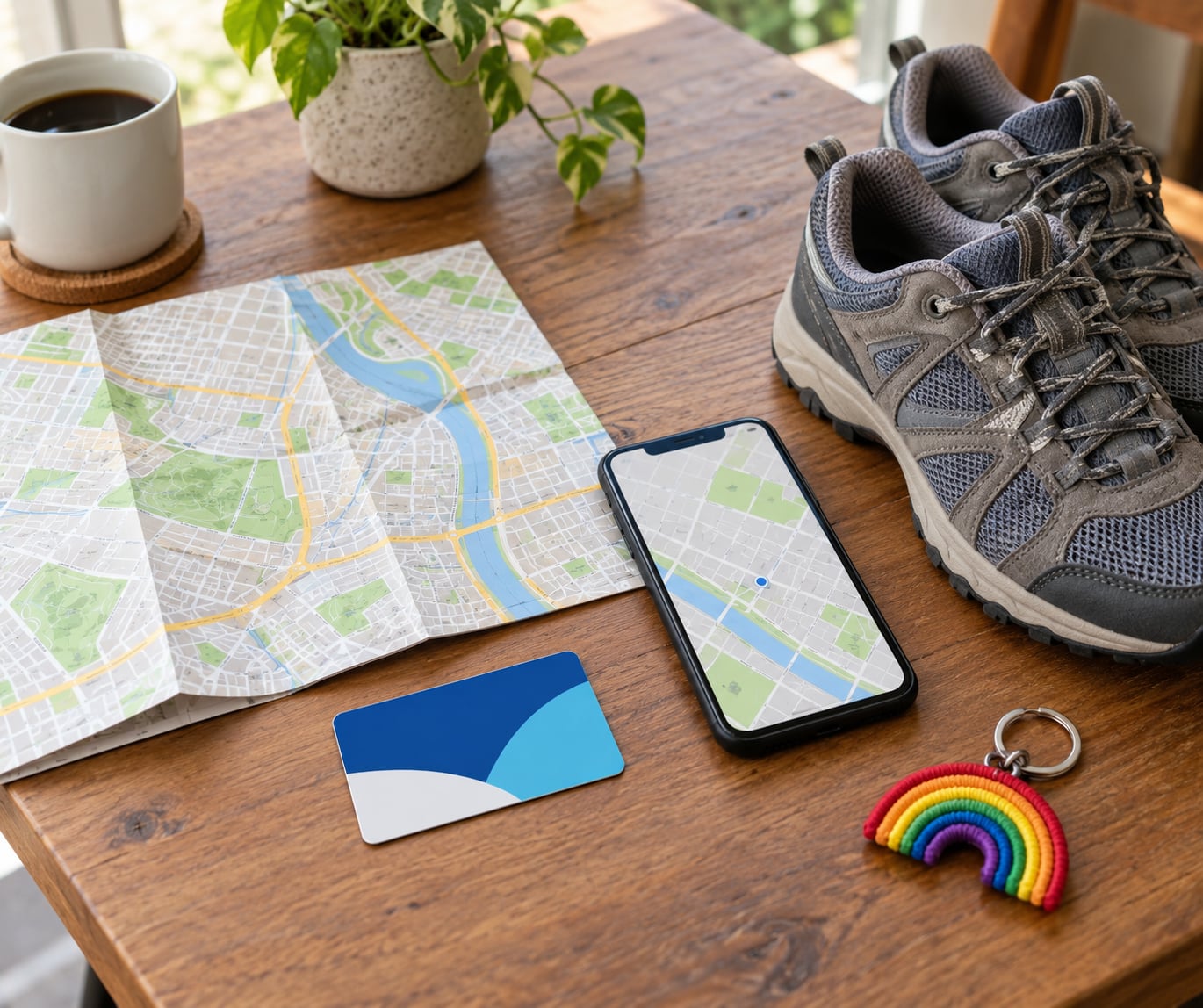
You need very little. A charged phone, comfortable shoes for a district that was designed for walking rather than parking, and one evening with no other commitments.
Beyond that, add a few practical items:
- A map with pins saved offline. Cell service in packed bars tends to fail exactly when you want to look something up.
- A small amount of cash. Some of the best bars in any gayborhood are still cash-only at the door and have no card terminal behind the bar.
- A loose layer. Door policies at dance clubs and leather bars rarely care what you wear, but they do expect something clean and closed-toe.
- A specific interest. “I want to see a drag show” narrows a city of two million people into six venues. “I want to go out” does not.
- Time on a weekday. Sunday afternoon and Tuesday evening are when you see residents and regulars instead of a visitor crush.
- A backup plan. Every venue in this article can be closed on the night you visit. Know the second one.
Leave the camera in your bag unless you plan to ask people first. These are residential streets, and the people on them are not exhibits.
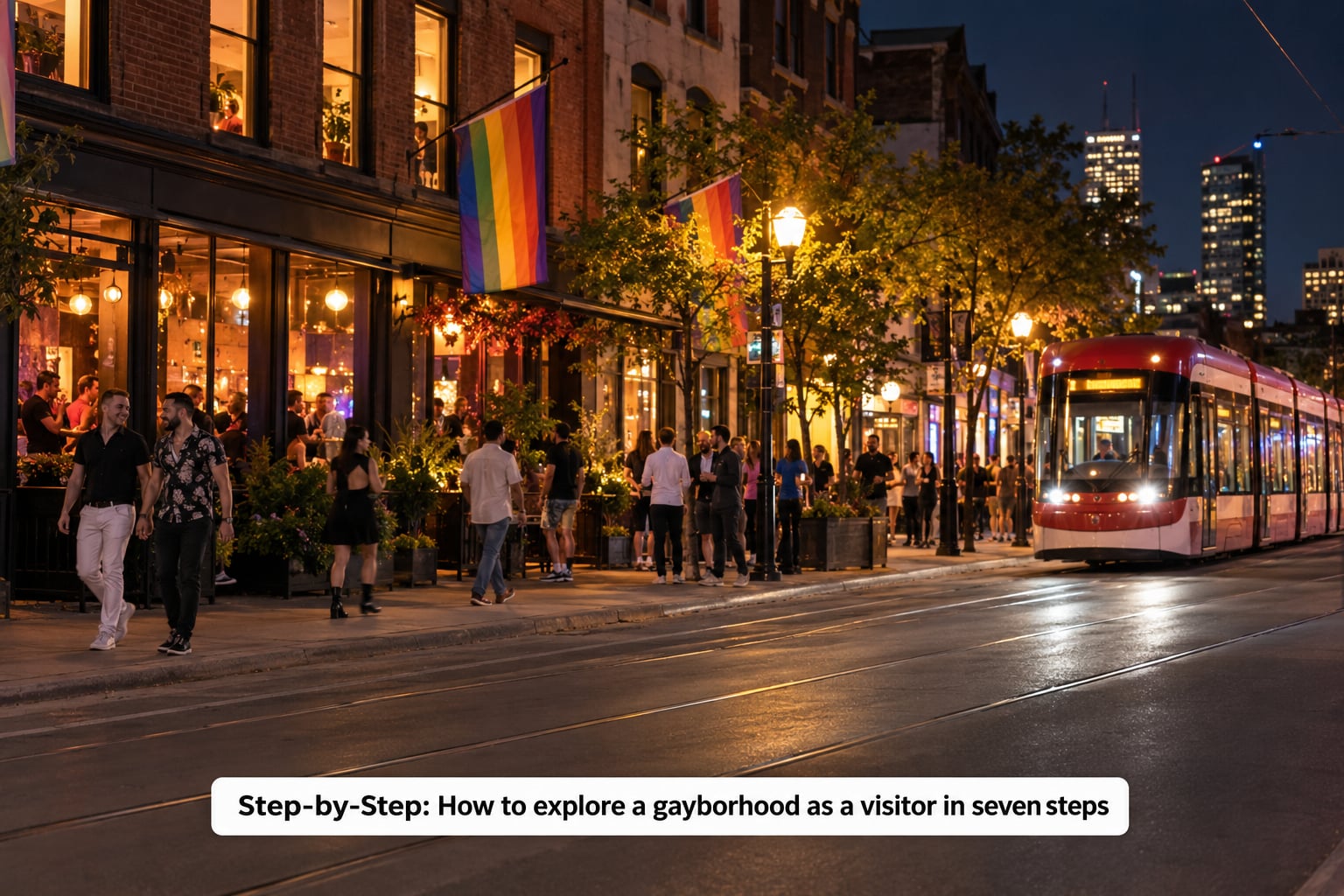
Step-by-Step: How to explore a gayborhood as a visitor in seven steps
1. Research the gayborhood before you go
Start by finding out where the queer life actually concentrates in your target city. Some cities have one dense district you can cover on foot. Others scatter the scene across neighborhoods an hour apart, and picking the wrong one wastes an entire evening.
San Francisco’s Castro is a single walkable strip. New York splits its scene across Hell’s Kitchen, the West Village, Chelsea and the East Village, and choosing between them is most of the planning work. Chicago’s Boystown sits between North Clark Street and Belmont, close enough to Wrigleyville and the lakefront to combine with a normal sightseeing trip.
Then separate what is permanent from what is temporary. Bars, restaurants, bookstores, community centers and historic markers exist year round. A pop-up party, a private sex party or a roaming bar crawl announced on social media does not, and you cannot plan a trip around it.
2. Choose a base and plan a route you can walk
Pick one area to stay in rather than moving between hotels, and pick a central area of the district as your anchor. Staying on the edge of the neighborhood is usually the sweet spot: cheaper rooms, a quieter block at night, and a ten-minute walk to anywhere you want to be.
Group your destinations by walking distance rather than by fame. Two venues four blocks apart are a better night than two that take forty minutes on transit. Sort them into a loose order: daytime history and shops first, food in the early evening, nightlife last.
Check the transit picture before you commit. Philadelphia’s Washington Square West is a compact grid you can cross in fifteen minutes. Berlin’s queer nightlife spans several districts that need a night pass and a plan.
3. Check the day’s events and venue details
Confirm opening hours, cover charges, dress expectations, age limits, accessibility and reservation rules through the venue’s own channels on the day you go. Almost nothing about door policy is published in advance and almost all of it changes.
Check four things the night before: the venue’s social account for a same-day post about tonight, the event calendar for anything scheduled, whether the door takes cash, and when the last call actually is. Venue accounts are more reliable than any article, including this one.
Learn what kind of place you are walking into. A dance club, a low-lit neighborhood bar, a leather bar with a door policy, and a drag cabaret are four different social contracts wearing the same address block. Knowing which one you are heading for tells you what to wear, whether you need to arrive early, and what the room will feel like when you open the door.
4. Start with a welcoming local venue
Begin at a cafe, restaurant, bookshop or community space where you can sit, watch the room and get your bearings without committing to a packed floor at midnight. Early evening does this better than late evening.
This step matters more than it sounds. People who walk straight into the busiest club on their first night often describe the experience as confusing rather than fun, because the room has a rhythm you cannot read yet. A quieter hour in a less dense room teaches you the neighborhood’s tempo at a fraction of the social cost.
Ask one question while you are there: what is happening this weekend that is worth seeing? Locals answer this happily, and it is the fastest route to a good night.
5. Explore beyond the best-known nightlife
A gayborhood is a place where people live, shop, eat, worship, make art and remember things. The bars are the loudest part, not the whole thing, and a visit that never leaves the nightlife strip misses most of what makes the neighborhood interesting.
Fill the daylight hours with something else. Look for historic markers, rainbow crosswalks, plaques, memorials and photography installations that mark where queer life actually happened. Wander the shopping streets: queer bookstores, vintage and thrift stores, record shops, bakeries, cafes and small galleries.
Look for institutions with real roots: an LGBTQ+ community center, an archive, a theatre company, a queer film festival or a historic district walking tour. These are the places that keep a scene’s memory intact, and staff will happily point you toward events that are not on any tourist list.
Pairing the district with the rest of the city is also worth doing. Locals in Chicago routinely suggest pairing a Boystown trip with the Architecture River Boat Tour or Millennium Park rather than isolating the day.
6. Attend an event that matches your interests
Choose by format, not by hype. Dance parties, live music, drag cabarets, film screenings, panel discussions, leather events, karaoke and Pride programming are completely different rooms with completely different expectations.
Then confirm who the event is actually for. Some are public and ticketed. Some are members-only, invitation-only, or hosted in a private home. Some are age-restricted. A listing that does not say is usually a party that assumes you already know someone.
If you land with no plan at all, work down this list from most to least reliable: the venue’s own social feed for tonight, the community center’s calendar and bulletin board, the neighborhood’s own Pride or event listings, the local queer press calendar, and dating apps where people post what they are organizing this week.
7. Be present, respectful, and flexible
A gayborhood is a community, and behaving like a guest in someone’s hometown is the entire difference between a good visit and an awkward one. None of this is complicated.
- Use the name and pronouns someone gives you, and correct yourself without fuss if you slip.
- Ask before photographing anyone, and skip photographing people altogether unless they say yes.
- Do not treat residents as scenery. Photograph the architecture, not the people on the sidewalk.
- Respect private and restricted spaces. If a doorway is unmarked and clearly not inviting, it is not for you.
- Do not assume every business in the district is queer-owned. Plenty of places are simply in a convenient location.
- Know that visible affection varies by person and by neighborhood. Holding hands is welcome in most queer districts and unwise in some. Follow the room, not your assumptions.
- Leave when something feels wrong. If the energy is hostile or you are not comfortable, that is information, not a challenge.
Going alone is completely normal, by the way. Plenty of regulars do it every week. Sit at the bar, order a drink, watch the room and let an evening happen at its own speed. Nobody is tracking your social performance.
Common Mistakes
Trusting old venue information. Districts churn constantly. A blog post from two years ago is a plausible guess, not a plan. Check the venue’s own account the day you visit.
Assuming everything is queer-owned. A bar in a gayborhood may be run by straight people who leased a cheap block years ago. Support queer businesses deliberately rather than by assumption.
Coming for bars only. Two nights of nightlife leaves most of the neighborhood unseen, and the daytime parts are often the reason people return.
Arriving with no plan. Walking into an unfamiliar district at 11pm with no venue picked means waiting on a street corner and scrolling. Pick one place, then one backup.
Photographing without asking. This is the fastest way to make someone feel like an exhibit in their own neighborhood. Ask first, or do not ask at all.
Making assumptions about identity. You cannot tell who is queer by looking, and guessing loudly is a bad time for everyone. Let people introduce themselves.
Reading visibility as universal comfort. A rainbow flag over a bar says the bar is queer-friendly. It does not promise that every person inside wants to be spoken to, photographed or hit on.
Loitering on residential streets. Sidewalks around these blocks are people’s front doors. Walk the main strip, then move on.
Frequently Asked Questions
Is it normal to go to a gay bar alone?
Yes. Going alone is routine, not a mistake. Sit at the bar, order a drink and watch the room. Conversation happens when it happens, and plenty of regulars spend whole evenings without talking to anyone new. Arrive a little early if you want a seat rather than standing at the end of a line.
Can a straight visitor go to a gay bar or club?
Yes, and many regulars are allies. The difference is what you do with the evening. Be a decent guest rather than a tourist taking the room in. Keep your attention on the people who came to be there, do not treat any single person as a spokesperson for the community, and go home when the night stops being fun for anyone.
Do gay bars allow straight people at the door?
Most do. A few leather bars and sex-positive venues ask about your reason for being there, and a handful restrict entry to specific scenes. Nobody is going to check your ID or interrogate you at a regular bar. The problems start when straight visitors treat the room as a novelty, which is a social issue rather than an entry issue.
What should I wear to a gay club or bar?
Clean and closed-toe is the safe baseline. Most dance clubs and bars do not police fashion, but shoes matter more than anything else because floors get sticky and you will lose them. Avoid a costume that makes the room a spectacle. If a venue posts a theme, follow it, because themed nights are usually the ones with the strongest door policy.
What do I do in a gayborhood during the day?
Look for historic markers, rainbow crosswalks, plaques and memorials, then walk the shopping streets for queer bookstores, thrift stores, record shops, cafes and bakeries. Add any community center, archive, theatre or film festival you can find. On Castro Street in San Francisco and around Washington Square West in Philadelphia, this daytime layer is often the more interesting half of the visit.
What if the venue I planned to visit is closed?
Check whether it moved, renamed, or shifted its night, then try the backup you picked before you left. Failing that, walk the main strip and read the door signage, which is usually honest about the venue’s hours and type. If you land somewhere with no plan, ask a bartender or a shop worker what is good tonight. They answer this question all the time.
Conclusion
Exploring a gayborhood well is mostly sequencing. Research before you fly, stay in one walkable area, spend your daylight hours on history and shops rather than bars, and check what is actually scheduled for the night you are there.
Three things to do first. Open the district’s event calendar tonight and note the dates you care about. Book a room within a ten-minute walk of the main strip. Then pick one venue you genuinely like the look of, with one backup, and go early.
Everything else you can work out on the sidewalk. Being new is fine. Asking questions is fine. Treating the neighborhood as a place people live rather than a place people perform is the part that matters.