The way to plan a bachelor party that is not a bar crawl is to pick one anchor activity the groom genuinely loves, build a short itinerary around it, and treat the meal as the main event rather than the background. Six to ten weeks is enough lead time for a local plan. No strip clubs, no matching shirts, no hangover before the wedding.
Most bar-crawl parties fail for the same reason: nobody asked the groom what he wanted, so the group defaulted to a format most people have already sat through at twenty-two. A good non-bar party is not a watered-down version of that night. It is a different night entirely, built around food, a shared interest and enough unstructured time for the group to actually talk.
Quick answers on what a non-bar-crawl bachelor party looks like in practice:
- A cooking class where the group eats what it made
- A long lunch at a restaurant that needs a reservation
- A day trip built around one sport or hobby
- A private screening or game night at a rented house
- A weekend trip around food, trailheads or stadiums
- A concert or sports game with seats bought as a block
- A home dinner party the group cooks together
Below is the planning sequence that gets you there, including what to collect before booking anything, what a realistic budget looks like, and how to handle guests who do not drink.
Table of Contents
- What You Need Before You Book Anything
- How to Plan a Bachelor Party That Is Not a Bar Crawl: Step by Step
- Step 1: Choose a Central Theme
- Step 2: Set the Budget and Headcount
- Step 3: Build a Flexible Schedule
- Step 4: Add One Signature Experience
- Step 5: Coordinate Food, Transportation, and Access
- Step 6: Send the Plan and Handle the Day Of
- How to Tell Your Best Man You Do Not Want a Bar Crawl
- Planning for Non-Drinkers and Designated Drivers
- Planning for a Same-Sex Couple or a Mixed Guest List
- Common Mistakes to Avoid
- Frequently Asked Questions
- How do you plan a bachelor party without drinking alcohol?
- What is a reasonable budget for a bachelor party that is not a bar crawl?
- Should a bachelor party have one main activity or several?
- How do you handle guests with dietary restrictions or accessibility needs?
- What if the weather ruins an outdoor bachelor party plan?
- How can you make a structured bachelor party feel spontaneous?
- Conclusion
What You Need Before You Book Anything
Gather seven things before you look at a single venue. Most of this takes one conversation and one afternoon, and it prevents the expensive mistakes that come from booking a space for twelve people when six are coming.
- Headcount range. A firm minimum and a realistic maximum, not an optimistic guess.
- Total budget and a per-person figure the group actually agrees on.
- Occasion priorities. What the groom would be sad to miss, and what he would not care about.
- Dietary and accessibility needs. Collect these privately, not in the group chat.
- Location. Local, day trip, or overnight, and how far people are willing to travel.
- A decision-maker. One person who can settle disagreements in the final week.
- Timing. The date, plus how much notice your guests realistically need.
Notice how little of that list is about venues. The best man who books a private room before he knows whether the groom wants a quiet dinner is planning a party, not a good one.
Party Length and Format: How to Plan a Bachelor Party That Is Not a Bar Crawl for One Night, a Day or a Weekend
Three formats cover almost everything. One night is the default and the easiest to execute. A day long is the sweet spot for groups who want depth without anyone missing a Sunday. A weekend is the only format where you need a house, a hotel block or a long drive, so it costs the most and takes the most coordination.
Group size changes the plan more than budget does. Four to six people can do almost anything, including things that need a minimum enrollment. Seven to twelve is the workable range for restaurant reservations and classes. Twelve or more turns every booking into a group negotiation, and activities that scale badly, like a pottery wheel, stop working entirely.
| Group size | Format that works | Watch out for |
|---|---|---|
| 4 to 6 | One night or a day trip | Many activities have enrollment minimums, so check before you promise |
| 7 to 12 | Day long, or a one-night plan with two stops | Restaurant bookings need a firm headcount and a deposit |
| 13 and up | Weekend, or a house with a private chef | Van and shuttle logistics, plus split shifts if the venue caps capacity |
How to Plan a Bachelor Party That Is Not a Bar Crawl: Step by Step
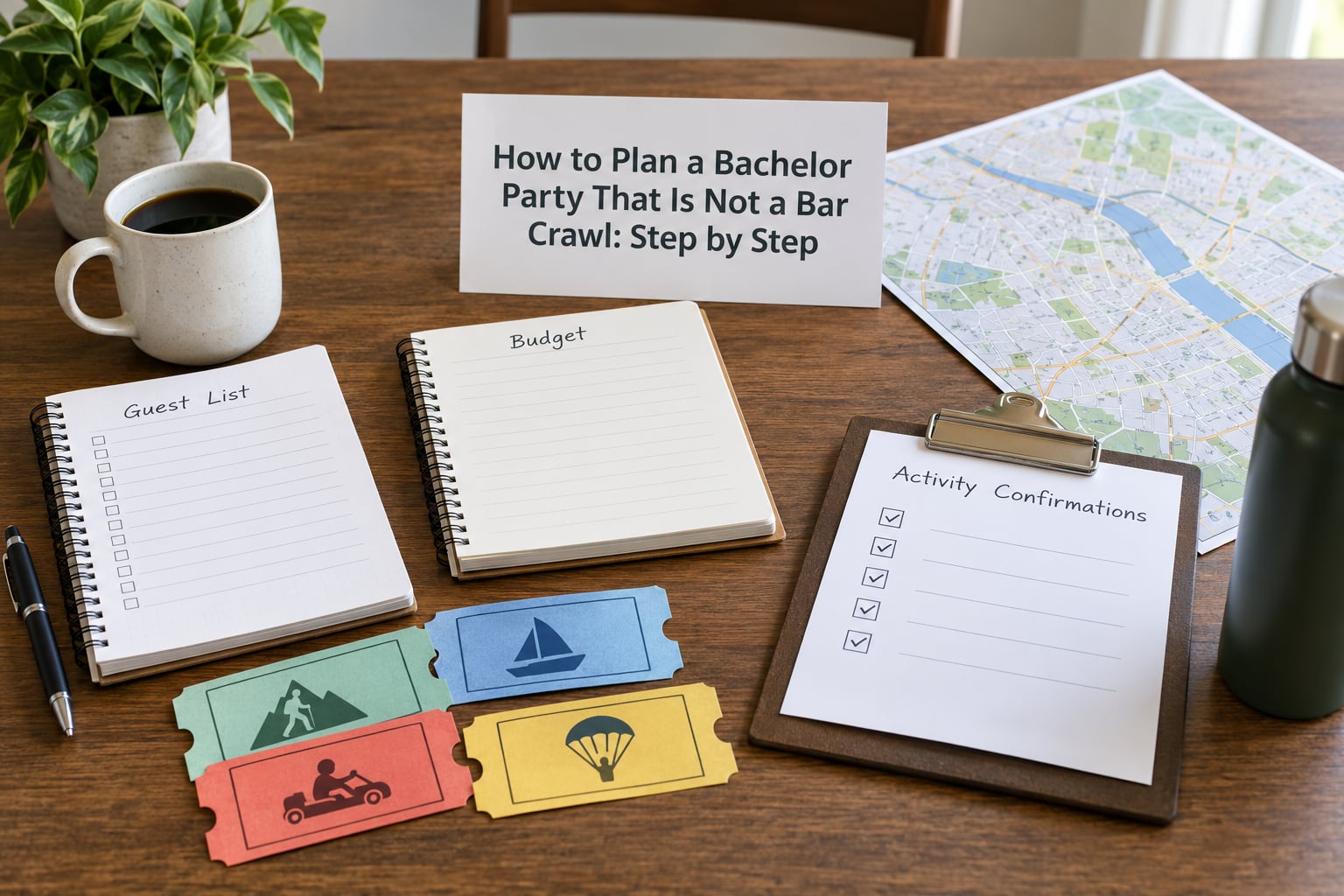
This is the order that works. Each step feeds the next one, and skipping ahead is what turns a thoughtful plan into a mess of deposits nobody can get back.
Step 1: Choose a Central Theme
Ask the groom what he is genuinely enthusiastic about right now, then check whether the group can support it. A shared interest becomes the thread that ties the activities together, so the day feels like one thing rather than a stack of unrelated errands.
Ask three questions, in this order: what would you do on a free Saturday with five of your closest friends, what is a place you would happily drive two hours for, and what is the one thing you would never want at your own party. That third answer saves more parties than any other line in the conversation.
Keep the theme loose enough to leave room. Call it food, call it outdoors, call it a send-off for his twenties. Do not build a costume around it, because costumed surprises turn into the kind of night a groom endures instead of enjoys.
Step 2: Set the Budget and Headcount
Figure out the real number before you fall in love with an activity. Costs below are in US dollars, and they are typical ranges that shift by region and change over time, so treat them as a starting point rather than a quote.
| Tier | Per person | Where the money goes |
|---|---|---|
| Local and simple | 100 to 200 | One big meal, one activity, transportation covered by guests |
| Comfortable | 300 to 500 | Anchor activity with a fee, a long dinner or private room, van rental, small matching gift |
| Weekend or destination | 750 and up | Travel, lodging, two anchors, meals, a group gift, plus a ten percent buffer |
Then be honest about who is paying. The traditional expectation is that the groomsmen cover the party and the guests cover nothing, though there is no law about it and plenty of groups split it differently. Some divide everything evenly, some have the guests pay their own way and the group covers the groom’s share, and some take a collection at the party. Whichever you choose, say it out loud at the start rather than in a text at the end.
Adding ten percent to your estimate is not pessimism. Something always costs more than the first quote, and a small buffer is what keeps a group from dropping the most enthusiastic person when the total comes in high.
Step 3: Build a Flexible Schedule
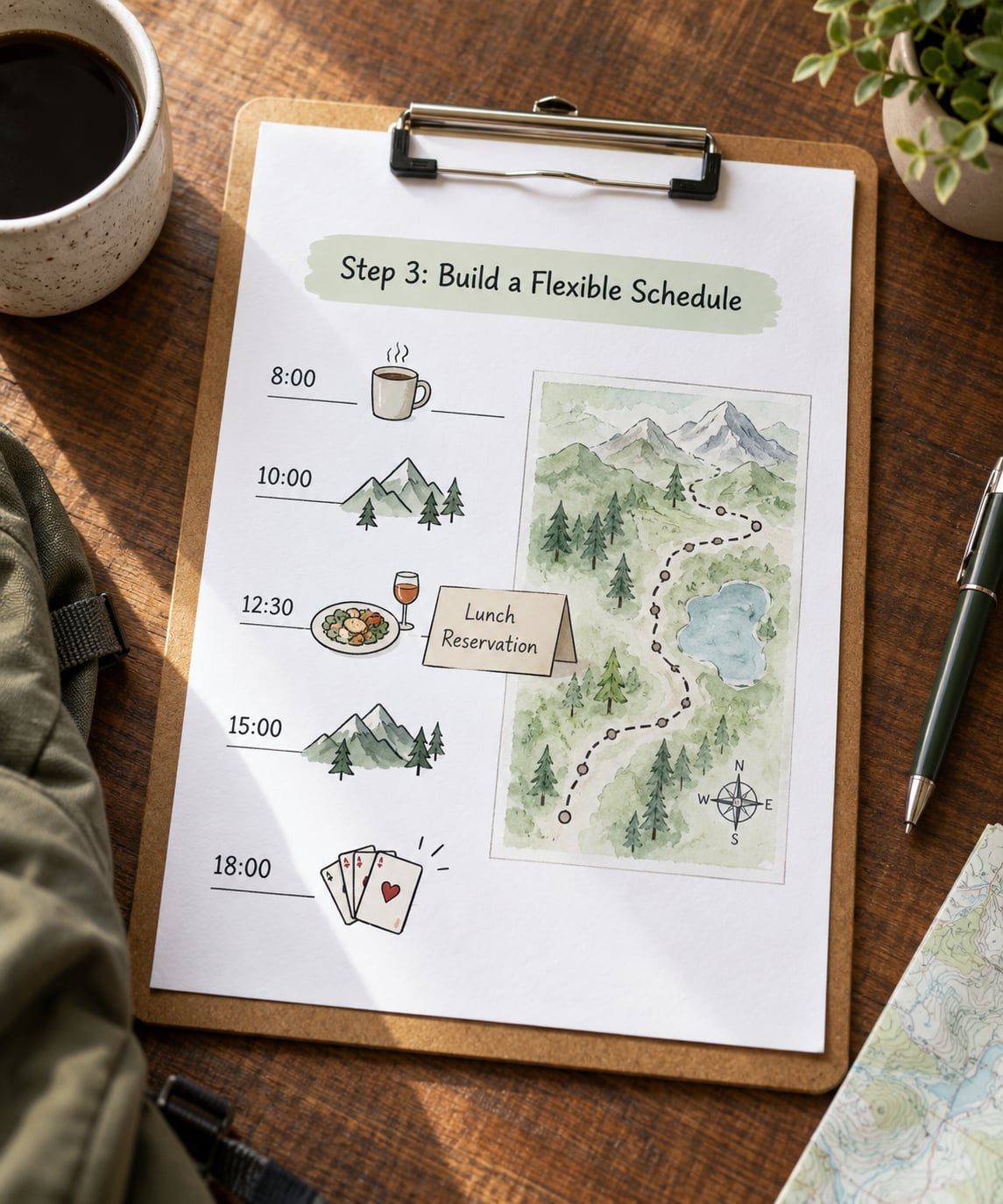
Write the schedule as one anchor activity, one meal, one optional side activity, and a clear endpoint. Anything more turns the day into a staff meeting with better catering.
The endpoint matters most. Tell people when it ends, because a party that has no stated end usually drags for an hour past everyone’s patience, and that dead hour is where the good plans get ruined.
| Time | One night | Day long | Weekend (Saturday) |
|---|---|---|---|
| 10:00 a.m. | n/a | Meet at a central point | Breakfast, then drive to the trailhead or the town |
| 12:00 p.m. | n/a | Anchor activity begins | Anchor activity, three to five hours |
| 3:00 p.m. | n/a | Long lunch, no rush | Optional side activity or nothing at all |
| 6:00 p.m. | Meet for drinks or dinner | Back to one bar or a second dinner spot, low pressure | Dinner with the group, nothing formal |
| 8:00 p.m. | Game night, dessert, a second venue if the group wants one | Home base, cards or a movie | Cards, music, an early night for the tired ones |
| 11:00 p.m. | Ends, rides home arranged | Ends | Ends, nobody drives after drinking |
Put buffer time in the plan, not just in the theory. A group of ten needs fifteen extra minutes to become a group, and reservations rarely run on schedule. If you want the day to feel spontaneous, hand the itinerary out as a loose set of times and let the group choose the order of two optional stops.
Step 4: Add One Signature Experience
One standout activity does more work than five average ones. It gives the group something to photograph, something to talk about on the drive home and something the groom will still mention a year later.
Cooking classes, guided food tours and reserved tasting menus work well because the group is seated and talking. Concert seats or a sports game work because the event runs on its own clock and nobody has to organize conversation. A day trip for fishing, hiking, climbing with a guide, or a shooting range works for groups who like being outside and tolerating a low-key pace. Pottery, wheel-throwing, axe throwing and screen-printing work for creative groups. Game nights, a private screening room or a rented house with a decent sound system work for groups who would rather control the room themselves.
Whatever you choose, book it before the restaurant. Restaurants around a popular activity fill up first, and the reversal of that order is why so many good plans end with a reservation for nine at seven when the concert ends at seven-thirty.
Step 5: Coordinate Food, Transportation, and Access
Collect dietary restrictions privately. A text that says let me know about allergies is more likely to get honest answers than a comment thread, and it lets someone skip a shared meal without explaining themselves in front of eleven people.
Plan transportation before the plan goes out, not after someone has had a few drinks. A rented van, a rideshare account for the group or two designated sober drivers covers most local nights. For a day trip, a single meeting point and a shared ride to the anchor beats a caravan of cars parking in three different lots.
Check accessibility directly with the venue rather than guessing. Ask about step-free entrances, restroom access, seating at the activity, and whether the meal venue can handle a wheelchair or a service animal. Venues answer these questions quickly and are rarely offended by the ask.
Always name a rain plan in the same message as the outdoor activity, with the indoor alternative spelled out. “There is a backup if it rains” is not a backup. “If it rains we move to the second floor lounge at noon, the reservation is under my name” is a backup.
Step 6: Send the Plan and Handle the Day Of
Send one message with everything in it: date, time, meeting point, what is booked and what it costs, what to wear if clothing matters, who to contact, and the day-of plan. Put it in a shared document people can reopen, because the person asking about parking at seven in the morning is not going to dig through a chat history.
Collect money before the day, not at the door. A payment link that goes out three weeks ahead with a clear deadline removes the most awkward part of the entire process, which is asking eight people for money you need to have already spent.
On the day, assign a backup decision-maker and then stop managing. Send the plan in the morning with one line of context, keep the group chat for logistics only, and give yourself permission to be a guest at your own party.
How to Tell Your Best Man You Do Not Want a Bar Crawl
This is the conversation the whole plan depends on, and it goes badly mostly because people hint instead of asking. Say it plainly and early, before any money moves.
“I would love something where we eat well and hang out, nothing where we are chasing drinks all night” gets a straight answer. So does naming the two things that genuinely bother you, whether that is strip clubs, being made to wear a costume, or being put on the spot to give a speech. One specific no beats a general request for something different, because a general request gets interpreted by whatever the other person already had in mind.
Best men planning this for the first time ask for a repeatable structure because they have never done it before, which is why so many plans default to the loudest tradition. Frame the request as collaboration, not refusal. Bring two or three date options and a budget range to the conversation and you have turned a veto into a planning session.
Planning for Non-Drinkers and Designated Drivers
A groom who does not drink, or a group with a sober member, changes the plan more than the menu does. Two different needs need two different answers: a non-drinker needs the evening to be fun on its own terms, while a designated driver needs a plan that assumes nobody is drinking heavily enough to matter.
- Anchor the night in food and activity, so the drinks are an option rather than the engine
- Build a mocktail menu with real effort in it, not a pitcher of juice with seltzer
- Book the evening so nobody needs to drive late; arrange a van or a paid ride home
- Skip any activity whose only mechanic is drinking; card games, bowling, escape rooms and go-karts all scale cleanly
- Check the venue’s drink policy before you go, since some places limit service at a private event
- Buy a bottle or a set of something as the group gift, so the focus is not on what is in the glass
None of this has to be announced as a policy. A group where the best dinner of the year is the centerpiece does not need to discuss sobriety at all.
Planning for a Same-Sex Couple or a Mixed Guest List
When both people in the couple are being celebrated, the default all-male format is the wrong container, and it is worth saying so early rather than accommodating later. Plan one party that honors the couple instead of a bachelor party and a rehearsal dinner that compete with each other.
Mixed guest lists work best when you plan for the widest range of energy rather than the average. A family member who does not drink, a coworker twenty years older and a college roommate who wants to go until 2 a.m. can share a meal and a daytime activity happily; they cannot share a twelve-hour drinking timeline. The same is true of accessibility, plus-ones and age spread. Pick an anchor that most people can join, then let the evening have optional parts that suit different appetites.
Common Mistakes to Avoid
Most disappointing bachelor parties fail on logistics, not ideas. These are the ones that recur, with the fix for each.
- Overpacking the itinerary. Three activities plus dinner plus a late stop means nobody sees anything. Fix: one anchor, one meal, one optional extra, and a stated end time.
- Planning around alcohol. If drinking is the through-line, the non-drinkers are spectators and the morning is a write-off. Fix: make the activity or the meal the through-line instead.
- Booking before you have numbers. A deposit for fourteen when twelve are coming, or a table you cannot fill. Fix: get RSVPs before any deposit, and ask the venue about its headcount adjustment deadline.
- Ignoring dietary and accessibility needs. Surprise them at the table and the evening stalls. Fix: ask privately in the first week and confirm with the venue that it can handle them.
- No rain plan. A beautiful outdoor plan with no indoor version is a plan that ends at the first cloud. Fix: name the indoor alternative in the same message as the outdoor one.
- Collecting money late. Venues want payment before the event, and chasing friends for money in the final week is miserable. Fix: send a payment link three weeks out with a firm deadline.
- Making the groom perform. Dress him up, put him in the middle of a toast, hand him a prop. Fix: ask what he is comfortable doing, and give him a real opt-out for anything physical.
- Forgetting the good photo and the good speech. The night ends without marking the occasion. Fix: reserve ten quiet minutes for a toast before the group disperses, and take one picture everyone actually gets sent.
Two quieter habits help more than they sound. Leave a gap of unstructured time in the plan, because that is when the conversation people remember actually happens. And decide in advance who is not driving, so nobody has to be the one to say it.
Frequently Asked Questions
How do you plan a bachelor party without drinking alcohol?
Build the whole plan around an activity and a meal instead of drinks: a cooking class, a food tour, a game night, a day trip, a concert or a reserved dinner. Pick an activity that runs on its own clock, put good non-alcoholic drinks on the table, and arrange transport so nobody needs to drive after drinking. Nobody has to announce that the evening is dry.
What is a reasonable budget for a bachelor party that is not a bar crawl?
Most local parties land between 100 and 200 per person for a meal and one activity, and between 300 and 500 if you add a paid anchor activity, a private room and a rented van. Weekend and destination trips usually run 750 and up once travel and lodging are counted. Add a ten percent buffer before you commit to anything.
Should a bachelor party have one main activity or several?
One main activity. Several activities fragment the day and leave the group rushing between them, so nobody actually talks. Pair your anchor with one good meal, one optional side stop, and a clear end time. If you want a second anchor, make it an evening event like a concert or game night that runs without organizing.
How do you handle guests with dietary restrictions or accessibility needs?
Ask privately and early, in a direct message rather than in the group chat, then confirm with each venue that it can accommodate them. Ask venues about step-free entrances, restroom access, seating and service animals when accessibility comes up. Sharing the answers with the group, without naming who said what, keeps everyone from having to explain themselves at the table.
What if the weather ruins an outdoor bachelor party plan?
Decide the indoor version before you publish the plan and name it in the same message, so nobody learns about the change on the day. A rented house with a good sound system, a museum, an indoor climbing wall or a long lunch at a nearby restaurant all work as stand-ins. Bring one thing that works outdoors regardless, like food or a card game, in case the decision gets made late.
How can you make a structured bachelor party feel spontaneous?
Hand out the itinerary as loose anchor times rather than a minute-by-minute schedule, and let the group choose the order of two optional stops. Tell people who are not driving, and keep a paid ride home arranged so nobody has to decide in the moment. Structure feels stiff when it is enforced; it feels easy when it is simply written down and then left alone.
Conclusion
Ask the groom what he is enthusiastic about, agree a per-person number, and reserve one anchor activity before anything else. Everything after that is transport, food and a stated end time, and it takes six to ten weeks to get right.
Last updated in 2026.