Hosting a brunch at home comes down to one idea: do the work before the guests arrive, not while they are standing in your kitchen. Pick a menu that can be made a day ahead, lay the food and drinks out so people serve themselves, and follow a short timeline on the morning of the event. That is the whole method, and it works whether four people are coming over or twelve.
Most of the stress people associate with hosting comes from trying to plate food at the same moment they are trying to be present for it. A brunch is unusually forgiving about that. The meal is flexible, the occasion is low-pressure, and people naturally help themselves to food and coffee, which means you can spend the morning with your guests instead of hovering over a stovetop.
This guide covers the practical side of learning how to host a brunch at home: what to gather beforehand, the order of operations from the night before to the last guest, how to handle dietary needs and drinks without fuss, and how to close the morning out without being elbow-deep in dishes until two in the afternoon.
Table of Contents
What You Need
Almost every hosting headache traces back to a decision that got skipped. Fix the six things below and the day itself runs itself.
A firm headcount
Decide your number before you shop, because every quantity on the list depends on it. Six to ten guests is the sweet spot for a home kitchen. Above twelve, cooking and serving dishes start fighting for counter space and the meal slows down.
A menu you can mostly make ahead
Choose two savory dishes, one sweet item, and something fresh. If a dish needs attention in the final twenty minutes, it has no business on a brunch menu. Casseroles, frittatas, strata, yogurt parfaits, fruit salad and bakery pastries all travel well.
One slow cooker or oven space
Unless you plan to keep your oven on low the whole morning, skip it. A warm oven at 200 degrees Fahrenheit holding foil-wrapped dishes covers most of what you will serve.
Serving pieces you can set out and forget
One platter per dish, a spoon or tongs for each, and a small bowl for scraps at the end of the line. You do not need platters that match. Baking sheets covered in parchment work fine and cost almost nothing to replace.
Food-safe storage and labels
Refrigerate or freeze anything that needs it the same day, and write the date on containers with a marker. Small cards or masking tape flags on serving dishes tell guests what is in them and whether a dish is vegan, gluten-free or contains nuts. Labeling takes two minutes and prevents someone from guessing badly at a casserole.
Drinks, planned by category
Build one non-alcoholic option that is genuinely good, one coffee setup, and whatever else the group expects. A pot of coffee, a pitcher of cold-brew, and a sparkling water station are the baseline. See the drink section below for how to lay it out.
Seating that fits your space
Count chairs, then count how many of your guests are likely to stand and eat. Two small tables often work better than one crowded one, and folding card tables solve the apartment problem entirely.
A schedule with one deadline
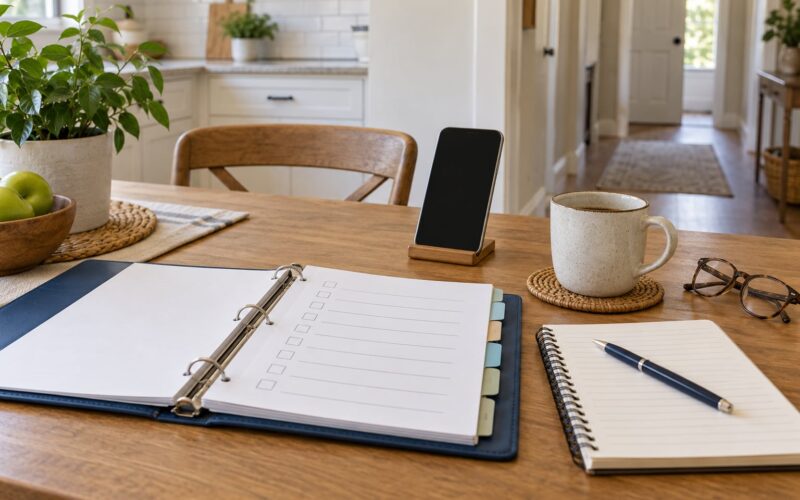
Write down when you want food on the table and work backwards from it. The rest of the checklist hangs off that single time.
How to Host a Brunch at Home: Step-by-Step
Here is the order that keeps a brunch calm: choose the menu, prep the night before, set the space the morning of, welcome guests and stay with them, then close it out. Each stage has a checkpoint, so you always know whether it worked.
How to Host a Brunch at Home: Choose the Menu
Build the menu around the occasion, the guest count and your own effort level. A celebration for someone turning thirty calls for a showpiece. A slow Sunday with four friends calls for almost nothing. Deciding which one you are hosting takes ten seconds and saves an hour of second-guessing.
A reliable formula for six to ten guests: two savory make-ahead dishes, one egg-based dish, one sweet bake or a dozen pastries, one fruit dish, and bread with butter. That is enough that nobody finishes hungry and not so much that you are cooking until noon.
Work the balance sweet to savory. Too much sweet and everyone is full before the savory dish appears. Too much savory and the pastries feel like an afterthought. Roughly two-thirds savory to one-third sweet is the ratio that works for most groups.
For effort level, there are three useful shapes. A make-ahead menu means everything is assembled the night before and day-of work is a warm oven and a coffee pot. A vegetarian menu leans on frittatas, vegetable strata, roasted potatoes, yogurt parfaits and a big bowl of fruit. A flexible menu is the forgiving one: a self-serve spread of bagels, toppings, spreads, fruit, salads and pastries where guests build their own plates.
There are also dishes to avoid entirely, and it is worth knowing them in advance. Skip souffles, which collapse within minutes of leaving the oven. Skip steak, which needs last-minute attention and a hot pan. Skip raw fish, anything that must be plated to order, and dishes that need more than two hands and a timer. These fail at a party for the same reason: they need you at the exact moment you are supposed to be talking to someone.
If you buy anything, buy the things that are genuinely better bought. A bakery box of pastries, a rotisserie chicken, good coffee in quantity and a decent fruit salad from a grocery store deli all buy you time without anyone noticing.
How to Host a Brunch at Home: Prep Ahead
The night before is where a brunch is won. Aim for ninety minutes of active work, spread across shopping, chopping and assembling, and you will have almost nothing left to do but boil water.
The night before, in order:
- Shop for everything, including coffee, milk and oat milk if anyone needs it, plus paper towels and a bag for trash.
- Chop fruit and vegetables. Store fruit dressed with a squeeze of citrus so it does not brown.
- Assemble savory casseroles and strata, cover them, and refrigerate. Do not bake them yet.
- Set up a yogurt parfait bar: bowls of yogurt, granola, berries and toppings lined up and covered.
- Wash and dry serving pieces and put them where you can grab them in the morning.
- Build the playlist and the seating plan. Physical setup takes ten minutes at night and much longer with people in the room.
- Set out the coffee pot, mugs, juice and any drink ingredients so they only need filling.
The morning of, working backwards from your serving time:
- Three hours before: preheat the oven and bake the savory dishes. Most egg dishes need 35 to 45 minutes. Set a timer and write down what needs reheating at what temperature.
- Two hours before: bake the sweet item. Prep the fruit salad and put it in the fridge.
- Ninety minutes before: fill the coffee pot, chill the juice and sparkling water, cut bread, and put out napkins, cutlery and any food labels.
- One hour before: arrange the buffet on your table or counter, fill serving pieces, and set up the drink station.
- Fifteen minutes before: turn the oven to 200 degrees Fahrenheit and put warm dishes in it, loosely covered with foil. Warm your coffee carafe if you have one.
- Arrival: put out cold items last, open the door, and stop working.
That fifteen-minute buffer is the whole trick. Because everything is already cooked, warming and arranging is the only thing left, and it does not need you standing guard.
On food safety, use USDA minimum internal temperatures and keep them in your head: 165 degrees Fahrenheit for poultry, 160 for ground meat, and 145 for whole cuts and fish. Anything held out for service should stay at 140 degrees Fahrenheit or above, and perishables that sit out more than two hours go into the fridge or the trash, not back into the serving dish.
How to Host a Brunch at Home: Set the Table and Space
Set up so guests serve themselves. That single decision keeps you out of the kitchen and lets you sit down, which is the entire reason buffet-style brunch hosting works.
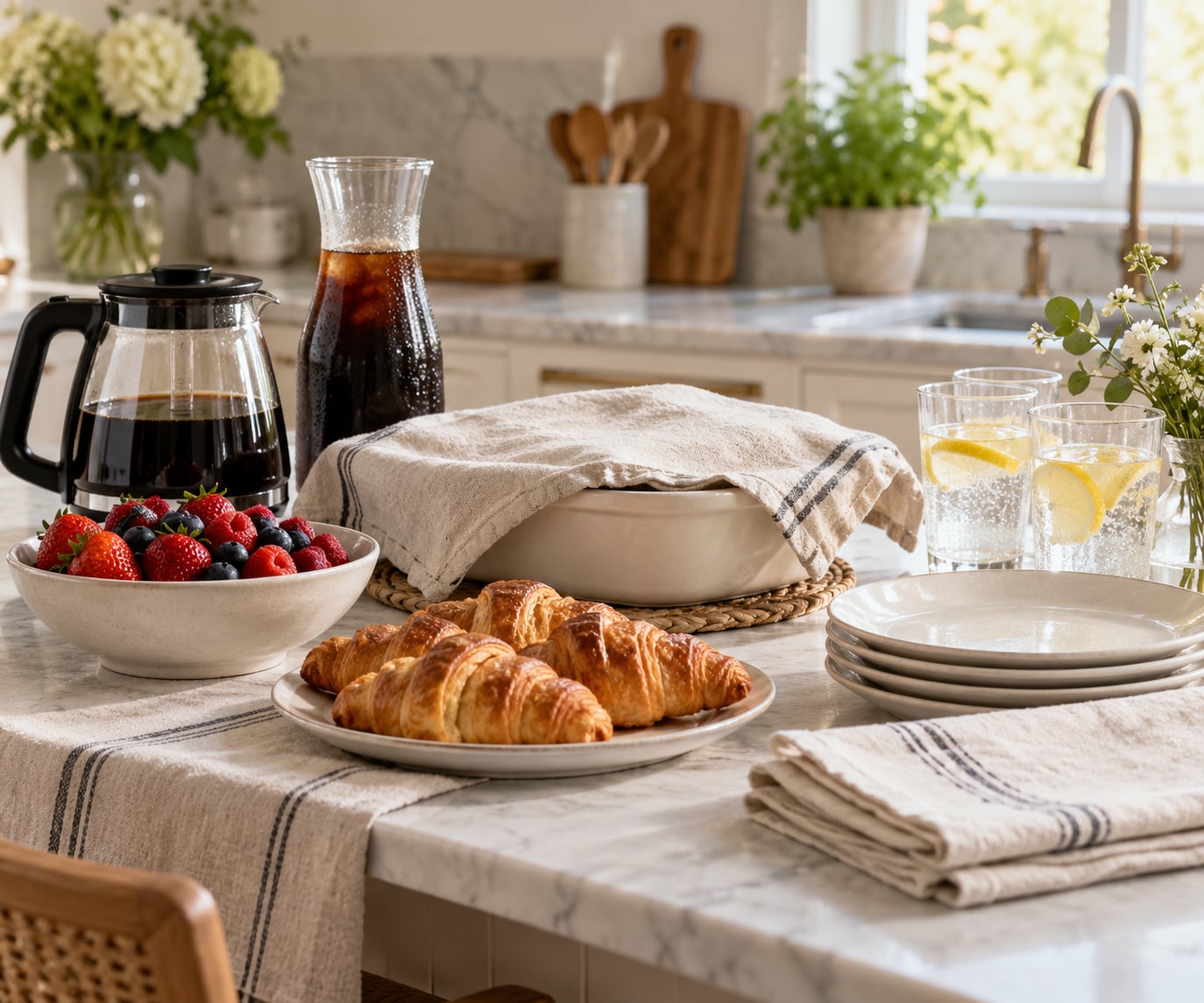
Put the food in one line, starting with plates and ending with the coffee pot and mugs. That order means nobody carries a loaded plate through a crowd. Place napkins and cutlery at the start of the line rather than on the table, so people grab them while their hands are still free.
Build a drink station that guests can work on their own. A coffee pot, a cold-brew pitcher, milk and a non-dairy option, mugs and a spoon should all sit together. A pitcher of sparkling water with lemon and cucumber slices does more for a morning than anything alcoholic, and it takes five minutes to assemble. If alcohol is part of the plan, put juice and bottles on a side surface with small glasses so the mimosa mixing does not happen over the food.
For small spaces, a self-serve buffet is better than a seated meal because it needs chairs, not table width. Set up in the kitchen and put seating in the living room, or push two small tables together if the wall allows. A folding card table rented or borrowed solves a twelve-guest brunch in a one-bedroom apartment. Skip anything that needs your stove at the moment guests arrive, because in a small kitchen the cook and the crowd occupy the same two feet of floor.
For an outdoor brunch, cover every dish with lids or mesh, weigh them down if it is breezy, and keep perishable items in a cooler with ice packs until the last minute. Citrus-scented candles or a citronella candle help with insects.
On dishware, do not be precious about it. Paper plates, compostable cutlery or the good plates everyone is afraid to use are all reasonable choices. Less to wash means more of the morning spent with people. If you want a washing-up compromise, name one person for the sink at the start rather than hoping it sorts itself.
How to Host a Brunch at Home: Welcome and Guide Guests
Your job after the door opens is hospitality, not cooking. Stand near the entry with a drink ready to hand over, and tell people where the food, drinks, bathroom and coats are in one breath.
Guests will arrive spread over an hour. Early arrivals are not early, they are on time, so give them something to do: a drink, a tour of the food, a seat somewhere comfortable. Have one appetizer that requires no cooking available immediately, like a cheese board, olives, spreads and crackers.
Sit down within the first fifteen minutes if you can. A host who stays standing signals that something is still unfinished. Once everyone has a plate, the meal is running itself.
A few things make a room more welcoming with almost no effort. Use people’s chosen names on anything you put in front of them, which matters more than it sounds for friends whose names do not match their paperwork or who are not out to everyone in the room. Ask about access needs when you send the invitation, so a guest who uses a wheelchair or cannot climb stairs is not solving a logistics problem on arrival. Label dishes clearly and keep an ingredients list for anything with nuts, dairy or gluten.
Treat alcohol-free hosting as a real option, not an afterthought. Plenty of guests at a morning gathering are not drinking, and a coffee pot, a cold-brew pitcher and a pitcher of sparkling water with citrus is a complete drink menu. Nobody should have to announce why they are not having a mimosa.
How to Host a Brunch at Home: Close the Brunch Smoothly
Most hosts dread the ending because nobody plans it. Decide in advance that brunch ends at a set time, and say so casually at some point, which gives everyone a graceful exit.
As people trickle out, clear plates and stack them rather than washing. Put perishables into containers and refrigerate within two hours, cutting fruit and creamy dishes sooner than that. Keep the coffee going until the last person leaves, because the stragglers are often the ones having the best conversation.
Then clean in the order that makes the next brunch easier. Wipe surfaces, wash or soak the serving pieces, take out trash, and put the leftover food into containers with the date written on them so you know what to eat first. Assigning one guest to the sink while you handle the rest takes about fifteen seconds to ask and removes the awkwardness of doing it later alone.
A short message the next day closes the loop. A thank-you plus one line about something that went well is all it takes, and it makes the next invitation easy.
Common Mistakes
These are the failures that come up again and again, and each one has a specific fix.
- Planning three days of cooking for one brunch. Make the menu one dish longer than feels necessary, not two. Over-preparing creates waste and stress, and guests rarely eat more than a normal portion.
- Letting food sit in the danger zone. Dishes left out past two hours, or held lukewarm instead of hot, are where foodborne illness actually happens. Hold hot dishes at 140 degrees Fahrenheit or above, and push perishables back into the fridge promptly.
- Filling every chair at one table. A crowded table slows the meal and traps conversation in one corner of the room. Two smaller tables give groups their own conversations and let people move.
- Forgetting dietary restrictions until the labels go up. Ask at the invitation stage, then put a labeled card on every dish and keep a printed ingredient list for anything with nuts, dairy or gluten. Guessing at a casserole is how someone ends up sick at your brunch.
- Underbuying drinks. Plan coffee for more cups than guests, and assume two drinks per person for anything else. Also stock a non-alcoholic option that is not simply water in a pitcher.
- Leaving no time for the end. If you have no plan for cleanup, the last hour happens to you instead of to your guests. Set the ending time in advance and decide who handles the sink.
- Cooking dishes that need last-minute plating. Anything requiring a timer at the moment people arrive will pull you out of the room. Souffles, omelets finishing at the table and anything seared are the usual culprits.
- Waiting for a perfect table before anyone arrives. Setting up at the last minute in front of guests turns a hosting task into a performance. Do the setup before the door opens, then stop.
Frequently Asked Questions
What time should a brunch start, and how long should it last?
Aim to have food on the table between 10:30 and 11 a.m. Most home brunches run two to three hours, which is long enough to feel unhurried and short enough that nobody is hungry again by lunch. Send a serving time rather than a vague window, then give guests a two-hour arrival window. Add a note that food is at its best early if you have a dish that will not hold.
How much food do I need per person for a brunch?
Plan roughly three savory portions and two sweet portions per adult, plus one extra portion for every four guests. In practical terms, that is about two eggs per person for an egg dish, a dozen pastries for eight people, and a cup of fruit salad each. Children and big appetites count as full portions. When in doubt, slightly under rather than over.
What are some easy brunch recipes I can make ahead?
Strata, frittatas, French toast casseroles and savory bread pudding all assemble the night before and bake in under 45 minutes. Overnight oats and yogurt parfaits need no cooking at all. Fruit salad, coffee and a box of pastries are ready before guests arrive. Anything fried fresh, like pancakes and waffles, is better skipped unless you have an electric griddle running.
What are the rules for brunch?
There is no formal code, but a few unwritten rules cover most situations. Arrive within the window you were given, bring nothing unless asked, and help yourself buffet-style rather than waiting to be served. Sit anywhere. Guests who offer to help with dishes usually mean it, so saying yes is easier than avoiding it. And no one is expected to stay until the end.
How do I host a brunch without a dining room?
Treat it as a buffet instead of a meal. Set the food up on your kitchen counter or a folding table, put seating in the living room, and let people carry their own plates. In a small kitchen, cook everything before anyone arrives so the stove is not in use while guests move through. A bathroom and a coat hook you can point to matter more than table space.
What should I do with the extra food after the brunch?
Refrigerate perishables within two hours, including eggs, dairy, meat and cut fruit. Label containers with the date so you know what to eat first, and plan on eating well into the week. Casseroles, frittatas, breads and most pastries freeze well and reheat in a 325 degree oven. Freeze in portions rather than one big dish so grabbing breakfast takes a minute.
Conclusion
Start with two decisions tonight: pick your menu and write down the time you want food on the table. Everything else, the shopping, the chopping, the casserole going in the fridge overnight and the table you set before anyone rings the bell, follows from those two.
Beyond that, leave a little slack in the plan and resist the urge to make the morning perfect. Nobody remembers whether the napkins matched. They remember that the coffee was hot when they walked in, that there was somewhere comfortable to sit, and that the host was not stuck in the kitchen the whole time.
Updated for 2026.