How to shop for clothes that fit your body comes down to three things: your measurements, the garment’s own dimensions, and how the cut is drafted. The problem is almost never the body. It is the label, the grading, or a shape the garment was never designed for. Take four measurements, learn to read a size chart, and test the garment by moving in it before you pay.
This takes about an hour the first time, then ten minutes per shopping trip once it becomes habit. Nobody is born knowing this. Most people go through years of returns first, which is what this guide is meant to cut short.
Table of Contents
- What You Need
- Step-by-Step: How to Shop for Clothes That Fit Your Body
- Common Mistakes and How to Fix Them
- Frequently Asked Questions
- How can I find clothes that fit my body type?
- Why can’t I find clothes that fit me?
- How do I shop for clothes online when I can’t try them on?
- How do I know which size to buy when I’m between sizes?
- My body shape changed but my weight barely did. Why don’t my clothes fit any more?
- Is it worth getting clothes altered?
- Conclusion
What You Need
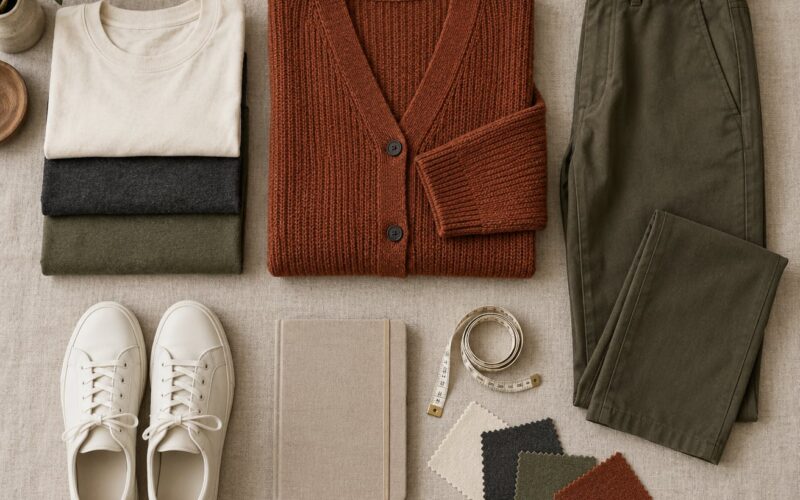
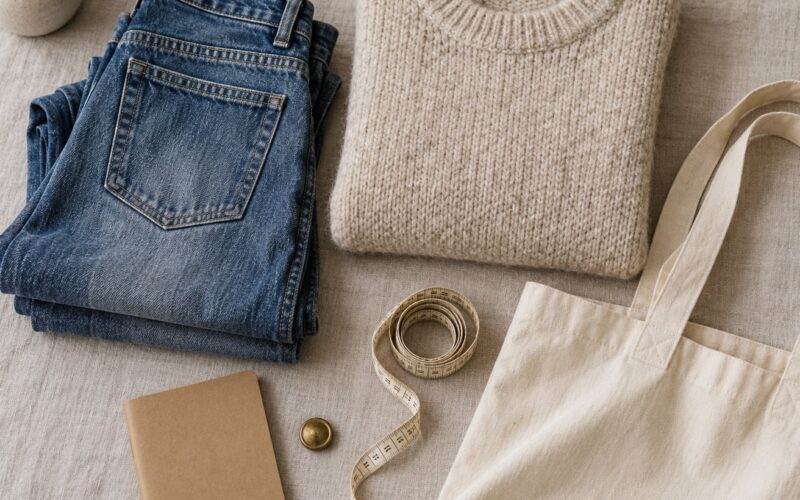
A flexible tape measure is the one tool that matters. The cheap cloth kind with a metal end is fine, and a tailor’s tape is better if you take measurements often.
Next, find a baseline garment. This is any piece of clothing you already own that fits exactly how you want it to: the shirt that sits right on your shoulders, the trousers that need no alteration. Lay it flat, measure it, and write the numbers down. That garment becomes your personal fit template, and comparing against it is more reliable than any brand’s size chart.
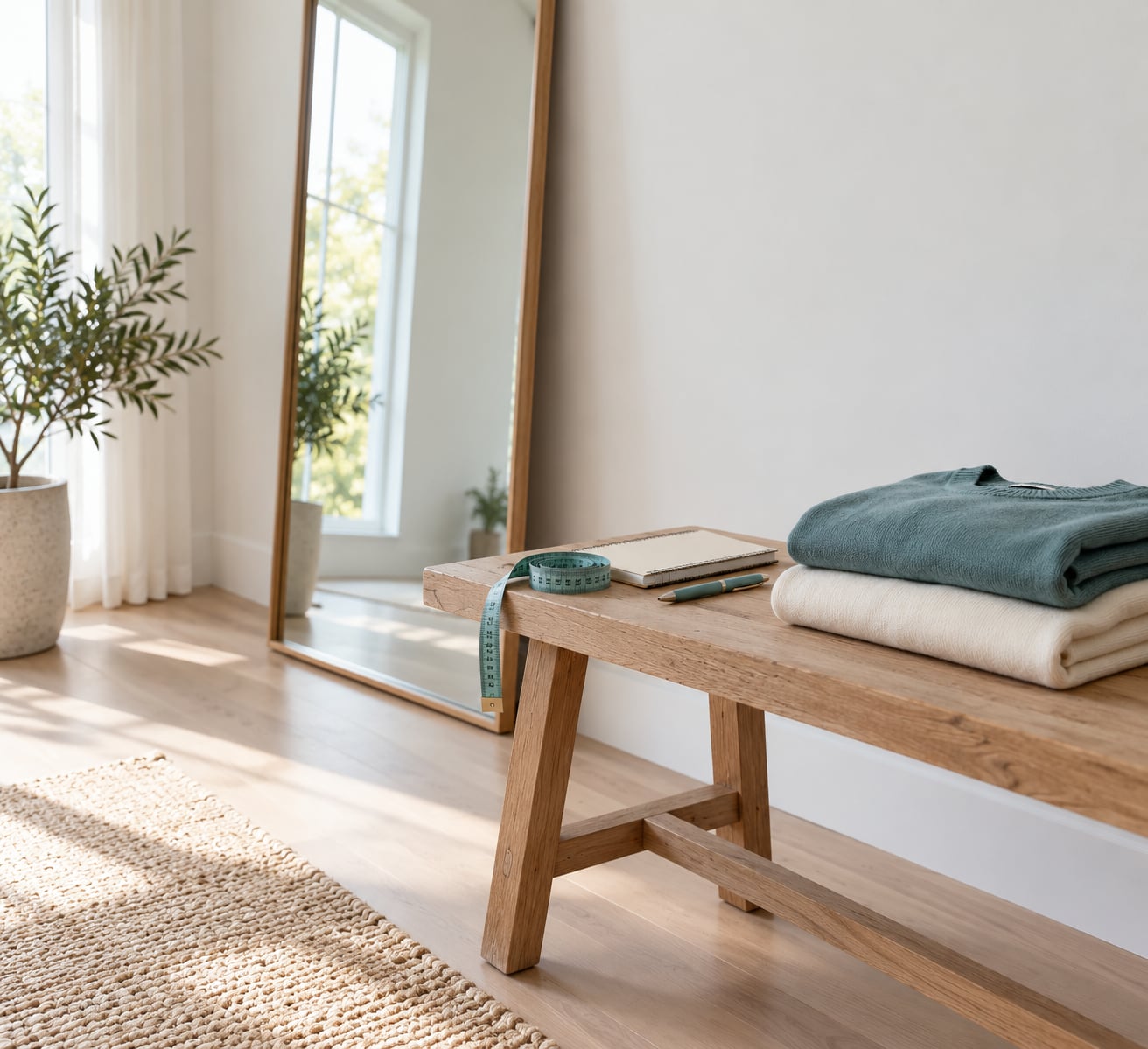
You also want a full-length mirror, a phone or notebook for recording measurements, and access to the retailer size charts for the brands you shop. Every serious clothing brand publishes garment measurements now, usually under a Size Guide tab. If a brand does not publish them, that tells you something useful about how much trouble a return will be.
Step-by-Step: How to Shop for Clothes That Fit Your Body
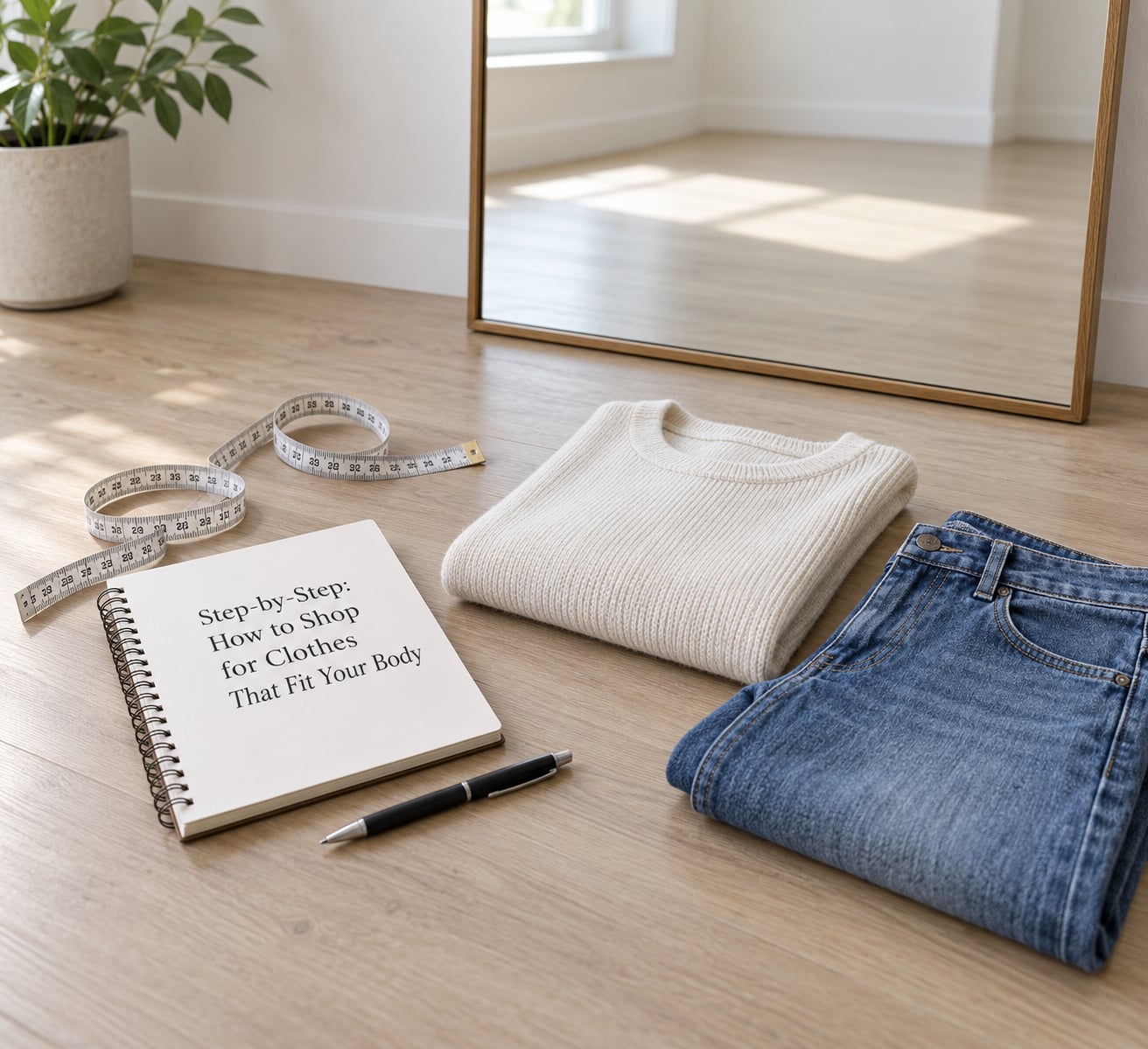
Step 1: Measure the Places Clothes Need to Fit
Measure over a light layer, keep the tape snug but not tight, and breathe normally. Do not measure over the clothes you plan to wear under the garment unless you always will.
- Shoulders: across the top of one shoulder, straight across the back, to the top of the other.
- Bust or chest: around the fullest part, keeping the tape level all the way around.
- Natural waist: at the narrowest point of your torso, usually just above the navel. Bend sideways to find it.
- Hips: around the widest point of your seat, usually 7 to 9 inches below the natural waist.
- Inseam: from the crotch seam to the hem of trousers that already fit well.
- Shoulder-to-shoulder: the flat width across a garment, useful for comparing shirts across brands.
Write the numbers down and date them. Bodies change, and a sheet of paper with a date on it beats a memory. If measuring yourself feels awkward, ask a friend, which is what most people in style forums say they end up doing.
Step 2: Define Your Fit Priorities
Fit means different things to different people, and a shopping trip goes wrong when you want a relaxed fit and buy a slim one. Decide before you look at anything what matters most to you: room to move, a defined line at the waist, or a specific silhouette you want the garment to create.
Know the vocabulary too. Relaxed means the garment hangs loose from the body. Tailored means shaped through the waist with structure. Close-fitting is meant to sit against the body. Adjustable usually means drawstring, elastic or wrap construction, and it is the most forgiving thing you can shop for when you are between sizes or when your proportions shift.
If you are shopping for a specific occasion rather than general wardrobe, write down what the day actually involves. A seated dinner and a twelve-hour shift in the same dress are two different requirements.
Step 3: Read the Sizing Chart Before You Shop for Clothes That Fit
Read the chart, not the label. A size chart lists finished garment dimensions: chest flat across, waist flat across, hip flat across, inseam, shoulder width, and sometimes total length. Those are the numbers that predict whether the piece will work on you.
Convert flat to full circumference by doubling. If a shirt lists a chest of 20 inches across, that garment gives you about 40 inches of chest room, and you compare that to your bust measurement plus the ease you want. Ease is the deliberate gap between body and garment, and it runs anywhere from a couple of inches for a fitted knit to 6 or more for an oversized coat.
Then check the grade. If a chart jumps from 16 inches to 18 inches to 20 inches across, each size step adds 2 inches of chest, and you can see exactly where a shape stops being offered. Brands cut this differently, and a grade of half an inch versus one inch changes how a garment behaves on a curvier frame.
Be skeptical of inflated labels. Some brands deliberately label a garment one size larger than it measures to make shoppers feel better. Vanity sizing makes labels close to useless, which is why garment measurements beat size numbers every time.
Step 4: Compare the Garment With Your Measurements
Put your numbers side by side. For a trouser, compare your waist and hips to the chart’s waist and hip, then check the rise. A mid-rise sits at the natural waist; a high-rise reaches the waist or the base of the ribs. If you carry more through the seat than the waist, a rise that cuts into your stomach while leaving a gap at the back is a bad match no matter what the label says.
For a top, the shoulder-to-shoulder flat width on the garment is the number that predicts fit best, because seams set there do not forgive. Shirts are drafted from the shoulder point, so a garment with a narrow shoulder seam will pull across the back no matter how much room you have elsewhere.
Fabric changes the answer. Stretch jersey and knit give several inches of give and are forgiving of small measurement mismatches. Crisp woven shirting, denim and anything structured hold their shape and expose every gap, so order one size up or plan for alterations.
Step 5: Try On and Test Movement
Standing still is the least useful part of a fitting. Sit down, walk across the room, reach for something off a high shelf, bend forward, cross your arms and raise them overhead.
Then check the specific stress points. Shoulders should not pull forward or bunch into a wrinkle when you move your arms. The waistband should stay put without a gap in the back or a cutting line in the front. Hems should sit where you want them, whether that is mid-calf, ankle, or the floor.
Check the fastenings while you are still in there. Button a shirt from the bottom up, because buttons pull across the stomach when closed from the top. A wrap or tie waist should give you at least a hand’s width of adjustment beyond your measurements.
Step 6: Check the Details Before You Buy
Fabric content and stretch decide how a garment will wear over months, not just minutes. Check the lining for transparency by holding it up to a window or your phone screen, especially on pale colours and lighter fabrics.
Look at seam finish and closure quality. A raw seam or a chain hem on a mid-price piece usually tells you what to expect. Then read the care label and the return policy together: a garment that must be dry cleaned is a bigger commitment than one that is not.
Secondhand has no returns at all, so measurement is the only tool you get. Sellers who list a flat bust, waist and length in inches are worth favouring over ones who write “medium”. Bring the tape measure. For second-hand and vintage specifically, buy the size you can alter rather than the size that almost fits.
Common Mistakes
The recurring errors are all versions of the same habit: trusting a label instead of a measurement. The rest of this section pairs each one with a fix you can apply on your next shop.
Common Mistakes and How to Fix Them
Believing the size label. Fix: find the chart on the same page, convert flat widths to full circumference, and compare with your own numbers. Two garments from the same brand in the same labelled size can differ by an inch or more across the chest.
Trying it on standing still. Fix: build a movement test into every fitting, sitting and reaching before you decide. Fit that only works in a mirror pose does not survive a real afternoon.
Buying a size down in hope it will shrink. Fix: check the fabric content. Only untreated natural fibres shrink meaningfully, and they shrink unevenly, usually at the seams and the waistband first. A garment that fits snugly now will not become fitted later.
Buying a second size up when you are between sizes. Fix: think about ease rather than size. In stretch jersey and knit, take the smaller size, since the fabric moves. In a structured or woven fabric, take the larger one or get it altered.
Skipping alterations because they seem expensive. Fix: price a local tailor against the price of a garment you will actually wear. Taking in a waistband or taking in sleeves on a piece you love usually costs less than replacing the piece, and it is the only way to get a genuinely custom result.
Shopping only in one size range. Fix: measure a garment you already own that fits well, then hunt for brands whose charts match those numbers, even in a different category. Women’s, men’s and gender-inclusive sizing are graded on different assumptions, and the brand that fits you may sit in a section you have never shopped.
Assuming your shape is fixed. Fix: remeasure every six months or after any significant change in weight, pregnancy, or recovery. Proportions shift before the number on the scale does, and a set of trousers that fit two years ago can sit badly with nothing else having changed.
Frequently Asked Questions
How can I find clothes that fit my body type?
Start with measurements, not labels. Take your shoulders, bust, natural waist and hips, then compare them against the garment measurements on each brand’s size chart rather than the labelled size. Note whether you are relaxed, tailored or close-fitting, then shop cuts drafted for the proportions you actually have. Re-measure every six months, because proportions shift before your weight does.
Why can’t I find clothes that fit me?
Most often the brand’s grading does not cover your proportions. Sizing systems are built around average bodies, so a curvier bust with a fuller hip, a tall frame, or a shorter torso can fall between two sizes in every chart. Vanity sizing makes it worse by labelling garments larger than they measure. Check finished garment dimensions, and compare against a garment of your own that already fits well.
How do I shop for clothes online when I can’t try them on?
Measure a garment you already own that fits exactly how you want, then match its flat measurements to the brand’s size chart. Check the return policy before you order, and take photos of the tags. Where returns are free, ordering two sizes and sending one back beats guessing. Prefer brands that publish garment measurements, because those are the only numbers that predict fit.
How do I know which size to buy when I’m between sizes?
Decide by fabric, not by size. Stretch jersey, knit and elastic blends give several inches of movement, so take the smaller size. Crisp wovens, denim, leather and anything structured hold their shape, so take the larger one and expect to have it altered. A wrap or drawstring waist buys you a full size of adjustment in one garment.
My body shape changed but my weight barely did. Why don’t my clothes fit any more?
Proportion is what clothing is drafted around, not weight. Changes in pregnancy, perimenopause, strength training or medication can redistribute where you carry inches while the scale stays still, which changes how a garment sits on you. Re-measure and work from the new numbers. Your old clothes are the cheapest reference point available, so check them before buying anything new.
Is it worth getting clothes altered?
Usually, when the garment is one you love and only one thing is wrong. Taking in a waistband, shortening a sleeve or letting out a seam gets you a fit no off-the-rack garment will give you, and it costs less than replacing a piece you would have to send back. It is less worthwhile on very cheap fast-fashion items, where the fabric often will not take the alteration cleanly.
Conclusion
Clothes fit when the garment’s measurements meet your measurements with the amount of ease you wanted in the first place. That is a solvable problem, and it starts with a tape measure rather than a label.
Start by measuring yourself properly and laying flat the garment you already love, then take those numbers with you. How to shop for clothes that fit your body is mostly comparison after that, and comparison gets much faster once you have a baseline garment to measure against. Everything after this first hour is just repetition. Updated for 2026.