To make cocktails without alcohol, build the drink the way a bartender does: pick a strong base, then add sweetness, acid, bitterness, dryness and length in measured amounts instead of pouring over ice and stopping there. Most mocktails collapse because they skip the bitter and dry parts and end up tasting like juice. The whole method takes about five minutes per drink, and it costs less than a bottle of spirits.
Alcohol does four specific jobs in a glass. It adds bitterness and a drying, tannic bite, it gives body and viscosity so the drink coats your mouth, it carries warmth and aroma, and it dissolves and carries flavor. You can replace every one of those with something from your kitchen. Once you know which job each ingredient does, you stop needing recipes and start building drinks on your own.
This guide works for sober-curious drinkers, people avoiding alcohol for medical, pregnancy or religious reasons, designated drivers, and hosts who want a drink that is interesting enough for the guests who do drink. Dry January is the obvious excuse, but honestly the drinks are just good.
Start with the ingredient list, or jump straight to the three combos worth learning first.
Table of Contents
What You Need
You need very little. A citrus squeezer, a jigger or a shot glass to measure with, a shaker or any jar with a lid, and a strainer. Ice, a peeler and a muddler cover most of it. Everything below is available at a normal grocery store, and most of it keeps for weeks.
Bases. These are the liquid that carries the drink. Cold-brew tea is the most underrated option because it brings tannin, the same drying compound found in red wine. Black tea tastes closest to whiskey and rum; green tea and jasmine tea taste closer to gin. Coconut water is rounder and more tropical. Verjus is unripe grape juice mixed with vinegar, which is the single best budget swap for wine in a drink. Kombucha adds both acidity and a faint funk that reads as complexity. NA spirits like Seedlip or Lyre’s are distilled bases designed to stand in one for one for gin, vodka, rum, tequila or whiskey.
Sweeteners. Simple syrup is sugar and water in equal parts, and it is the workhorse. Make it in a batch by warming 1 cup of sugar with 1 cup of water until dissolved, then cooling it. Honey syrup works well if you dissolve two parts honey in one part warm water. Sugar-free versions exist for people avoiding sugar, but they do not carry flavor the way real syrup does, so use half the amount and add a little more citrus.
Acids. Fresh lemon and lime are the standards. Grapefruit is more bitter-leaning, and orange juice is sweet and mild enough to count as both acid and sugar at once. Pomegranate and cranberry add acidity plus color.
Bitterness and dryness. This is the group most recipes forget. Non-alcoholic bitters give a concentrated, dark herbal bitterness. Shrubs are fruit plus sugar plus vinegar, strained, and they read as tart and adult rather than sweet. A spoon of strong tea, a dash of balsamic, a strip of grapefruit peel or a pinch of cocoa bitters all work. Ginger and chili bring heat rather than bitterness.
Length. Sparkling water, soda water, dry tonic and ginger beer add bubbles and dilute without adding sweetness. Tonic carries quinine, which gives a faint bitterness that pairs with juniper flavors in a gin-style drink.
Garnish. Citrus peel, a sprig of mint or basil, a cucumber ribbon, and dehydrated fruit. Garnish does visual work but it also sends aroma toward your nose before the first sip.
One honest caveat: bitters and orgeat syrups often contain a trace amount of alcohol, usually around 0.5 percent ABV, even when the label says non-alcoholic. If you are avoiding alcohol entirely for recovery, pregnancy or religious reasons, check the bottle, or make your own syrup and skip packaged bitters.
Step-by-Step: How to Make Cocktails Without Alcohol
1. Build the base
Start with 2 ounces of your primary liquid in the shaker. Measuring matters. If you free-pour the base, you will not know how much acid or syrup to add and you will either oversweeten or undress the drink. Cold-brew black tea for a whiskey or rum profile, verjus for anything that was a wine or a Negroni, coconut water for a tropical drink, and a botanical NA spirit for a direct 1:1 swap are all reliable picks.
The fastest way to build a foundation that mimics a spirit is to swap a commercial NA spirit straight in at 1:1 for the alcoholic spirit in any classic recipe. That one substitution gets you a non-alcoholic Negroni, a gimlet or a Paloma with no other changes. The result still tastes more like a cocktail because the base was distilled for that job.
You know the base is right when the drink tastes balanced on its own before you add anything else. If it is already too sweet, you needed a drier base like tea or verjus, not more syrup.
2. Add sweetness and acidity
Add 0.5 to 1 ounce of simple syrup, then balance it with 0.5 to 1 ounce of fresh citrus juice. The classic starting ratio is 2 parts base, 1 part acid, and a quarter to half part sugar. Taste it with a clean spoon before moving on.
The acid is the dial that matters most. If the drink is cloying, add another squeeze of lemon rather than more syrup. If it is sharp enough to pucker your cheeks together, back off the juice by half an ounce and add a quarter ounce of syrup instead.
Grapefruit juice is the interesting substitute here. It is acidic with a bitter edge, so it does the job of both lemon and bitters. Two ounces of grapefruit and a quarter ounce of syrup will cover for a drink that originally had campari in it.
3. Layer in flavor
This is the step that separates a mocktail from juice. Add two or three drops of non-alcoholic bitters, a half ounce of shrub, or a quarter ounce of a strong tea. Then add aroma: muddle a few mint leaves or basil with the back of a spoon, add a cinnamon stick, a slice of ginger, or a few drops of orange flower water.
For warmth where a drink used to have alcohol burn, ginger, cinnamon, star anise, black pepper and chili all work. A small splash of vinegar in a drink that was whiskey-based will read as spirit and dryness once it is balanced with syrup.
For texture, use a quarter ounce of aquafaba, which is the liquid from a can of chickpeas, shaken hard in the sealed jar. It foams like egg white and is vegan, which matters if you are hosting for people who do not eat eggs. Coconut cream or a spoon of almond cream does the same job for a tiki drink.
Smoke is the one flavor that gets people excited. Lapsang souchong tea syrup, a drop of liquid smoke diluted with water, or a smoked grapefruit peel gives a drink a smoky edge without any alcohol behind it.
4. Add length and texture
Top with 3 to 4 ounces of something cold and sparkling. Dry sparkling water keeps the drink clean and lets the flavors stay in front. Tonic adds quinine bitterness and pairs well with cucumber, mint and anything juniper-flavored. Ginger beer adds spice and sweetness at once, so reduce the syrup when you use it.
Ice does more work than most people expect. A large cube dilutes slowly and keeps the drink cold for a whole sitting. Small cubes melt fast and water it down within minutes. Flavored ice cubes made with a splash of berry or citrus juice in the water make a plain sparkling drink feel considered.
Longer drinks also need a wider glass than you think. A highball or a wine glass holds the ice without melting it fast and gives you room for the garnish to be seen.
5. Shake, stir, and taste
Shake anything with juice, syrup or cream in it. Put ice in, close the jar or shaker hard, and shake for 10 to 15 seconds until the outside of the metal feels cold and frosty. Strain over fresh ice into a chilled glass.
Stir anything built on tea, verjus, NA spirits or bitters. That means a gin sour, an Americano or a Negroni-style drink. Stir with a bar spoon for about 20 seconds, rolling against the side of the glass, so the drink chills and dilutes without getting cloudy and foamy the way a hard shake does.
Before you serve, check four things. Dilution: if it tastes thin, you under-shaked it. Sweetness: if the finish lingers and clings, add a quarter ounce of acid, not more syrup. Acidity: if it burns, it needs sugar. Aroma: if you cannot smell anything, the garnish or an aromatic ingredient is missing. Your mouth should be left with a dry finish rather than a sweet one, and that dryness is the signature of a well-built alcohol-free cocktail.
6. Three combos to learn how to make cocktails without alcohol
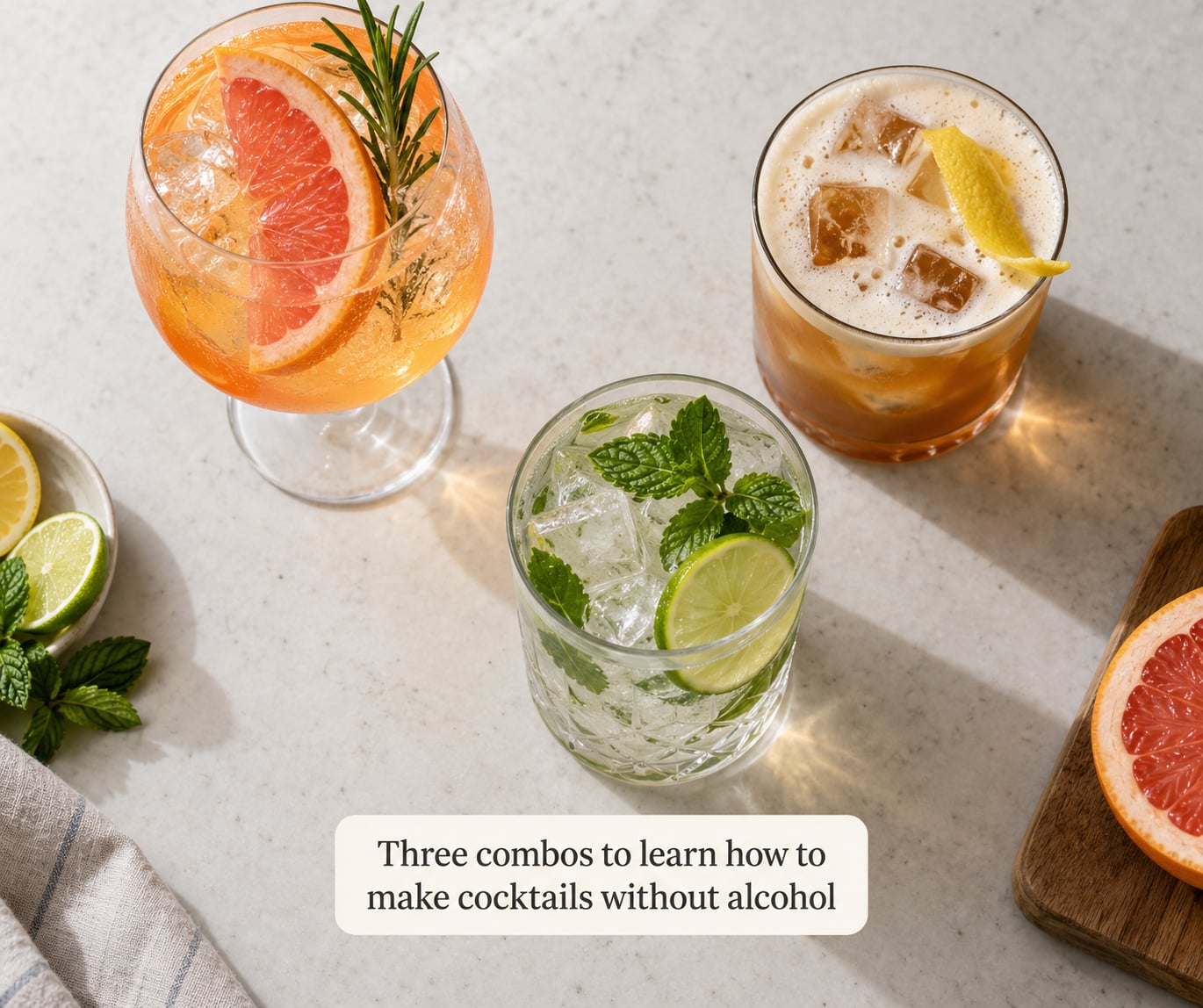
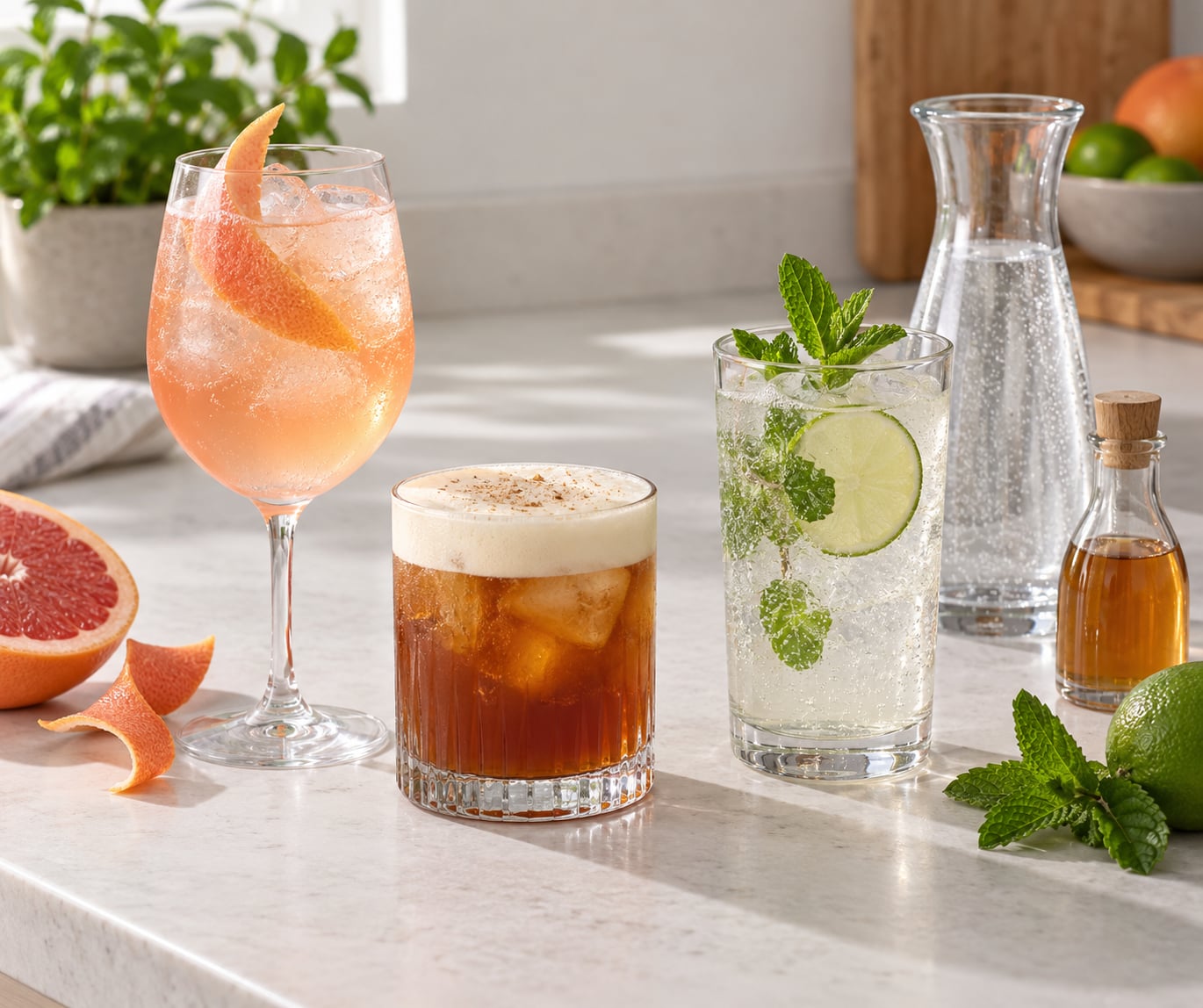
Citrus spritz. 2 oz cold-brew green tea, 1 oz fresh grapefruit juice, 0.5 oz simple syrup, 2 dashes of non-alcoholic bitters, topped with 4 oz dry sparkling water and a grapefruit peel. Build over ice, stir once, and top. This is the drink I make most because it needs four ingredients and takes under a minute.
Tea sour. 2 oz strongly brewed black tea, cooled, 1 oz fresh lemon juice, 0.5 oz simple syrup, 2 dashes of bitters, and an optional quarter ounce of aquafaba shaken into a foam. Shake hard with ice and strain. The tannin in the tea gives you the dry finish a bourbon sour would have, and the aquafaba foam stands in for the egg white.
Tonic drink. 2 oz NA gin or verjus, 1 oz lime juice, 0.5 oz simple syrup, 4 oz dry tonic, and a small handful of mint leaves. Muddle the mint lightly, add the liquids, shake, then top with tonic and a lime wheel. If the mint gets bruised too hard it turns the drink bitter in a bad way, so be gentle.
Those three cover the whole method. Change the base and you get a different classic. Tea becomes a whiskey sour, verjus becomes a Negroni, tonic becomes a gimlet, coconut water becomes a mai tai.
Common Mistakes
It tastes like juice. You skipped bitterness and tannin. Add two dashes of bitters and a splash of strong tea or vinegar, and pull back the juice by half an ounce. Juice has sugar and acid in it and nothing else, so a drink built only from juice has no structure.
It is too sweet. Most recipes call for more syrup than a drink built on spirits needs, because there is no alcohol burn to counter it. Start at a quarter ounce instead of a full ounce, and add acid in place of sugar every time. If you want to keep the sweetness but lose the cloying edge, add a splash of dry sparkling water.
The acidity is harsh. It usually means too much lemon and not enough sugar, or too little dilution. Add a quarter ounce of syrup, or top with sparkling water, before you cut the juice.
It tastes thin or watery. Add body with aquafaba, coconut cream, or a spoon of pulp from a blended fruit. Thin drinks also come from serving over ice that has already melted. Keep the ice cold and solid.
It tastes flat. Either the bubbles are gone or there is no aroma. Top with fresh cold sparkling water right before serving rather than at the start, and add a citrus peel or herb that gives off scent as the drink opens up.
Everything tastes muddy. Muddled herbs release chlorophyll and turn a drink swampy. Press gently, or muddle the herbs separately and add them as an infusion later. Too many strong ingredients is the other cause. Pick one bitter element and one aromatic, not three of each.
You leaned on substitutes too heavily. Some NA spirits are built around juniper and read as gin no matter how much you pour. Using four ounces of one substitute makes the drink taste like the bottle. Treat NA spirits as a base at 2 ounces and let the other ingredients carry the flavor.
Hosting notes. Batching works, but do not add the bubbles early. Mix the base, syrup, acid and bitters for a whole pitcher, chill it, and top each glass with sparkling water at the moment of serving. Budget about 12 ounces of finished drink per guest for a full evening and 8 ounces for a casual get-together.
Storage. Syrups keep in the fridge for a month. An unbubbled pitcher of cocktail base keeps three days. Once you add sparkling water, drink it within an hour. Citrus juice goes stale in flavor within two days of pressing, so squeeze what you need for one evening rather than the whole week.
Mocktail builders on Reddit tend to converge on the same advice: measure by ratio rather than by splash, keep at least one bitter or fermented ingredient in the glass, and treat tea as a real spirit rather than a fallback. That formula holds up.
Frequently Asked Questions
What can I use instead of vodka in a cocktail?
Use cold-brew tea, coconut water, verjus or a botanical non-alcoholic spirit. For a vodka-based sour, cold-brew green tea with a squeeze of lemon and a half ounce of syrup works because the tea tannins mimic the dry finish vodka leaves. If you want a 1:1 swap with no recipe changes, a distilled NA spirit replaces vodka ounce for ounce.
What can I use instead of gin in an alcohol-free drink?
A juniper-forward non-alcoholic spirit is the cleanest swap and works at 1:1 in a gimlet, martini or Negroni. For a budget version, cold-brew green tea plus a splash of tonic water gives you the herbal and slightly bitter quality gin supplies. Add a pinch of salt or two dashes of bitters to build more of that pine-and-pepper edge.
Are nonalcoholic cocktails still sweet?
Most recipes are sweeter than the alcoholic version, because there is no alcohol burn to balance the sugar. You can cut sweetness by using less syrup than the recipe calls for, adding a squeeze of citrus instead, or finishing with dry sparkling water. Aim for a dry finish rather than a sweet one, which is what makes a drink read as a cocktail.
Can I make alcohol-free cocktails ahead of time?
Yes, with one rule: leave the bubbles out of the pitcher. Mix your base, syrup, acid and bitters ahead of time, refrigerate the pitcher, and top each glass with cold sparkling water as you serve it. Undiluted batches keep about three days in the fridge. Never add tonic or soda more than a few minutes ahead or the drink goes flat.
What is the best mixer for a zero-proof spritz?
Dry sparkling water is the best all-purpose choice because it lengthens the drink without adding sweetness. Dry tonic works well if you want a faint bitter edge from quinine. For a spritz built on an amaro substitute, use 3 ounces of soda water to 2 ounces of the base so the bitterness stays readable instead of getting lost.
How do I make a nonalcoholic cocktail taste less like juice?
Add the three things juice does not have: bitterness, tannin and body. Two dashes of non-alcoholic bitters, a splash of strong brewed tea and a quarter ounce of aquafaba or coconut cream will change the texture and the finish immediately. Then reduce the juice by a third and top with sparkling water so the flavors are not all competing at once.
Conclusion
Make the citrus spritz first: 2 ounces of green tea, an ounce of grapefruit juice, half an ounce of simple syrup, two dashes of bitters, and sparkling water on top. Five ingredients, one minute, and it will pass as a real drink rather than juice.
After that, trust the three dials. Cut sugar when it tastes too sweet, add citrus when it tastes flat, and add bitters or tea when it tastes one-dimensional. Once you can adjust those on instinct, you can make cocktails without alcohol from any recipe you already like.