
If you are wondering how to start a skincare routine for men, the answer is three steps done every day: cleanse your face, moisturize it, and apply broad-spectrum SPF 30 or higher. That is a complete routine, not a placeholder. The whole thing takes about three minutes, and you can build it out from there whenever you want.
Most of the hesitation I hear from people starting out is that skincare looks like a twelve-step thing involving serums, essences, and numbered bottles. It isn’t. The social media version assumes you’re already doing everything right.
The order matters more than the brand. Thin watery products go on first, thicker ones last, sunscreen closes out the morning because nothing goes over it.
Table of Contents
What You Need
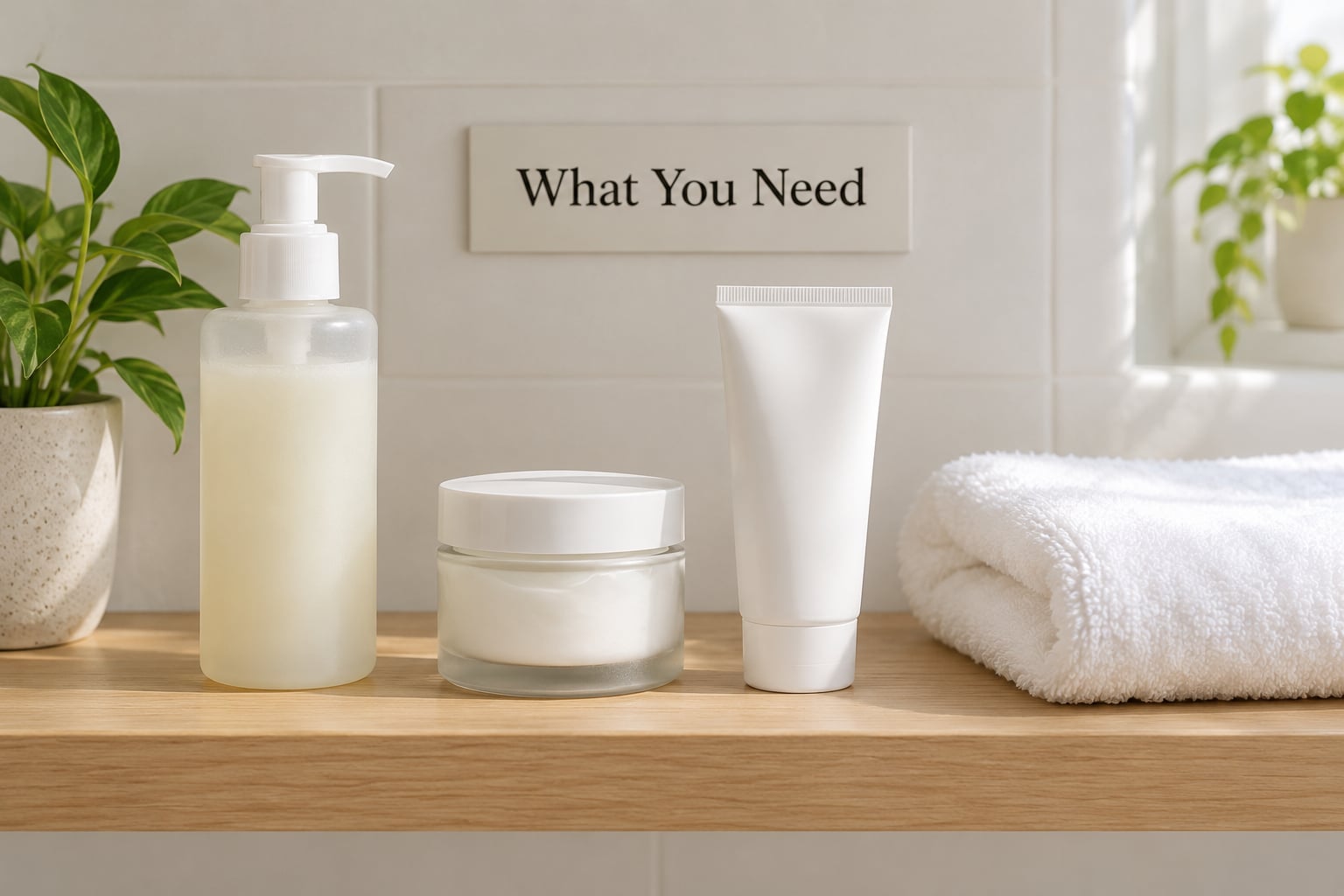
Three products cover a complete routine for almost every man: a gentle cleanser, a moisturizer, and a sunscreen. Everything else is optional and can wait a few months.
The cleanser is for the morning and evening. Its job is to lift oil, sweat, and city pollution off your face without stripping it. Look for a sulfate-free gel or cream wash, fragrance-free if you can get it. Bar soap is not a face cleanser, even the nice-smelling one in your shower caddy.
The moisturizer is for both ends of the day. It slows water leaving your skin and supports the skin barrier. Oily skin needs it more, not less, because oil is not moisture.
The sunscreen is a morning product. Broad-spectrum SPF 30 or higher, meaning it protects against both UVA and UVB rays rather than just the burn you can feel.
Everything else you will see advertised — toner, eye cream, essence, sheet mask, second serum, face oil — is optional. Skincare communities are basically united on this point. One recurring line in r/SkincareAddiction threads is that a cleanser and moisturizer should be the base of everyone’s routine, full stop. Nobody has ever fixed a skin problem by buying a seventh product.
Before you use anything regularly, patch test it. Put a small amount on the inside of your forearm or behind your ear, leave it, and check it over the next day or two. A little reaction there means you should look for a gentler formula before it goes on your face.
Step-by-Step: How to Start a Skincare Routine for Men
Start With a Gentle Cleanser
Wet your face with warm water, not hot. Hot water strips oil from your skin and leaves it less able to hold onto moisture, which is a fast route to the tight, flaky look beginners mistake for progress.
Work a small amount around your face for about thirty seconds. That is long enough. Scrubbing longer with a hot, rough wash is the single most common way a first attempt goes wrong, and it usually feels like the cleanser is working because the tightness afterwards reads as clean.
Do you need to cleanse in the morning? Most men’s skin produces enough sebum overnight that a gentle wash feels right, but plenty of people do fine rinsing with water only and applying moisturizer straight away. Try both for a week and keep whichever leaves your face comfortable.
Here is the comfort test. After you rinse and pat dry, your skin should feel neutral, maybe slightly soft. Tight means the cleanser is too strong. Greasy within an hour means it was too weak, or that you need less of it.
Use a Simple Moisturizer
Apply moisturizer while your skin is still slightly damp. A light layer goes on in about fifteen seconds and you are done. If you are still unsure, that is the right amount for the first month.
Men need moisturizer regardless of skin type. Oily skin gets breakouts partly because oil production ramps up when the barrier is stressed, so removing every trace of oil tends to produce more oil, not less.
Useful qualities: lightweight, non-comedogenic, fragrance-free. Ceramides are a good sign because they are a natural part of the skin barrier. Hyaluronic acid is common too, though on humid summer nights it can leave some people feeling slightly slick.
Move to a heavier cream only when the light one leaves you tight by lunchtime in winter. Chicago’s indoor heating in January dries faces out faster than most people expect, and seasonal switching is normal.
Add Sunscreen to the Morning Routine
Sunscreen goes on every morning, not just on beach days. UVA rays pass through window glass and drive most of the dark spots, uneven tone, and premature lines people notice later, and none of that arrives with a warning.
Use enough to cover the face generously, roughly two finger lengths for the face and neck. Most people underapply and then assume the product failed. The American Academy of Dermatology recommends broad-spectrum, water-resistant SPF 30 or higher as the standard choice.
Reapply every two hours when you are outdoors for long stretches. A combined moisturizer with SPF merges two steps into one if mornings are tight, just check that the number is SPF 30 or above rather than lower.
Sunscreen is the final morning step because anything you put on afterwards can dilute it. That also means it goes on after your moisturizer and after any treatment you add later.
Treat Shaving or Razor Bumps Carefully
Shaving is the most common source of irritation for men who start a routine, and it interacts with every other step. The recurring complaints in shaving forums such as Badger and Blade and Shaving Parlour are consistent: too much pressure, the wrong angle, a dull blade, thin lather, and rushing.
Soften the hair first with warm water and a few minutes of patience. Use a sharp blade and shave with the grain, letting the razor do the work rather than pressing down. Going against the grain is a later move, not a first-month one.
Afterwards, rinse with cool water and apply your moisturizer or a simple fragrance-free after-shave product. Ingrown hairs often come down to shaving too closely too often, so giving the skin a rest day is usually more effective than a stronger product.
If irritation, redness, or bumps persist after a few weeks of gentler technique, stop and speak to a qualified clinician. Persistent facial redness, itching, or pustules are not a skincare problem to keep experimenting on.
Introduce One Additional Product at a Time
Once the basics have run cleanly for a few weeks, you can add something. Not several things. One product, with two to four weeks of observation before you decide whether it works.
Exfoliation is the usual first addition. Two or three times a week, at night, with a chemical exfoliant rather than a rough scrub. Salicylic acid works inside the pore and suits oily, acne-prone skin. Glycolic acid suits dull or uneven texture. Skip scrubs with gritty particles entirely.
Some people notice a temporary flare-up in the first two weeks when adding an active. That is often described as purging, where skin clears faster than it can push things out. It differs from a bad reaction in that it fades, whereas burning, swelling, or a rash spreading past where you applied the product means stop.
Niacinamide is the gentler first serum for most beginners because it tolerates daily use. Vitamin C and retinol are worth adding later, and retinol especially deserves a slow start at night, two or three nights a week.
If you are on prescription retinoids, hormone therapy, or any medication that affects skin, ask your prescriber before adding actives. That combination is not something to self-manage.
Common Mistakes
Using the shower bar on your face. Body bars are formulated for a larger, tougher surface. Switch to a gentle face wash and give it two weeks before judging anything else.
Washing with hot water and long passes. The tightness that feels like a clean face is barrier damage in progress. Lukewarm water and thirty seconds is the standard.
Over-exfoliating. Daily exfoliation is the fastest route to a damaged barrier, and beginners almost always move too fast on this one. Two or three times weekly is plenty, and going daily is a bad idea.
Buying everything in one order. The classic version is cleanser, then six new actives, then no moisturizer. Use what you have, replace nothing until it runs out, and add at most one new thing a month.
Skipping sunscreen. The single biggest visible difference over a year comes from daily SPF, and it is the step people drop first when the routine feels long.
Changing everything after one bad week. A rough patch after adding an active is information, not failure. Note what happened, pause that one product, and let the base routine continue undisturbed.
Two habits do most of the work: keep the routine short enough that you never skip it, and judge it on weeks rather than days. Consistency beats complexity, and it is not close.
Frequently Asked Questions
What is the simplest skincare routine for men?
Cleanse, moisturize, and apply broad-spectrum SPF 30 or higher every morning. In the evening, cleanse and moisturize again. Those three products are a complete routine, not a starting point, and they are enough for most men for the first year of consistency.
Should men use skincare products every day?
Yes, and daily use matters more than any single product. Cleansing twice a day, moisturizer morning and night, and sunscreen each morning gives your skin the least change to adjust to. Skin responds to repetition, so a simple routine done daily beats an elaborate one used occasionally.
How many skincare products does a beginner need?
Three. A gentle cleanser, a moisturizer, and a broad-spectrum sunscreen cover cleansing, hydration, and protection. Add one optional product at a time after a few weeks of steady use, and give each one two to four weeks before deciding whether it works for you.
Is sunscreen necessary for men?
It is, and daily use is the step that shapes how your skin looks years later. UVA and UVB exposure drives dark spots, uneven tone, and premature lines, and much of it happens through window glass on ordinary days. Broad-spectrum SPF 30 or higher is the standard the American Academy of Dermatology recommends.
How often should a man exfoliate his face?
Two or three times a week at night is plenty, and that is once the basics are working well. Use a chemical exfoliant such as salicylic acid for oily skin or glycolic acid for uneven texture, and skip gritty scrubs. Daily exfoliation strips the skin barrier and makes irritation more likely.
What should I do if skincare causes irritation?
Stop the product you most recently added and go back to your cleanser, moisturizer, and sunscreen only. Stinging, redness, flaking, or swelling that spreads beyond the application area are signs to stop rather than adjust. If it does not settle within a week or two, see a qualified clinician.
Conclusion
Start with three products: a gentle cleanser, a moisturizer, and a broad-spectrum SPF 30 or higher for the morning. That is how to start a skincare routine for men without overcomplicating it. Run them daily for a month before adding anything, and when you do add something, change one variable at a time so you know what caused any reaction.
If a skin problem persists despite a simple, consistent routine, see a qualified clinician rather than buying another product. That is the point at which advice stops being useful and diagnosis starts.