How to grow out your hair gracefully comes down to one habit: keeping the shape intentional while the length catches up. Hair grows roughly half an inch a month, and it does not grow evenly — the back of the head races ahead while the sides and top lag behind. A maintenance trim every 8 to 10 weeks, plus a routine that treats your scalp and your ends, is what keeps the in-between months looking like a haircut instead of a phase.
Most people quit in month four, weeks before the length they wanted. Almost always it is not the appearance that ends it. It is the comments, the constant styling, and the slow loss of access to a stylist who understood what they were doing.
This guide works for every texture and every starting point: growing out a pixie or a buzz cut, growing out a haircut you regret, growing out colour you are tired of, or adding length as part of a transition. The stages overlap, so read the length you are at rather than the one you are aiming for.
Table of Contents
What You Need — Tools and Products for Growing Out Hair Gracefully
The kit is short, and most of it you already own. What changes during a grow-out is not the number of products but which ones you reach for: the creams and pastes that suit a two-inch pixie will clump shoulder-length hair into strings.
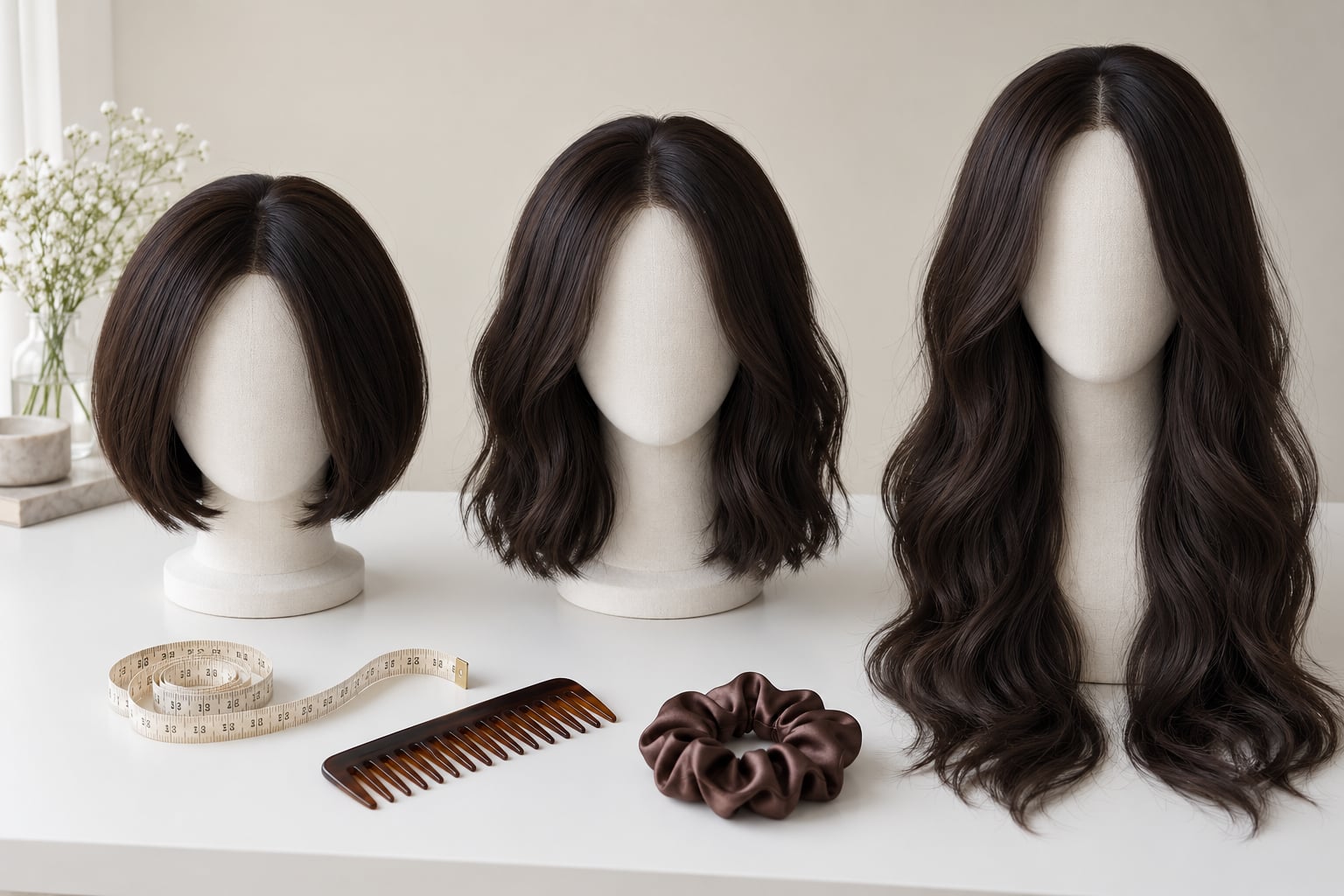
- Shears or clippers for neckline and edge cleanup between salon visits, plus a small mirror so you can see the back.
- A wide-tooth comb for detangling curly and coily hair straight from the ends upward. A paddle brush is fine for straight and wavy lengths.
- Leave-in conditioner on the mid-lengths and ends. This is the one product that does more work than anything else in the list.
- Heat protectant if you use a blow dryer, flat iron, or curling wand at all, even occasionally.
- Satin or silk pillowcase, or a bonnet to cut overnight friction on the ends and hairline.
- A satin scrunchie or claw clip for holding the short, awkward length without creasing it or pulling at the scalp.
- A styling cream, matte paste, or sea salt spray for texture and separation at short lengths.
- Dry shampoo so you can stretch your wash days as the hair gets heavier.
Keep it simple. Add something only when a specific stage demands it, and patch-test anything that touches your scalp or neckline for 24 hours before you use it properly.
Step-by-Step: How to Grow Out Your Hair Gracefully
1. Set a realistic growth plan
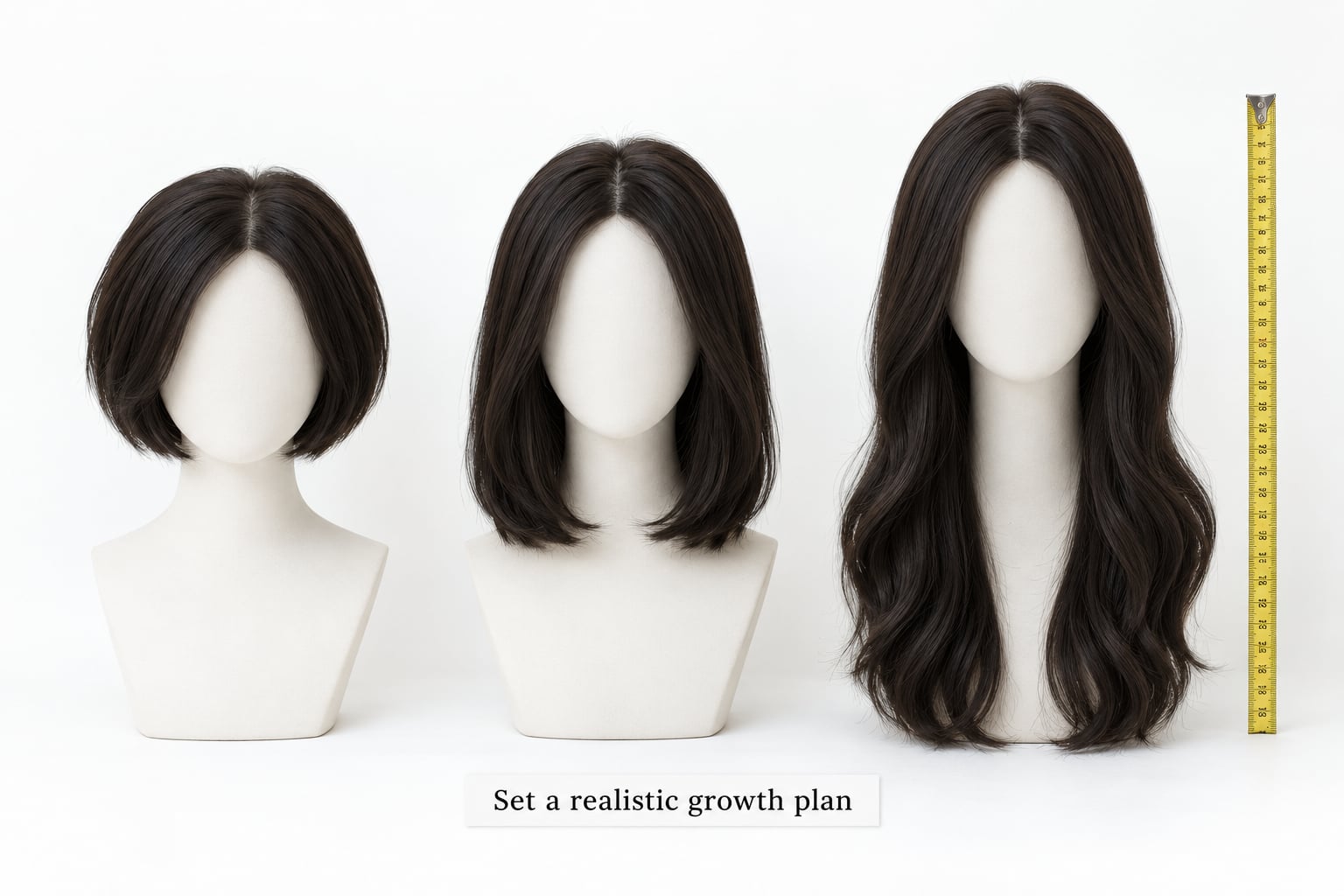
Start by measuring what you have now, from the scalp to the ends, and writing the number down. Then decide which of the two goals you are chasing: a specific length, or a specific shape you want to maintain indefinitely.
People who struggle with a grow-out usually did not choose. They went along with whatever the length became. Aiming at shoulder length from a buzz cut is roughly two years of work; aiming at “hair that looks intentional” can be three months.
Take one photo every month, in the same spot with the same light, and put them in a single album. Progress photos kill the feeling that nothing is happening, which is the most common reason people reach for the scissors early. You can tell the plan worked when you can name your length in weeks rather than guessing in months.
2. Keep the scalp and hairline healthy
Hair only grows from scalp you are not fighting. Wash when the scalp is dirty rather than on a fixed schedule, use lukewarm water, and massage the scalp for a minute or two while your conditioner sits in. Co-washing works well for many curly and coily textures and costs far less than a salon wash-and-go every week.
The hairline takes the most damage during a grow-out because it is where tension concentrates. Any style that pulls at it — tight ponytails, cornrows right at the hairline, elastic snapped back hard — should come out of your rotation until you are past shoulder length.
Persistent itching, flaking, tenderness, or sudden shedding is not a grow-out problem, and no amount of styling advice will settle it. See a dermatologist for those. Be equally cautious about supplements and growth products: claims outrun the evidence, and a blood test is a better place to start than a shelf full of oils.
3. Protect the hair during growing-out styles
Pick styles that your density and texture can actually support. Fine straight hair will not hold a high ponytail for hours without tension, and 4C hair will not survive the same repeated combing routine as 2C hair. Working within your own texture protects length better than copying a style that fights it.
Friction is the quiet one. Cotton pillowcases, constant tucking behind your ear, and rubbing a towel back and forth all create breakage that shows up as thinning ends months later. Sleep on satin, blot your hair instead of scrubbing it, and let the ends rest on your shoulder rather than on a collar.
At the awkward length, control comes from restraint, not from product. A loose claw clip or a spin pin holds a bob-length shape without a single crease, which is why that advice shows up over and over in grow-out threads.
4. Style each transition stage differently
Short lengths, roughly under three months, want texture and separation. Sea salt spray scrunches and dries into place; a matte paste adds hold without shine; a slick-back with a light gel is the fastest route to looking deliberate rather than unfinished.
Medium lengths are the hardest stage. This is where the sides catch up with the back and the outline goes shapeless. Blow-drying with a round brush trains the hair to fall one direction, which does more for it than any product, and a soft fringe or face-framing pieces pull attention to your face instead of the length.
Longer lengths can finally hold heatless curls, a brushed-out wave, or a low bun. Curl patterns will re-appear at the roots as relaxed or colour-treated hair grows out unevenly — leave them, or get a blowout done to blend them. On coily and textured hair, budget far longer than the usual estimate; r/Naturalhair posters consistently describe shrinkage and end retention as the reason their timeline stretches well past the average.
5. Limit heat, tension, and chemical stress
Heat protectant every single time, including on the blow-dry you consider harmless. It goes on damp hair, before the tool, and it is what stands between your ends and months of damage that a trim cannot fully repair.
Detangle wet hair with a wide-tooth comb, starting at the ends and working upward in small sections. Forcing a tight comb through dry hair from the top is the fastest way to break the exact length you are trying to keep.
Colour is where grow-outs get complicated. Box dye grows out on a hard line that shows up precisely when the cut is most awkward, and bleach leaves the regrowth band weaker than the rest. Ask a colourist about blending, balayage, or a low-maintenance move to your natural shade, and leave at least a few months between any two colour services. Grey and silver grow-outs follow the same logic: a toner or a gradual blend beats a hard line.
6. Maintain the shape without overprocessing
Small trims every 8 to 10 weeks remove split ends before they travel up the shaft and break off on their own. To be direct about it: trimming does not make hair grow faster. It removes the damaged part so you keep more of the length you actually grew, which is the same number at the end either way.
Book maintenance trims, not full cuts, and say so at the desk. r/CutYourOwnHair threads are full of people who sat down at an unfamiliar barber who assumed a full cut and took several inches off a grow-out they had spent a year building.
Find someone who works regularly with your texture and with the length you are heading toward, and book a short consultation first if you can. For trans and nonbinary readers growing hair out as part of a transition, that conversation is worth having early — posters on r/trans describe the hard part of a grow-out as being misread in public, not as looking unkempt, and a stylist who already understands the goal saves months of explaining.
Common Mistakes
Comparing your timeline to someone else’s. r/FierceFlow answerers report roughly two to two and a half years to reach a length that feels fully grown in, and almost nobody posts the months they hated it. Judge your progress against your own photo album, not against a highlight reel.
Cutting too much in one visit. The urge to snap back to short is strongest right when the length is at its least flattering. Ask for a quarter inch off the ends and nothing else.
Wearing tight styles through the in-between length. Tension at the hairline is the most permanent damage a grow-out causes, and it does not reverse when you finally reach your goal length.
Keeping the products you had at the short stage. Heavy creams suited to two inches of hair will clump longer lengths into tangles. r/NoStupidQuestions first-timers are warned about exactly this: the routine changes more than people expect.
Skipping the protective basics. Leave-in, heat protectant, and a satin surface on the pillow cost less than one salon visit and prevent most of the split ends you are trying to trim off.
Treating split ends as a growth problem. Damaged ends look shorter than they are, which reads as a stalling grow-out. That is a repair job, not a growth one, and no supplement fixes it.
Frequently Asked Questions
What is the awkward stage of growing out hair?
It is the stretch where your hair is too long to style short and too short to style long, usually somewhere between month three and month six. The back of the head catches up before the sides and top, the outline loses its shape, and the hair sits at an unflattering angle. Nothing is wrong with your hair; the length simply has nowhere to go yet.
How long does the awkward stage last when growing out hair?
Most people describe the genuinely hard stretch as three to six months, with the worst point around month four. A full grow-out to a length that feels finished usually takes closer to two years for straight hair, and longer for coily and textured hair because of shrinkage. Managing the stage actively with trims and styling tends to make it feel much shorter than waiting it out.
How do I keep my hair looking good while it grows out?
Book a maintenance trim every 8 to 10 weeks so the outline stays clean, use a leave-in conditioner and heat protectant on the mid-lengths and ends, sleep on satin or wear a bonnet, and style the current length on purpose rather than waiting for a length you do not have yet. Texturizing products and a round brush during a blow-dry do more for short and medium stages than anything else.
Why is my hair growing out unevenly?
Because hair does not grow at one speed across your head. The nape and the back of the scalp typically grow faster and denser than the top and sides, which produces what people call the mullet effect: a heavy, dark nape with short, thin sides. Blunt cuts and some textures exaggerate it, while tapered shapes and textured products disguise it well.
What should I tell my stylist when I am growing out my hair?
Say the words maintenance trim, and say how much: a quarter inch off the ends, neckline and edges only. Tell them your target length and ask what they would change at that length. If your current stylist does not work with your texture, or you are going somewhere new, book a consultation first so nobody assumes a full cut.
Does trimming hair make it grow faster?
No. Trimming changes how much length you keep, not how fast new hair arrives. Split ends travel up the shaft and break on their own, and a regular dust trim removes them before that happens, so the hair you grew stays attached and your final length is longer. That is the entire benefit, and it is worth having on its own.
Conclusion
Three things to do this week. Photograph your hair at its current length in decent light, and start that album. Get a scalp and ends routine in place, even a basic leave-in and a satin pillowcase. Then choose a style that suits the length you actually have right now, and book a maintenance trim for eight to ten weeks out.
That is how to grow out your hair gracefully — not by waiting for a perfect length, but by making the current one look like a decision.