To prepare for your first piercing, eat a real meal a couple of hours beforehand, drink plenty of water, skip alcohol and caffeine, get an ordinary night’s sleep, and wear clothing that gives the piercer easy access to the placement. Tell them if you are nervous or have fainted at a previous appointment, because they can plan around it.
The piercing itself takes under a minute. Almost everything that makes it memorable happens before you walk through the door, so this guide covers the paperwork, the clothing, the questions worth asking, and the warning signs that mean a new piercing needs a professional.
Table of Contents
- What You Need
- Step-by-Step: How to Prepare for Your First Piercing
- 1. Research the piercer and studio
- 2. Decide on the placement and jewelry
- 3. Ask questions during the consultation
- 4. Prepare your body and routine
- 5. Attend the appointment with consent and attention
- 6. Follow the piercer’s aftercare instructions
- 7. Know when healing needs professional help
- If you are nervous, prepare the mental side too
- Finding a piercer who gets you
- Common Mistakes
- Frequently Asked Questions
- Should I eat before getting my first piercing?
- Can I bring a friend to my piercing appointment?
- How long does a first piercing appointment usually take?
- Is swelling and tenderness normal after a piercing?
- How long should I wait before changing my jewelry?
- When should I contact a doctor about a new piercing?
- Conclusion
What You Need
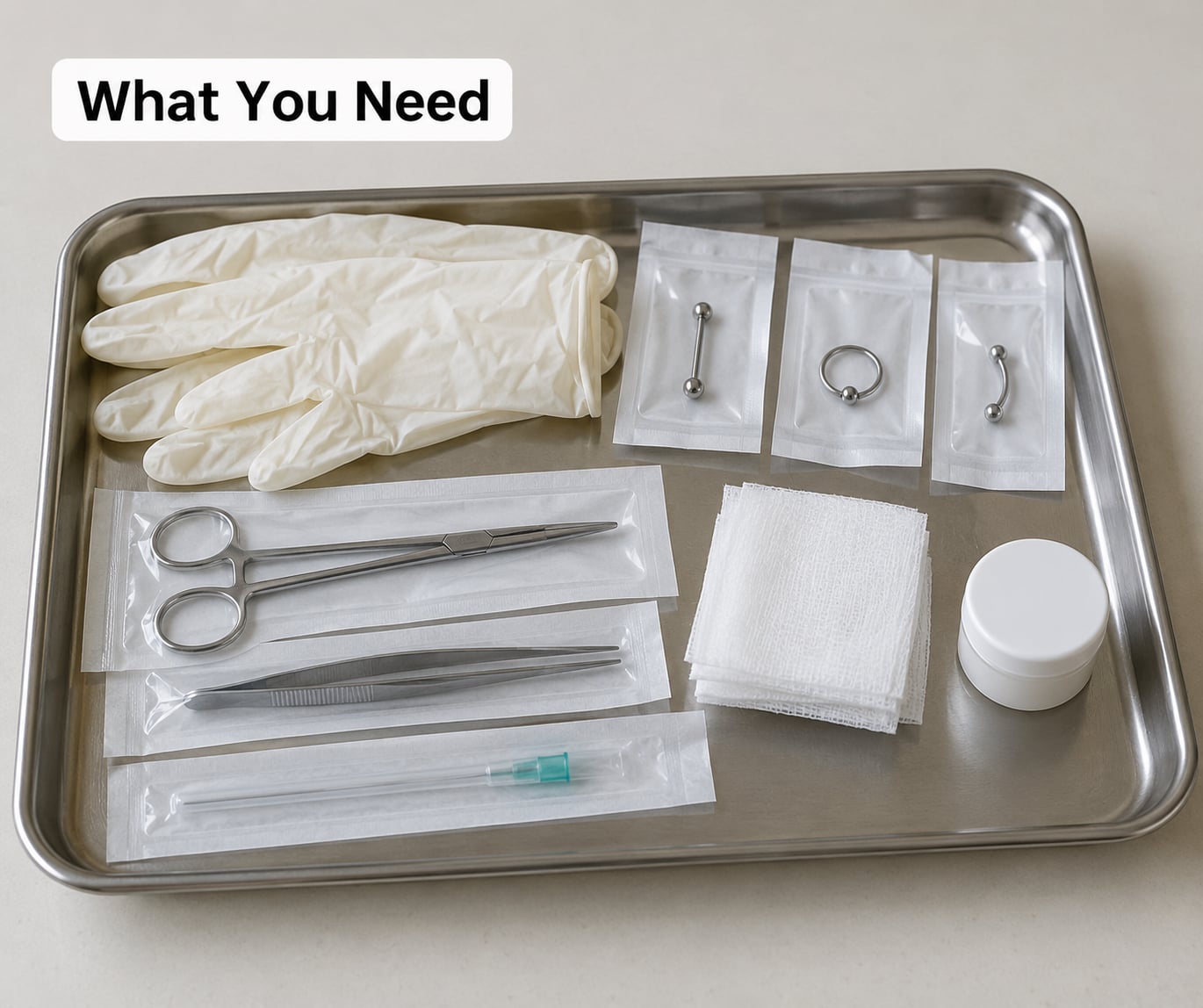
Start with the person doing the work. Look for a professional who can explain their training, their sterilization process and their jewelry standards without being prompted. Training bodies such as the Association of Professional Piercers publish membership standards you can check, and many regions have local licensing rules worth looking up.
Next, decide on the placement before the day. You need somewhere specific, jewelry approved for that spot, and at least one idea about sizing.
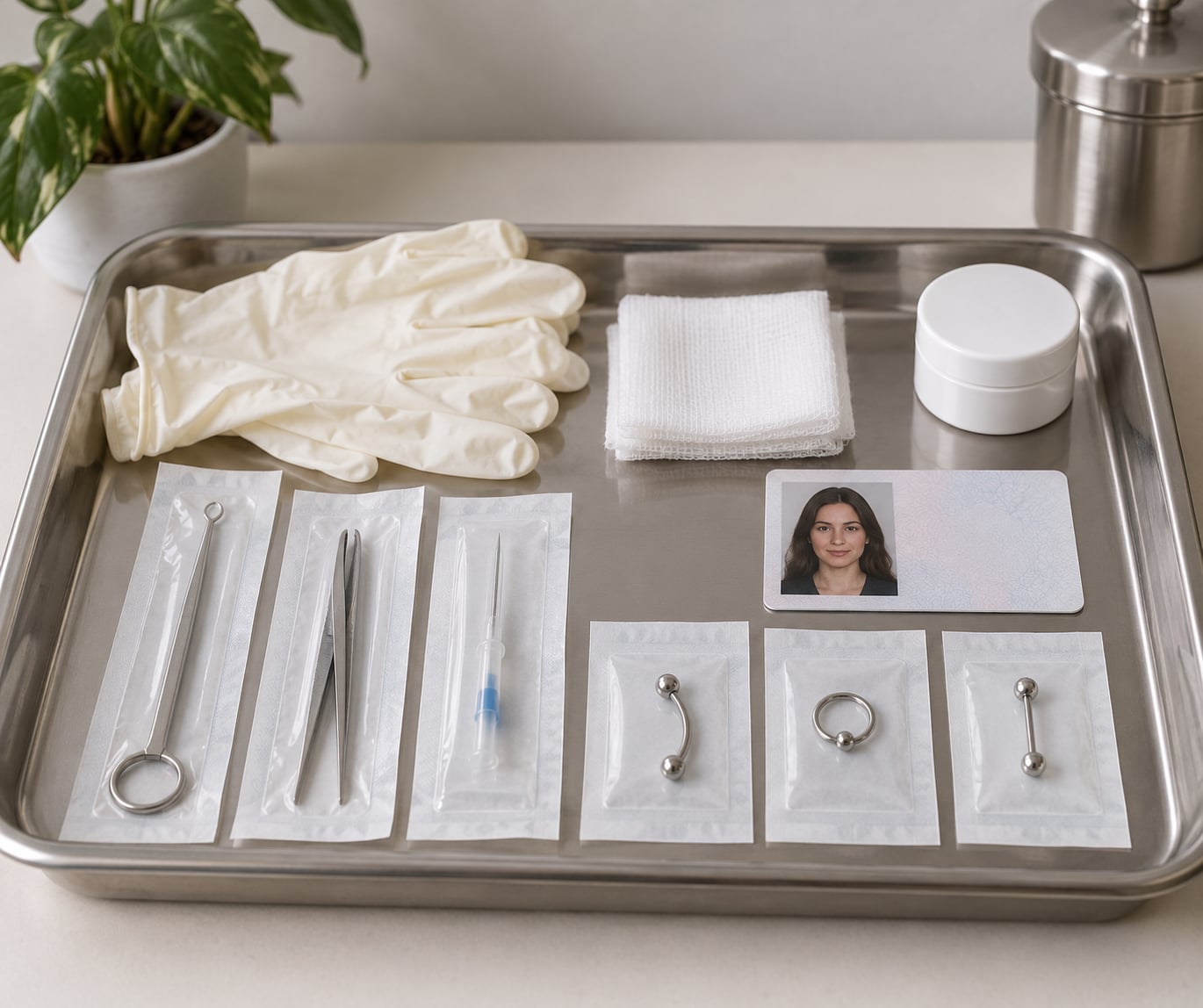
Bring a government-issued photo ID. If you are under 18, expect a parental or guardian consent requirement, and call ahead to ask exactly what form they need and whether it has to be notarized.
Dress for access. Every placement has a clothing problem attached to it, and figuring it out in the studio chair is the wrong moment.
Have payment sorted, including whatever the studio expects for a tip. Tipping norms vary widely, so ask or check the studio’s own guidance rather than guessing.
Bring a support person if you want one. Many studios allow a friend in the room, and having someone there means someone can flag to the piercer that you are going pale before you can say anything yourself.
Plan your aftercare supplies before the appointment. Having sterile saline or a 0.9% sodium chloride wound wash at home means you can start on the schedule your piercer gives you the same evening.
Be ready to disclose health details. Tell the piercer about medications, allergies, skin conditions, prior piercing problems, pregnancy, or any history of fainting. That conversation is ordinary and clinical, not something to be embarrassed about.
Step-by-Step: How to Prepare for Your First Piercing
1. Research the piercer and studio
You are looking for someone whose sterilization process you could describe afterwards. Most reputable studios will happily walk you through it: single-use sterile needles opened in front of you, hands cleaned and gloves changed, surfaces disinfected between clients.
Walk away from anyone who cannot explain how their tools are sterilized, who reuses anything that should be single-use, or who pressures you into booking on the spot. A piercing gun that shoots a pre-sterilised cartridge is not the same thing as a needle, and most professionals in this field will tell you so themselves.
Check a portfolio before you go. Look for clean technique and healed work rather than dramatic or unusual placements. Read reviews that describe the experience, not just the result, and check local licensing rules where they exist.
You will know the research is done when you could describe the studio’s process out loud without guessing.
2. Decide on the placement and jewelry
Think about how the placement lives in your actual week. Which side do you sleep on, what does your work shirt or helmet or collar touch, does the placement get grabbed during sport, and does it change how you dress?
Also think long term. A placement you cannot hide at work is a different commitment than one you wear openly, and switching a jewelry style later is easier than moving the piercing.
Let the piercer recommend the starting size and material. Implant-grade titanium and surgical steel are the two most common approvals, and the diameter that fits a fresh earlobe is rarely the diameter you would choose later. NIOSH guidance and Association of Professional Piercers standards both point toward a sterile single-use needle over a gun.
You will know this stage is complete when you have a placement in mind and you are not planning to argue with the piercer about jewelry.
3. Ask questions during the consultation
The consultation is where a first-timer’s questions actually belong. Useful ones cover what tool they use and why, what jewelry material they are inserting, what the sensation will feel like, roughly how long the area takes to settle, how the aftercare works, what a touch-up involves, whether the fee includes the jewelry, and what happens if you develop a problem.
Ask about your own health too, without asking for a diagnosis. Medications, blood-thinning prescriptions, allergies, skin irritation, pregnancy and past fainting all change what a careful piercer wants to know before they start.
If you want the studio’s contact details before you leave, take them. A piercer who is hard to reach after the appointment is a warning sign about the follow-up you would get if something went sideways.
4. Prepare your body and routine
Eat a proper meal one to two hours before. This is the single most useful thing you can do, because an empty stomach is one of the main drivers of feeling lightheaded and faint during a piercing. Knowing how to prepare for your first piercing physically is mostly this one habit, repeated on the day.
Drink water steadily through the day before and on the morning of the appointment. Being dehydrated makes everything harder, including sitting still through the anticipation.
Skip alcohol for at least the day before. It thins the blood, complicates communication while you are nervous, and can interfere with healing.
Coffee, energy drinks and nicotine are worth skipping too. Stimulants raise anxiety and heart rate, and caffeine affects hydration, which works against everything you want on a stressful appointment.
If you take aspirin, ibuprofen or another anti-inflammatory regularly, do not stop a prescribed medication on your own. Ask your prescriber or pharmacist about it in advance, and tell the piercer what you take on the day. The same goes for supplements such as fish oil or high-dose vitamin combinations.
Get ordinary sleep the night before and shower. Being clean and rested is part of the preparation, not a detail to skip.
5. Attend the appointment with consent and attention
A responsible appointment starts with placement. The piercer marks where the piercing will go, checks the anatomy against your request, and confirms that this is what you want before any tool comes out.
Then hand hygiene, gloves, and a clear verbal consent check. If you want to stop, say so. A good piercer will pause, and pausing is not a failure on your part or theirs.
What you will feel varies. People describe a sharp quick pressure for an earlobe, and a longer burning stretch for cartilage, the septum or an oral placement. You will also feel warmth and heat around the area as blood flow increases.
The whole appointment usually runs about 15 to 20 minutes, and the piercing itself is a small part of that. The rest is paperwork, the consultation and the aftercare briefing, which is the part worth listening to.
If you feel faint, say so immediately. Say it before you think you are being dramatic, because the window for saying it early is short.
6. Follow the piercer’s aftercare instructions
Use what your piercer recommends, and ask if you are unsure. Most professionals will tell you to clean with sterile saline or a 0.9% sodium chloride solution rather than harsh products.
Avoid hydrogen peroxide, alcohol-based antiseptics and unverified home remedies. Forums repeatedly make this point: people debate between saline, nasal spray and wound wash, but the products nobody recommends are the ones that irritate tissue.
Leave the jewelry in place unless a professional tells you otherwise, and do not twist or spin it. Touching it to check is the most common avoidable irritation.
Protect the area during exercise, travel and sleep. A piercing pillow or a clean folded towel helps when you sleep on the affected side, and pools, hot tubs and lakes are off the list until a professional says otherwise.
Showering on day one is generally fine. Let water run over it, keep the area free of product, and pat dry rather than rubbing.
7. Know when healing needs professional help
Some early sensations are ordinary. Expect tenderness, some swelling, mild heat, a small amount of clear or pale-yellow fluid, and itching as the skin settles. That last one catches people out, because itchiness feels like it should mean something is wrong.
Contact the piercer or a healthcare professional if redness spreads beyond the area, pain increases instead of easing, swelling worsens, discharge becomes thick or foul-smelling, or a fever shows up. A jewelry problem, such as a piece that is embedded or stuck, also needs a professional rather than you.
Seek emergency care for difficulty breathing, a rapidly worsening reaction, or any symptom that is severe and fast. A new piercing is an open wound in the skin, and the same general rule as any wound applies: watch it, and get help early.
If you are nervous, prepare the mental side too
Needle phobia has a clinical name, belonephobia, and it is far more common than people admit. Naming it to yourself before the appointment takes some of its power away, because the anticipation is usually the worst part.
Breathing is the practical tool. Breathe in for a count of four and out for a count of six, keeping the exhale longer than the inhale. Slow exhalation supports the parasympathetic nervous system, which is the part of you that calms down. People who faint at blood draws often report that a longer exhale is what keeps them upright.
Grounding works alongside it. Name five things you can see, four you can feel, three you can hear. Feet flat on the floor or back against a wall gives your body something to push against.
Ask to lie down rather than sit. Lying flat is the single simplest protection against a vasovagal response, and no studio will think less of you for asking.
And expect the emotional aftermath. Crying, shaking hands, an adrenaline comedown and even a delayed anxious reaction hours later are all common, and none of them mean you did the wrong thing.
Finding a piercer who gets you
For trans and non-binary clients, or anyone who has felt talked over in a medical setting, the fit of the practitioner matters as much as the portfolio.
Read reviews with an eye for how people were treated rather than what they got pierced. Ask directly whether the studio works with the pronouns and anatomy you are expecting to be asked about. A good answer is a matter of course, not a negotiation.
You are also entitled to basic privacy. Asking for a drape, a closed door, or a specific position during the consultation is a reasonable request, and a professional who reacts badly to it is telling you something useful about future appointments.
Common Mistakes
Choosing on price alone. The cost of a piercing says nothing about the training behind it. Research the sterilization process instead, and let the portfolio do the rest of the work.
Arriving on an empty stomach. This is the most avoidable cause of feeling faint and it is also the most common. Eat, hydrate, and eat again if the appointment runs long.
Wearing clothing that covers the placement. A high collar, a hood or tight waistband will have to come off in front of a stranger. Choose what you would be comfortable adjusting before you arrive.
Skipping the consultation because the piercing is quick. The consultation is where your jewelry and placement get settled, and rushing it is how people end up with a piercing they did not really want.
Switching jewelry too early. Fresh piercings are often swollen, and jewelry that fit at the appointment may not fit a few days later. Leave that to your piercer.
Twisting the jewelry to check it is clean. It moves the jewelry against tissue that is trying to settle. Look, do not fiddle.
Treating every ache as normal. Mild tenderness and warmth in the first days are expected. Increasing pain, spreading redness, fever or foul-smelling discharge are not.
Trying to prepare for the pain and forgetting to prepare for the paperwork. ID, consent requirements for minors and payment are boring, and they are also the things that will hold you up at the counter.
A calm appointment is mostly built the day before. A real meal, water, an early night and honest nerves will do more for your experience than any breathing trick at the chair.
Frequently Asked Questions
Should I eat before getting my first piercing?
Yes, a normal meal about an hour or two beforehand is the single most useful thing you can do. A fresh piercing takes seconds, but sitting through the anticipation can last much longer, and an empty stomach makes lightheadedness far more likely. Eat something with some substance to it, drink water alongside it, and tell your piercer if you feel off during the appointment. Most studios will point you to a nearby cafe if you have not managed to eat.
Can I bring a friend to my piercing appointment?
Most studios allow one support person in the room, though a few ask you to check in advance. It is worth calling the day before. A support person is genuinely useful for a first timer, because they can watch your face and tell the piercer you are going pale before you have the words for it. If you would rather go alone, that is completely fine, just let the piercer know your preferences so they can position you lying down instead of seated.
How long does a first piercing appointment usually take?
Budget about 15 to 20 minutes for a first visit, and more if you are getting several piercings or want a long consultation. The piercing itself takes seconds. The time goes on paperwork, talking through placement and jewelry, marking the spot, and the aftercare briefing at the end, which is the part you should not skip. If you are getting multiple piercings in one session, ask the studio in advance how they sequence them so you are not surprised by how long you are sitting there.
Is swelling and tenderness normal after a piercing?
Yes, for the first few days. Mild swelling, tenderness, warmth, a little clear or pale-yellow fluid and itching as the skin settles are all ordinary, and they usually settle within a week or so. What is not ordinary is redness spreading beyond the area, pain that gets worse instead of better, thick or foul-smelling discharge, or a fever. If you are unsure which category you are in, message your piercer with a photo or contact a healthcare professional rather than guessing.
How long should I wait before changing my jewelry?
Keep the jewelry your piercer inserted in place until they tell you otherwise, and ask them directly for a timeline rather than guessing. Fresh piercings are often swollen, so a piece that fits comfortably on day one may not fit by day five, and forcing a change irritates tissue that is still settling. When the time comes, your piercer should be the one removing the original jewelry and fitting the new piece, not you at home on your own.
When should I contact a doctor about a new piercing?
Contact a healthcare professional if redness spreads beyond the piercing, pain increases over several days, swelling worsens, discharge becomes thick or smells unpleasant, a fever appears, or the jewelry becomes embedded or stuck. Treat it as a wound and do not wait it out, because most problems are easy to sort early and harder later. Seek emergency care for difficulty breathing or rapidly worsening symptoms. When in doubt, message your piercer as well, since they will know your placement well.
Conclusion
Start with research. Spend the time finding a professional whose sterilization process, consultation style and manner you can vouch for, then decide on a placement and let them recommend the jewelry and starting size.
On the day, eat, hydrate, keep caffeine and alcohol off the table, wear clothing that gives easy access, bring photo ID, and tell your piercer if you are nervous or have fainted before.
Working through how to prepare for your first piercing in the right order is what makes it calm: research first, then the paperwork, then the body and the nerves. That order has not changed much in 2026, and it is still the one that gets people through the chair comfortably.
Afterwards, follow their aftercare schedule rather than anything you have read in a forum thread, and get in touch early if you see a warning sign. Asking questions, changing your mind mid-consultation and taking a pause are all normal parts of a safe process, not something to apologise for afterwards.
Nobody gets a second first appointment, so take your time finding the right person and then turn up fed, rested and honest about how you feel.