Shaving irritation comes down to friction, and friction comes from a dull blade, dry skin, too much pressure, or too many passes. Soften your hair with warm water, lay down a genuinely slippery gel or cream, and shave with light short strokes in the direction the hair grows. Most people who struggle with redness and bumps are doing three of those four things wrong, and fixing them takes about a week of consistent practice.
It is also worth naming what you are dealing with, because the terms get used interchangeably. Razor burn is inflammation from friction and heat: red, warm, slightly tight skin that shows up within minutes of the shave. A razor bump is a small raised spot that appears days later where a hair regrew and curled into the follicle. Ingrown hairs are the same thing with a visible hair trapped in the irritated bump. Different problems, same root causes, different fixes.
One more thing before we start: irritation is not just uncomfortable. Skin that stays inflamed from repeated shaving develops ingrown hairs, gets darker or lighter where it has healed unevenly, and slowly loses the ability to hold moisture. A bad routine gets worse every month, not better. Getting how to shave without irritation right is mostly about removing variables, and the routine below removes them one at a time.
Table of Contents
- What You Need
- Step-by-Step: How to Shave Without Irritation
- Common Mistakes
- Frequently Asked Questions
- How often should I shave if I have sensitive skin?
- Is shaving cream or shaving gel better for sensitive skin?
- What should I do about razor burn right after shaving?
- Should sensitive skin ever shave against the grain?
- Why does my skin itch a few days after shaving?
- When is shaving irritation a problem I should take to a doctor?
What You Need

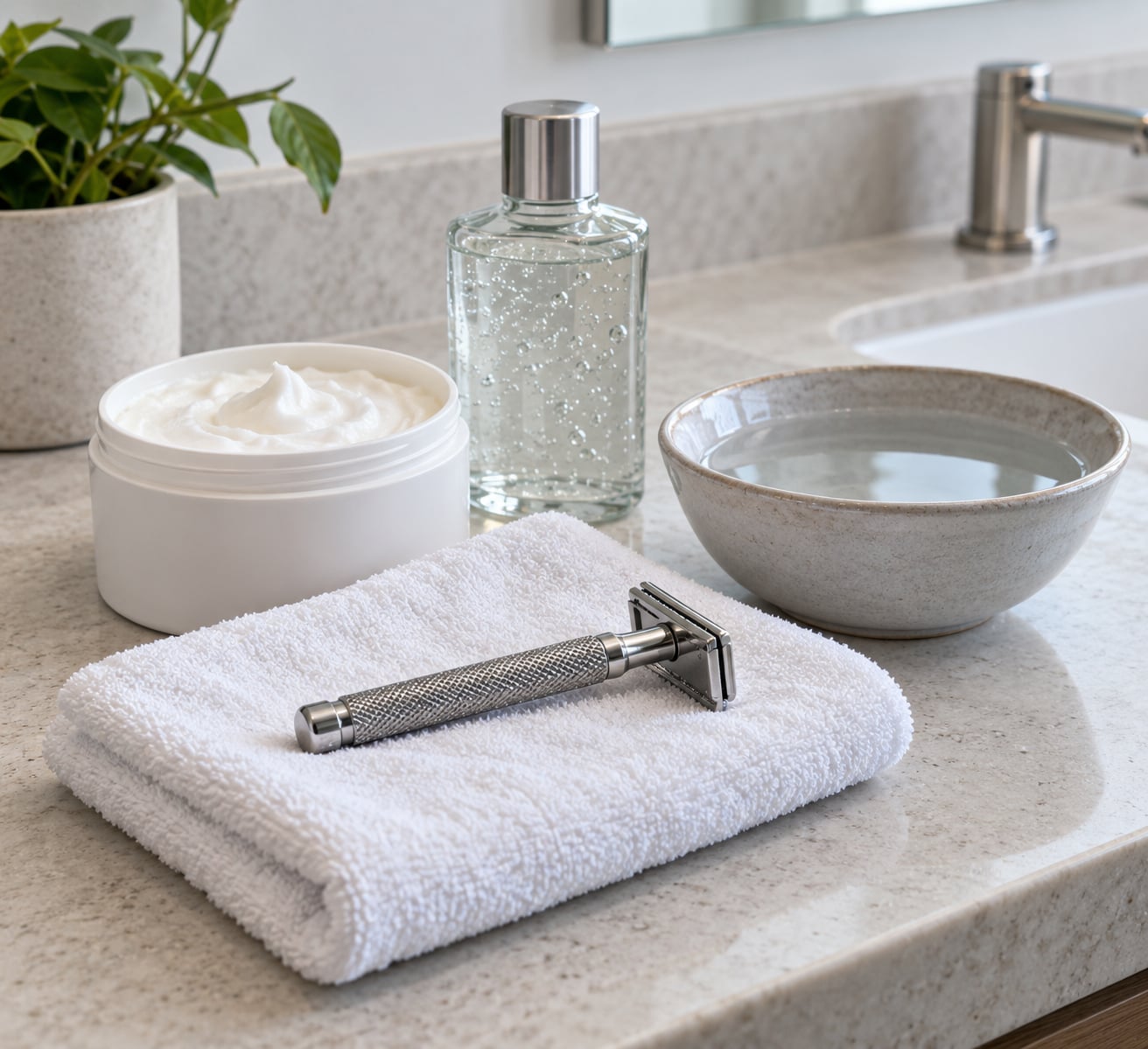
You need six things, and all of them are ordinary. Anything marketed specifically as burn relief is a treatment for the problem you are trying to avoid in the first place.
- A sharp blade or foil head. Replace a cartridge roughly every five to seven shaves and a disposable blade every three to four. A dull edge drags instead of cutting, which is why you press harder and end up with irritation anyway.
- Enough lubricating product to actually slip. A gel or cream that leaves your fingers gliding, not a thin slick you can feel running off. Slickness is the point. Cushion is not.
- Lukewarm water and time. Two to three minutes of warm water softens the hair and swells the outer layer of skin so the blade glides instead of scraping.
- A clean face and hands. You are moving a blade across your face; grit is the fastest route to a nick.
- A soft, clean towel. Rubbing with a rough towel while the skin is still wet causes more irritation than the razor did.
- A fragrance-free, alcohol-free moisturizer or balm. Plain enough that it will not sting on freshly shaved skin.
A note on the lather, because this is where most people go wrong. Thick foamy soaps build a cushion that holds the razor up and off your skin, which feels gentle and shaves terribly. Gels and creams built around lubricating polymers stay slick and let the blade ride on the surface. A long-running thread on the Badger and Blade forum walked through this in detail, and the conclusion matched what most barbers already tell you: lubrication beats cushion on reactive skin.
Step-by-Step: How to Shave Without Irritation
1. Prepare Your Skin and Tools
Rinse your face or the area you are shaving with lukewarm water and let it sit for two to three minutes. That waiting period is doing two jobs at once. Water softens the beard hair so each pass takes fewer strokes, and it swells the corneocytes in the outer layer of your skin slightly, which softens the surface the blade rides on. Hot water feels more refreshing but pulls the moisture out of your skin, so keep it lukewarm.
While you wait, rinse the razor under hot water and shake it dry. Water on a fresh blade helps it glide; it also softens any lather left from the last shave that could scratch this time around. If your skin is shower-dirty, cleanse it first and rinse well.
Squeeze out a nickel-sized amount of gel or cream and work it into the skin with your fingers for thirty seconds. The product is ready when your fingers move across the area without catching at all. Then let it sit for about a minute. Most people apply the product and immediately start shaving, which wastes it. The dwell time lets the lubricating film form evenly instead of concentrating in patches.
You are ready when the skin is fully covered, the product has not wiped away, and the blade moves across a wet, slick surface with no sound. Dragging sound means the blade is catching. Add more product before you start rather than after you have already irritated the skin.
2. Use Light, Short Strokes
Start with the grain, which is the direction the hair grows when you look at stubble. Strokes should be short, roughly the length of an inch, and slow. Hold the razor loosely. If you can feel the handle pressing into your palm, you are pushing too hard, and pressure is the single biggest cause of irritation because it forces the blade below the surface instead of letting it skim it.
Pull the skin taut with your free hand, gently. Tight is good, yanked is not, because dragging skin back and forth under a blade creates the exact drag you are trying to avoid. On the neck, use two fingers above and below the area to flatten the hollows, where hair also grows in more than one direction. On concave areas like underarms and the bikini line, stretching the skin flat gives the razor a straight path to follow.
Rinse the blade every few strokes. A blade that collects hair and soap residue stops cutting cleanly and starts scraping, which is the moment irritation is created. Then take stock before you go again. In most areas one pass with the grain and a careful second pass across it is enough. Against-the-grain passes give the closest result and produce the most ingrown hairs; save them for the face only, and only on skin that has no active irritation.
The most useful diagnostic is how the razor feels. If it glides and cuts with almost no effort, you are doing it right. If you are thinking about how hard to press, stop, add product, and start that patch again.
3. Rinse, Pat Dry, and Moisturize
Rinse the shaved area with cool water. Cool water does not close your pores, since pores do not open and close like that, but it does take the heat out of inflamed skin and it feels better than warm water right after a shave.
Pat dry with a soft towel. Blotting presses the water into the stratum corneum; rubbing drags it back out along with the top layer of skin cells. Then apply your fragrance-free, alcohol-free moisturizer while the skin is still slightly damp. Alcohol-based splashes sting for a reason: they evaporate fast, strip surface water, and the sting is your nerve endings reacting to it. On sensitive skin, skip them.
Give the skin ten or fifteen minutes before you put anything else on it. Cologne, aftershave, deodorant, and sunscreen applied immediately onto freshly shaved skin are a common cause of both stinging and ingrowns, especially under the arms where deodorant blocks the follicle opening.
Shaving at night gives all of this a head start. The skin gets eight hours of recovery while you are asleep, and people who shave in the evening tend to notice less redness the following morning.
Common Mistakes
Almost every case of shaving irritation comes down to one of the following. Work through the list and see which one matches what is happening to you.
- Shaving against the grain. The hair is cut below the skin surface, and the sharp tip grows back into the follicle. This is the main cause of razor bumps and ingrown hairs on the neck and jaw. Fix: shave with the grain, or across it on the second pass only.
- A dull blade. It tugs, so you add pressure, which scrapes. Fix: replace it. Most people get more out of two fresh blades than one they have been forcing for a month.
- Skipping the product or using too little. A dry shave removes skin cells along with hair. Fix: a full minute of product with fingers, not a quick squirt from the bottle.
- Repeating passes to chase closeness. The second and third passes are where irritation is born. Fix: stop after two, and shave again in a day or two instead. People who shifted to every-other-day shaving on Reddit’s r/wicked_edge forum mostly reported the same thing, that the skin looked better and the eventual shave was just as close.
- Exfoliating hard right before shaving. A rough scrub the night before leaves micro-abrasions that the blade turns into nicks. Fix: a gentle, infrequent exfoliation, ideally a day or more before, not immediately before.
- Shaving over dry skin. Never a good idea, even in a pinch. Fix: wait, or use what you have. A little product beats no product every time.
- Fragranced or menthol products. Menthol reads as cooling while actually irritating the skin underneath, and fragrance is a common contact allergen. Fix: go fragrance-free and menthol-free.
- Shaving too often to stay smooth. A close shave every morning does not reset the timeline; the second shave the next day happens on skin that was cut too close yesterday. Fix: every two or three days lets the hair reach a length where the blade catches it cleanly. Three days is not bad for the skin, and it is where most dermatology guidance lands for reactive faces.
A few smaller habits help more than they sound. Rinse with cool water, not hot. Pat, never rub. Change your blade on a schedule rather than when it starts hurting. And if you shave daily, treat the daily routine as a system you tune over a few weeks, not a problem you solve once.
Frequently Asked Questions
How often should I shave if I have sensitive skin?
Most people with sensitive skin do best shaving every two or three days rather than daily. Daily shaving keeps cutting the same follicle before the hair has grown long enough to catch a blade cleanly, which is what produces the closest result. Giving the skin rest days reduces cumulative inflammation. If you shave daily for work, keep the technique light and expect to give it more than a once-a-week routine.
Is shaving cream or shaving gel better for sensitive skin?
Gel is usually the better choice, and the reason is lubrication rather than cushion. Foaming soaps build a thick pad that holds the blade up and off your skin, so you end up pressing harder to compensate. Gels and creams based on lubricating polymers stay slick and let the blade skim the surface. Whichever you pick, use more than you think you need and let it sit a minute before you start.
What should I do about razor burn right after shaving?
Rinse with cool water, pat the skin dry rather than rubbing it, and apply a fragrance-free, alcohol-free moisturizer while the skin is still slightly damp. Skip aftershave splashes, cologne and hot towels for a day. Razor burn is friction inflammation, so it settles within a few hours or a day. If redness, swelling or itching lasts several days, that is worth raising with a clinician.
Should sensitive skin ever shave against the grain?
Only occasionally, and only on the face. Against-the-grain passes give the closest shave and they are also the leading cause of ingrown hairs and razor bumps, because the hair is cut below the skin surface and grows back in. On the neck, jaw and any area prone to bumps, stay with the grain or use across-the-grain passes. If you are already irritated, wait until the skin is calm before trying anything closer.
Why does my skin itch a few days after shaving?
Itching three days out usually means the hair is growing back and curling into the follicle, which is an ingrown hair starting to form, rather than a reaction to the shave itself. Gentle exfoliation a day or two later, keeping the area moisturized, and not wearing tight synthetic fabric over it all help. Some people also find an alcohol-free toner useful. Persistent itching with no visible bumps is more likely a product reaction and deserves a doctor.
When is shaving irritation a problem I should take to a doctor?
See a clinician if irritation keeps coming back no matter what you change, if you develop spreading redness, warmth or pus-filled spots, if bumps scar over time, or if patches stay darker or lighter after they heal. Those point to something beyond ordinary shaving irritation, such as folliculitis or a contact allergy to a product. This guide covers general skin care only and is not medical advice.
Start with the blade and the product, not the technique. A fresh edge plus a full minute of genuinely slick lather fixes most of what people describe as irritation, and it costs almost nothing to test. Keep the rest of the routine for two weeks before changing anything else, then adjust one variable at a time. That is how you find out what your skin is actually reacting to, instead of guessing.
Learning how to shave without irritation is a habit change rather than a one-time fix, and the difference shows up in the two weeks after you switch. If redness is still there after a fortnight of light pressure and a fresh edge, that is the signal to see a clinician rather than keep experimenting.