Money is the part of a group trip that goes wrong most often, and it usually goes wrong because nobody agreed on a system out loud. Learning how to split costs on a group vacation comes down to three things: one agreed method for paying, one shared place where every expense gets written down the same day, and one short sitting where balances settle before anyone flies home.
It takes about twenty minutes of planning before you leave. Most groups who skip that planning end up doing the arithmetic from memory weeks later, which is exactly how a small balance turns into a friendship-sized problem.
The short answer:
- Decide the method before the first booking — front-and-reimburse, a shared fund, or pay-as-you-go.
- Agree on what counts as a shared expense versus a personal one, in writing, before anyone spends.
- Log every shared expense the day it happens, with the receipt attached.
- Settle balances on the last night or the last morning, not weeks after the trip.
Updated for 2026.
Table of Contents
- What You Need
- Step-by-Step: How to Split Costs on a Group Vacation
- Step 1: Decide What Everyone Is Paying For
- Step 2: Set a Total Budget and Spending Limit
- Step 3: Choose the Fairest Cost-Splitting Method
- Step 4: List Every Expected Expense
- Step 5: Assign Each Person’s Share
- Step 6: Create a Shared Tracking System
- Step 7: Collect Money and Pay Bills
- Step 8: Reconcile Costs After the Trip
- Common Mistakes
- Frequently Asked Questions
- Should group vacation costs always be split equally?
- How do we split vacation costs when people use different amounts?
- Should we collect money upfront or reimburse people after the trip?
- How do we handle shared expenses when one person pays?
- What is the fairest way to split vacation costs with different budgets?
What You Need
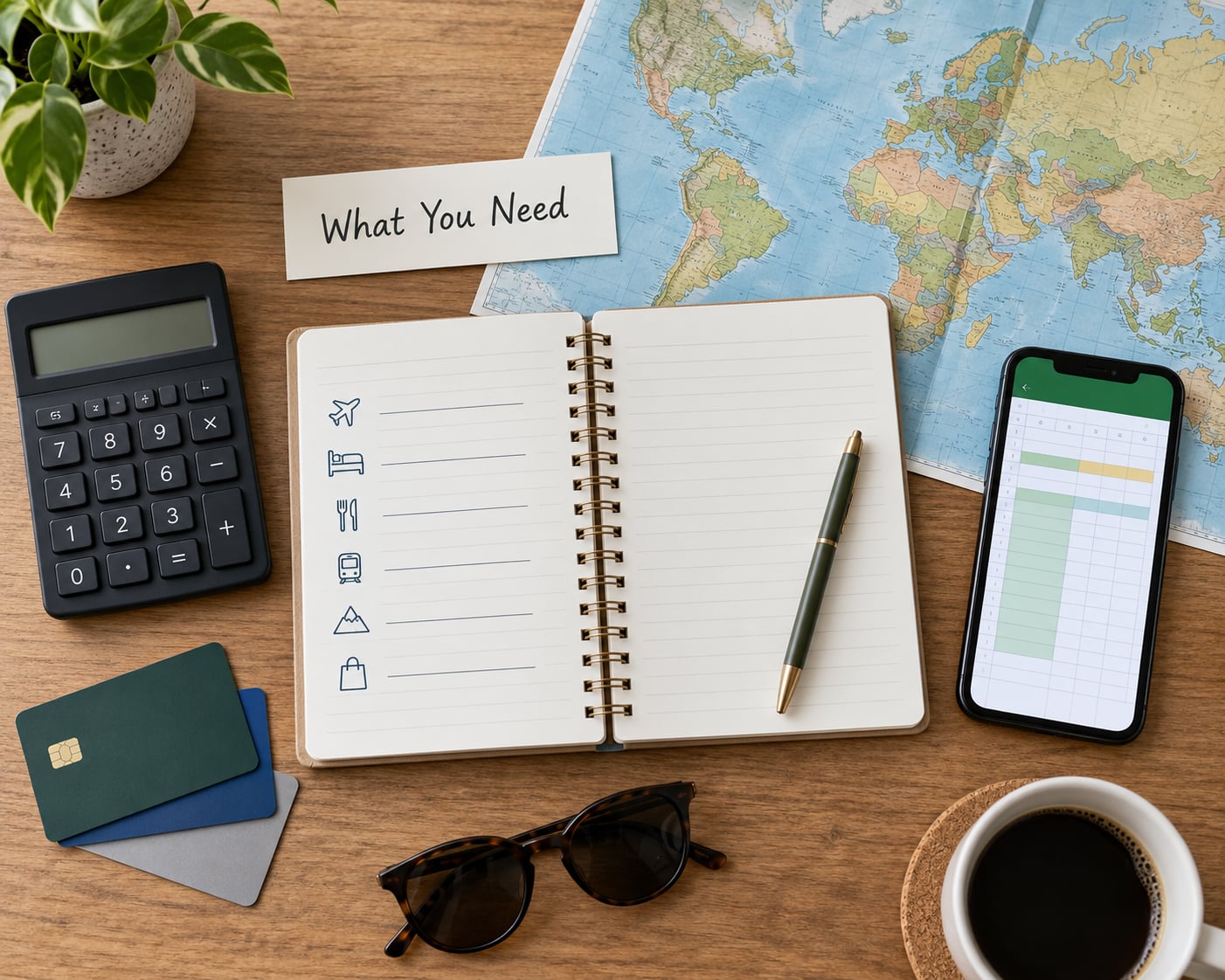
You need information and decisions, not equipment. Before anyone divides a single number, the group should agree on these eight things:
- Destination and dates. The trip’s shape changes everything else. A long weekend and a ten-day trip do not split the same way.
- Number of travelers. Count everyone who is coming, including anyone whose costs are covered by someone else.
- Trip length. Nights, not days, because most shared costs scale with nights rather than hours.
- Shared lodging. One rental, two rooms, or a mix. This is usually the single biggest line in the budget.
- Optional activities. List the things that are not happening to everyone — a boat trip, a concert, a class, a nicer dinner.
- Payment method. Which platform or account the group will use for shared money.
- A fairness standard. Equal shares, shares based on actual use, or a percentage of each person’s chosen spending level.
- One named tracker. A person, not an app, who keeps the ledger current.
That last one matters more than people expect. Groups on travel forums like r/traveladvice keep repeating the same lesson: a shared sheet that everyone can see beats an app that only one person understands.
Step-by-Step: How to Split Costs on a Group Vacation
The process runs in three stages — before, during, and after — and it works best when the before stage is done properly. The steps below follow that order, and each one tells you what finishing it looks like.
Step 1: Decide What Everyone Is Paying For
Sort every planned cost into shared or personal before anyone spends. Shared costs are the ones the group benefits from as a group; personal costs are the ones only one person chooses.
A concrete example: lodging, the shared van, and admission to the main attraction are shared. Personal meals when people eat apart, souvenirs, and optional nightlife are personal. A shared dinner where the group picks one restaurant and one bill goes into the shared column, because splitting a table bill by item is where groups unravel.
It is finished when each person can say which bucket a given expense lands in without asking. Write the rule down, not just the decision — a group chat message that everyone replies to works better than a verbal yes.
Step 2: Set a Total Budget and Spending Limit
Agree on one realistic total and one ceiling above it. The ceiling matters: without an agreed stopping point, every individual purchase becomes a group negotiation.
Build the estimate from real quotes, not from memory. Check current prices for lodging and transport, price the big shared activities, then add a contingency of roughly ten percent for the things nobody forecast. That cushion is what absorbs a taxi, a late dinner, or an extra night without turning into a surprise.
Decide in advance what happens when the group nears the ceiling. The usual answer is that individual optional spending slows down, not that the group dumps on whoever is still eager. Agree on the trigger and who watches it while the group is still in planning mode.
Step 3: Choose the Fairest Cost-Splitting Method
There are three workable methods, and the right one depends on group size, trip length, and how much cash anyone wants to carry.
| Method | Who fronts the money | Cash-flow risk | Works best for | Main downside |
|---|---|---|---|---|
| Front and reimburse | One person pays for everything, the group settles at the end | High for the person who fronts it | Small groups of two to four, short trips | Someone carries all the risk and all the chasing |
| Shared fund | Everyone pays the same amount into a dedicated account before departure | Very low for everyone | Any group size, longer trips, international trips | Returning the leftover balance takes planning |
| Pay in the moment | Whoever is holding the card or the cash | Low, but slower | Groups with mixed budgets and people who like control | Every purchase becomes a transaction |
Spend the time on picking the fairness standard as well. Equal splits suit a group of people who genuinely use the trip the same way. A share based on actual consumption suits a group where one person takes two rooms, one private bathroom, or the master bedroom, since splitting those evenly is not fair to anyone else. Percentage-based splits suit groups with genuinely different budgets, where each person picks a level they are comfortable with and the group treats those as different categories.
Chosen family groups, couples traveling with friends, and mixed-budget friend groups usually land in the third bucket. Nothing about that needs an apology; it just needs to be said before the first booking.
Step 4: List Every Expected Expense
Turn the budget into a table with five columns so nothing is missing and nothing is doubled. Do it before departure, because this list is what the tracker will mirror later.
| Expense | Estimate | Who pays the bill | How it is split | Required? |
|---|---|---|---|---|
| Transport to and from the destination | Quote per traveler | The person booking | Per person, exact | Required |
| Lodging | Total for the stay | Whoever books it | By bedroom or by night | Required |
| Local transport | Daily estimate | Shared fund | Equal or by usage | Required |
| Meals | Daily estimate | Whoever pays at the table | Shared when the group eats together | Required |
| Main attraction or tour | Quote per person | Shared fund | Equal | Required |
| Optional activities | Quote per person | Each participant | Individual, only for those taking part | Optional |
| Fees and taxes | Estimate | Whoever books it | Proportion of the original charge | Required |
| Tipping | Rough percentage of the bill | Whoever pays at the table | Follows the group split | Required |
| Miscellaneous buffer | Ten percent of the total | Shared fund | Equal | Required |
All figures here are illustrative shapes for a budget, not current price estimates. Travel costs move constantly by season, route and demand, so fill the estimate column with quotes your group has actually checked this year.
Step 5: Assign Each Person’s Share
Divide the total by the number of travelers when everything is genuinely shared, then adjust for the things that are not. Here is a worked illustration: a sample group budget of 3,600 in the trip’s currency, split six ways, gives 600 each before adjustments.
Now layer the variables on. One traveler takes the room with the extra square footage, so the lodging line moves 180 from the pool and the person using it carries the extra share. A couple in the group is either one unit of two or two units of one, and the group should say which out loud rather than working it out at settlement. One person declines the paid excursion, which comes off their personal share only.
The adjusted figure is still an average — the point is that it is an average everyone agreed to, not a guess made in a group chat three weeks after the trip.
Sample amounts are illustrations of method, not travel price estimates. Every number you use in real life should come from your own quotes.
Step 6: Create a Shared Tracking System
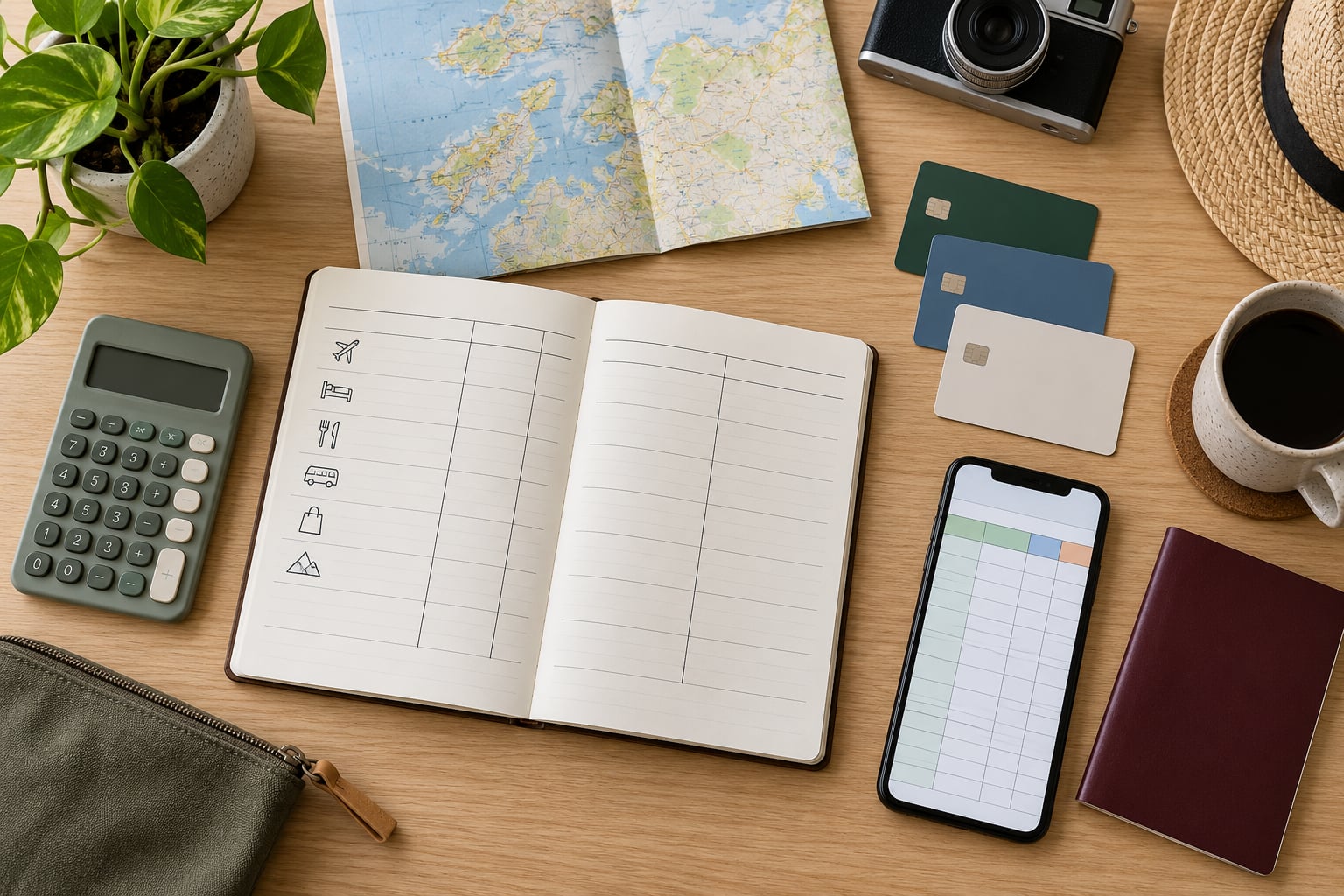
The tracker needs five columns and one owner: date, what it was for, who paid, how much, and how it was split. Five columns is enough to reconcile anything later without turning the trip into accounting.
One person is the designated recorder for the whole trip. That person adds each expense the same day and attaches the receipt photo. Not a committee, and not “whoever remembers”.
A free shared spreadsheet is usually the lowest-friction option, and it works offline if you download it before departure. Expense-sharing apps do the same job faster and handle multi-currency better, at the cost of everyone creating an account. Keep receipts in one folder per trip rather than scattered across cameras and chat threads, and the after-trip step takes an afternoon instead of a month.
If you would rather not manage the money part, here is a message you can copy, change the details, and send to the group before departure:
“Quick money plan for [destination]. Lodging, transport and the main attraction are split evenly among all of us. Anything optional — the boat trip, the concert — is individual, and nobody has to join. I’m keeping one shared sheet and adding everything the same day with the receipt. Please pay your share into the shared fund by [date], and we’ll return any unspent balance on the last night. Shout now if you’d rather split something differently.”
It is finished when every traveler has read it and no one has asked a follow-up question a week later.
Step 7: Collect Money and Pay Bills
Choose the platform before the first purchase, not in week two. One dedicated account or card that everyone funds with the same amount removes reimbursements entirely, and travelers on forums repeatedly describe that as the least stressful option because no single person is exposed.
Two habits keep it clean. First, pay shared bills from the shared account only, and keep personal spending on personal cards, so the ledger never mixes the two. Second, set an approval threshold — anything above an agreed amount gets a quick yes from the group chat before it is charged.
Paying as you go with a running total visible to everyone works fine too, and it kills the end-of-trip surprise. Just keep the group of two or three splitting a single coffee bill to a minimum; the transaction time outlasts the coffee.
Step 8: Reconcile Costs After the Trip
Settle up while the context is still fresh, ideally on the last night over a drink or the last morning before flights. People remember what a shared van cost when they are standing next to the van, and months later nobody does.
The order of operations: gather every receipt and card statement, confirm what actually cleared against what people estimated, pull refundable deposits out of the total, calculate each person’s balance with the same formula used during the trip, then round off small amounts and pay immediately.
Rounding is what makes a settlement feel finished. If the gap is only a small amount, call it even or cover it with a bottle of wine at dinner. Everyone agrees to that in advance, nobody has to chase anyone, and the ledger closes the same night.
Common Mistakes
- Splitting by head regardless of use. Equal shares are unfair when one person takes more space or a partner’s costs ride along. Fix it by agreeing the allocation rule before booking, not at settlement.
- Estimates nobody rechecked. Budgets built from a vibe produce a gap at the end. Fix it by using current quotes and keeping a ten percent buffer.
- Mixing group and personal spending. One card for everything means the ledger lies. Fix it with one payment method for shared costs.
- Relying on memory. Fix it with a daily entry and a receipt photo. Five minutes a day beats a three-hour reconciliation.
- Forgetting rewards and fees. Card rewards, foreign transaction fees, and exchange-rate spreads change the real cost. On international trips, agree in advance who absorbs the fees, and record the amount in the local currency with the date so conversion is reproducible.
- Changing the agreement after money is committed. Refunds, cancellations, and dropouts are decided against the rules the group already wrote. Fix it by handling those cases in the pre-trip agreement rather than arguing about them later.
- Making expensive activities compulsory. Anyone should be able to skip an optional splurge without explaining why. That single rule prevents more group friction than any app choice.
Frequently Asked Questions
Should group vacation costs always be split equally?
No. Equal splits work when everyone uses the trip the same way. When one person takes an extra room, a private bathroom, or brings a plus-one, an equal split quietly transfers their cost to everyone else. Agree the allocation rule before you book: equal shares, shares by actual use, or percentage tiers. The rule matters more than the arithmetic, as long as everyone knows it before the first payment.
How do we split vacation costs when people use different amounts?
Track by usage, not by head count. Lodging splits by bedroom or by bed, shared transport splits per rider, and anything one person alone chooses stays personal. Run the shared total through your tracker with each line allocated by use, then give each person their own running total. Anyone who wants a firmer number can enter their actual line items rather than accepting a flat share.
Should we collect money upfront or reimburse people after the trip?
Collect upfront whenever you can. Everyone funds the same amount into a dedicated account or card before departure, shared bills are paid from it, and nobody has to chase anybody at the end. Reimbursement works fine for smaller groups, but it leaves one person carrying all the risk and all the awkwardness. If you do reimburse, settle on the last night rather than weeks after everyone is home.
How do we handle shared expenses when one person pays?
Photograph every receipt the day it happens and log it the same day in one shared sheet, with the date, amount, payer and split rule. Do not settle it in the group chat months later. A dedicated account removes the problem entirely, since no one fronts anything. If someone already paid out of pocket, decide a reimbursement date before departure and hold to it, then round off small remaining balances.
What is the fairest way to split vacation costs with different budgets?
Use tiers instead of one flat number. Each person picks a contribution level they are comfortable with, and shared costs are split across the tiers by the rule you set, either equal per person or by usage. The important part is that the tiers are chosen privately and honoured without comment, so nobody has to explain why they are spending less than the group average.
Do the boring part first. Before the first booking, write down which costs are shared, pick your split method, choose the tracker, and send the plan to the group. Twenty minutes of that covers every method and template above, and it removes the single most common reason a great trip ends with an awkward balance.