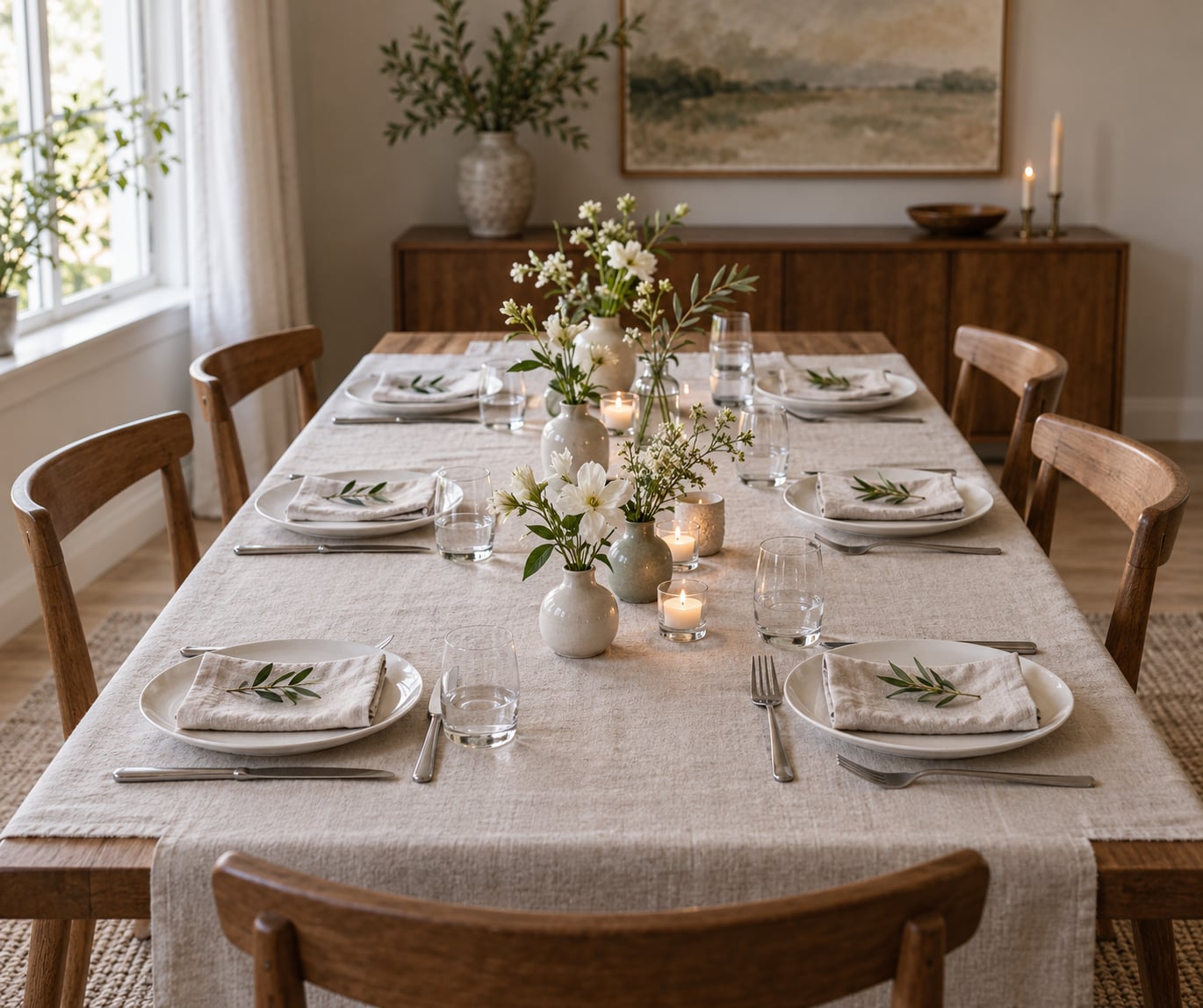
When people ask how to set a table for guests, the honest answer is one rule: start at the plate and work outward. Dinner plate in the center, forks on one side, knives and spoons on the other, glasses above the knife, napkin last. Get that order right and the whole setting falls into place in about 20 minutes for six people.
The point is not perfection. A set table means nobody has to ask where the fork lives, nobody reaches across your arm for the salt, and the food looks like you tried, because you did. Guests notice a considered setting, and it quietly tells them their comfort matters to you.
I host small dinners most weeks, and the same pattern repeats every time: linens first, plates, then flatware, then glasses, then whatever is decorative. Once you internalize that sequence, formality stops being a test you can fail. Every rule below can be relaxed. A mismatched thrift-store dinner plate is a feature, not a mistake, as long as nobody is reaching over the table to get it.
Table of Contents
What You Need
Seven things cover nearly every table you will ever set, whether it is a Tuesday dinner for four or a holiday feast for twelve. Buy or borrow more than you think you need, because extra pieces absorb a dropped plate and a second round of guests.
- The table and a cover. One table plus one cloth or set of placemats. A cloth should hang 12 inches below the tabletop edge on each side; formal settings drop closer to the floor at 18 inches or so.
- One dinner plate per guest, plus two spares. A salad plate if you are serving a salad course, and a bread plate or small side plate if you are serving bread.
- Flatware for the courses you actually serve. A dinner fork and dinner knife for everyone. Add a salad fork, a soup spoon or a dessert spoon only when that course is on the menu. Setting utensils you will never use is how a table starts to look cluttered.
- Glassware. One water glass per guest is the baseline. Add wine glasses at one per person, or two glasses for every two diners if you are pouring both white and red. Reuse one style of glass rather than assembling a mismatched set.
- Napkins, one per guest. Cloth or paper both work. If you fold, iron them the night before; a crisp napkin does more for a table than an expensive centerpiece.
- Low decor. One centerpiece, a few unscented candles, or a jar of garden branches. Unscented matters, because scented candles compete with the smell of whatever you cooked.
- Serving pieces. At least one platter or bowl per dish, a serving spoon for each, and a trivet if the pan comes to the table hot. Salt and pepper shakers belong on the table too, not in the kitchen.
Budget or space can bend any of this. Placemats or a runner work instead of a full cloth, paper plates and good flatware look intentional on a casual table, and a table that is too small is fixed with a folding card table rather than by squeezing the corners.
How to Set a Table for Guests: Step by Step
Six steps, in this order. Work left to right around the table and around each setting, and you will never end up with a fork on the right.
1. Choose the table layout and level of formality
Measure first. Allow 24 inches of table edge per guest for a comfortable sit-down meal and 36 inches if you want people to set elbows down and stay there. A round table fits six to eight people far better than a long narrow one, and a folding card table at the end of the dining table solves almost any headcount problem.
Then pick a level and stick with it. Basic is one plate, one fork, one knife, one spoon, one glass. Casual adds a salad plate, a bread plate, more glasses and a cloth napkin. Formal layers a charger under everything, adds a soup bowl, a fish fork, three or four glasses and a dessert spoon set at the top of the setting. Match the level to the meal, not to your ambition.
A quick success check: everyone at the table should be able to lean in without elbows colliding and without a chair scraping the person behind them.
2. Prepare the table surface and linens
Wipe the table down, check that it is level, and clear anything that will not be used during the meal. Appliques, mail and fruit bowls all have a way of ending up in the guest’s elbow space.
Lay the cloth from the center out so the drop is even on every side, then smooth from the middle toward the corners. A damp cloth ironed the night before, or a steam shower over the linen for a minute, removes most wrinkles. Tuck the corners if you want them to stay put; leave them loose if kids will be climbing on the table later.
Placemats and runners work the same way: center them, keep every mat the same distance from the table edge, and treat the four corners of your table as the guide rather than eyeballing each one. A small table with no cloth on it at all can still look finished with a runner down the middle and a placemat or two.
Success check: from a standing position, every mat or cloth hangs evenly, and no corner pools on the floor unless that was the intent.
3. Place the centerpiece and tableware
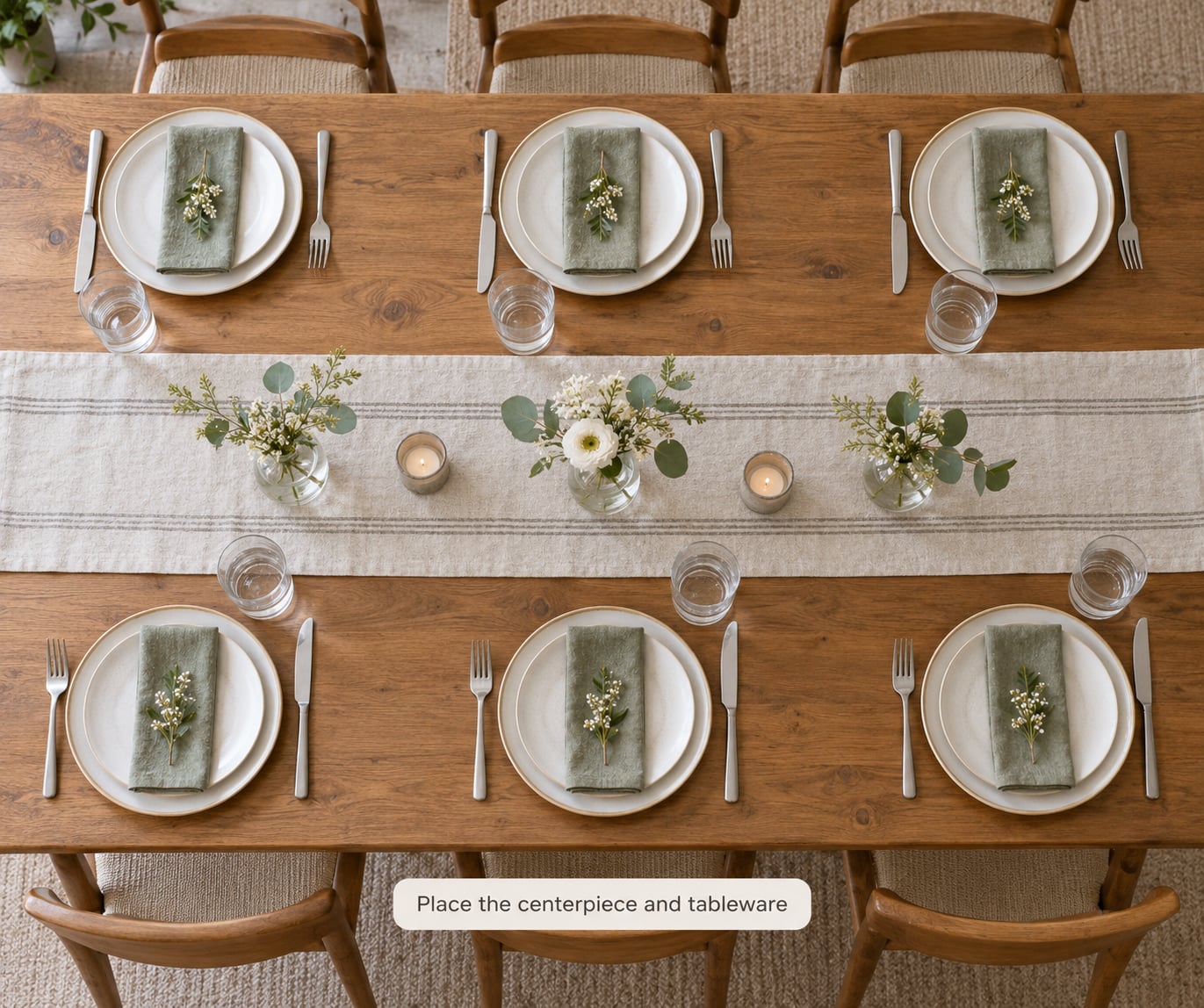
Set the centerpiece before the plates, not after, so you can see exactly how much room it leaves. Keep it under about 12 inches tall so guests can see each other’s faces across the table. If the arrangement is taller than that, it belongs on a sideboard or buffet instead.
Then build each place setting outward from the dinner plate. Adding courses means stacking them in the same spot, so the basic setting is the whole map:
- Charger or presentation plate: centered on the place mat, marking where the dinner plate goes.
- Dinner plate: centered on the charger.
- Salad plate: on top of the dinner plate, or to the left of the forks.
- Bread plate: above the forks, around 10 to 11 o’clock.
- Dinner fork: left of the plate, closest to it.
- Salad fork: left of the dinner fork, with the dinner fork nearer the plate.
- Dinner knife: right of the plate, blade facing inward.
- Butter knife: right of the dinner knife.
- Soup spoon: right of the knives, or on the plate for formal service.
- Dessert spoon and fork: laid horizontally above the forks at a formal setting.
- Napkin: to the left of the forks, or centered on the dinner plate for formal meals.
- Water glass: above the knife tip, roughly at 1 o’clock.
- Wine glasses: above and slightly right of the water glass.
- Place card: above the forks or resting on the napkin.
Align the bottoms of the forks and knives with the bottom edge of the dinner plate, and leave about half an inch of space between any two pieces of flatware. Alternating the glassware instead of the flatware works well for a formal setting.
For a casual table, skip the charger, the soup spoon and the dessert flatware unless you are serving those courses. If you are not serving soup, do not lay out soup spoons. That single habit removes more clutter than anything else on this list.
Success check: step back and look down the length of the table. Every plate should sit in a straight line, and every fork should be on the same side as every other fork.
4. Arrange glasses, napkins, and serving items
Water goes in first, at 1 o’clock above the knife. White wine follows at about 2 o’clock, red wine at 3 o’clock, and a champagne flute sits slightly behind and to the right of those. Three glasses form a triangle with the water glass at the apex, pointing back toward the diner, which lets you reach every stem without shifting anything.
Pour water into the glasses before guests arrive. It removes the awkward first-request moment, and it is the single most repeated piece of advice in hosting threads I have read on r/etiquette and r/AskCulinary.
Napkins go to the left of the forks on a casual table. On a formal table the napkin goes on the dinner plate or in a clear glass at each setting. The contradiction you will find online comes from describing two different levels of formality, not from competing rules.
Serving dishes belong where a standing person can reach them without reaching across a seated guest, so items you pass go to one or both ends of the table, and dishes you do not pass go on a sideboard or the counter. Salt and pepper sit near the center of the table so both ends can reach them. If you are serving anything at room temperature in a dining room, keep the hot food at 140 degrees or above and the cold food at 40 degrees or below, in a chafing dish or on ice.
Success check: seated, you can reach the water glass, the salt and every item on your own setting without standing up or leaning across anyone.
5. Add place cards and finishing touches
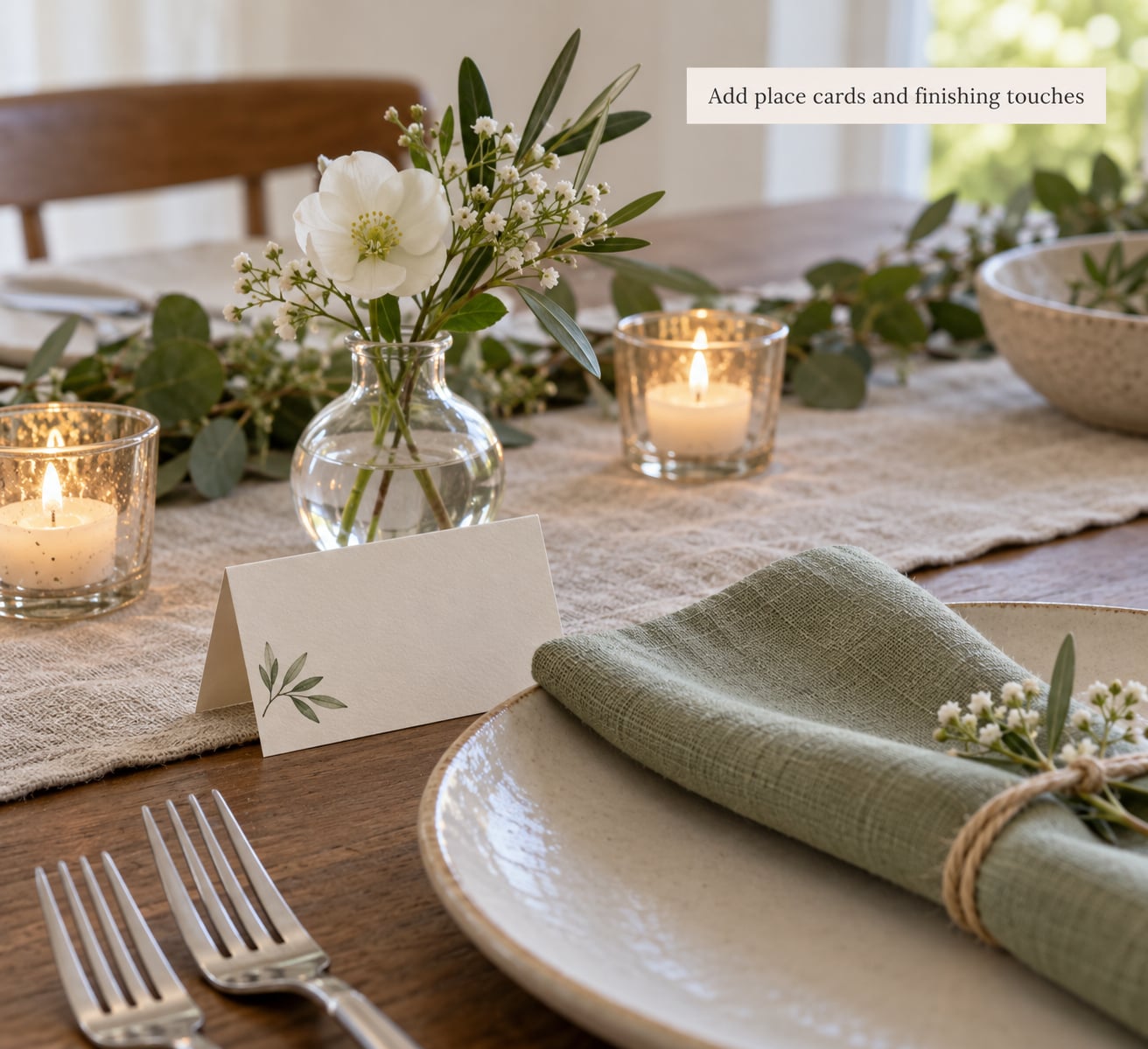
Place cards are useful at any headcount past six, because they take the guessing out of a group that includes strangers, couples who should sit together, or a table with one wheelchair user who needs an approach that keeps a chair out of the circulation lane.
Write names and pronouns on simple cards or folded index cards. It looks considered, it answers a question no one wants to ask out loud, and it helps you seat a chosen-family gathering where not everyone uses the same name in every room.
Then light the candles. Unscented tapers or tealights, in an odd number, spread along the runner or grouped in pairs at each end. Set a small favor or a take-home treat at each spot if you have one, and skip it if the meal runs late, since nobody enjoys carrying a gift bag through leftovers.
Success check: sit down in a guest chair and look across. You can see the faces of the people opposite you, and nothing is more than about 12 inches tall between you and them.
6. Check the setup before guests arrive
Do a full walk around the table in the last ten minutes. Glasses are clean and filled, knives are sharp, flatware is straight, the cloth has no wrinkles in the guest view, and the centerpiece is not wobbling or sitting on a folded napkin that could slide.
Check the things people forget. The coffee pot or kettle is accessible. Serving spoons rest under the dishes they belong to. Charger plates you never intended to use have been cleared away. Music is on low before anyone knocks, and the kitchen light is off so the table is the bright thing in the room.
If you are hosting a small dinner, set the whole table before guests arrive rather than setting it while they stand in the kitchen holding a drink. It is the most common piece of advice from first-time hosts, and it is right. For a larger gathering, set everything except the food, then place the dishes as you bring them out.
Success check: everything a diner needs sits inside their own reach zone, and nothing on the table belongs to a dish you never served.
Common Mistakes
Overdecorating. Three centerpiece tiers, a floral arrangement and six candle holders compete for the same space and bury the food. Fix it by keeping one focal point and moving everything else to a side surface.
Crowding the place setting. Every plate you stacked “just in case” steals width from the diner’s elbows. Fix it by setting only the courses you serve and removing anything not used within the hour.
Glassware on the wrong side. Glasses belong above the knife tip, not beside the plate or behind the forks. Fix it by using the clock face: water at 1 o’clock, wine at 2 and 3, bread plate at 10 or 11.
An unstable centerpiece. A heavy arrangement in a narrow vase tips when someone reaches past it. Fix it by keeping the footprint wide and the height low, or by moving it to a sideboard entirely.
Mismatched linens. Two tablecloths that clash pull the eye straight to the surface instead of the meal. Fix it with one cloth and a runner, or one neutral base layer with a single accent color on top.
Setting the table too late. A table set while guests wait makes the host look busy and hurried, which is the opposite of the point. Fix it by setting everything except the food about 20 minutes before arrival and finishing with a short walk around the table.
A few habits that fix most of the above at once. Set the table for a lower formality than the occasion suggests rather than a higher one, because nobody has ever complained that a dinner party felt too relaxed. Skip scented candles and heavily perfumed flowers near the plate. Put serving dishes on a sideboard when the table is tight, and let the people who love to help handle the kitchen instead of the dining room.
One accommodation worth remembering: left-handed diners want their forks on the right and knives on the left, and setting it that way costs you nothing if you keep a mental note of who is sitting where. A guest using a wheelchair needs clear knee space, so leave that chair off any table with a pedestal leg, and check that the table edge clears their knees by sitting in the chair yourself before anyone arrives.
Nothing on this list is a rule anyone enforces. The table is a backdrop for people talking, not an exam.
Frequently Asked Questions
How far apart should place settings be?
Leave about 24 inches of table edge per person for a sit-down meal, or 36 inches if you want room to lean back and talk comfortably. Measure the edge rather than the whole tabletop, and remember that a chair needs about 18 inches of pull-out space behind it. If your table cannot give each guest that much, use a second table for food and drinks rather than squeezing everyone in.
Should tablecloths touch the floor?
For everyday and casual dining, a tablecloth should hang about 12 inches below the tabletop edge on every side, so seated guests cannot see your knees and nobody trips on a hem. A formal setting drops closer to the floor, around 18 inches or the full table length, which is the traditional look for holiday and wedding meals. On a low table, check that a seated guest’s feet will clear the cloth before you let it hang long.
Where should napkins go on a formal table?
On a formal table the napkin goes on top of the dinner plate, centered and sometimes tucked under the fork, or stands folded in a clear glass above the forks so each guest lifts their own. On a casual or basic table it goes to the left of the forks, lined up with them. Both placements are correct, and the difference is the level of formality rather than a rule one source invented and another got wrong.
How do you set a table without tablecloths?
Skip the cloth and anchor each setting with a placemat, sized so the plate sits inside it with a little room at the edges. A runner down the middle of a bare wood table adds color and gives candles and bud vases somewhere to go. You can also set the table directly on a clean, unmarked surface if your plates are substantial enough to carry the look on their own, which is a perfectly good choice for a small casual dinner.
What size centerpiece will not block conversation?
Keep anything at the center of the table at or under 12 inches tall, which sits below seated eye level for most adults. Shorter arrangements, low bowls of fruit, bud vases and clusters of tealights work better than a tall bouquet in the middle. If you own something dramatic, put it on a sideboard or a separate drinks table where it can be admired without anyone talking around it.
Conclusion
Prepare the table surface first, lay out the place settings second, and add the decoration last. Work from the dinner plate outward, set only the courses you are actually serving, fill the water glasses before anyone arrives, and keep the centerpiece low enough that everyone can talk across the table.
Set it lower than you think you should, serve it warm, and let the mismatched plates and loud napkins stay exactly where they are. Guests remember how the evening felt, not how square the glasses were.