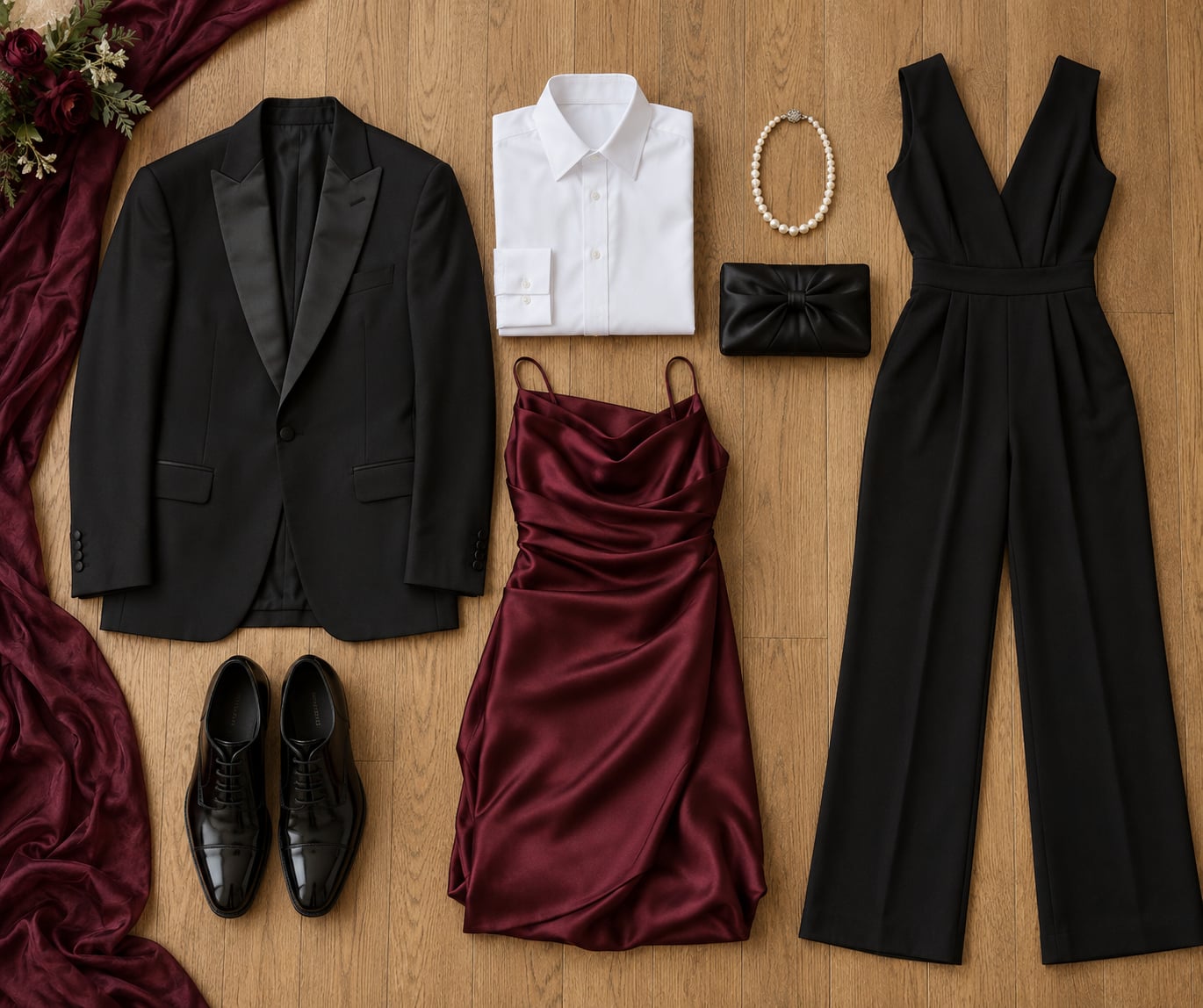
To dress for a formal event, work out what the invitation actually asks for, then build one outfit from a dark base garment, polished shoes and a single strong accessory. Most first-timers get it wrong by guessing, not by dressing badly.
The code word on the invitation sets the floor and the ceiling. Black tie means a tuxedo or a floor-length gown. Cocktail attire means something shorter and lighter. When the card says nothing at all, dress one notch below black tie and you will be fine. Most of this takes about an hour to put together once you know which rung you are standing on.
Table of Contents
How to Dress for a Formal Event: What You Need
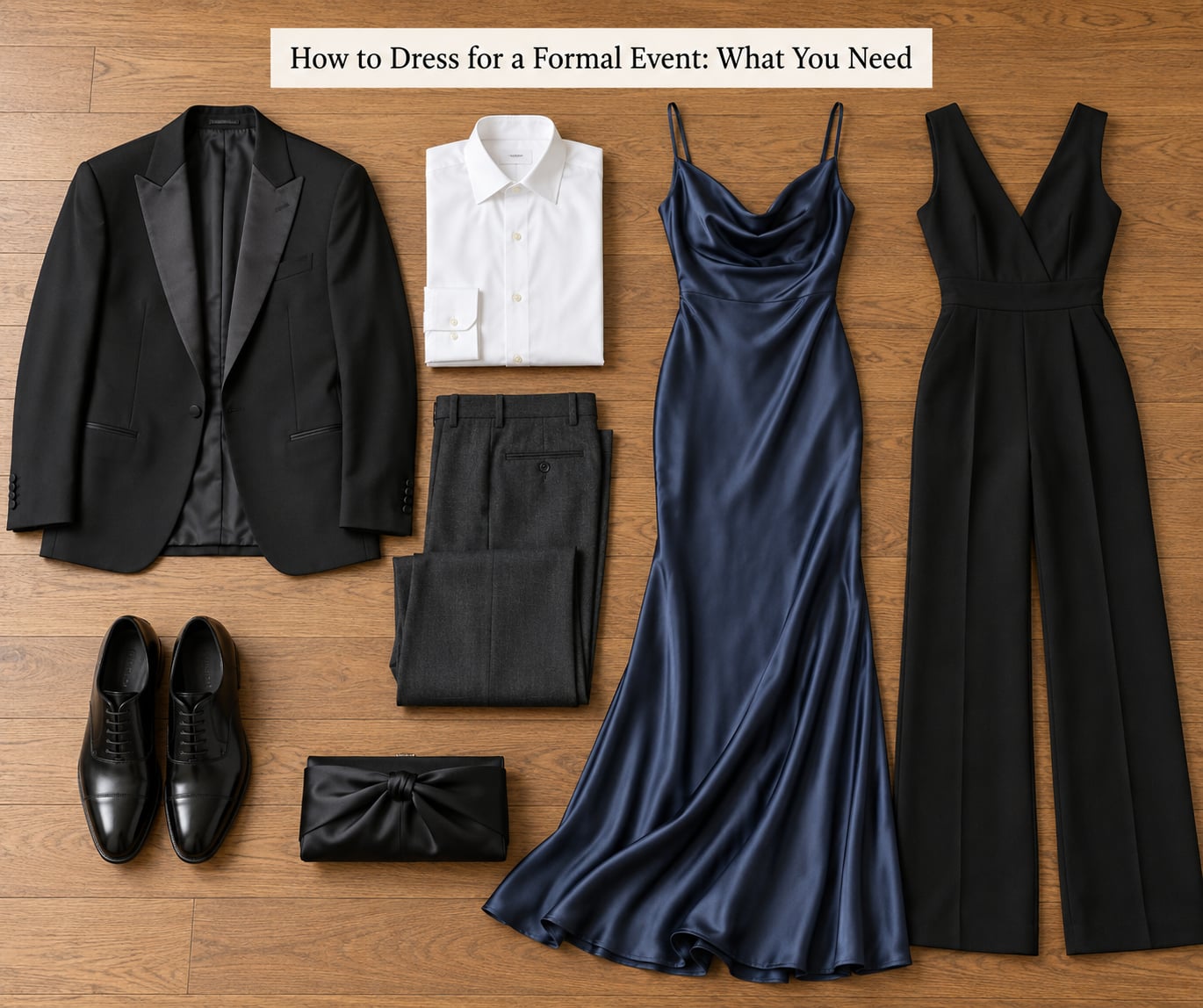
Five things decide your outfit before a single item gets tried on. Get them straight and the rest is just putting pieces together.
The dress code. Find the exact wording on the invitation or the host’s message. White tie, black tie, black tie optional, cocktail attire and formal each mean something different, and guests at the same event will read the same word.
The event type and the hour. A seated charity dinner at 7pm asks different things than a reception with a dance floor at 10pm. Daytime events want lighter fabrics and flatter shoes. Night events can carry heavier cloth and more shine.
Venue and weather. Outdoors on grass, on a beach or in a room without air conditioning changes fabric and shoe choice. Beach formal means the code is loosened but hemlines still read formal. A drafty hall in winter means you will be glad for a mid-layer that does not look like outerwear.
What you will actually do. Standing for two hours in a cocktail dress is a very different commitment than sitting through speeches. If there is dancing, flats or a low block heel beat a narrow stiletto.
How long you will be out. A six-hour wedding is a clothing endurance test. Anything that digs, rides up or needs adjusting every ten minutes will undo you by hour three.
Step-by-Step
Six steps take you from an invitation to a finished outfit. Work through them in order and you will not end up buying the wrong thing for the wrong evening.
How to Dress for a Formal Event by Reading the Invitation
Start with the word printed on the card, because that word decides everything downstream. Each rung has one garment that tells you whether you are in the right place.
- White tie. The most formal code there is. A tailcoat or structured dinner jacket with a bow tie, waistcoat, starched wing-collar shirt and patent shoes. Floor-length gowns, capes, opera gloves. Almost nobody needs this unless the host is hosting a state dinner style event.
- Black tie. A tuxedo or dinner jacket with a bow tie for the traditional suit-and-dress reading, or a floor-length gown. A full-length jumpsuit with a dinner jacket works and reads as deliberate rather than borrowed.
- Black tie optional. The range, not a single answer. Cocktail-length dresses, dressy jumpsuits, dark suits with a tie or without one, midi dresses with a heel. This is where most first-time anxiety lands because people assume it means black tie anyway.
- Cocktail attire. Cocktail-length or midi dresses, dressy separates, a well-cut pantsuit, a velvet jacket over trousers. Skirts and tops read fine as long as both halves look dressy, not like work clothes.
- Semi-formal or formal. A dark matched suit with a tie and a dress shirt; a cocktail dress or a dressy top with a long skirt. Solid colours are the safe move at ceremonial events.
- Themed or creative. “Black tie creative” and costume-adjacent wording genuinely give you permission to be interesting. Read the host’s own words, because that is where the actual instructions are.
Black tie optional is worth dwelling on because it causes more confusion than any other code. Read it as a range from cocktail up to full black tie, and pick the middle of that range. A dark suit with a crisp shirt, no tie, is a solid choice. So is a cocktail dress with a heel.
What do you do when the invitation names nothing? Dress for black tie optional. That sits in the middle, and a guest who is slightly underdressed in a dark suit looks fine, while a guest who is slightly overdressed in a full tuxedo can look like they are on the wedding party.
If you are still stuck, ask the host one question directly. Nobody minds being asked about a dress code. Guessing quietly and arriving wrong is worse.
Choose Your Formal Outfit
Your base garment does most of the work. Pick it first, then add everything else around it.
A suit. The most versatile thing you can own. A charcoal or midnight suit with a tie handles semi-formal, black tie optional weddings, galas, awards nights and funerals. It survives in your closet, which is exactly what you want from a garment you might wear twice.
A tuxedo or dinner jacket. Reserve it for true black tie. A single-breasted dinner jacket in black wool, midnight blue or deep burgundy, with a bow tie and patent shoes, is the traditional answer. Black tie creative is the correct place to experiment with colour and pattern.
A floor-length gown. The formal reading of a gown is silk, satin, chiffon, crepe or velvet in a solid, deep colour. Cut matters more than the label on the tag. A hem that skims the floor without dragging is the working target.
A cocktail dress or midi. The correct answer for cocktail attire and most black tie optional invitations. Knee to mid-calf, in a fabric that holds shape rather than a jersey that goes limp.
A jumpsuit. Yes, you can wear a jumpsuit to a formal event, and plenty of people do at galas and black tie weddings. The cut does the persuading: fluid drape, a defined waist, strong shoulders or a wide-leg leg line. Add a heel and a clutch and it reads as chosen, not as a shortcut.
Dressy separates. A silk or crepe blouse with trousers or a long skirt, or a velvet jacket over a column dress. Works well for Pride galas, benefit dinners and any room where you want to move freely.
None of this splits neatly by body shape or gender, and that is the point. What matters is that the garment is well fitted where you want it to be, that the fabric is genuinely formal, and that the shoes are polished. If tailoring is the only thing standing between you and an outfit you love, that is a solvable problem, and it is the one most worth solving first.
Build a Comfortable, Polished Look
Fit beats everything else. A well-fitted cheaper garment photographs better and wears better than an expensive one fighting your body.
Fabric does the formality work. Satin, silk, chiffon, crepe, velvet, brocade and fine wool read formal. Jersey, cotton and denim read casual no matter how elegant the cut. That single distinction answers most of the dress code questions people argue about online.
Colour. Black, navy, burgundy, deep green, midnight blue and charcoal are safe at any formal event. Jewel tones suit deeper skin tones beautifully. Bright colour works when the dress code says creative, or when it is midday and the event is outdoors.
Layering. Bring a wrap, a tailored jacket or a structured shawl for venues that run cold. Bare shoulders are fine indoors, but a cover solves unheated rooms, evening air conditioning and the walk from the car.
The shoe rule: your shoe should be at least as formal as the rest of the outfit. A beautiful gown with scuffed flat sneakers still reads casual.
Shoes. Oxfords or Derbies in polished or burnished calfskin, patent leather for black tie, Belgian loafers, velvet slippers for a dinner jacket, block heels or kitten heels for long standing, dressy flats in satin or leather at black tie optional. Open-toed sandals are fine outdoors, less so in a ballroom.
Bag and accessories. One small bag you can hold in one hand or wear on a chain: a clutch, a small structured bag, a flat satin envelope. Statement jewellery in one place, or fine pieces in three places, rather than everything at once. A pocket square, a dress watch and a simple ring finish a suit.
Comfort is not a separate concern from formality, it is part of it. If you know you will be on your feet for five hours, choose a block heel you can walk in or a formal flat that has been resoled. Wrapping your feet in blister pads before you leave is unglamorous and it works.
Add Color and Personal Style
Once the base works, the fun part starts. Most people dress formally by going neutral and hiding, and that is a waste of an evening.
Understated. A monochrome outfit in one colour family, one piece of silver jewellery, hair in a low chignon or a clean slick-back. This is the look that photographs well and never fights the occasion.
Colourful. A saturated jewel-tone suit, an emerald or sapphire gown, a patterned silk tie with a plain suit. Colour reads loudest in a room full of black, so if the invitation says black tie creative, take it.
Romantic. Chiffon, a soft drape, a floral or lace wrap, a midi hem in a light fabric. Best at garden parties, daytime weddings and spring events.
Expressive. Cutouts, sheer panels, bold earrings, colour-blocked tailoring, a statement belt. Know the venue. At a charity gala or a club night, expressive looks land well. At a religious ceremony, dial the sheer fabric back.
Queer formalwear has its own logic worth using: the suit, the gown and the jumpsuit are all available to anyone, and you do not have to pick one lane. Tailored menswear-inspired pieces, fluid cuts that read from a distance and enough shape that the outfit never looks borrowed are the details that make it work.
Grooming finishes the look. Book hair and makeup ahead rather than on the day, and set nail colours early enough to fix any chips. Leave perfume for the last step and use less than you think, because a warm room amplifies it.
Do a Final Dress-Code Check
Run this list the night before. It takes five minutes and catches most of the disasters.
- Formality. Compare what you are wearing to the dress code word, not to what you imagine the crowd is wearing.
- Weather. Check the forecast for the time of day you will actually be outside. Bring the wrap, the backup flat or the lighter layer.
- Venue rules. Some buildings and houses of worship have rules about hemlines, shoulders, shoes removed at the door or photographs during the ceremony.
- Theme. If the invitation names colours, a season or a decade, that is a request. Meet it somewhere in the outfit.
- Phone and wallet. Know where your phone is before you leave, and carry a card you would be happy to hand over.
- Backup plan. Photograph the full outfit in daylight and again at night. If a heel breaks or a hem fails, you already know what to change.
- Colour conflict. Do not wear the same colour as the couple, or as another guest you were told about.
One last check: does it work standing under low light? Dark velvet, navy and black can disappear in a dim ballroom, and sequins and satin sing under one. That is what your final photo is for.
How to Dress for a Formal Event Without Overthinking It
Some evenings you do not have the headspace for a full system. When that is the case, this four-move path takes about twenty minutes.
Choose one anchor piece. The dress, the suit or the jumpsuit. It has to be right on its own, because everything else is decoration.
Add one polished layer. A tailored jacket, a longline coat, a wrap. It makes the outfit look considered and solves a cold room.
Wear shoes you can stand in. Polished, closed or elegant, and comfortable for the length of the evening. This one decision changes how the whole night feels.
Finish with one meaningful accessory. One piece of jewellery, one bag, one hair detail. Pick one and stop.
That is the whole formula: anchor piece, layer, comfortable polished shoe, one accessory. Everything else is optional, and the outfit will read as formal because the fabric and the footwear are right.
Common Mistakes
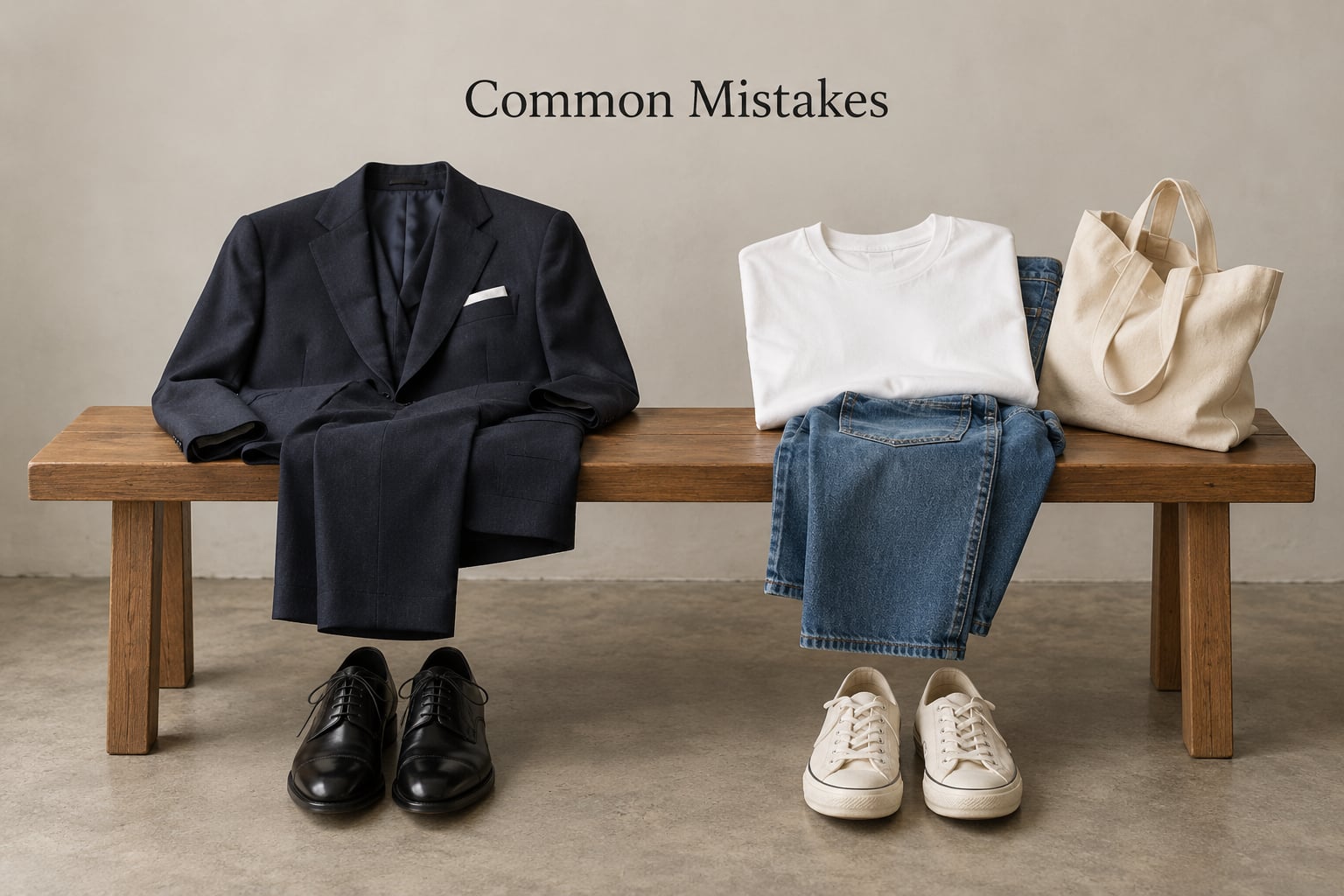
Almost every dress code mistake runs in one of two directions. Here are the ones people regret most, and the fix for each.
Overdressing at a casual event. The most common regret in wedding attire is showing up in a full tuxedo to a room in polos. Fix: match the code word, and if you are unsure, drop one notch below black tie. You can always stand out slightly, but you cannot undo looking like you came from a different event.
Underdressing at a formal event. Jeans, sneakers, a casual sundress and everyday denim all read as too casual even with a beautiful dress. Fix: change the shoes first. That is the fastest upgrade available to you.
Ignoring the dress code because it says optional. Optional is not permission to ignore the occasion. Fix: treat black tie optional as a range and land in the middle of it.
Wearing the same colour as the couple. Ivory, white and cream are reserved. Fix: pick a deep jewel tone or a colour that photographs differently against skin.
Choosing a hemline that fights the shoes. A floor-length gown with a low block heel gets stepped on all night. Fix: match the hem to the heel height before the day, not the night before.
Buying something you will wear once. Fix: rent for true black tie if the garment is unusual, and buy for anything you expect to wear twice. Resale and consignment stores are full of barely worn formalwear.
Skipping the coat and bag. Fix: put real shoes on a real bag rather than a flat that creases and a canvas tote that appears in every photo.
Underestimating the day of. Hair, nails and tailoring all need time. Fix: aim to be fully dressed an hour before, not ten minutes.
One more that gets missed: arriving as the most dressed person in the room is its own kind of awkward. If the invitation used the word cocktail, a floor-length gown is technically lovely and socially loud. Dress to the invitation, not to your mood.
Frequently Asked Questions
What is the dress code for a formal event?
A formal event dress code sits above business casual and below white tie. A floor-length gown, a cocktail-length dress, a dressy jumpsuit or a dark suit with a tie all read correctly, and a tuxedo is the right answer when the invitation says black tie. Whatever you choose, the wording on the card always outranks your assumption about the room.
What kind of dress should I wear to a formal event?
Three answers cover almost everything: a floor-length gown for black tie and galas, a cocktail-length or midi dress for cocktail attire and black tie optional weddings, and a dressy jumpsuit or tailored suit if you prefer not to wear a dress. Choose a formal fabric like satin, chiffon, crepe or velvet, and finish with polished shoes and a small bag.
Can you wear flats to a formal event?
Yes at black tie optional, cocktail attire and most semi-formal events, as long as the flat is dressy rather than casual: satin, patent leather, embellished or metallic. Keep them for true black tie, weddings and galas. A polished block heel or a formal flat with a backup pair in your bag covers both comfort and formality.
Can I wear a jumpsuit to a formal event?
Yes. A jumpsuit works at black tie weddings, galas and formal receptions when the cut has presence: fluid drape, a defined waist, wide legs or strong shoulders. Add polished shoes, a small clutch and one piece of statement jewellery. A crepe or silk-blend fabric in a deep colour reads far more formal than a stretch jersey.
Is it rude to overdress for a wedding?
It is not rude, but it can read as though you came to a different event, and people notice. Black tie optional invitations generally invite cocktail attire rather than a full tuxedo or floor-length gown. When you are unsure, dress one notch below the stated code. Slightly under is far less noticeable in the room than slightly over.
What are common formal dress code mistakes?
The most common errors are footwear and fabric, not silhouette. Sneakers, everyday denim and casual sandals make an otherwise formal outfit read casual. Other frequent mistakes: ignoring black tie optional as a range, wearing the same colour as the couple, a hemline that does not match the heel, arriving in a full tuxedo when the invitation said cocktail, and wearing a dress cut for standing all night.
Confirm the dress code first, then pick the most comfortable polished option from your wardrobe. Anchor piece, one layer, shoes you can stand in, one accessory. Updated for 2026.