Thrifting like a pro means treating secondhand shopping as a skill rather than a lucky walk through a store: you go with a list, on a good day, with a measuring tape in your pocket and a condition checklist in your head. The method is simple enough to learn in one trip and useful enough to keep for years. Most beginners lose money not because thrift stores are bad, but because they arrive with no plan and buy whatever feels cheap.
That is the whole idea worth stealing. Everything below is what changes when the activity stops being a hobby and starts being a repeatable routine. Budget around 15 minutes of prep and 60 to 90 minutes in the store, and treat a trip where you buy nothing as a normal Tuesday.
Table of Contents
- What You Need
- How to Thrift Like a Pro: The Seven-Step Routine
- Step 1: Set a shopping budget and decide what you are shopping for
- Step 2: Build a shortlist so you thrift like a pro, not by accident
- Step 3: Know where to thrift, from charity shops to resale apps
- Step 4: Inspect quality before you hand over any money
- Step 5: Price the item against the alternatives
- Step 6: Style secondhand pieces so they look intentional
- Step 7: Clean, repair and track what you keep
- How to thrift online when the racks are gone
- Common Mistakes
- Frequently Asked Questions
- What is the best way to start thrift shopping as a beginner?
- How do you know whether a secondhand item is worth buying?
- Should I thrift clothing online or in person?
- How can I make thrift finds look stylish instead of outdated?
- How do I thrift without buying too much clutter?
- Are thrift finds always cheaper than buying new?
- Conclusion
What You Need
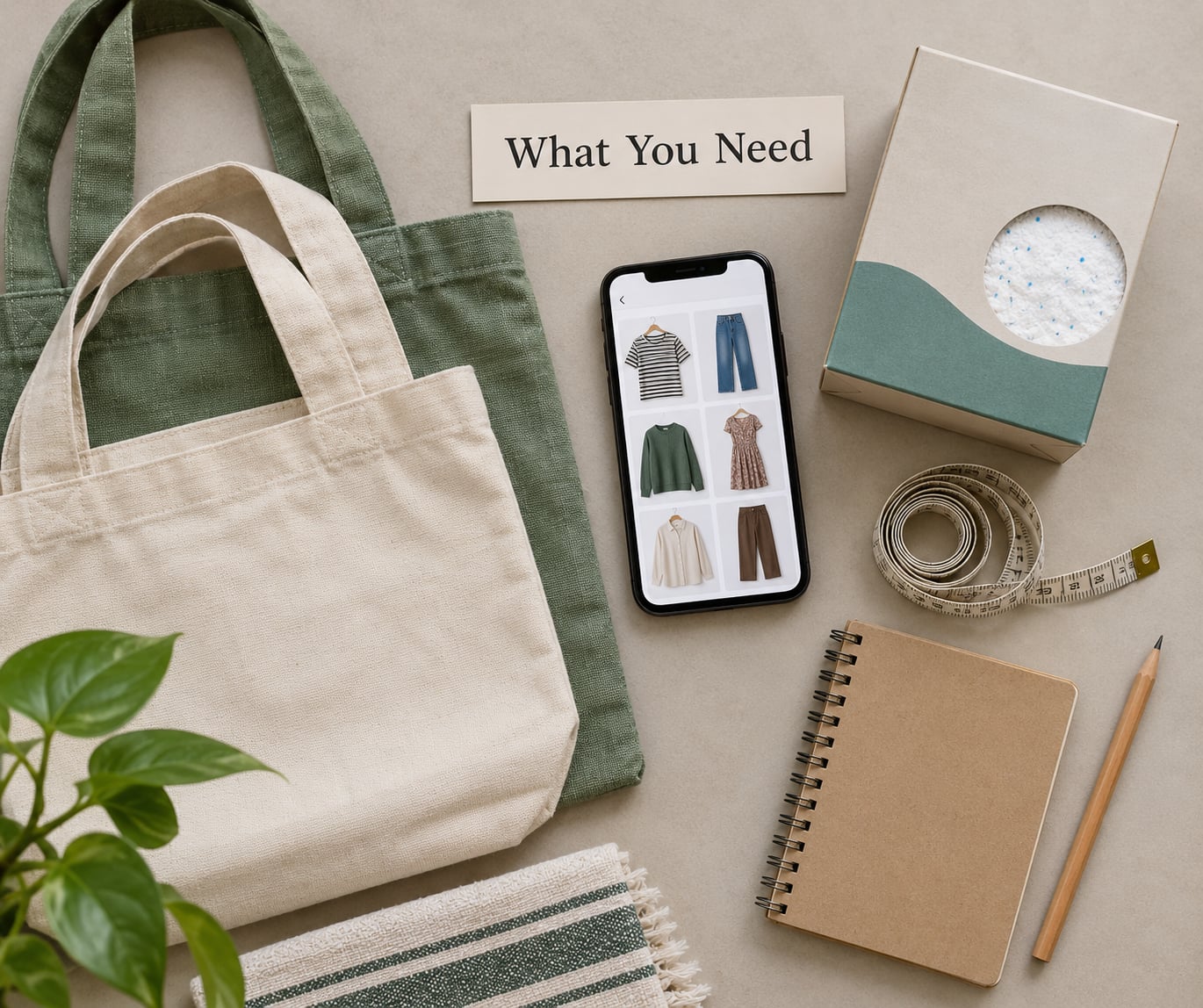
None of this is expensive or special. It is just the difference between shopping and thrifting.
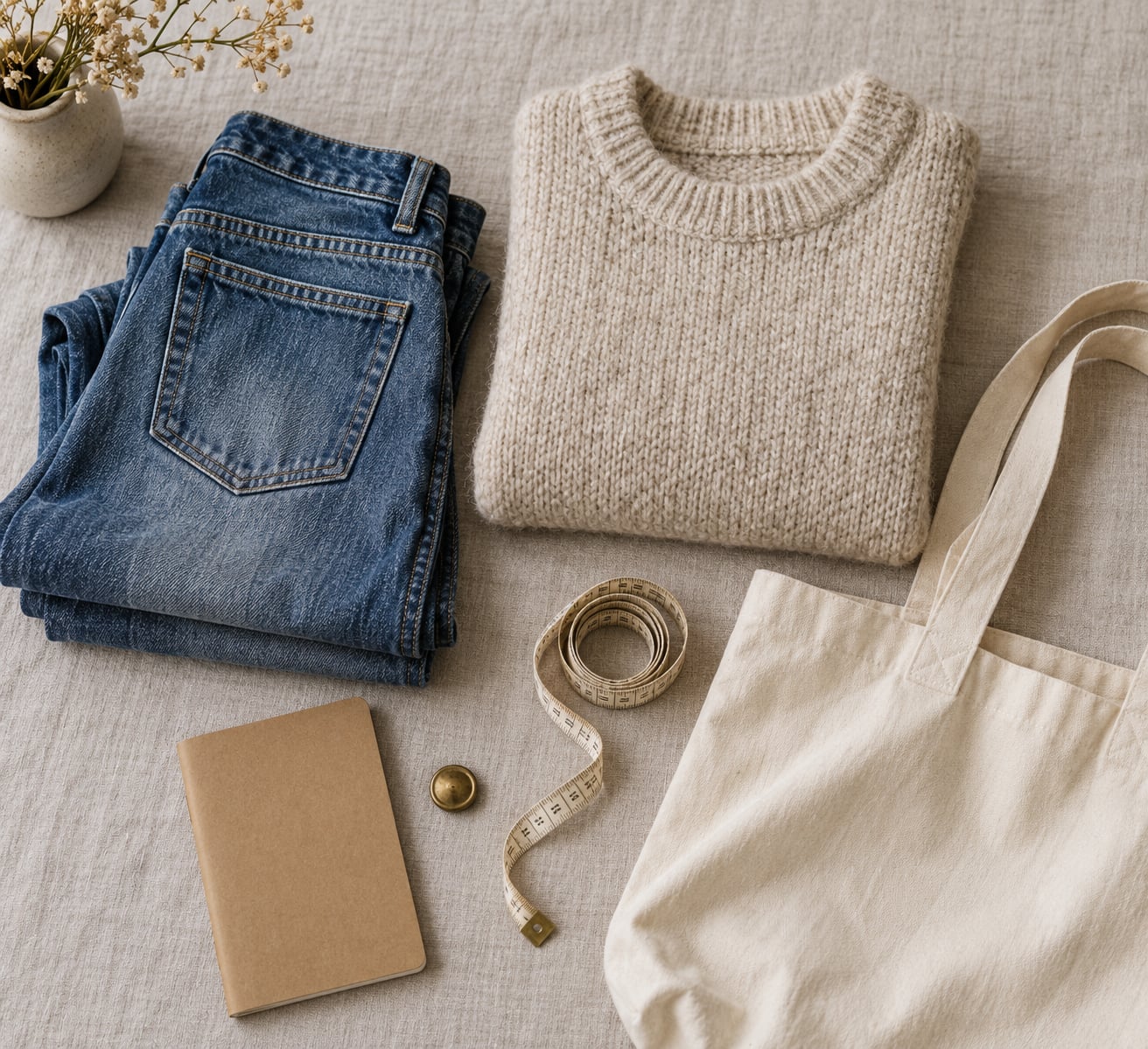
- A measuring tape. Thrift sizing is not sizing. A medium from 1994 and a medium from last year can be a completely different garment, and a tape measure does not lie about a waistband.
- Your real measurements. Bust or chest, waist, hips, inseam, and shoulder width, written down. Size charts measure a garment, not a body.
- A phone with a camera and a reverse image search tool. Point it at a label or a maker’s mark to identify a brand and get a rough sense of what the piece sells for new.
- A budget number for the trip. A firm cap you can say out loud, plus a rough number of items you are actually shopping for.
- Reusable bags and a belt bag. Going hands-free keeps your phone free for photos and measurements, and it stops you from abandoning a pile of clothing on the floor because your tote filled up.
- Layers. A sweater over a shirt lets you try sizing on top of what you are wearing without a fitting room, which most thrift stores still do not have.
- A shortlist. In a notes app is fine. Paper is faster when your phone battery is dying, which it will be.
- Cleaning supplies waiting at home. A wash load, a spray bottle, and somewhere to air out a find before it enters the closet.
Do one thing before the first trip: check the categories you already own. Most thrift closets are not short on sweaters. They are short on a good jacket, a working iron, or a pair of boots that fits. Thrift the gap, not the category.
How to Thrift Like a Pro: The Seven-Step Routine
Step 1: Set a shopping budget and decide what you are shopping for
Pick a spending cap before you walk in, and a number of items that is a target rather than a maximum. Pros I have shopped with all carry the same rule: three things was a good morning.
Then separate planned purchases from impulse ones. A planned purchase answers a gap you identified in step two. An impulse purchase answers the moment. If you cannot name the gap, it is not a find, it is a donation with your money attached.
Step 2: Build a shortlist so you thrift like a pro, not by accident
The list does not need to be long. Five specific items beats twenty vague intentions, and a list is the single habit that separates people with good thrift hauls from people with a closet full of regret.
Include the measurement you need, the color, and the reason. “Dark straight-leg denim, 30 inch inseam, 32 waist, workwear weight, for the two days a week I wear jeans” is a shopping brief. “Jeans” is a wish.
Step 3: Know where to thrift, from charity shops to resale apps
Different sources produce different finds, and mixing them up wastes a lot of afternoons.
- Chain charity shops have the highest volume and the steadiest restocking, often several drop-offs a day on weekdays. Sorting is rough and sizing is chaotic, which is exactly why good pieces survive.
- Local and independent charity shops run tighter curation, so the average item is higher quality and the volume is lower. Smaller donations, gentler handling.
- Consignment shops resell on behalf of the original owner, which usually means someone cared for the item. Expect a higher price tag and a shorter size range.
- Upsale and vintage shops are where genuine older pieces live. Price is higher, the pick rate is far better, and everything gets inspected before it hits the floor.
- Garage and estate sales reward early mornings and cash. Households clear whole categories at once, so a single table can hold a decade of cast iron or denim in one trip.
- Antique markets and maker fairs are where handmade pottery, mid-century pieces, and craft supplies turn up. Go with a measuring tape and know your car’s cargo space.
- Resale apps and sites replace the treasure hunt with a search, and they are a different skill entirely. See the online section below.
Community thrift groups on social platforms are worth a scroll too, particularly for larger items where pickup is local. Ask for the measurements first, and ask whether they smoke, before you drive across town.
On location, regular thrifter advice converges on one thing: shop in neighborhoods where people have money. Suburban and affluent areas donate better, the stores are less crowded, and the odds of finding real vintage improve. Dense downtown stores are busy and picked over, which is normal, not a sign you are bad at this.
Step 4: Inspect quality before you hand over any money
Run every garment through the same check in about fifteen seconds. Hold it up to the light, turn it inside out, and look at the parts that wear out first.
- Fabric. Check the care label composition. Wool, cashmere, silk, and linen are worth more attention than a polyester blend that pills after three washes, but also require more careful cleaning.
- Seams and stress points. Look at armholes, crotch, underarm, and shoulder seams. Slight looseness is normal. Open seams or puckered fabric are not.
- Stains and snags. Check underarm areas, collars, hems, and the seat. Hold the fabric up to light to find pinholes, moth damage, or small pulls.
- Odor. Bring your nose close to the seams and underarm, not just the collar. Old storage smell means airing it out. A sharp chemical or musty smell means walking away.
- Structure. Buttons, zippers, buckles, and hardware. A missing button is a five-minute fix. A broken zipper on a lined jacket usually is not.
- Fit. Layer it over what you are wearing and check the shoulders, length, and where it pulls.
Skip anything with visible mold, pest damage, or a car seat, helmet, or mattress you cannot verify the history of. Those are safety items, not bargains, and no price makes them worth it.
Step 5: Price the item against the alternatives
The test is one question: would I buy this at full price, right now, in a regular store? If the answer is no, the thrift price does not rescue it. This is the single most effective guard against overspending, because cheap is a feeling, not a value.
Then run the math. Divide what you paid by how many times you will realistically wear it. A coat that costs a fifth of its retail price and gets worn 100 times beats a mid-priced coat worn twice a year, every single time. This is cost per wear, and it is the honest measure of whether thrifting saved you anything.
Add the hidden costs before you commit: a tailor for two hems, a cobbler for a resoled boot, a dry cleaner for a wool blazer. If the repair bill approaches the cost of a new item, buy the new item. Also check that the piece fits your actual life, which means surviving a dog, a toddler, or a busy laundry week.
Step 6: Style secondhand pieces so they look intentional
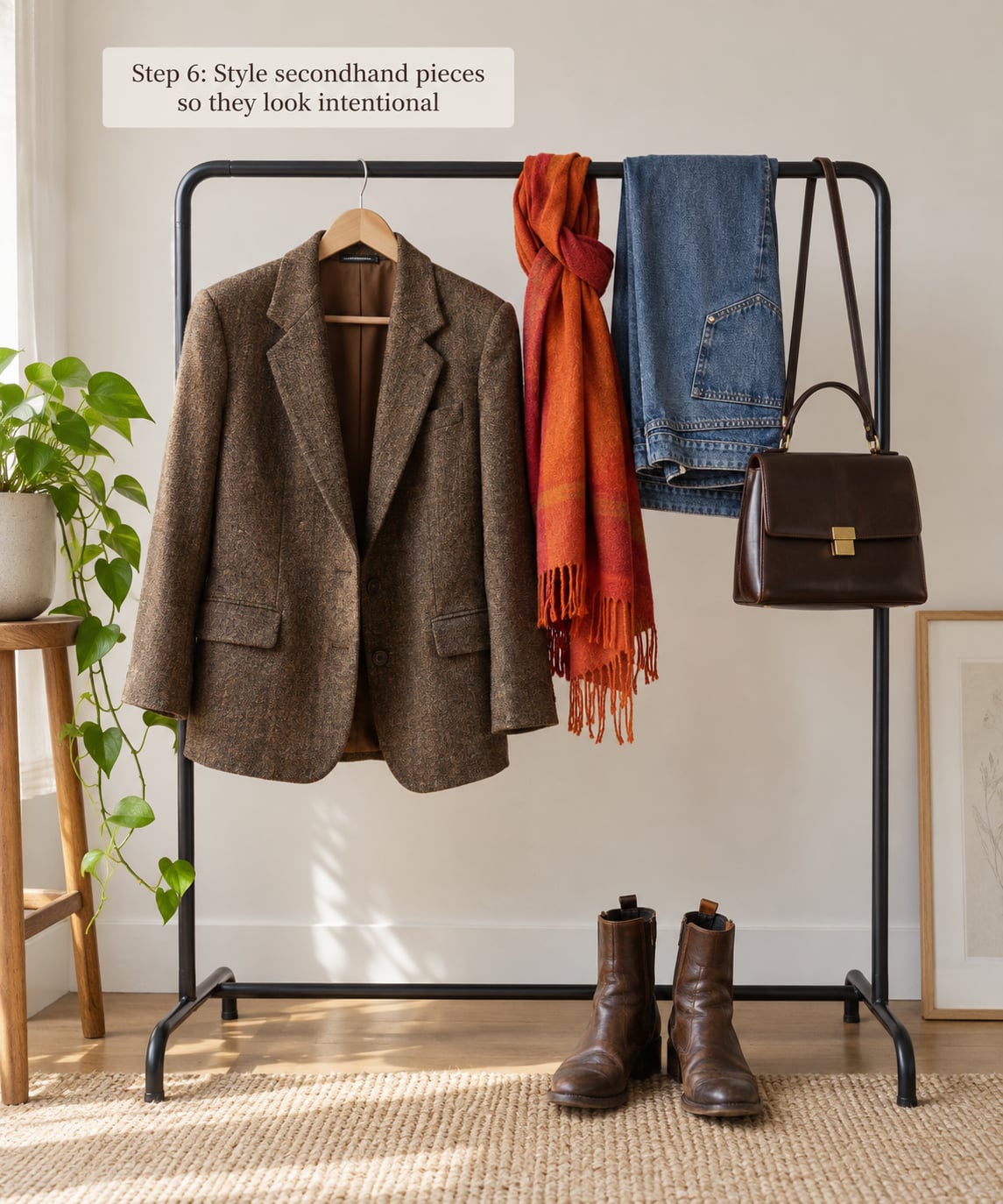
Secondhand clothes do not read as dated because of their age. They read as dated because of the fit and because nothing else in the outfit is deliberate.
- Fix the proportions. A blazer with shoulders that end past your own looks borrowed. Have it taken in, or size up and wear it open over a fitted layer. Hemming is cheap and changes everything.
- Anchor with something new. A great secondhand coat over a plain new tee and your everyday jeans looks like a styling choice, not a compromise.
- Shop the sections other people skip. Menswear racks carry oversized tees, plain knits, sturdy denim, and better-fitting trousers. The tailoring there is often better too.
- Build formulas, not outfits. A tucked knit plus wide denim plus a structured bag. Learn two or three and repeat them until the pieces earn more attention.
- Use accessories deliberately. A bright scarf, a good belt, or a simple watch pulls a whole look together, and accessories are the easiest secondhand category to find in good condition.
Wear what makes you feel most yourself, not what you think is most valuable. Someone will notice the coat, and nobody has ever said anything unkind about a person wearing a great coat.
Step 7: Clean, repair and track what you keep
Deal with finds as they come home, not in a pile three weeks later. Air out anything with a storage smell by hanging it near an open window or outside in dry weather for a few hours. Wash according to the care label, and steam or spray items you cannot machine wash, especially anything lined or wool.
If a garment is dry-clean only, weigh the cost against the item. A vintage wool coat is usually worth the cleaner. A lined polyester blouse probably is not. For a stubborn odor, a soak in cold water with a splash of white vinegar followed by a normal wash handles most cases that a trip through the machine does not.
Basic repairs are worth learning: replacing a button, rehemming a straight hem, sewing a small tear at the seam, or reattaching a pocket. Fixing an item yourself in an afternoon is the best deal in secondhand shopping, and it beats paying someone else to do the same job.
Finally, keep a simple list of what you bought, what you paid, and what you have worn. Most people who thrift seriously end up donating more than they expected to, and tracking cost per wear is the fastest way to see which categories are actually working for you.
How to thrift online when the racks are gone
Online thrifting is its own routine. Search by brand, fabric, and measurement rather than by style, turn on saved searches so the good stuff reaches you first, and check the seller’s return policy and posted measurements before you commit. Depop, Poshmark, ThredUp, eBay, and charity-run online shops all reward the same habits: saved searches, patient alerts, and buying on condition rather than on the photo. Expect to pay more and to wait longer, and remember that each order adds a delivery fee, so batch your finds into one order when you can.
Common Mistakes
- Shopping without a list. The fix: write the five items you came for and check them off. If the list is done, you are done.
- Buying because the price felt good. The fix: apply the full-price test. Cheap is not a reason; a bargain on something you would never buy new is still money out the door.
- Shopping only your labeled size. The fix: measure everything. Sizing is inconsistent, and the best-fitting pieces are often one or two sizes away.
- Skipping inspection in a hurry. The fix: use the fifteen-second check on every item, including accessories. Stains and odors hide in seams.
- Buying project pieces. The fix: only take on a repair you have done before or are confident you can learn in an afternoon. Otherwise the find becomes a chore and a future donation.
- Forgetting what you already own. The fix: a quick closet audit before you go. The third pair of similar jackets was not a deal.
- Overspending on fixes. The fix: price the repair with the item. When the total approaches the cost of a new version, buy new.
- Treating a dry trip as failure. The fix: restocking means turnover. A quiet trip is how the good stuff stays available for your next visit, and the knowledge you gained is real.
- Ignoring etiquette. The fix: keep aisles sorted, take only what you intend to buy to the register, leave fitting rooms as you found them, and do not sort through a pile someone else is using.
One more that catches everybody: buying something that will not fit in your car or your closet. Measure first, especially for furniture. The piece is only a find if you can actually take it home.
Frequently Asked Questions
What is the best way to start thrift shopping as a beginner?
Start with one category you actually need and a fixed budget for the first three trips. Write down your real measurements, bring a tape measure, and learn one store’s layout before spreading yourself across ten. Most beginners do better by going to the same place weekly than by visiting everywhere once.
How do you know whether a secondhand item is worth buying?
Ask whether you would buy it at full price in a regular store. If not, the thrift price does not change the answer. Then add up the cost of any repair, cleaning, or alteration, and divide the total by how many times you will realistically wear it. If that number stays high after the math, walk away.
Should I thrift clothing online or in person?
In person is better for denim, tailoring, knitwear, and anything that needs to fit your body exactly, because you can check condition and construction yourself. Online is better for rare brands, sizes that never show up locally, and pieces worth more than the trip costs. Many people use both: store for volume, apps for specific searches.
How can I make thrift finds look stylish instead of outdated?
Fit is most of it. Get hems and waistbands adjusted, choose one focal piece, and keep everything else simple and current. Layer a secondhand jacket over new basics, add one deliberate accessory, and repeat a few outfit formulas you like. Intentional styling reads as a choice, and nobody can date where the blazer came from.
How do I thrift without buying too much clutter?
Set a monthly cap on both money and item count, shop from a written list, and run every purchase through a full-price test and a cost-per-wear calculation. Donate or resell anything unworn within a few months, because a backlog you dislike is clutter with a receipt. Keep a simple log so you can see which categories actually earn their space.
Are thrift finds always cheaper than buying new?
No, and that is the biggest myth in this hobby. Dry cleaning, tailoring, and repairs add up, and fast-fashion pieces are sometimes cheaper secondhand than secondhand plus alteration. Thrifting wins on quality, uniqueness, and cost per wear, not on the sticker alone. Do the math per item and the discount decides itself.
Conclusion
The method is short enough to remember: a budget, a five-item list, your real measurements in your pocket, one good store you return to, and the full-price test on everything. On your next trip, do only the first three of those and watch what changes. The finds you were missing were probably always there, waiting for someone with a system.
And when you walk out empty-handed, remember that restocking is turnover, not a verdict on your taste. 2026 is a good year to build the habit slowly and buy fewer, better things.