Learning how to plan a group trip with friends comes down to a handful of decisions made early, in writing, by everyone. Agree on the trip’s purpose, the dates, and a per-person budget first. Name one person as coordinator, agree that nobody books anything until the group votes yes, and then book transport first, lodging second, everything else last.
Most trips that fall apart were not ruined by the destination. They were ruined by a budget nobody said out loud, a non-refundable deposit someone else covered, and a group chat with four hundred unread messages where the confirmation number got buried.
Table of Contents
- What You Need
- Step-by-Step
- Common Mistakes
- Frequently Asked Questions
- How far in advance should I plan a group trip with friends?
- What is the best app for group trip payments?
- Is there anything better than Splitwise?
- What are good questions to ask in a group trip poll?
- How do you split costs when friends have very different budgets?
- What happens if someone cancels after we already booked?
- Conclusion
What You Need
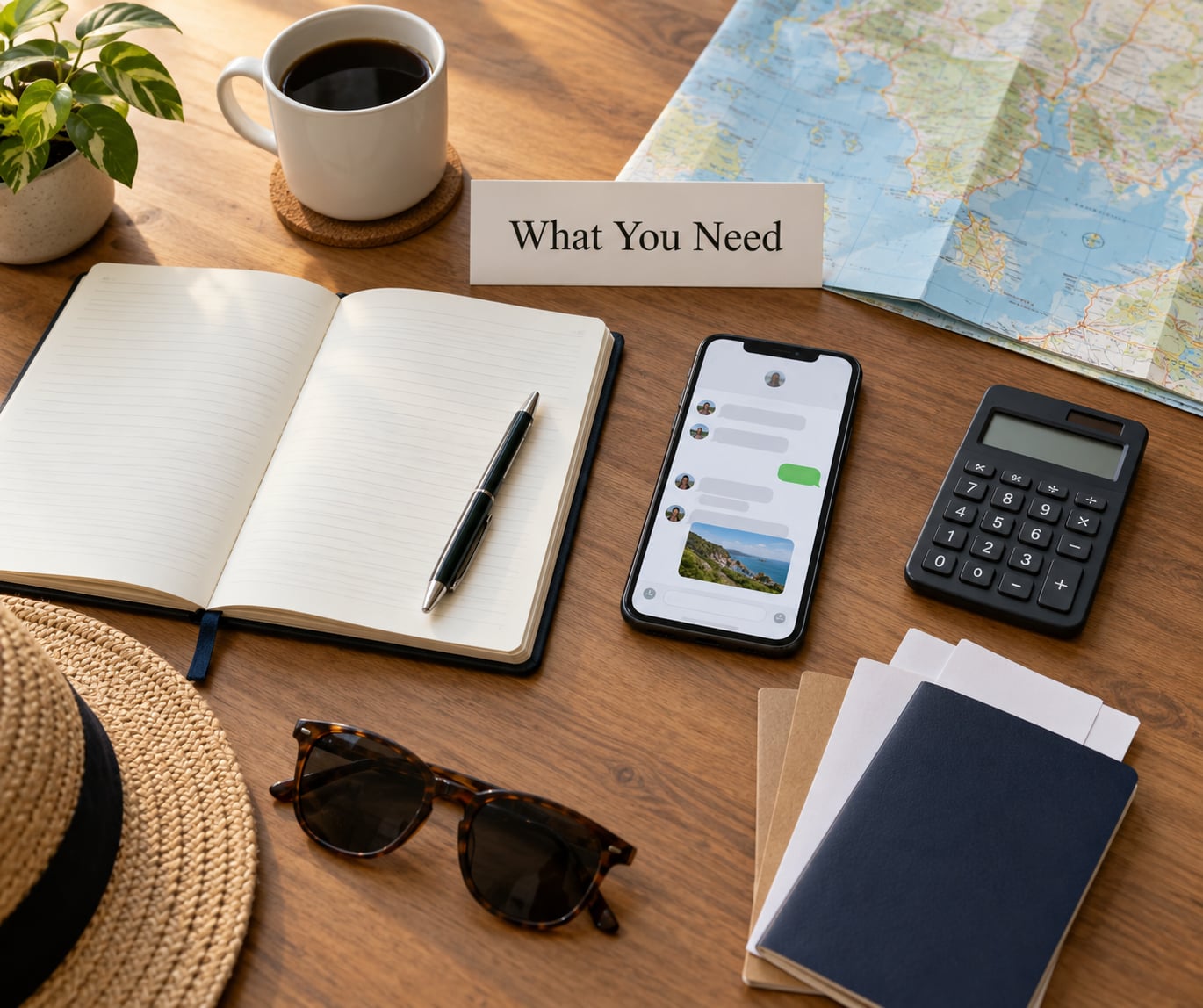
Most of what makes a group trip manageable is gathered before anyone spends money. Two hours of collecting information up front saves the arguments that happen later.
Start with the basics about your group:
- Confirmed headcount and whether anyone is bringing a partner, a child, or a friend who has never met the others.
- Hard date limits that no one can move, such as school breaks, work commitments, medical appointments, or a birthday.
- A per-person ceiling, stated honestly, plus the amount each person could stretch to without being stressed.
- Trip style votes, such as food-focused, hiking, nightlife, rest, shopping, or a mix.
- Mobility, dietary, and accessibility needs, including how many flights of stairs a person can manage and whether anyone needs an accessible bathroom.
Then the paperwork side. Every traveler should know what identification and travel documents they currently hold, when those expire, whether a visa or an international driving permit applies, and whether anyone needs a letter from a doctor for a specific medication. Check entry and vaccination rules early rather than at the airport, because some destinations ask for months of notice.
You also need somewhere to keep the plan and a way to reach each other. One group chat everyone actually reads, one shared document that holds the live version of the itinerary, and one place where booking confirmations live. Choosing these in the first ten minutes prevents six parallel conversations later.
Finally, agree on how emergencies get handled before they happen: a designated emergency contact outside the group, who carries a paper copy of everyone’s key details, and where everyone meets if phones die or people get separated.
Step-by-Step
The process below runs in order. Each step has a clear signal that it is finished, so you know when to move on.
1. Define the Trip’s Purpose and Non-Negotiables
Start by deciding what kind of trip this is, because it changes every other choice. A relaxing week at a rental house, a birthday with a shared rental car, a music festival, and a week of hiking are four different planning problems wearing the same name.
Collect the non-negotiables from everyone before you compare anything. These are the constraints that cannot move: the month, the maximum budget, the maximum number of travel days, and one or two must-have experiences. A large group almost always has at least one hard constraint, usually time or money, and finding it early narrows everything else.
You know this step is done when you can write one sentence the whole group would agree with, for example: “We are doing a four-day road trip in the fall, four people, hanging out or hiking, and each of us spends the same amount whether we share a room or get our own.”
2. Create a Shared Planning System
A planning system does three jobs: it collects answers, it records decisions, and it tracks money. One document and one app usually handle all three.
Pick tools the group already uses. A shared spreadsheet works for tracking confirmations and costs. A group chat works for fast decisions. An expense-splitting app works for settling up. Popular choices include TripIt for a live itinerary, Travefy for collaborative trip planning, Splitwise for itemized costs, and TravelSpend for people who hate expense apps and prefer a single shared pot.
Give the group a real deadline for every question. A poll with no closing date is just a slow argument.
Assign three roles and write them down. One coordinator collects answers and makes calls. One person handles money, deposits, and reimbursements. One person owns the shared document and sends the final pack a week before departure. Roles can be shared, but they should never be unassigned.
The coordinator’s job is logistics, not happiness. They are not responsible for everyone’s mood, and they are allowed to say no. Forum travelers describe this boundary constantly, often in the same words: you are not the cruise director.
3. Compare Destinations and Travel Options
Limit the group to two or three destination options. Four or more guarantees a long thread of opinions and no decision, which is the exact failure mode people complain about most on travel forums.
Score each option against the same short list so nothing gets decided by whoever types fastest: total travel time door to door, typical cost for the specific season, safety and neighborhood quality, accessibility of the places you actually want to go, and visa or entry friction.
Most comparisons are really about transport. A destination four hours away by train can beat one three hours away by air once you count airport time, luggage, rideshares, and the flexibility of arriving downtown. For road trips, many groups budget a mix of driving days and one longer transit leg rather than pure driving, which cuts fatigue and fuel cost.
Vote with a deadline. If the group splits evenly, the tie-breaker is the person whose schedule is least flexible, or a coin toss with the loser choosing the restaurant.
4. Set a Budget and Payment Plan
Set the budget after the destination and before any booking. Everyone should say a real number, out loud, in the group chat. This conversation is repeatedly cited on travel forums as the single step that prevents the money fight later.
Break the total into per-person daily categories: transport, lodging, food, planned activities, and a contingency of roughly ten percent for the unexpected. Work out the daily figure by dividing the per-person total by the number of days. If two people in the group have very different budgets, decide now who is absorbing the difference, and put it in writing.
Choose one of two payment models and tell everyone which one you are using. Itemized splitting charges each person only for what they consumed, which is fairest and requires the most record-keeping. A shared pool means everyone puts the same amount into a common account, and the coordinator pays shared costs from it, which is simpler but hides who is actually over.
Decide the collection deadline, the payment method, and what happens to someone who does not pay by it. People describe unanswered payment requests as the single most repeated annoyance in travel groups, so pick a method the whole group will actually use and set a hard date.
5. Book in the Right Order
Booking order matters because the most restrictive reservation should be the one you secure first. If everyone can meet the date, lock in the least flexible thing first.
The usual sequence: transport first, then lodging, then anything with limited capacity such as a rental car, tours, or dinner reservations, and optional add-ons last. Travel insurance, if the group wants it, goes immediately after transport.
For a group of eight or more, ask hotels about a room block or a group rate. In a room block, the hotel holds a set number of rooms at one price and each guest books and pays individually, so one person’s cancellation does not sink the others. Ask directly for the group code and the cutoff date, and write both into the shared document.
Most travelers book their own flights and coordinate arrival windows rather than buying one group ticket. That keeps flexibility when someone is delayed, at the cost of everyone having to share their itinerary so the coordinator knows when to expect arrivals.
After every booking, record three things: the confirmation number, the cancellation policy in plain words, and the date the free-cancellation window ends. This step is finished when every non-refundable dollar in the trip is written down next to a name.
6. Build a Flexible Itinerary
Turn the confirmed bookings into a day-by-day schedule that still leaves room to breathe. A packed itinerary for a group of friends tends to collapse on day two.
Anchor each day with one or two things that need tickets or reservations, then leave the rest open. A working pattern is two anchor mornings and free afternoons, or one anchor activity per day plus an unplanned evening block. Add travel buffers of at least thirty minutes between neighborhoods, and more if your group includes anyone traveling with small children or mobility aids.
Plan for different energy levels. Mark which days are active, which are slow, and which are optional. Then schedule one deliberate split-up block, usually an afternoon or evening, where people do their own thing and meet for dinner. Groups that build in free time report fewer arguments than groups that fill every hour.
A few smaller details make a shared itinerary work better:
- Two meal options per day, not one, so nobody is stuck waiting for a table.
- A backup plan per day, such as a covered market or a cafe when weather turns.
- Meeting points named as landmarks rather than as a pin everyone drops into a different map app.
- Local transit or parking notes copied once, not re-explained each morning.
- Notes on accessibility for each planned activity, including stair-free routes and restroom locations.
For LGBTQ+ and chosen-family groups, add a short safety section to the same document: which neighborhoods to plan around after dark, which venues are welcoming, and where to regroup if someone needs to leave a situation quickly without drawing a scene. Small private groups report far less friction than large mixed groups, so consider splitting into smaller subgroups on the busiest days.
7. Confirm Details and Share the Final Pack
Seven days out, build one final pack and send it to everyone at once. Include every confirmation number, addresses with entry instructions, times in local time with the time zone labeled, a one-page daily schedule, emergency contacts, and any entry or vaccination documentation.
Ask people to confirm receipt. A single reply-all saying “got it” removes almost all pre-trip anxiety, and it makes late cancellations visible early enough to rebook.
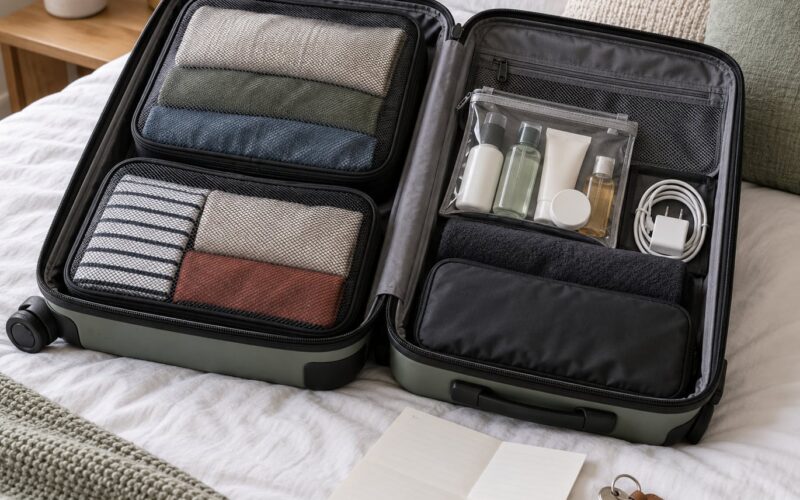
Add a small pre-trip checklist each person can handle in ten minutes: charge devices and pack chargers, download an offline map of the area, tell someone outside the group the itinerary, carry a card with a little local currency, and check that travel documents are still valid.
Common Mistakes
Deciding by vibes in the chat. Fix: move every question into a poll with a closing date, and cap destination options at three.
Booking before the group agrees. One person finds a great deal and books it for two others who had not committed. Fix: no reservations until the vote closes and the deposit terms are shared with everyone.
Leaving the budget vague. “Let’s just spend what we need” is how a moderate trip becomes a financial story people still argue about. Fix: a real per-person ceiling, agreed before booking, with a stated stretch amount.
Hiding costs in the fine print. Resort fees, bag charges, cleaning fees, city taxes, and single supplements often add up to a meaningful share of a trip. Fix: add a ten percent contingency and list every fee in the shared document.
Overpacking the itinerary. Fix: one or two anchors a day, one scheduled split-up block, and backup options for weather.
Leaving money to the end. Fix: set a collection deadline before the first booking, choose one payment method, and put the non-payment policy in writing before it is ever tested.
Ignoring accessibility and dietary needs. A venue that looks fine online may have stairs only at one entrance. Fix: ask each person privately what they need, then call venues ahead rather than assuming.
Burning out the coordinator. Fix: hand off the shared document and money tracking to other people, and remind everyone that the coordinator is not responsible for fun.
Not planning for a late cancellation. Fix: agree in advance, before booking, on who absorbs a loss when a friend drops out after a non-refundable payment. Waiting to discuss it after the fact guarantees the worst possible conversation.
Frequently Asked Questions
How far in advance should I plan a group trip with friends?
For a domestic weekend about four months out is usually enough. For international trips, start nine to twelve months ahead if you want a specific neighborhood, a room block, or flights near a holiday. Give yourself at least two weeks for a simple drive, six weeks for most domestic trips, and three to four months for anything international or festival-based. The calendar starts when the group agrees on a purpose, not when it agrees on a destination.
What is the best app for group trip payments?
For most friend groups, an itemized expense-splitting app is the safest default, because each person is only charged for what they actually used. Set the whole group up in the app before the first booking, not during the trip. If your group hates expense apps, use a single shared pot that everyone contributes to equally and one person reconciles it weekly.
Is there anything better than Splitwise?
There is no single best answer, because the friction is usually people rather than software. Itemized apps suit groups with different spending habits, while a shared-pot setup suits groups who want less record-keeping. Some travelers simply keep one running total in a shared spreadsheet and settle at the end. Pick the option everyone will actually use, because the most feature-rich tool loses to the simplest one when half the group ignores it.
What are good questions to ask in a group trip poll?
Ask about hard dates, the per-person budget ceiling, trip style, must-do experiences, dietary and accessibility needs, how many nights people can take, and whether anyone would rather stay home than spend. Add one question about tolerance for travel time and one about whether they would accept a non-refundable deposit. Ten questions is plenty; more than that and response rates drop sharply.
How do you split costs when friends have very different budgets?
Decide before booking who pays for the upgrades. The simplest approach is a shared base trip that everyone funds equally, with each person paying their own optional extras like nicer rooms, spa visits, or premium seats. Avoid subsidizing silently, because the person paying for others usually resents it later. Write the arrangement down and say it out loud in the group chat so nobody is surprised by a request.
What happens if someone cancels after we already booked?
It depends on the cancellation policy, which is why you record it at booking time. Non-refundable costs already paid for that person are usually their responsibility unless the group agrees to absorb them. The kinder and clearer path is to set the rule in advance: whoever confirms a non-refundable booking pays for it if they drop out. If the booking is refundable, move fast, because free-cancellation windows are short.
Conclusion
Do four things this week, before anyone opens a booking site. Write down what kind of trip you want and the dates nobody can move. Ask every person for a real per-person budget and their non-negotiables. Set up one group chat, one shared document, and one expense app. Then name a coordinator who handles logistics and nothing else.
Once those four are done, comparing destinations, booking in the right order, and building a loose itinerary becomes straightforward. The hard part of learning how to plan a group trip with friends was never the logistics; it was getting everyone to be honest about money and time while nobody was feeling pressured.