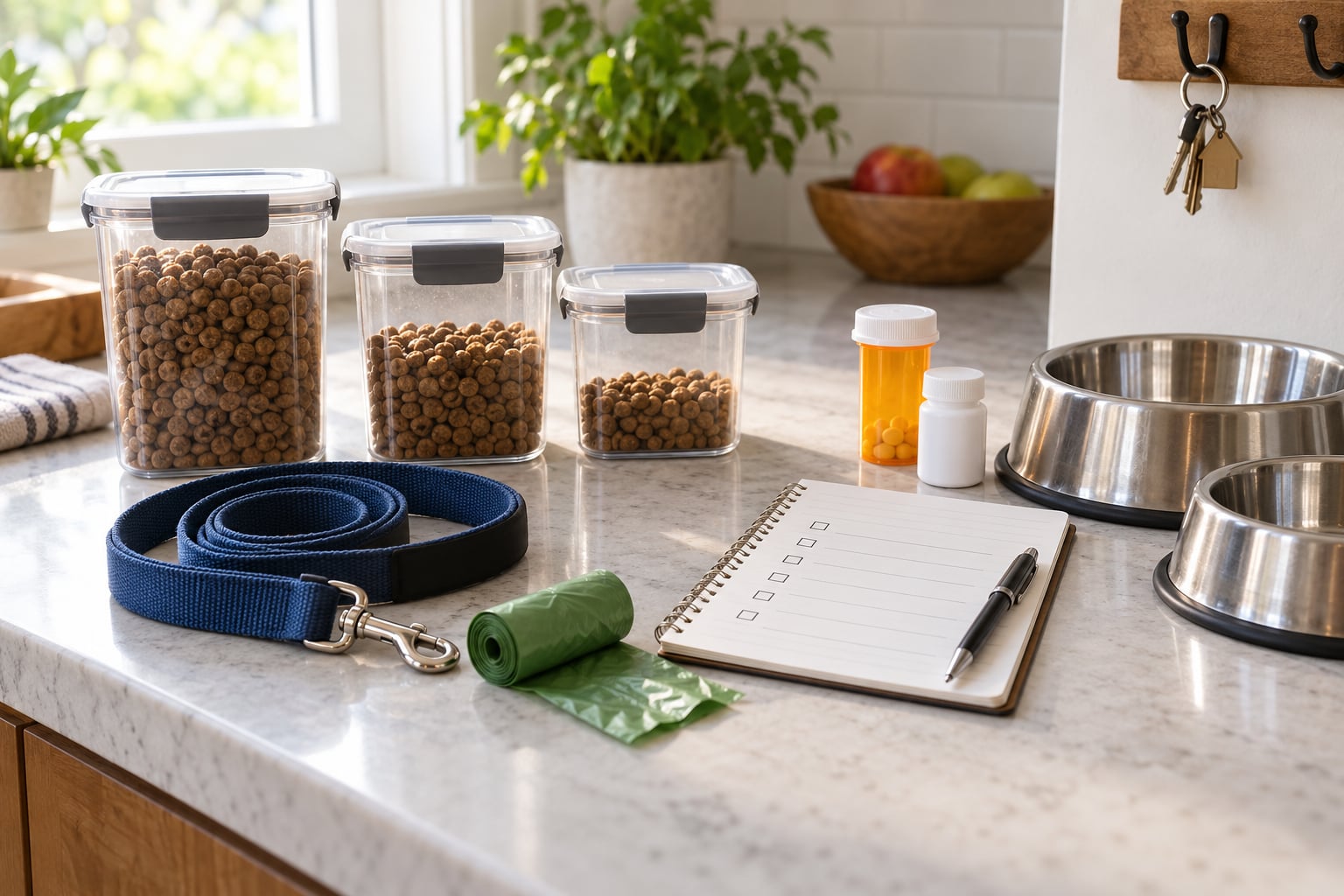
Learning how to pet sit for friends comes down to three things: a written routine instead of a verbal one, a real meetup with the animal before you commit, and a plan for the day something goes sideways. Get those right and a weekend of dog walking is genuinely easy. Get them wrong and you are guessing at a sick animal’s symptoms while texting an unreachable friend in another time zone.
Almost every avoidable disaster comes from an assumption. “Feed him as usual” turns into a portion debate at 6pm. The trap door to the yard was never mentioned. The vet number was in a text from March. I would rather spend an hour with my friend at their kitchen table than rescue a frantic call from a neighbor at midnight.
This checklist is current for 2026 and covers everything from the first message to handing the pet back.
Table of Contents
What You Need Before You Pet Sit
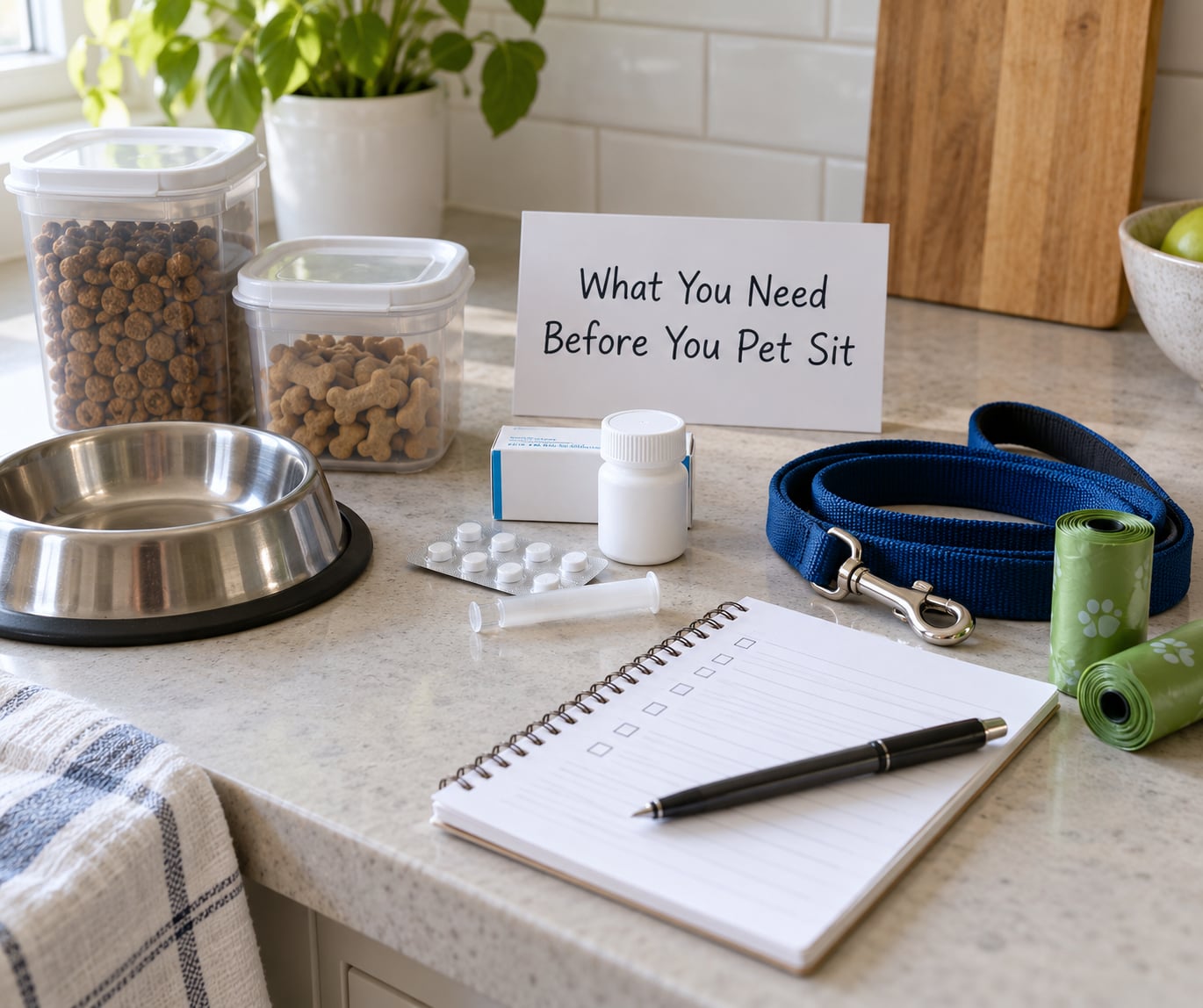
You need four things before the sit starts: a written care plan, your own emergency instructions, the pet’s supplies, and a clear agreement about money and access. If any one of those is missing on the day you begin, you are improvising with someone else’s animal.
The care plan
The single highest-value thing you can be handed is a one-page written routine from the owner. Sitters in the r/petsitting threads say the same thing over and over: instructions like “feed them as usual” leave you guessing, and guessing is where things go wrong. Write it down together, then photograph it and keep it on your phone.
A workable care plan covers exact portion sizes and not just scoop counts, exact clock times for feeds and medication, the potty schedule, water bowl location, walk duration and route, and any commands or rules the pet already follows. It should also name what the pet is allowed to eat as treats, because “a little bit of cheese” means something completely different to a dog with a sensitive stomach.
Emergency authorization
Ask for the regular veterinary clinic’s name, address and phone number, plus a second clinic that is open after hours. Ask for the microchip number, the vaccination record, and a written emergency spending limit with a phrase like “go ahead if it is under a set amount without calling me.” That single sentence is what lets you act in minutes instead of hours.
Also collect a second emergency contact who is authorized to make decisions. If your friend lands in the air with no signal, you need a human who can say yes.
Supplies and access
Confirm you have enough of the pet’s actual food for the whole stay plus two extra days, and check that prescription food or supplements will not run out. Bring your own leash, waste bags, a spare key, and a phone charger that reaches the farthest corner of the house.
Sort out access before the owner leaves: which door to use, whether there is a garage code or a lockbox, where the spare keys live, and what to do about an alarm. Park where you will not be towed.
A printable checklist
Copy this list into your notes and tick each line during the meetup.
- Feeding amounts, times and food location
- Medication name, dose, time and whether it is given with food
- Potty schedule and where accidents are cleaned
- Walk times, duration, route and leash rules
- Water bowl and refresh schedule
- Vet name, address, phone and after-hours clinic
- Emergency spending limit and a human who can authorize overages
- Microchip number and vaccination records
- Trash day, recycling and where the bags go
- Gate, door and window security, plus known escape risks
- Bedding, favorite toy, and any item that carries the owner’s scent
- How often you should send updates and by what method
Step-by-Step
The process runs in seven stages, from meeting the pet to handing it back. Each stage has one thing that tells you it went well, and if that check fails you fix it before moving on.
How to Pet Sit for Friends: Meet and Plan in Person
You should meet the pet in person before you agree to anything, ideally twice. Sitters consistently describe the meet and greet as the step that decides whether a stay is doable, because you cannot tell from a photo whether a dog will relax around you in ten minutes or bark for an hour.
Watch how the pet behaves with the owner present. Note who initiates contact, whether the dog pulls hard on the leash, whether the cat hides until the room is empty, and whether either animal resource-guards food or toys. A dog that is friendly with its owner can be much less friendly with a stranger holding a bowl.
Ask your questions in a fixed order so nothing gets skipped. Sitter forums have a consistent tip here: ask about the potty schedule before you ask anything about food, because owners describe the bathroom routine confidently and skip it later.
- What is the daily schedule for food, water, medication and walks?
- What does the potty routine look like, and where do you clean accidents?
- What are the current health issues, past surgeries and medication names?
- Does the pet have separation anxiety, food guarding, or a fear of strangers?
- What are the house rules: furniture, bedrooms, the cat’s space, where the dog sleeps?
- How do you want updates, and how often?
- What is the spending limit in an emergency, and who else can authorize it?
- Which behaviors are normal for this pet and which should prompt a call?
You have it right when you can recite the routine back to the owner from memory without reading your notes. Do that out loud in front of them; any gap in your understanding is a gap you will not notice at 6am on day three.
Prepare the Home and Pet Supplies
You secure the home and set up supplies in the first few hours, before anything goes wrong. Walk the house the way an escape artist would.
Check every exterior door, gate and window latch. Put childproof latches on the bins the dog can nose open, and secure the recycling, because a determined terrier treats a blue bin as an unlocked restaurant. Keep medication and cleaners in a closed cabinet. Move houseplants you are unsure about out of reach, and remove anything on the floor a pet might swallow.
Put the trash schedule on your phone for the full stay. An overflowing bin is the fastest way to make a house smell like a kennel, and it signals to the owner that nobody is home.
Measure the food into a container with the portion marked so you are not estimating by eye at mealtime. For medication, keep it in the original pharmacy packaging with the label visible; guessing from a loose pill in a bag is how pets get the wrong dose.
If the home is missing something essential, buy it and tell the owner the same day. A slow bowl, an extra harness, a scoop for the litter box. If it costs real money, keep the receipt; expenses are easier to settle at the end than to argue about mid-stay.
Do the Drop-Off and First Care Check
The first hour after the owner leaves tells you most of what you need to know, so do it deliberately. Sign in on the owner’s system if they use one, or take a photo of the rooms you are responsible for as they looked on arrival.
Then do a physical check: eyes clear, nose reasonably wet or dry without crusting, no discharge, normal walking, normal energy for that time of day. Fill the water, do the first walk or litter box visit, and give the first feed on schedule rather than early because you are anxious.
Confirm the exit plan for yourself: which door, which key, whether the alarm is set or unset when you leave. Send the agreed first update even if everything is fine, because the first message is what teaches your friend what to expect from you for the next ten days.
You know the handoff went well when the pet has eaten, drunk and eliminated normally, and when the first update has been answered with something closer to “great, thank you” than a follow-up question.
Follow the Daily Care Routine
Run the same sequence every day, because animals read consistency better than enthusiasm. A workable order: morning potty break, then the first meal with any morning medication, fresh water, a walk or play session, midday check for cats or for dogs that need a longer rest block, afternoon potty break, evening meal with evening medication, final walk, then settle the pet in its usual spot.
A few rules keep the routine from drifting. Keep the owner’s schedule instead of imposing your own, even when you think you know better. Skip a meal only if the vet or the care plan tells you to. Wipe the bowl and refresh the water every visit rather than topping off a stale bowl. Keep the pet’s own bedding and a worn item that smells like the owner in the same spot, which measurably lowers stress.
For cats, scoop the litter daily, ideally twice during a long stay, and keep the box in the same location. For dogs, stick to the walks the owner actually does, because doubling the exercise on day two often shows up as a limping dog on day three.
Write down what happened after each check. A two-line log keeps you honest and gives you something concrete to show the vet if something goes wrong.
Monitor Health and Behavior Without Guessing
Distinguish normal settling from a warning sign. It is normal for a dog to be clingy or bored in a new person’s house, and for a cat to hide for a day or two. It is not normal to refuse both food and water, to vomit repeatedly, to limp, to breathe hard at rest, to have pale gums, to have a seizure, or to be unable to urinate, which in a male cat is an emergency in itself.
Watch for the things that cause most preventable trouble: chocolate, grapes and raisins, onions and garlic, alcohol, caffeine, xylitol in sugar-free gum, macadamia nuts, and cooked bones that splinter. On the plant side, true lilies are acutely dangerous to cats, and pothos, philodendron and sago palm all cause real problems if chewed.
Never give a pet human medication. Not ibuprofen, not acetaminophen, not an over-the-counter sleep aid or allergy pill, not a friend’s leftover. If the pet needs something, it comes from the veterinarian and nothing else.
For a suspected poison, call the ASPCA Animal Poison Control line, which charges a consultation fee, and your vet at the same time rather than waiting to see what happens. Anything you are unsure about is worth a phone call; a clinic that thinks you are overreacting costs less than the alternative.
Send Updates and Handle Changes
Set the update cadence in writing, usually once a day plus a photo after each walk. Updates do more work than anything else you will do during the stay: pet sitters in community forums point out that daily photos are what reduce the owner’s anxiety and the sitter’s own guilt at the same time.
Report three things every time: what the pet ate and drank, what it did, and anything that was different from yesterday. Small differences are the useful data, so do not wait for a crisis before mentioning that the dog ate half its dinner or that the cat slept in the closet all morning.
Anything that breaks the routine gets a call, not a note in your log. That means a missed meal, a skipped medication dose, a broken latch, a leaking pipe, a dead bulb, or a spider you are certain is a brown recluse.
On money, buy the essentials yourself and keep receipts, then ask before spending on anything non-essential. A tab you both forgot about is a worse outcome than an awkward five-minute conversation.
When the owner cannot be reached, work down this order: try every channel you agreed on, then the second emergency contact, then the vet for advice, and treat the pet’s welfare as the priority. If you are facing a genuine emergency and the owner is unreachable, take the animal in. You can explain yourself later; you cannot explain not having taken the animal in.
Finish with a Clean Handoff
Close the stay the way you opened it: deliberately and in writing. Do the final agreed care task on time rather than skipping it because the owner is already on the way, since a dog waiting an extra hour for its walk is a dog that greets them with muddy paws.
Clean as you go. Take out trash, wipe counters, sweep the kitchen floor, empty the litter box one last time, and put your own belongings together. Gather the pet’s things: leash left on a hook, medication put back in the labeled bin, the water bowl washed and refilled. If you used a bed pad or borrowed a crate, return it clean.
Hand back the keys in person if you can. Send a short written summary covering the whole stay, how the pet behaved, anything that concerned you, and a photo of the log. Settle up the money and hand over receipts the same day, while the details are still clear.
A good ending looks like this: pet handed back, house tidy, keys returned, and a text that says the stay is over without a single unanswered question hanging over the friendship.
Common Mistakes and How to Fix Them
Almost every pet-sitting failure traces back to one of a handful of avoidable mistakes. Here is what goes wrong and what to do instead.
Changing the diet
A sitter who upgrades the food to “something better” is gambling with the pet’s digestion. Fix: use only the food in the house, and if it will run out, tell the owner before you improvise.
Skipping or guessing at medication
Missed doses accumulate quietly, and double doses are genuinely dangerous. Fix: set a phone alarm for every dose, mark each one as given, and never improvise with anything that is not in the labeled pharmacy packaging.
Assuming the pet is fine after odd behavior
The pet hides on day one and eats nothing on day two, and the sitter decides it is personality. Fix: compare against the normal baseline you wrote down at the meetup, and call the vet on the first real change rather than waiting for a crash.
Failing to secure doors and bins
The pet gets loose on day four because a screen door was never latched. Fix: check every exit and every bin on arrival and again at the end of each visit, and treat any latch as a question to ask about.
Sending too many or too few updates
Hourly texts get read and ignored; silence gets read as a disaster. Fix: agree on one update a day with a photo, then add extra only when something changes.
Leaving your own items unattended
A laptop, a stack of mail and an unfamiliar ring tone add stress to an animal that is already unsettled. Fix: keep your stuff minimal, in one spot, and muted.
Mixing up food, bowls or medication between pets
In a multi-pet household, the fastest route to a very bad afternoon is giving the dog the cat’s food. Fix: label bowls, feed in separate rooms, and keep each pet’s medication in its own clearly marked container.
A few closing safety and communication habits tie it together. Never give human medication to an animal. Write things down rather than trusting memory. Call your friend early and small rather than late and big. And if the pet, the house or the length of the stay makes you uneasy, say no before you start, not on day nine.
Frequently Asked Questions
Can I pet sit for a friend without staying at their house?
Yes. Most friend sits are drop-in visits rather than overnights. For a healthy adult dog, three or four visits a day covering walks, meals, medication and bathroom breaks is usually enough, and for a cat one or two daily check-ins of fifteen to thirty minutes usually covers food, water, litter and play. Overnight stays make sense for puppies, dogs with separation anxiety, cats that refuse to eat alone, or medical aftercare.
What should I do if the pet will not eat or takes medication?
Skip nothing silently. Call or text the owner immediately and note the time of the last successful meal. If the pet also refuses water, vomits, or seems sluggish, contact the veterinarian the same day rather than waiting. Never substitute food, and never give human medication or double a missed dose. A pet that eats nothing for a full day, or a cat that will not urinate at all, needs a vet immediately.
How many times a day should I visit or walk a friend’s pet?
Follow the pet’s normal schedule rather than a rule of thumb. Most adult dogs need three or four visits daily for walks and bathroom breaks, puppies need more frequent breaks, and cats typically need one or two check-ins of fifteen to thirty minutes. Long stays sometimes work better with two longer visits than many short ones. Write the agreed schedule down on the care plan and set alarms so nothing depends on your memory at 6am.
What if I find the pet sick but the owner is unreachable?
Try every contact channel you agreed on, then reach the second emergency contact the owner gave you, then call the veterinary clinic for advice. If the pet is genuinely distressed, in pain, struggling to breathe, seizing, or unable to urinate, take the animal in regardless of whether you have spoken to the owner. Do the safe thing for the animal and explain your decision afterwards. Keep every receipt and log entry from that day.
Should pet sitters be paid, and who pays for supplies?
Either is fine, but say it out loud before the stay instead of after. Common options are a straight swap of favours, an agreed daily amount that sits below the professional rate, or a gift such as a bag of food, a vet-covered visit, or grooming. Agree who pays for anything extra you buy, from waste bags to prescription food, and keep receipts. Settling money the same day you return the pet keeps the friendship clean.
Conclusion
Start with the checklist, not the suitcase. Work through the list above at a kitchen table with your friend, meet the animal in person twice, and write the routine down together before anyone leaves town.
Once the care plan exists, the job is mostly repetition: same times, same portions, same medication, same one daily update. Consistency is what keeps the animal calm and keeps your friend relaxed, and a clear emergency authorization with the vet’s number written down is what protects both of you when something unexpected happens.
Small favors between friends go wrong on details, not on willingness. Nail the details and you will be the person everyone asks to watch their pet.