A good first date is simple to plan: pick a public place where talking is easy, offer a specific day and time, and keep the whole thing short enough that neither person feels trapped. Most people overthink this one and end up planning a three-hour production with tickets booked. You do not need that. Here is how to plan a good first date in a way that feels warm, low pressure, and easy to say yes to.
The advice below assumes nothing about who you are or who you are dating. If you are queer, trans, bi, questioning, or somewhere in between, that only adds a few practical details, and they are covered here.
Table of Contents
What You Need
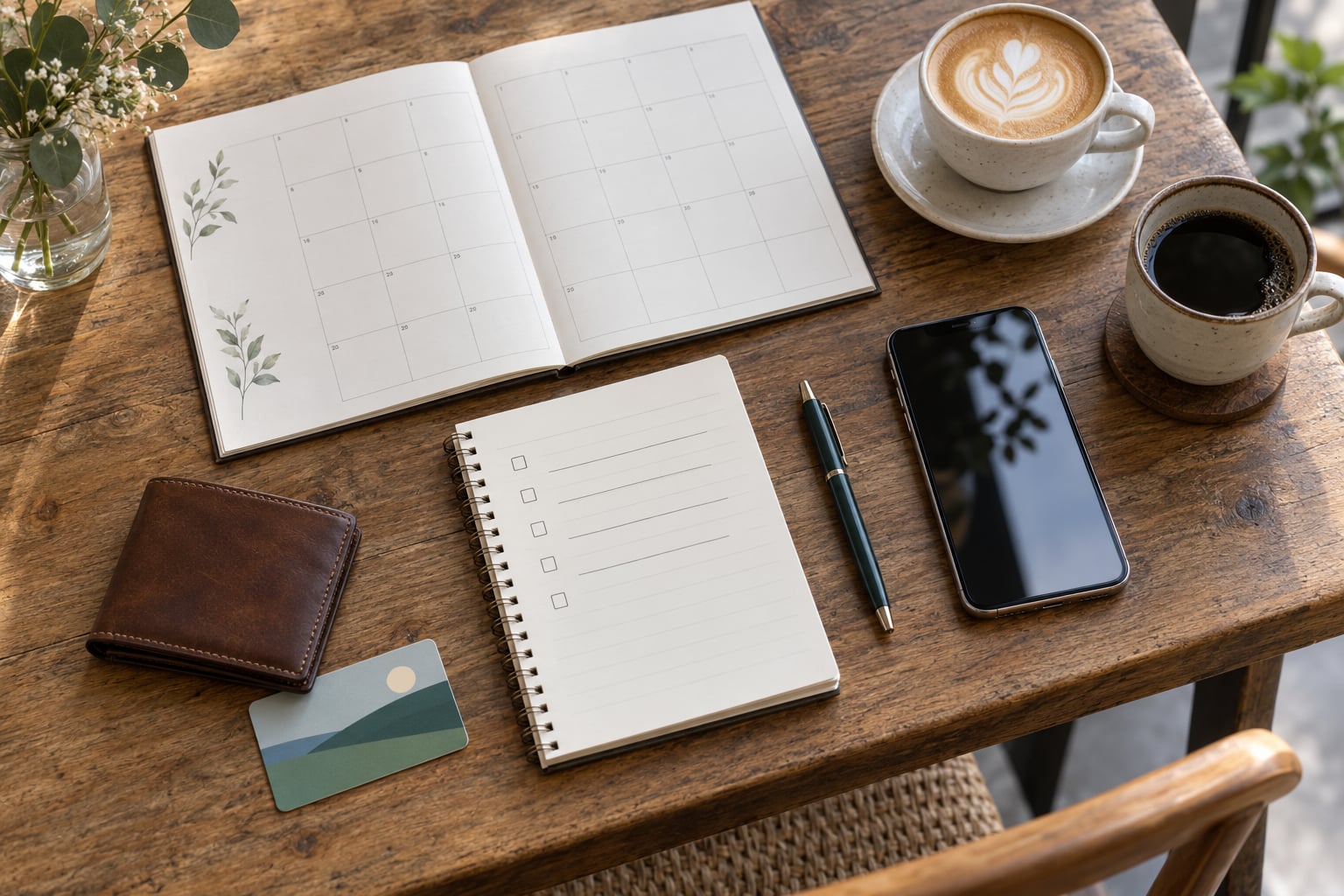
Before you pick a venue, get four things straight. Everything else is decoration.
Budget. Decide what you are genuinely comfortable spending before you look at any menu. Money is the quietest tension on a first date, and agreeing on it early removes it. Offer to cover it, offer to split it, or keep the venue cheap enough that the question never comes up. All three are fine.
Availability. Find one evening that works for both of you before you fall in love with a place. Offer two options rather than one, so nobody is guessing. Thursday or Sunday early evening leaves the weekend free if things go well.
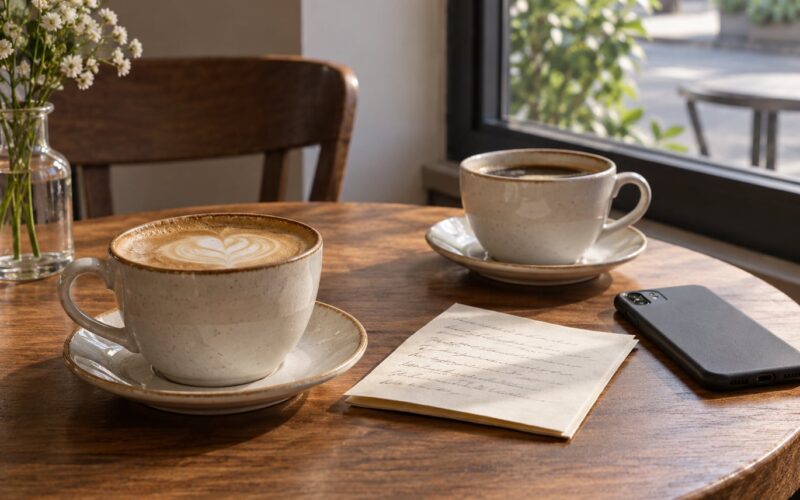
Shared interests. You do not need deep overlap. You need one thing you would both enjoy for ninety minutes. A bookstore, a great cup of coffee, a walk along the lakefront. If you cannot name one thing, that is useful information too.
Boundaries and access needs. Know your own limits before you are out: how much you drink, what physical contact you are open to, whether you need step-free access, noise sensitivity, or an exit strategy you can use without making a scene. Deciding in advance means you can act on it calmly.
How to Plan a Good First Date Step by Step
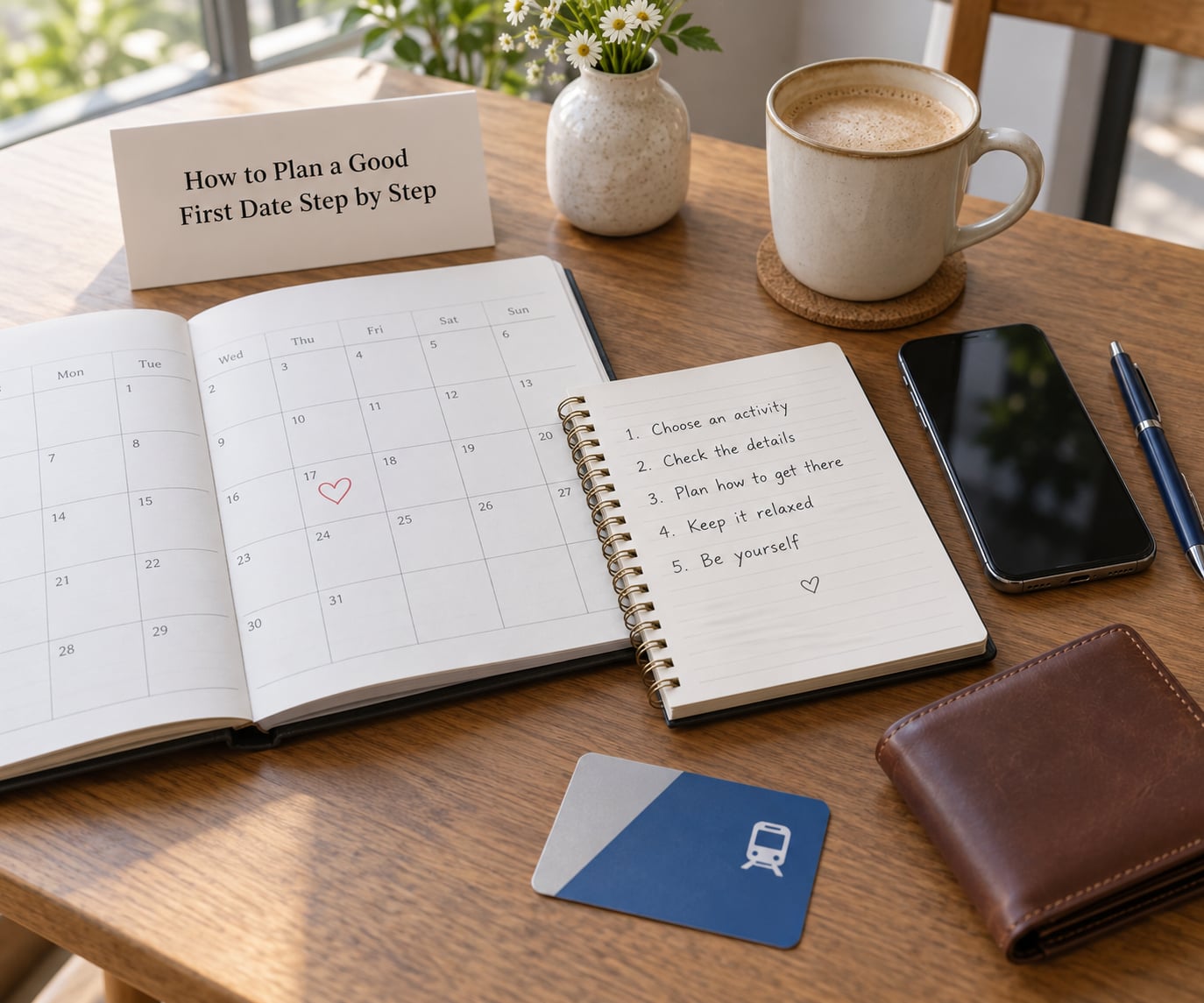
Set a Clear Purpose and Budget
Decide what the date is for. Conversation, activity, food, or a low-pressure mix. Coffee and a walk is the most reliable first date format for a reason: it is short, cheap, and easy to extend or abandon.
Then set your limit out loud without turning it into a lecture. “I would rather not spend much on the first one” reads fine. A silent tab anxiety does not. If the other person wants to spend more, you will find out at the venue.
Choose a Venue That Supports Easy Conversation
Noise is the hidden variable in first-date planning. A room where you have to lean in and shout works against you more than a mediocre drink ever will. Look for somewhere you can sit side by side or at a small table, at a volume where you can hear yourself think.
Options that hold up well:
- Bookstore with a café attached. Browsing gives you something to do with your hands and a built-in topic if the conversation stalls.
- Quiet neighborhood restaurant. Order a few shared plates instead of a full dinner. It lasts longer and costs less than two entrees.
- Casual wine bar or taproom. Good for people who get nervous when there is nothing to do with their hands. Skip the darkest rooms.
- Park, lakefront path, or sculpture garden. Free, unhurried, and easy to extend. Bring a layer.
- Small live music or a comedy show. Good when one of you is shy. You get to watch something together instead of performing.
For queer daters, venue choice carries extra weight. An explicitly LGBTQ+-friendly bar, a bookstore with a strong community shelf, or a neighborhood where you can walk home safely afterward all reduce the mental load of the evening. You are not obligated to explain your dating life to a host or a maître d’. You are also not obligated to spend an evening somewhere that feels like a test.
Chicago readers have good options in Andersonville, Boystown, River North and the West Loop, where a first date can happen without the evening feeling like a coming-out event.
Build a Loose Itinerary With One Anchor
One anchor plus one optional extra is the right amount. The anchor is the thing you are actually doing: coffee at a specific café at seven. The extra is the walk afterward, or the second drink, or the dessert bar. Only the anchor should be locked in.
This gives you an exit that does not feel like a rejection. If the hour goes well, you extend. If it does not, you already had a graceful ending built in. Plan for somewhere nearby, not across town, so leaving early costs nothing.
Build in ten minutes of slack. People are late, trains are late, and a rigid schedule turns a small delay into a bad mood.
Plan for Comfort, Safety, and Accessibility
A few habits cover most of it:
- Meet in public. A busy café, a well-lit restaurant front, a staffed bar. Not a home, not a car, not a walk down a quiet street at night.
- Share the details. Send one trusted person the venue, the address, and the time you expect to leave. This is normal, not paranoid, and it does not say anything about the person you are meeting.
- Keep your own ride. Know how you are getting home independently. Ride share, a friend on standby, or a route you are comfortable walking.
- Check in. A quick text to your friend halfway through is enough. Some people use a timer.
- Know your exit. Before you sit down, notice the door, the restrooms, and whether there is a side entrance. Same with getting to the bathroom past someone you would rather not touch.
- Watch the alcohol. Keep to one or two drinks. Alcohol lowers everyone else’s impulse control too, and it turns a first date into something you have to recover from.
- Plan for the weather. Have an indoor version of the plan ready. A walk with no backup on a freezing Chicago night is just a short date with extra steps.
- Ask about access needs. Step-free entrances, seating, restroom access, and noise levels are normal things to check before you go.
Send a Simple Confirmation Message
The day before, send something short. This is the whole message:
“Looking forward to tonight. Seven at the cafe on Damen, under the name Alex. No need to bring anything. See you then.”
It confirms the plan, shares a practical detail, and puts a small identifying detail in place without being strange. Skip the paragraph about how nervous you are. Skip the apology for not having planned something more creative. You planned something.
Make the First Date About Connection
Most first dates fail in the same way: two people performing, or one person interviewing. The fix is mutual disclosure. Ask something, then share something comparable about yourself.
Questions that are better than small talk:
- What is something you got into recently that you cannot stop talking about?
- What part of this neighborhood do you actually spend your time in?
- What is a trip you took that was worth the money, and one that was not?
- Where do you go when you want the night to go well?
Listen more than you talk, and follow the thread they take. Ask follow-up questions instead of jumping to your next prepared item. Using someone’s name early does more work than any outfit.
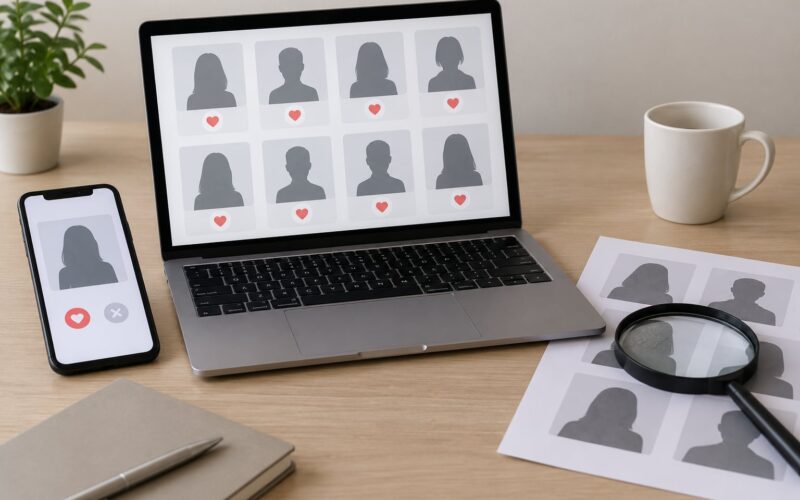
Leave the phone face down unless you are expecting a call. If you are on a dating app, close the app. Nothing improves the mood of a date like both people knowing they are not being scrolled.
Common Mistakes
Overplanning. Four activities and a timed itinerary signals anxiety, and it makes the date hard to enjoy. One anchor is plenty.
Choosing somewhere too loud. Loud venues are popular because they feel neutral. They are not neutral if you cannot hear the other person. Pick somewhere you can have a conversation.
No plan for getting home. Having a ride arranged is the single most reassuring thing you can do for yourself and invisible to everyone else.
Assuming what someone is out to anyone else. Do not ask whether they are out, who knows, or which name they use on a dating profile without the conversation. Plenty of people are not fully out to family, work, or anyone. Let them tell you in their own time.
Drinking to manage nerves. It works for an hour and then becomes the evening’s defining feature.
Reading a short date as failure. An hour of good conversation that ends because someone has an early morning is a success. Date length is not a score.
Over-texting before the meeting. Weeks of daily conversation can make the in-person meeting feel like a formality. Book the date in the first week or two, then let there be some discovery left for the actual evening.
Deciding who plans and pays by default. Traditionally it falls on one person, and that leads to resentment fast. Whoever initiates should make a specific proposal, and offering to pay should not be a test of character. Talk about money once, plainly, before the evening rather than negotiating it at the table.
Frequently Asked Questions
What is the 3-3-3 rule for dates?
The 3-3-3 rule is a dating-app guideline, not a planning rule. It suggests limiting your dating app usage to three hours a day, three conversations at a time, and taking three days off from swiping each week. Its purpose is to keep you from turning dating into an endless scrolling habit. It has nothing to do with how long a first date should be or how you structure the evening.
What is the 3 6 9 rule in dating?
The 3 6 9 rule is a texting guide that helps you read interest early. Messages should increase in substance: the first few should be short and playful, the middle stretch longer and more personal, and the later ones honest and direct. The idea is that effort should grow on both sides. On a first date, it simply means you should be able to speak plainly rather than performing through a screen.
How long should you wait to plan a first date after matching on an app?
Within a few days, and earlier if the conversation is flowing. Advice repeated on r/dating and r/Bumble is consistent on this point: weeks of near-daily texting drain the momentum and make meeting in person feel like an obligation. Ask within roughly a week. If someone suggests waiting much longer, that is usually about wanting more texting, not about being unavailable.
What are some red flags on a first date?
Watch for someone who ignores your boundaries, makes a joke you have to laugh at, arrives very late without a message, pushes for alcohol or physical contact early, monopolizes the conversation, or tries to move the date somewhere private. Also notice distrust of staff about who you are with. Trust your own discomfort rather than waiting for a reason, and leave without explaining yourself.
How long should a first date last?
Roughly one to two hours is the most common recommendation, and it is a good target because it can stretch in either direction. You want a natural ending point so nobody has to engineer an exit, and enough length to find out whether you want a second one. If it is going well at ninety minutes, stay. If it is dragging at forty-five, that is your cue.
What should you do if a first date goes badly?
Be decent, end it reasonably early, and send a short message afterward saying you enjoyed meeting them. Then actually let it go. Dating advice threads are full of people still blocked up months later over a bad coffee. A first date is a screening process, and it failed for a reason you can now use. Save the effort for the people who show up as interesting.
Conclusion
Learning how to plan a good first date comes down to restraint. One venue where conversation is easy, one anchor activity, a specific time, and an exit that costs nothing. Add the practical layer: a real budget, a ride home, a check-in with someone you trust, and patience about how out anyone wants to be.
Start with the setting. Pick the place this week, send the message, and let the rest of the evening stay simple.