If you have never done it before, how to travel with pets comes down to preparation rather than the trip itself: the right paperwork, the right carrier for the mode you are using, and a break schedule tight enough that nothing hurts. Most heartbreaking trips are not caused by the car or the plane. They are caused by the six hours before departure, when a stressed dog has a full bladder and no safe place to go.
Allow two to four weeks of lead time for a domestic trip, longer if paperwork crosses a state or national border. Below is the sequence that keeps a dog or cat calm and accounted for from the first mile to the last.
Table of Contents
- What You Need
- How to Travel With Pets Step by-Step
- How to travel with pets by car without stress
- Choose the right carrier and secure restraint
- Make a veterinary and paperwork checklist
- Pack for delays, weather, and accidents
- Run a practice trip before leaving
- Keep your pet calm during the journey
- Arrive safely and settle your pet
- Do not forget the return trip
- Common Mistakes
- Frequently Asked Questions
- Conclusion: Start With a Short Practice Run
What You Need
A smooth trip depends on nine things, and six of them are paperwork or restraint rather than gear.
Identification your pet cannot lose
A collar or harness with a tag carrying your cell number, plus a second tag with the number of whoever is meeting you at the destination, plus a microchip whose registry details you update before you go. Travel adds two failure modes that do not exist at home: a lost animal in an unfamiliar city, and a pet separated from you in a carrier or crate during a rebooking.
Vaccination and health records
Your vaccination cards, a copy of your pet’s medical history, and a certificate of veterinary inspection where the destination or carrier demands one. Domestic US flights usually require a health certificate issued within a set window before travel, often ten days. International routes need more: an import permit from USDA APHIS, proof of rabies vaccination, and for many countries a rabies antibody titration test with a waiting period measured in weeks.
An approved carrier or restraint
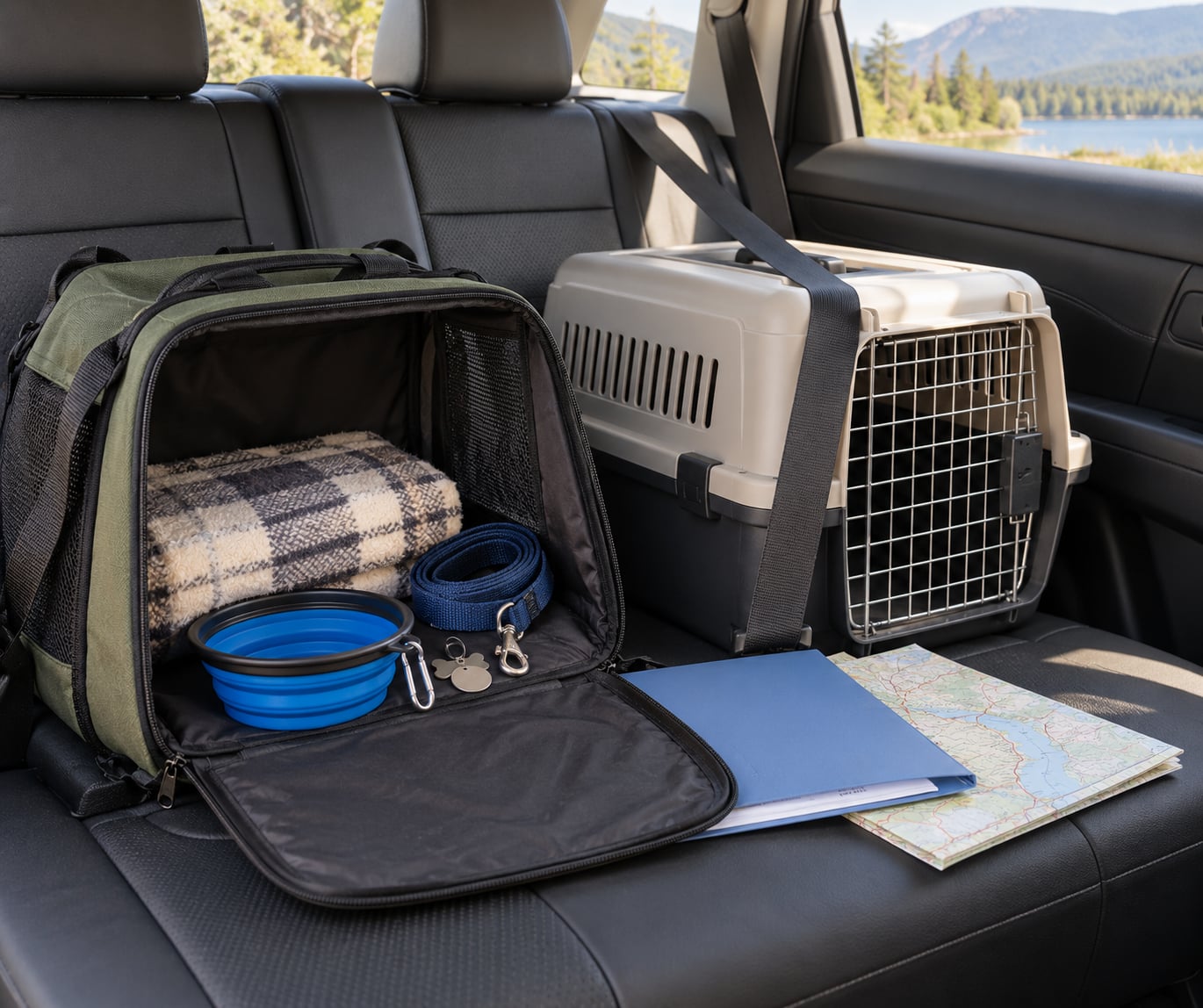
An under-seat carrier for air travel in the cabin, an airline-approved kennel for checked baggage and cargo, or a crash-tested vehicle harness and crate for driving. Rules differ by mode, so buy or borrow for the mode you are actually using.
Food, water, and medication
Enough of your pet’s normal food for the trip plus two extra days, water you can carry, collapsible bowls, and any prescribed medication in the original labeled container. Keep human medication out of reach; acetaminophen, ibuprofen, xylitol, chocolate, grapes, raisins, onions, and macadamia nuts are all toxic to dogs and cats.
Comfort and cleanup supplies
A familiar blanket or worn shirt, waste bags, a small first-aid kit, paper towels, a lint roller for fur, and a towel that can double as a car seat cover. For cats, a portable litter option and a sealed water bottle beat an improvised solution.
Destination-specific documents
Check the destination’s leash rules, dog park restrictions, breed bans, waste rules, and any licensing or vaccination requirements. Every airline, train operator, rideshare company, state, and country sets its own rules, and they change often, so confirm each one on the operator’s own page rather than trusting a third-party guide that has not been updated.
How to Travel With Pets Step by-Step
Work through these seven steps in order. Each one has a clear signal that your pet is ready for the next one.
How to travel with pets by car without stress
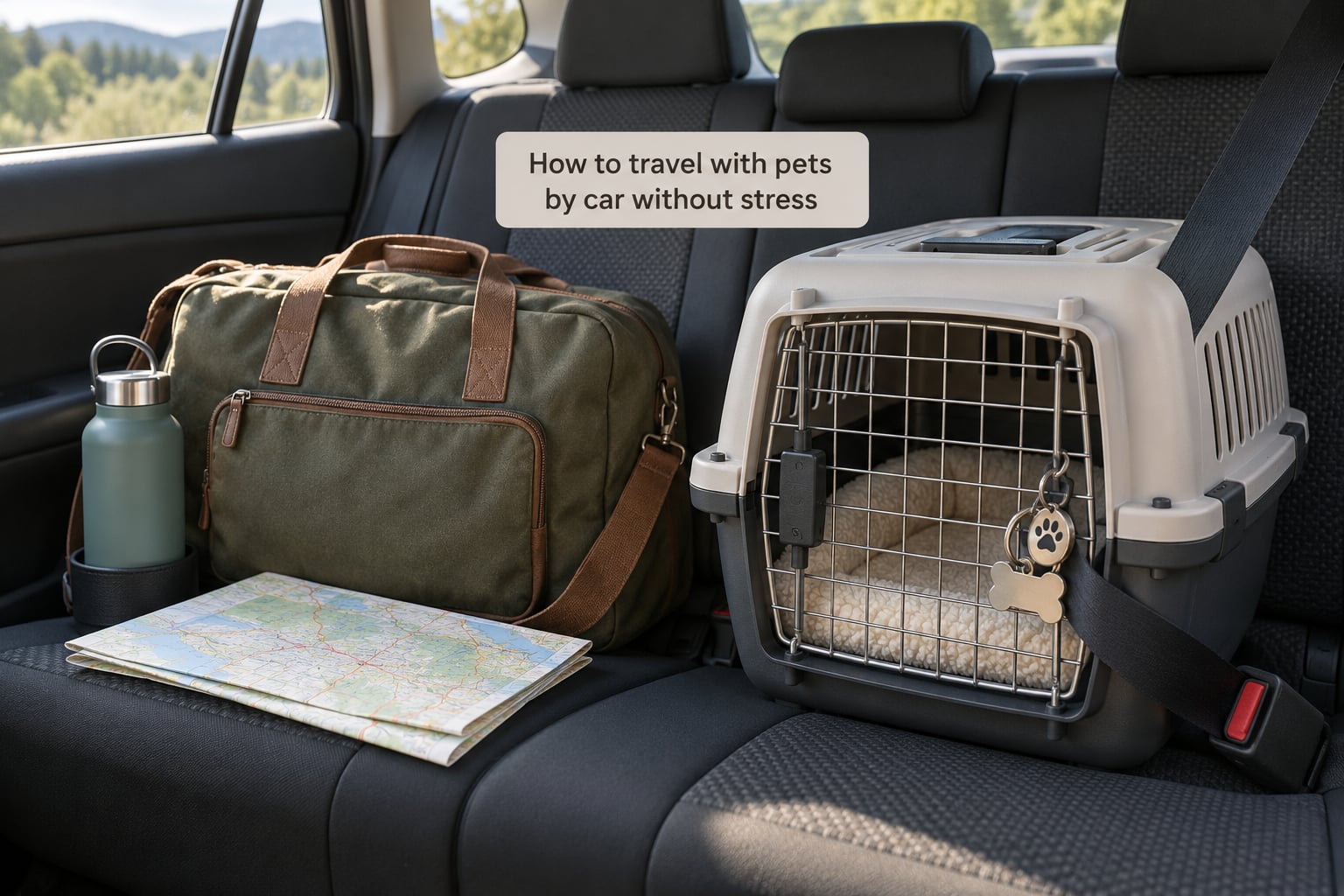
Secure your pet in the back seat with a crash-tested harness or a strapped crate. A dog riding loose or on a lap is thrown into the front of the cabin in a sudden stop, and an unsecured cat will end up under a seat or in the footwell by mile two. The back seat also keeps your pet away from an inflating front airbag, which can injure or kill a small animal.
Plan the route with pet-friendly stops marked in advance, ideally every two to three hours. At each stop: water, a bathroom walk on a leash, five minutes of movement, and a sniff. Owners planning every stop ahead of time report fewer rushed roadside moments and fewer escapes, because you are not searching for a safe patch of grass with a dog pulling toward the door.
Stop the car, attach the leash to the harness rather than only the collar, and open the door slowly. A dog who bolts at rest stops is the single most common road-trip emergency, and a harness clip plus a hand under the collar solves it before it starts. On hot days, run the air conditioning or leave the car running with the vents open, and never leave your pet unattended in a parked vehicle. Even a mild day can turn a closed car into a dangerous one in minutes.
If you are driving solo, plan stops around your own limits as well. A passenger who can handle the leash and the bags on the first stretch is worth the trade of splitting the driving in two.
Choose the right carrier and secure restraint
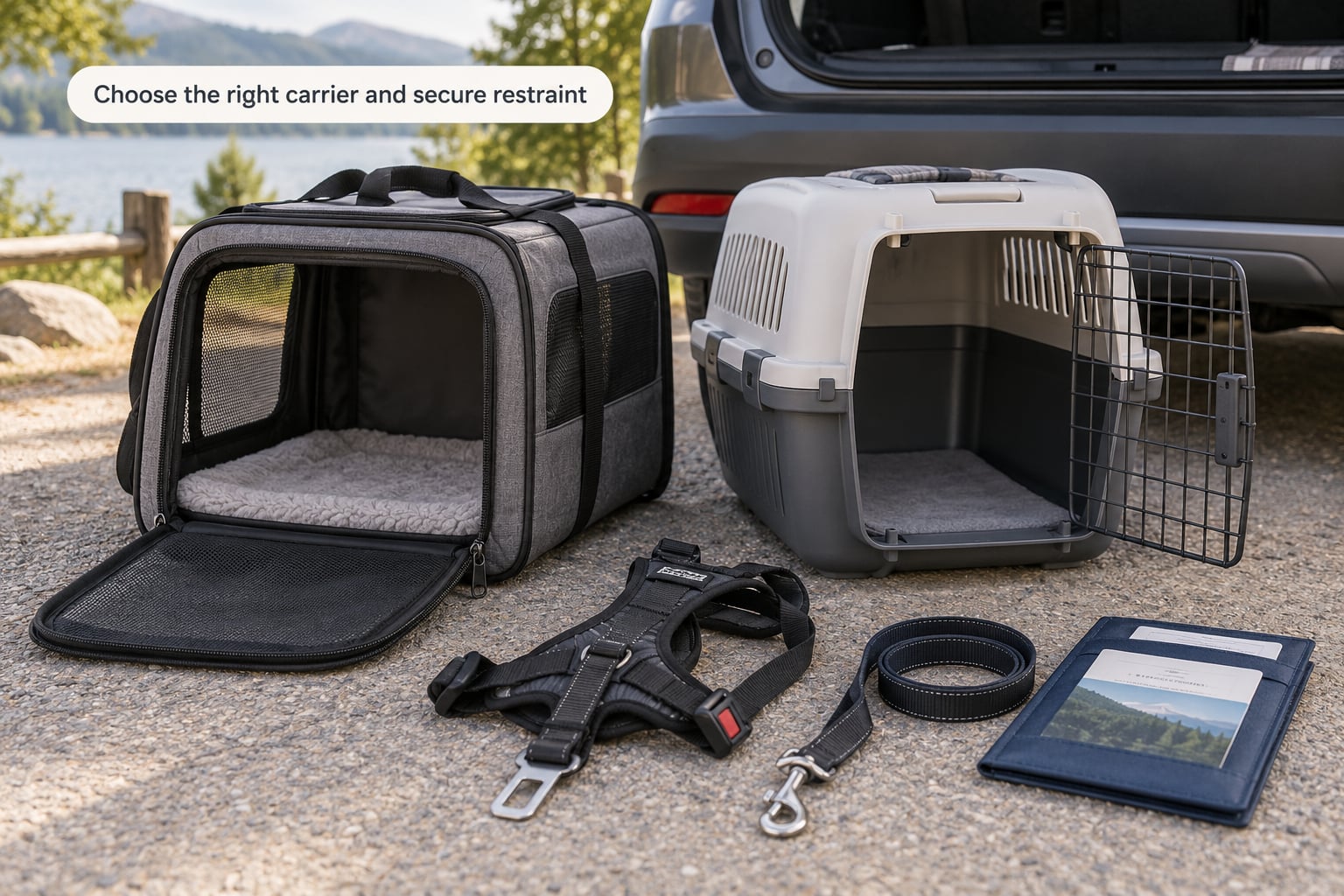
Carrier size is not a matter of fitting your pet in it. Your pet should be able to stand, turn around fully, and lie down naturally inside, because airlines apply the stand-turn-lie test and gate agents enforce it. Leave enough room to add a familiar blanket without blocking ventilation.
Build the carrier the way it will be used, not the way it looks at home. An under-seat soft carrier suits small dogs and most cats for cabin travel, since the carrier has to fit under the seat in front of you for the whole flight. A hard-shell kennel meets the durability requirements for checked baggage and cargo. For driving, a crash-tested harness clips into a seat belt and gives your pet more room to reposition than a crate.
Do not pick the restraint based on your pet’s size alone. Behavior decides it. A dog who reverses out of anything needs a crate; a dog who panics and thrashes needs a secure, partially covered harness setup; a cat who shreds fabric in a crate benefits from a hard-sided carrier with a top opening.
Make a veterinary and paperwork checklist
Book a vet visit before you book anything else, because paperwork can start a multi-week clock. Ask your veterinarian to confirm vaccinations are current, including rabies, and to issue any health certificate required by your carrier or destination. Domestic certificates are commonly valid for a short window around travel, so timing matters more than the appointment itself.
Raise travel anxiety at the same appointment. If your pet gets carsick, nervous, or refuses to eat when away from home, ask about medication approved for your pet, then test it at home on a short drive several days before departure. Owners who trial anxiety medication in advance report far calmer trips than those trying a new drug for the first time at the airport.
Never give human medication, essential oils, or a sedative without veterinary direction. Keep all human pills in a bag that stays with you, not in the pet’s reach. If you are crossing a border, confirm import permits and quarantine risk with USDA APHIS and the destination country’s agricultural authority, and start early.
Pack for delays, weather, and accidents
- Food for the trip plus two days of extra, in a sealed container
- Water, plus a collapsible bowl for both modes
- Prescribed pet medication in the original labeled container
- Waste bags, and a scoop for cat litter
- Familiar bedding, plus one item that smells like home
- Copies of ID tags, vaccination cards, health certificate, and microchip number
- A small first-aid kit and your vet’s contact details
- Weather protection: a coat, a cooling mat, or a blanket depending on season
- Cleaning materials for accidents in carriers and vehicle interiors
- A printed copy of your destination address, host contact, and nearest 24-hour emergency vet
Airline and rail allowances for what counts as a carry-on differ, so confirm current policies before you pay for anything. Airlines publish temperature embargoes that suspend pet transport when ground temperatures at an origin or destination fall outside a safe band, which is why a summer connection can strand a booked pet itinerary.
Run a practice trip before leaving
Desensitization beats forcing. Over a few weeks, leave the carrier out with bedding in it, then add treats, then feed a full meal inside it, then close the door for a minute, then for ten. Combine short drives with the carrier secured in the back seat. Owners who did this gradual work report noticeably calmer trips; pets pushed into an unfamiliar routine on departure morning tend to panic harder, not less.
Run one full dress rehearsal close to the date: carrier packed, harness clipped, bag loaded, ten minutes of driving with a planned stop. If your pet refuses to settle, repeat the rehearsal rather than adding force or a stronger drug.
Keep your pet calm during the journey
Calm comes from familiarity and predictability, not tricks. Use the same blanket, the same leash, the same departure routine, and speak quietly. Offer water every stop and keep the meal times you know, but expect a nervous pet to refuse food for a while; that is common and usually resolves within a day of arriving.
For air travel, request the cabin seat as early as possible, choose a direct flight over a connection, and board early so your pet is not waiting in the jet bridge. Layovers and long walks through unfamiliar terminals stress pets far more than the flight itself.
Watch for distress signals: repeated pacing that will not stop, frantic scratching at a carrier door, heavy panting with drooling, or aggression toward a normally gentle animal. Retreat to a quiet corner with water rather than trying to calm the pet in a busy terminal, and call a veterinarian or emergency clinic if the signs continue.
Arrive safely and settle your pet
Check your pet over before opening the carrier: breathing normally, no vomiting, no limping, no signs of dehydration such as dry gums or a dull coat. Release your pet in a small, quiet room rather than the whole house, with water, a bathroom spot, and bedding in place.
Hold off on a large meal for a few hours, then offer the usual portion. Keep a close eye on drinking and bathroom habits for the first day, because travel and a change in water can upset a sensitive stomach. Persistent vomiting, diarrhea, breathing difficulty, collapse, or unusual behavior after arriving warrants prompt veterinary care rather than waiting it out.
Do not forget the return trip
Plan the way home before you leave. Book pet-friendly accommodation before peak dates, confirm size limits and fees directly rather than trusting a “pet-friendly” label, and check the destination’s leash and breed rules for the trip home too. For a return flight, remember that some certificates need reissuing.
Common Mistakes
Nearly every avoidable pet travel problem comes down to one of these.
Choosing a route with no planned stops
Mapping pet-friendly stops and saving them to your phone takes ten minutes and prevents the most common roadside problems. Search for the nearest emergency vet at each stop while you are there.
Buying a carrier at the airport
Last-minute carriers rarely meet the airline’s dimensions or the stand-turn-lie test. Buy the carrier first, check it against the airline’s published size limits, and use the weeks before departure for desensitization.
Relying on an expired tag or outdated microchip
A tag with a disconnected number is worse than no tag. Update both numbers and confirm the microchip registry has your current contact details.
Feeding heavily right before travel
A full stomach on a twisting road or in a rising cabin-pressure hold is a recipe for nausea. Feed your normal meal several hours before departure and keep water available.
Leaving a pet in a parked car
There is no safe version of this, including in mild weather with a window cracked. Run the air conditioning and stay with your pet, or plan the stop around you rather than around the schedule.
Using human medication
Ask your veterinarian about anything your pet takes, and treat unapproved drugs as an emergency call rather than a judgment call.
Faking or stretching service-animal status
US Department of Transportation rules cover trained service dogs flying without a pet fee in the cabin, and they require forms. Emotional support animals are treated as pets by most carriers. Misrepresenting an animal can get you denied boarding and is unlawful under DOT rules.
Skipping destination rules
Breed bans, leash laws, licensing, and park restrictions are enforced locally and change. Check them before you arrive, not after a parking ticket.
Frequently Asked Questions
Can I travel with a pet on a plane?
Yes, most major US airlines take small dogs and cats in the cabin in an under-seat carrier, with the pet counted as a passenger rather than checked baggage. The carrier plus pet usually must stay under a combined weight limit of about 20 pounds. Larger pets travel as checked baggage or in the airline’s cargo program, and snub-nosed breeds face extra restrictions.
How do I travel with a dog or cat in a car?
Use a crash-tested harness clipped into the seat belt or a crate strapped into the back seat, never the front seat and never a lap ride. Stop every two to three hours for water, a bathroom walk, and a few minutes of movement. Keep the car cool, never leave your pet in a parked vehicle, and attach the leash before you open the door.
Is it allowed to bring a pet in a rideshare?
It depends on the company and the driver. Most rideshare apps offer a pet option or let drivers set their own preference, and some charge a larger pet or cleaning fee. Service animals are a different category: under US DOT rules they are not refused and are not charged a pet fee. Message the driver before pickup and never leave a pet unattended in a vehicle.
How much does it cost to travel with a pet?
Cost depends almost entirely on the mode. Flying adds a cabin or cargo fee, a carrier or kennel, a veterinary health certificate, and pet-friendly accommodation at the destination. Driving trades those costs for fuel, mileage, stops, and time. Book early, check the fee schedule for the specific carrier and route, and price pet-friendly rooms before you commit to an itinerary.
When should I ask a veterinarian about traveling with my pet?
Ask before you book, not at the gate. Your veterinarian can confirm vaccinations are current, tell you whether your pet’s health suits the trip, and discuss motion sickness or anxiety medication that you can trial at home a few days beforehand. For international travel, check USDA APHIS import permits and quarantine rules as soon as the destination is decided, since timing can run for weeks.
Conclusion: Start With a Short Practice Run
Before anything else, confirm the transport and destination rules on the operator’s own page, get the health and paperwork sorted with your veterinarian, test the carrier or restraint over several days, and pack for two extra days of delay. Then how to travel with pets becomes a routine you already know, instead of an improvisation on departure day.
For more ideas for getting out of the city with your dog, see our LGBTQ travel guides and our picks for pet-friendly stays and Pride weekends around Chicago.