To plan a weekend getaway with no car, pick a destination you can reach on one intercity train, bus, coach, or ferry, book the round trip in advance, and stay within a short walk of a station. Confirm the last service back before you book anything, then build a loose plan with one anchor activity per half day.
That is the whole method, and it takes maybe an hour of research once you know the shape of it. Most of the work is front-loaded: the hard questions about a car-free weekend are all answerable at your kitchen table, before any money changes hands. The weekend itself is mostly walking.
Updated for 2026. Fares, timetables, and service patterns change, so treat every number and schedule below as a starting point and verify it on the operator’s own site for your exact dates.
Table of Contents
What You Need
Six things decide whether a car-free weekend works before you look at a single destination. Gather them in this order and the rest of the planning goes quickly.
- Your origin and its real options. Not just your city, but the specific stations and airports you can actually reach, and how long it takes to get to them. A suburb forty minutes from a hub is a different planning problem than a downtown apartment.
- Your time ceiling. Decide the maximum door-to-door time you will accept. Under two hours and the weekend stays relaxed. Three hours and you are spending Friday evening in a seat unless you sleep late on Sunday.
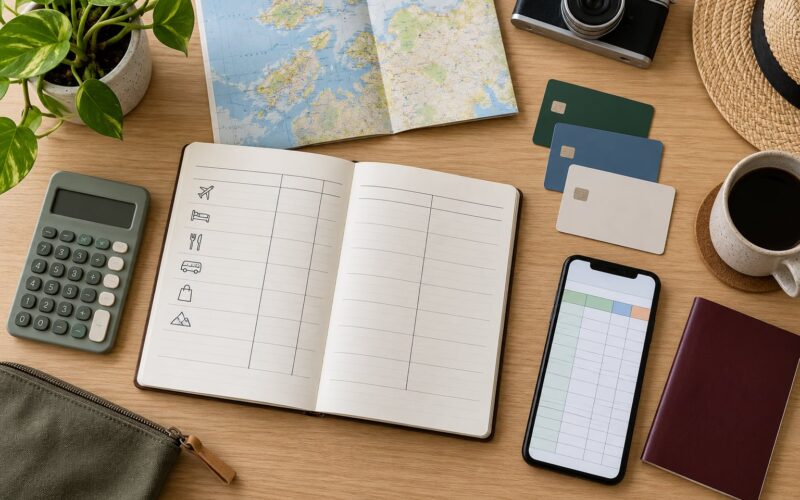
- Budget lines. Intercity transport, lodging, food, local transit, and activities, each with a number you are comfortable with. Knowing the split in advance stops lodging from eating the transit money.
- Mobility notes. Stairs, walking distance, standing tolerance, whether you use a cane or wheelchair, and how long you can be on your feet. This changes which destinations are realistic, and it is the part people skip.
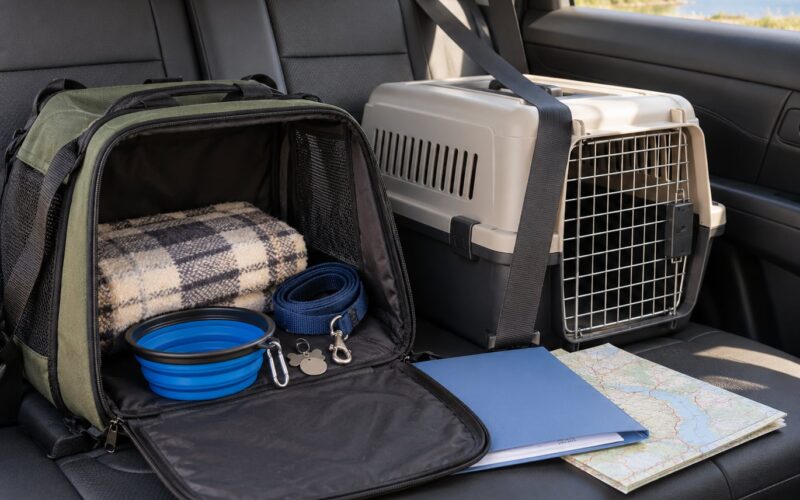
- Luggage limits. What you can carry between a platform, a stairwell, a bus aisle, and your bed without an elevator. Two nights should fit in a single bag you can lift yourself.
- Weather and a backup plan. What happens if it pours, or if the return train is cancelled. A car-free weekend with no plan B turns a small delay into a night in a station.
Two of these get skipped most often, and both are the ones that decide whether the weekend is pleasant. The mobility note and the backup plan are cheap to make and expensive to leave out.
Step-by-Step: How to Plan a Weekend Getaway With No Car
Choose a destination that works without a car
A destination works without a car when the things you want to do sit close to each other, not when it has good transit on paper. Look for three things: a single major station in or near the center, most of your shortlist of activities within about twenty minutes of each other on foot, and weekend service that runs late enough to get you home after dinner.
Test candidates honestly. Plug the departure into the operator’s timetable and check the return leg before you fall in love with the place, because a destination with an evening return that stops at nine is a Friday-to-Saturday trip, not a weekend one.
Small towns and mid-size cities usually beat big ones here. A dense downtown where everything is walkable gives you more usable hours than a metro area where the best museum is forty minutes away by bus, and the smaller places tend to have a simpler network to learn in two days.
Set a budget and reserve the flexible parts
Build the total in five lines, then decide what to lock down first. Lodging on a holiday weekend is the item that disappears, so reserve that before the transport. Intercity tickets are usually the second thing to go, particularly for the last departure of the day.
Reserve only what sells out and leave the rest flexible. Activities are the most forgiving line, and a restaurant you can walk into at eight beats a ticket you bought for six.
Two saving moves pay off more than anything else. Travel outside peak windows, since intercity fares often drop on midweek or off-peak departures, and buy a round trip rather than two singles. Local transit usually works as a day pass or a tap-based system you activate as you go, so check whether a multi-day option is cheaper than paying per ride, but not before you have a rough sense of how many rides a day you will take.
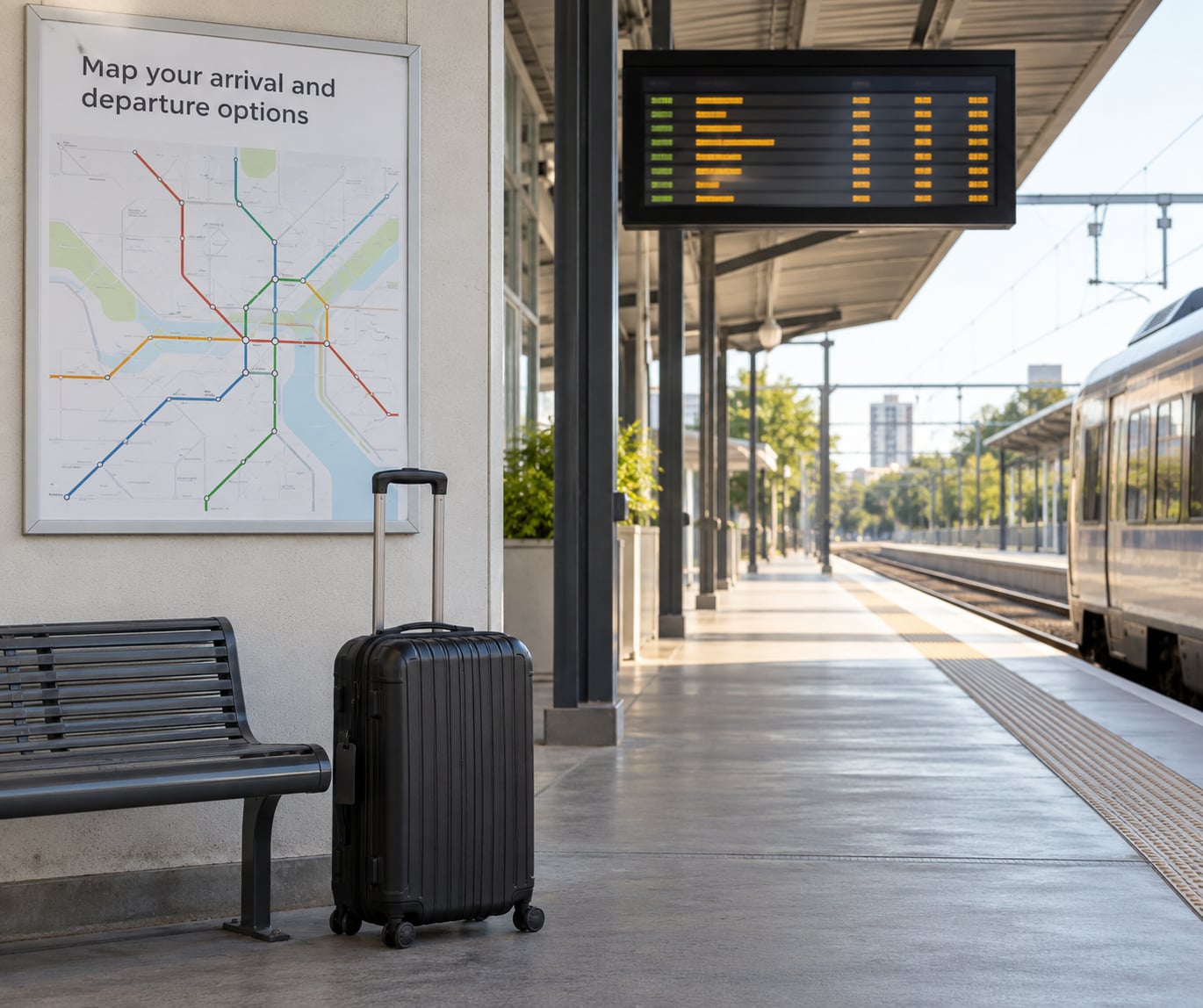
Map your arrival and departure options
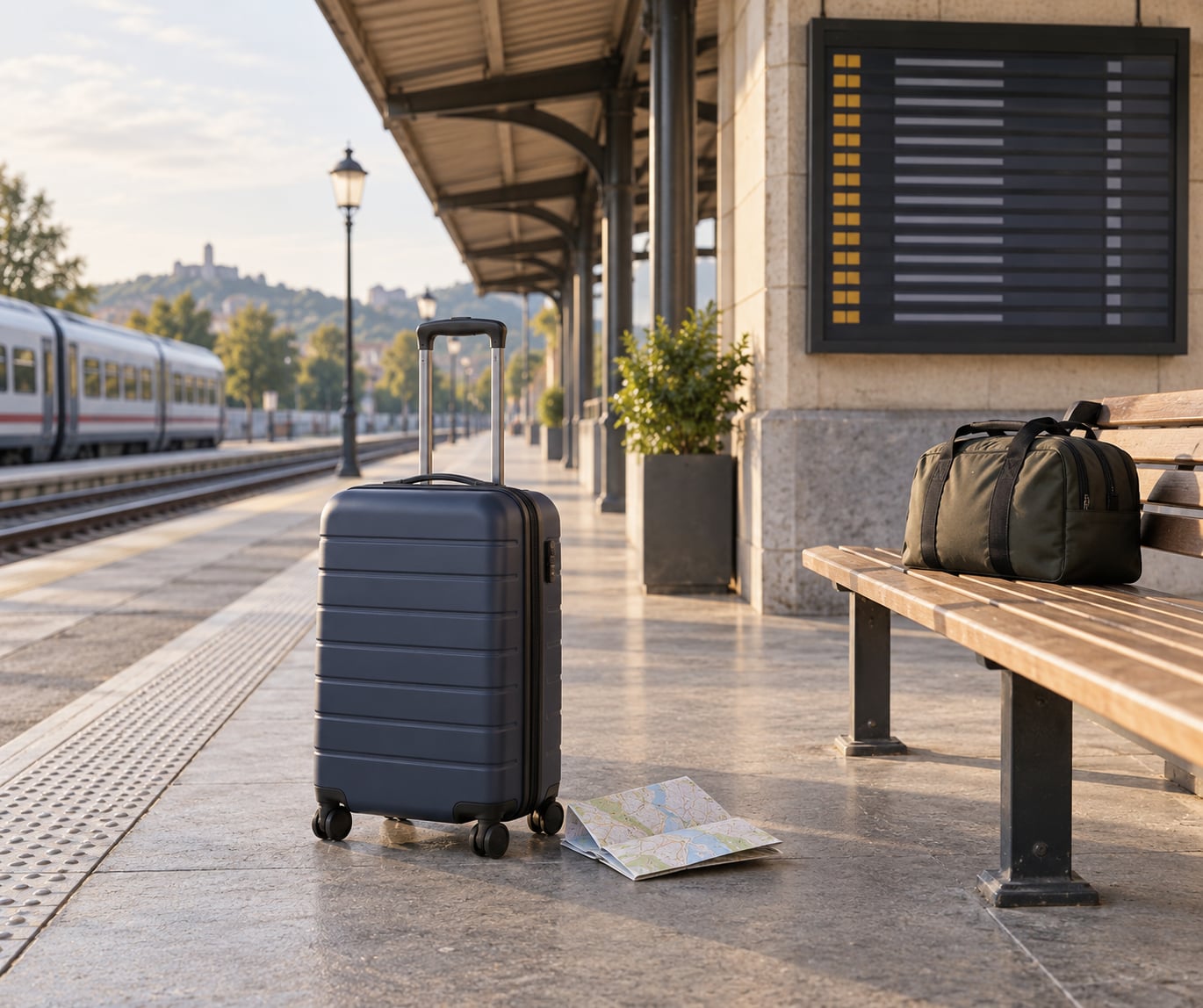
Work door to door, not station to station. That means the walk or local bus from home to the departure point, the platform you arrive at, the exit you need, and the walk on the other end to your bed.
Add a buffer of at least thirty minutes to any connection you are counting on, and more if it involves an unfamiliar station. Transfers get eaten by long platforms, wrong exits, and a station with more levels than you expected.
Check the practical details while you are in the planner. Which exits are open late, whether there are stairs or an elevator, and how long the last bus from the station actually takes to run. If you will not be back before the last service, plan to be home before the last service.
Write the route down. A screenshot of the timetable, the platform number, and the return departure time in your phone beats scrolling a website on a platform with no signal, and it takes two minutes.
Choose a walkable base near useful transit
The best base is close to a station or a main bus corridor, close enough that you can leave the room without planning anything, and central enough to reach both your first morning activity and your last night out on foot.
Central also has costs. A room over a bar or a main road will be loud until late, and a hill between the station and the door turns every outing into a workout with luggage. If you are staying somewhere hilly, one neighborhood down from the center is often better than dead center.
Check three things in the property listing before you book: the walk from the platform, whether the route to dinner at midnight is well lit and busy, and how you get from the station to the door with a bag. A host who answers those three questions clearly has done this before.
Pack lighter for walking, stairs, and transit
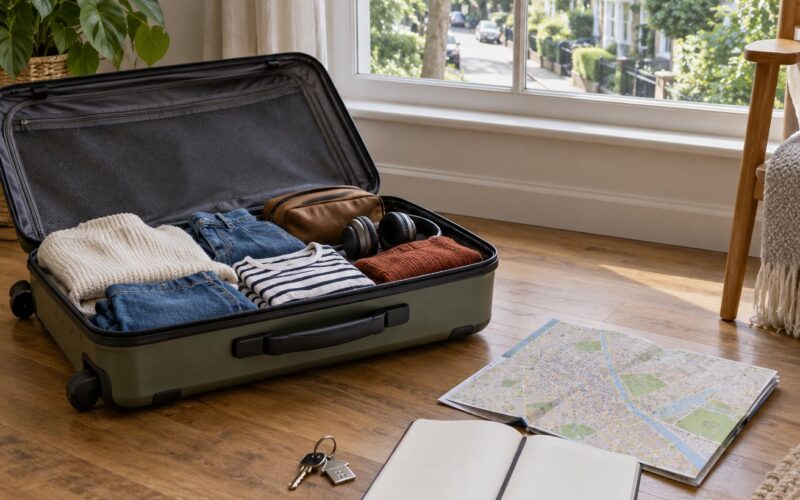
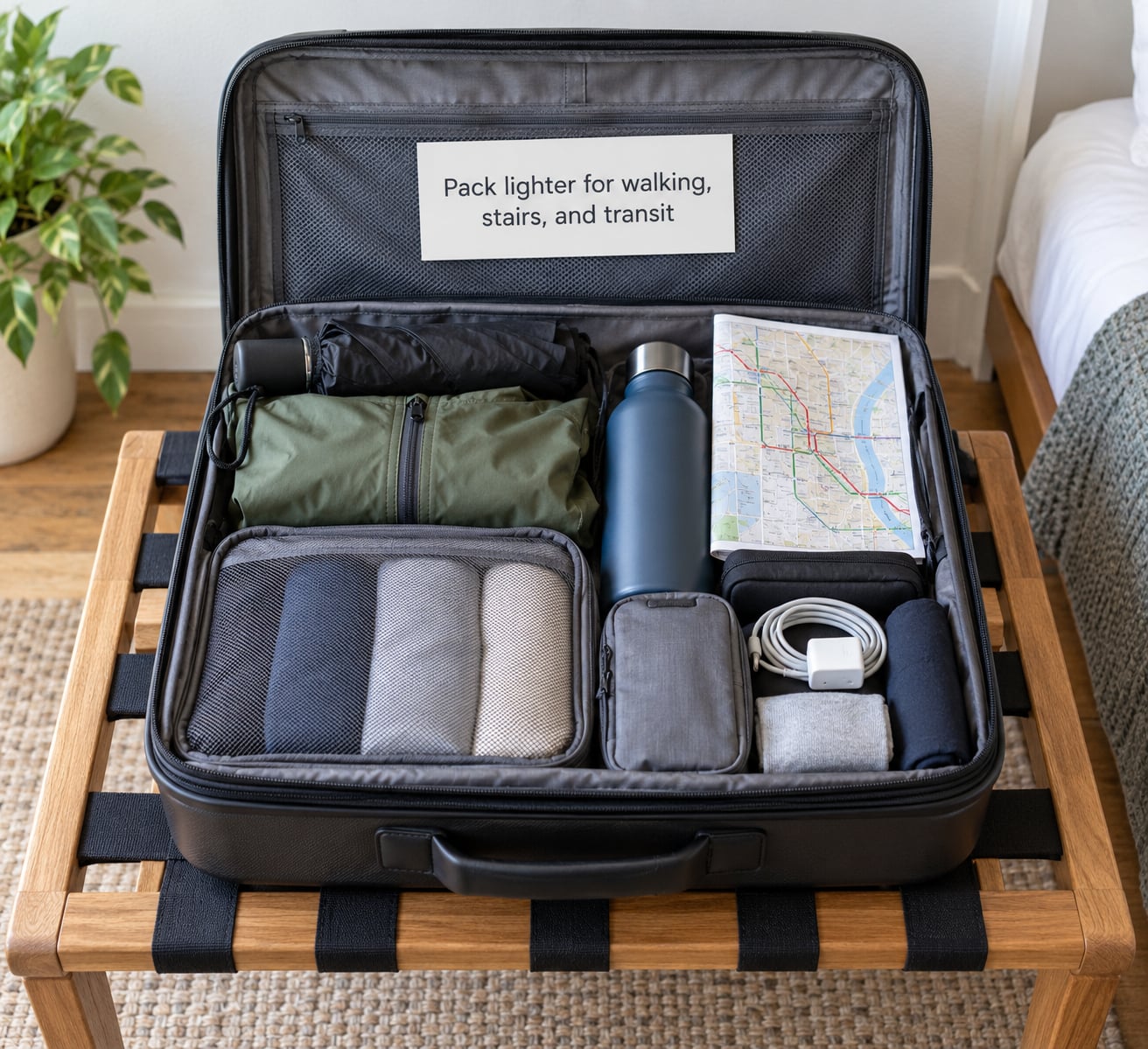
Everything you carry, you also lift, drag through a concourse, and possibly carry up a stairwell. A two-night trip fits in one bag you can lift with one hand, and that constraint makes every other decision easier.
A short list: comfortable shoes built for walking, not a photo, and a second pair. Weather layers instead of one heavy coat. A small daypack for the things you want on your shoulders. A refillable bottle. A compact umbrella. Any medication in original packaging. Photo identification and whatever you need to pay. And a written note with your accessibility details, emergency contact, and the name of your lodging, which matters more than it sounds if you are separated from your phone in a crowd.
Leave the hairdryer, the second pair of bulky shoes, and the full-size toiletries. Keep in mind that a bike is usually a rental on arrival rather than something you haul onto the train, since bike rules differ by operator and are rarely explained at the platform.
Build a weekend plan with a flexible margin
Group activities by neighborhood and plan one anchor per half day. Friday evening is arrival and dinner. Saturday gets a morning anchor and an afternoon anchor, with the gap between them kept unscheduled. Sunday gets one thing you would be sad to miss, then the trip home.
That structure means a delayed train costs you a coffee rather than a museum. A weekend with three must-sees in different corners of a city is three chances to lose one, and you will not enjoy the two you keep.
Check opening hours and days, because a place being closed on your specific Saturday is a wasted morning. Add one weather-dependent alternative in the same neighborhood as your main plan, and one indoor fallback, so a wet afternoon does not end the weekend early.
Prepare for delays and confirm the details
The evening before, re-check three things on official sources: the departure time, any schedule changes or track assignments, and the return service. Schedules shift, and it is better to learn about a change at home than on a platform.
Save offline directions to your lodging, the station, and one backup route that avoids stairs. Keep a second form of payment and a card of emergency contact details somewhere other than your phone. If you travel with someone, agree on what happens if you get separated on a crowded platform rather than assuming you will find each other.
For late returns, know your options before the weekend instead of at the platform. Many networks thin out sharply after nine and again on Sunday, so if the last direct service is early, plan to be on it, or settle on where you will wait out the gap in advance rather than improvising it at eleven at night.
Common Mistakes
Almost every bad car-free weekend traces back to one of these eight.
Packing for a moving hotel instead of a transit seat
A rolling bag is fine on smooth platforms and miserable on cobblestones, stairs, and bus aisles. Fix: one liftable bag, and a bag you can carry up stairs yourself.
Staying too far from the station
A bargain room twenty minutes from the transit hub turns every outing into a commute. Fix: pay for a base within a ten-minute walk of a station and treat the difference as part of the transport budget.
Reading a weekday timetable
Weekday frequency is the best case and rarely the weekend reality. Fix: check Saturday, Sunday, and the specific evening you intend to travel before you book anything.
Cramming distant attractions into one day
Two far-apart stops means two transfers and a day spent in transit. Fix: cluster by neighborhood and cap the day at one anchor in the morning and one in the afternoon.
Underestimating how big a station is
Big stations are layered, and the exit you need may be across a concourse from the one you come out of. Fix: give yourself thirty minutes at unfamiliar interchanges and identify the exit in advance.
Ignoring accessibility until you are already there
Elevators break, platforms do not always match, and some stations have long gaps. Fix: ask the operator about step-free routes when you book, and keep a backup route that does not depend on one lift.
Having no disruption plan
A cancelled train with no plan turns into a night in a waiting room. Fix: know the next departure, know an overnight alternative, and know what you would do if you missed the last one.
Booking the whole weekend in advance
Locking every hour means a late start eats the evening. Fix: book the transport and the bed, leave activities loose, and keep one unscheduled block on each day.
Frequently Asked Questions
Where can I vacation without needing a car?
Look for places whose main sights sit within a walk of a central station or main bus corridor: compact European cities, Midwestern rail towns, and waterfront districts with frequent ferries. Test three things before committing: the total door-to-door time, whether the shortlist of activities clusters in one or two neighborhoods, and whether the last return service still runs after a full evening out. A city with excellent weekday transit and weak weekend service is a hard weekend trip.
What is the cheapest way to travel without a car?
An advance round-trip intercity ticket on an off-peak departure, combined with free walking, is almost always the cheapest option, and it is rarely the only one. Add a cheap base near a station, a tap card or day pass for local transit, and free or low-cost activities like walking tours, markets, and parks. A rideshare is fine for the first or last mile, but using one for every leg quietly turns a car-free trip into a car trip.
How do I turn on public transport directions in Google Maps?
Open the app, set your origin and destination, tap the three-dot menu on the route preview, and choose Transit instead of Driving. Cycling is a separate option worth checking too, since it can reveal bike lanes and greenway routes that driving mode hides. In some regions transit routing needs to be turned on in Settings and the map style changed to a transit layer. Compare the transit result with walking and cycling before you commit to a plan.
How do I stay safe on public transport late at night?
Plan the return before you leave for the evening, not after the last drink. Know the last direct departure and what the gaps look like in between, since evening frequency drops fast on most networks. Sit or stand near other riders rather than in a corner, keep your bag in front of you, and treat an empty station as a signal to wait somewhere lit and populated. If a late return means a long wait alone, an earlier train is often the smarter choice.
What do I do if a car-free trip gets cancelled or delayed?
Check whether the fare is refundable or changeable before you travel, since flexible tickets cost more but survive a disruption. Keep a screenshot of your booking confirmation offline, along with the operator’s service alerts page. If your connection is broken, ask staff at the station rather than assuming the next train is your only option, and remember that a bus or a ferry on the same corridor may still be running. Confirm any new ticket is a rebook, not a new purchase.
Conclusion
To plan a weekend getaway with no car, you need four things to line up before you book: one intercity connection, a base within a short walk of a station, a confirmed return service, and an itinerary loose enough to survive a delay.
Start by comparing the departure options for your chosen destination on the actual weekend dates, not a weekday, and check the last service home. Once you know what the schedule really looks like, the rest of the weekend gets a lot easier to plan.