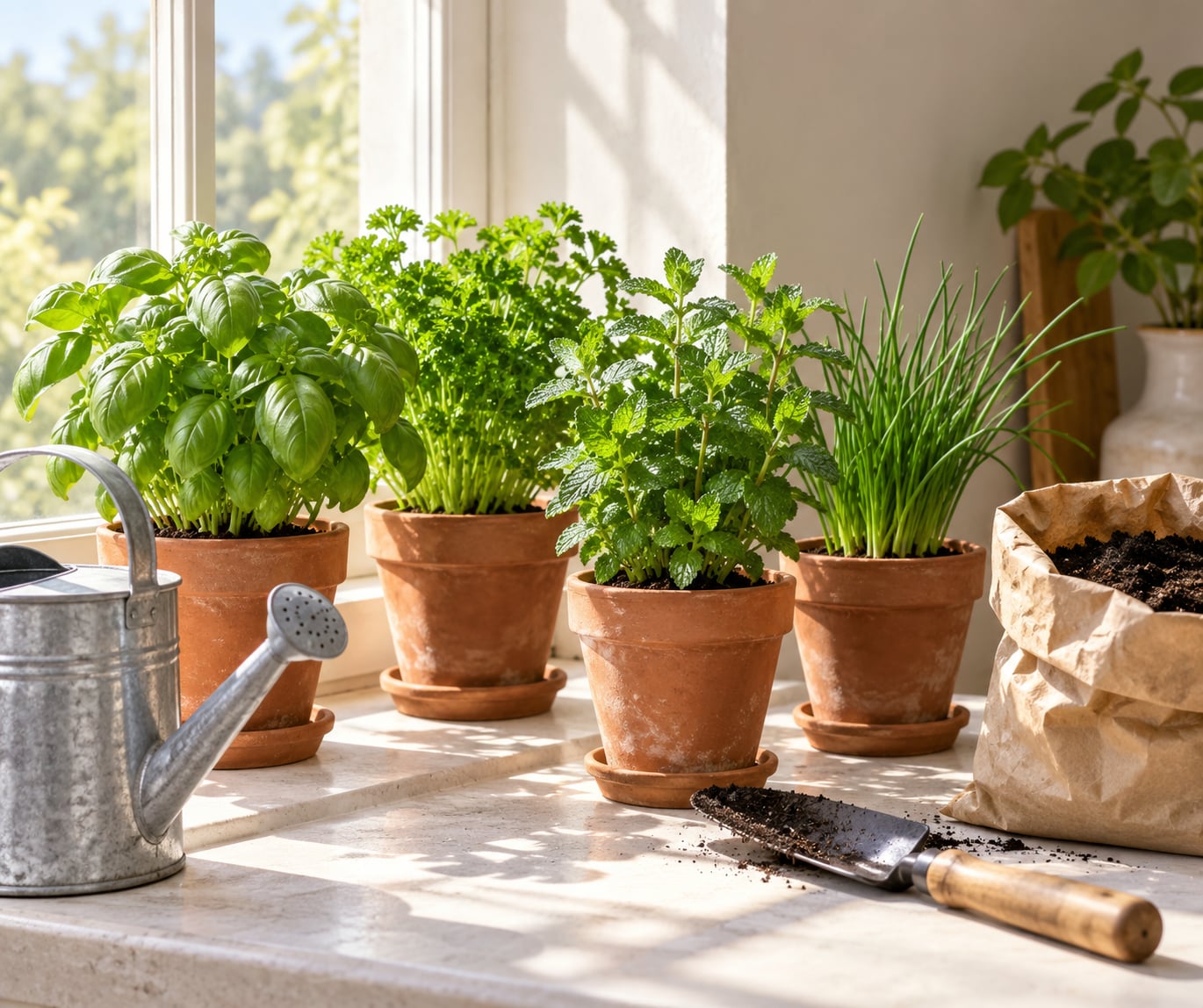
Growing herbs on a windowsill takes about fifteen minutes of setup and about thirty seconds of attention twice a week, which makes it the cheapest way I know to get fresh basil into a pasta sauce in February. If you know how to grow herbs on a windowsill, you are really only managing three things: light, drainage, and watering restraint. Get those right and chives, parsley, thyme, mint, and oregano will keep producing for months on a sill two inches deep.
I’ve killed more windowsill herbs than I’ve kept alive, and almost every death came down to one of three causes: a pot without a drainage hole, a spot that gets an hour of weak light, and watering on a calendar instead of on the soil. This guide walks through the whole process in six steps, then lists the mistakes that trip up almost everyone starting out. Budget about an hour from unboxing to planted.
What You Need
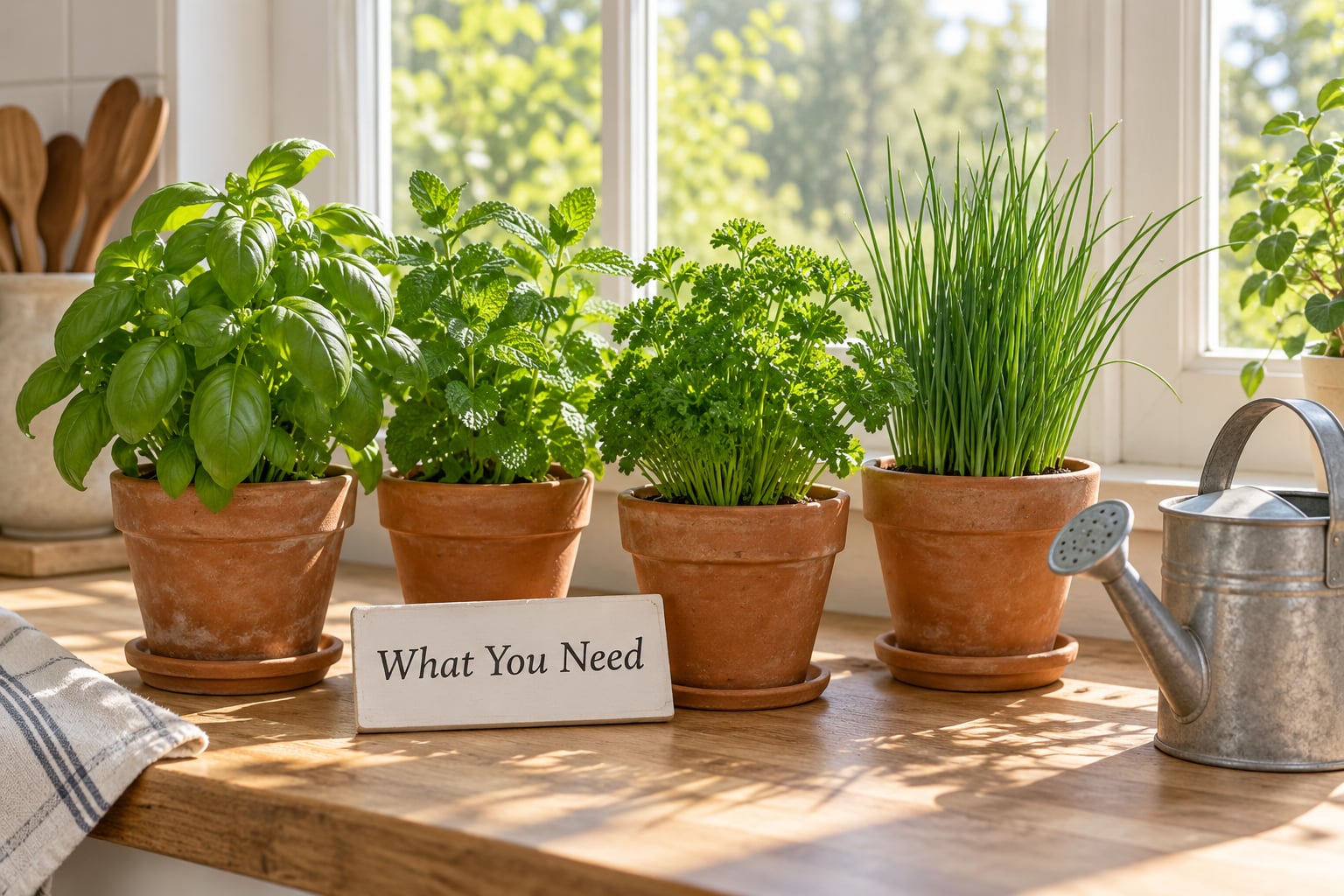
A windowsill herb garden needs five things, and only one of them costs real money: plants. Everything else you probably already own.
- A window that gets 6 to 8 hours of light. South-facing is best, east-facing is workable, north-facing means you need a grow light.
- One pot per herb, 6 inches wide at the top, with a drainage hole. Individual pots beat mixed planters by a wide margin, and a hole in the bottom is not optional.
- Potting mix. A bag of general-purpose indoor potting mix is fine. Never use garden soil from outside.
- A shallow saucer or tray for each pot. Without one, every watering leaves a wet ring on your sill or drips onto the wall.
- Starter plants, not seeds, for your first attempt. A nursery pot of chives gives you a working plant in a week instead of a sprout in a month.
A small pair of kitchen scissors or clean snips comes in handy for harvesting, and a bottle with a fine spout saves you from blasting soil onto the windowsill with a full watering can.
Step-by-Step
Step 1: Choose the Best Windowsill
You need a sill that gets at least 6 hours of direct light for most herbs, and 8 is better. Watch the window at three points in the day — midmorning, early afternoon, and the hour before sunset — and note where the sun patch actually lands, since a neighbouring building or a big tree often steals the afternoon light without you noticing.
Also check what happens when you open the window. A constantly draught sill chills the roots and stunts basil; a sill directly above a radiator bakes the soil dry by noon. Curtains are fine as long as you can push them back on sunny days. If your best window only gets two hours, buy a grow light before you buy more plants.
Step 2: Pick Containers With Drainage
Six inches across at the top is the minimum worth using, and deeper is better for parsley and chives. Terracotta is porous and wicks moisture away from the roots, which is helpful because people overwater. Glazed ceramic and plastic hold water longer, which helps if your apartment runs warm and dries out fast, but they need lighter watering.
Match pot sizes across herbs that share a watering rhythm. Basil and chives both want consistently moist soil, so pairing them is sensible; rosemary next to chives is not, because rosemary wants to dry out between waterings and chives never does. Keep mint in its own pot, always, and it should never share soil with another herb.
Set each pot on its saucer and leave a finger’s width between pots so air can move around the leaves. Crowding creates damp, still air that invites fungus gnats.
Step 3: Plant Herbs in the Right Potting Mix
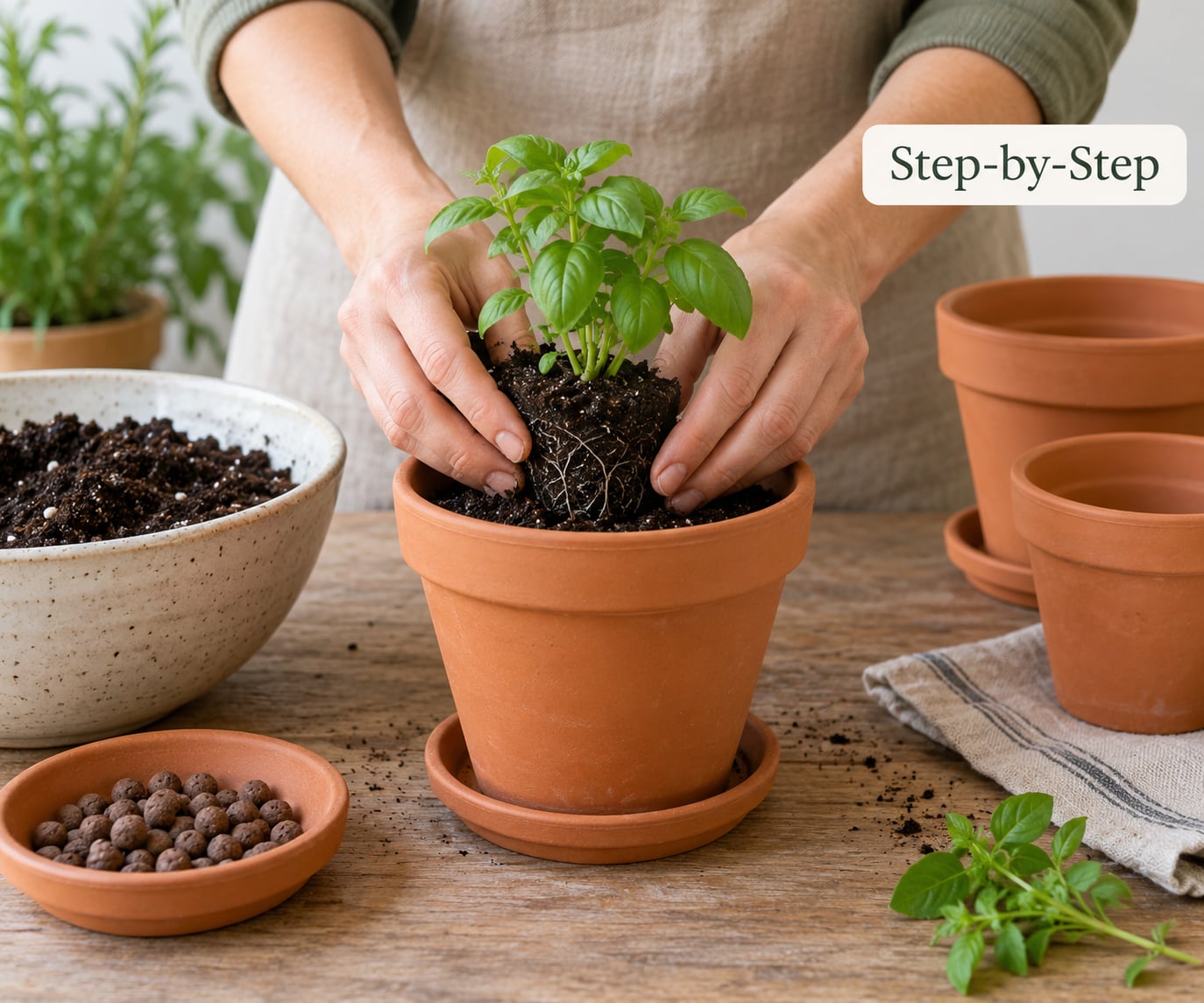
Fill the pot to about an inch below the rim with potting mix, then loosen the root ball of your starter plant before setting it in the centre. Fill in around the sides, press the surface down lightly with your fingers, and stop an inch below the rim so water has somewhere to sit instead of washing straight over the edge.
Plant at the same depth the plant was already at in its nursery pot. Burying the stem slightly deeper buries the crown and invites rot. Give each pot a gentle squeeze to settle the soil, water once immediately to close air pockets around the roots, and let it drain fully on the sill.
Skip garden soil, even good garden soil. It is too dense for a small container, it does not drain evenly, and you can bring in weeds and pests with it. Potting mix is light and sterile, and that is the whole point.
Step 4: Water Without Drowning the Roots
Push a finger about an inch into the soil. Water when it feels dry at that depth; for most herbs, that is two or three times a week in warm weather and about once a week in winter. Water thoroughly until it runs out of the hole, then empty the saucer after ten minutes so the roots are not sitting in water. Soggy roots turn brown and smell sour, and that is the leading cause of a dead windowsill herb.
Bottom watering works well and is easier to control. Add an inch of water to the saucer and let the soil pull it up from below over 30 to 60 minutes, then drain whatever is left over. Most people overdo the top-down soak because the pot looks dry on top while the middle is already saturated.
Adjust your rhythm with the window, not the calendar. A south-facing sill in July may need water twice daily; the same pot in a north window in January can go five days. Learn the pot, not the schedule.
Step 5: Give Herbs the Right Light
Basil, rosemary, and thyme want four or more hours of direct sun. Parsley, chives, mint, and cilantro handle three to four hours of sun plus bright indirect light, which makes them the right choice for a dimmer sill or an east-facing window.
Turn each pot a quarter turn once a week. Plants track the light source, and without rotation basil leans hard toward the glass and grows lopsided with long pale stems. Leggy stems stretched toward the window, small pale leaves, or a plant leaning dramatically all point to the same fix: more light or a grow light set 6 to 12 inches above the foliage on a timer for 12 to 14 hours a day.
Too much light looks different. Leaves that curl, crisp at the edges, or bleach to a papery tan mean the plant is sitting in hot glass with no air movement. Move it back from the pane or sheer a curtain during peak afternoon sun.
Step 6: Harvest and Maintain the Garden
Snip above a leaf node, where a leaf joins the stem, taking no more than a third of the plant at once. New shoots grow from those nodes, so cutting just above one is what makes a basil plant branch into a full bush instead of becoming one tall stalk. Pinch the growing tips weekly, and always remove flower buds as they appear — once basil bolts, the leaves turn bitter and the plant is finished.
Every four to six weeks in the growing season, feed each pot with a diluted liquid fertilizer or a pinch of slow-release granules. Potting mix runs out of nutrients after roughly two months of watering, and a hungry plant stops producing new leaves long before it dies. Refresh the top inch of soil once a year, and repot into a container one size larger when you see roots circling the drainage hole or water running straight through without soaking in.
Trim anything yellow or mushy the moment you see it, and wipe dust off the leaves with a damp cloth every few weeks. Dust blocks enough light on its own to make a struggling plant look worse than it is.
Common Mistakes
Overwatering tops the list. Soggy soil, a yellowing plant, and a sour smell from the pot mean you are watering too often, not too little. Let the top inch dry out completely between waterings and empty the saucer every time.
Pots without drainage holes come next. A container that holds water at the bottom is a slow root rot, and no amount of careful watering saves it. Drill a hole or use a pot that already has one.
Insufficient light sneaks up slowly. A windowsill that gets an hour of dappled shade will grow a thin, pale, leaning plant no amount of feeding can fix. Track your sun for a few days before you buy anything, then add a grow light if the numbers fall short.
Too many pots in too little space is the next one. Windowsills are narrow, and crowding leaves means no airflow and roots that compete for a finite volume of soil. Three pots on a three-foot sill is a full, healthy garden.
Undersized pots cause plants to dry out hourly in summer and go root-bound by autumn. If your pot is under 6 inches across, or the plant is drying out every other day, move it up a size.
Weak starter plants finish the list. Yellowing leaves, bare stems, and soft growth on day one mean the plant was already struggling before you got it. Choose plants with green new growth at the tip and firm, upright stems, and skip anything that has been sitting in a cold outdoor display.
Two habits keep a windowsill garden healthy longer. Rotate the pots weekly for even growth, and water from the top once a month to flush out any salt buildup in the potting mix, since a bottom-watered pot only ever gets wet from the very bottom up.
Frequently Asked Questions
What herbs grow well on a windowsill?
Chives, parsley, thyme, mint, oregano, and cilantro all do well indoors because they tolerate bright indirect light alongside direct sun. Basil performs best too, though it needs the brightest window you have and steady moisture. Rosemary and thyme are the most forgiving once established, since they prefer to dry out between waterings.
Can I grow herbs on my windowsill indoors?
Yes, and it is one of the easiest indoor gardening projects there is. Herbs need light, water, and a well-draining container, and a windowsill provides all three. The two things that kill indoor herbs are poor drainage and too little light, so use pots with holes and pick the brightest window in the room.
How much sun do windowsill herbs need?
Most culinary herbs want 6 to 8 hours of direct light daily, which in practice means a south-facing sill. Parsley, chives, mint, and cilantro are more forgiving and do well with 3 to 4 hours of sun plus bright indirect light. If you only have 2 hours or less, supplement with a grow light set 6 to 12 inches above the plant.
How often should I water windowsill herbs?
Check the soil instead of counting days. Push a finger an inch down; water when it feels dry at that depth. That is usually two or three times a week in warm weather and about once a week in winter. Water until it drains from the bottom, then empty the saucer so roots never sit in water.
Why are my indoor herbs leggy and pale?
Long, stretched stems and small pale leaves mean the plant is reaching for light. Move it to a brighter window, rotate the pot a quarter turn weekly, and consider a grow light on a 12 to 14 hour timer. Leggy growth will not shrink back, but new shoots from a well-lit plant will grow compact and full.
Why do my grocery store herbs die so fast?
Supermarket herbs are usually grown in a greenhouse with fertilizer and are shipped in small plastic sleeves with almost no light. Once they are on a dim windowsill, they adjust to indoor light and often run out of soil nutrients within weeks. Buy from a nursery or garden centre instead, and repot into a 6-inch pot with fresh potting mix.
Conclusion
Start with three herbs this week: chives, parsley, and a pot of thyme or mint. Give each its own 6-inch container with a drainage hole and a saucer, use fresh potting mix, and put them in the brightest window you have. Check the soil with your finger before watering rather than following a schedule, and expect to snip your first harvest in three to four weeks. That habit of light, drainage, and restraint is the whole skill, and it stays with you as the garden grows.